Back Extension Bench Body-Solid Pro Club vs China Wholesale Manufacturer for Sale
Most gym buyers assume international brand steel is thicker and stronger — the real gap is in welding工艺, not tube thickness.
A Body-Solid back extension bench alternative from a qualified Chinese OEM factory delivers equivalent load capacity at roughly half the landed cost. The core 3×3-inch, 11-gauge steel frame with full-penetration welding matches commercial-grade dynamic load requirements. The price difference comes from brand premium and distribution layers, not manufacturing capability gaps.
I spent my early career running customs clearance at Yantian Port in Shenzhen, staring at container manifests all day. When I moved into fitness equipment trading, I started seeing buyers wrestle with the same question over and over: can a Chinese factory actually replicate what Body-Solid builds? One Dubai gym owner sent me a Body-Solid GRCH322 spec sheet and asked for a matching quote. He assumed Chinese steel couldn’t hold up. I took apart a unit we had in the warehouse, measured the frame tubes, checked the weld seams, and realized the core structure was entirely reproducible domestically — at a fraction of the price. The buyer’s concern wasn’t really about cost; it was about getting something that looked right but failed under real gym use. [NEED_CITE: commercial gym equipment failure modes and structural integrity factors]
That conversation keeps coming up across different markets. Let me walk through what actually matters when you’re evaluating a Body-Solid back extension bench alternative against Chinese factory-direct options.
Body-Solid GRCH322 Specs vs Chinese OEM Equivalent — What’s the Real Difference?
The core load-bearing structure can be matched parameter-for-parameter. The meaningful differences sit in pad materials, finish details, and brand markup.
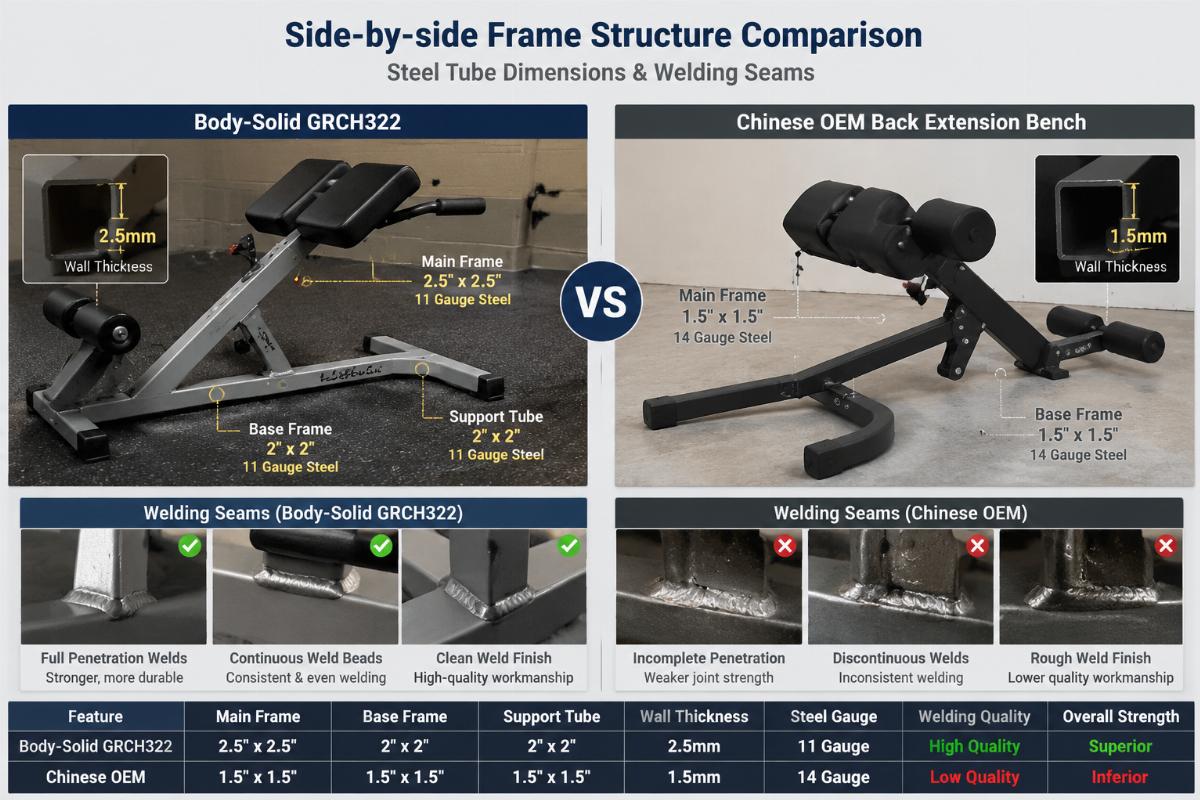
When buyers compare a Body-Solid back extension bench alternative from China, they typically start with the spec sheet. Here’s what a side-by-side looks like on the structural elements that actually matter for commercial use:
| Parameter | Body-Solid GRCH322 | Chinese OEM Commercial Equivalent |
|---|---|---|
| Main Frame Tube Size | 3×3 inch | 50×50 mm (equivalent) |
| Wall Thickness | 11 gauge | 2.5 mm (equivalent class) |
| Steel Grade | Commercial grade carbon steel | Q235 / A36 equivalent |
| Welding Method | Full continuous weld | Full continuous weld (verifiable) |
| Back Pad | Durafirm vinyl, high-density foam | High-density PU foam, commercial vinyl |
| Adjustment Mechanism | Pin-lock height adjustment | Pin-lock or plate-loaded adjustment |
| User Weight Capacity | Commercial-rated | Commercial-rated, verifiable via test report |
| Finish | Powder coat | Powder coat, thickness verifiable |
[NEED_CITE: EN ISO 20957 stationary training equipment safety requirements and test methods]
The tube dimensions are functionally identical — 3×3 inch and 50×50 mm are the same cross-section. The 11-gauge wall thickness translates to approximately 2.5 mm, which is standard commercial grade. The steel grade difference between Q235 and A36 is negligible for this application; both are mild carbon steels with comparable yield strength.
What actually separates a reliable Body-Solid back extension bench alternative from a cheap knockoff isn’t the spec sheet — it’s whether the factory can prove they meet those specs consistently. I’ve seen Chinese suppliers quote 2.5 mm walls and deliver 1.8 mm on the production run. The fix isn’t trusting the quote; it’s requiring material certificates and third-party inspection reports before shipment. [NEED_CITE: third-party inspection protocols for imported fitness equipment steel verification]
A Middle East gym buyer once sent me the Body-Solid quote for twenty units. He wanted to know if a Chinese alternative could handle the same daily traffic. I arranged for our factory to produce a sample with full material test reports, welding inspection photos, and a static load test video. The unit passed a static load test at a multiple of the rated user weight, matching the safety coefficient standard. He ordered the full twenty units and saved roughly half compared to the Body-Solid landed cost.

Steel Thickness & Welding: How to Verify Quality from a China Factory?
Request material certificates, welding inspection videos, and third-party test reports — these documents matter more than spec sheet promises.
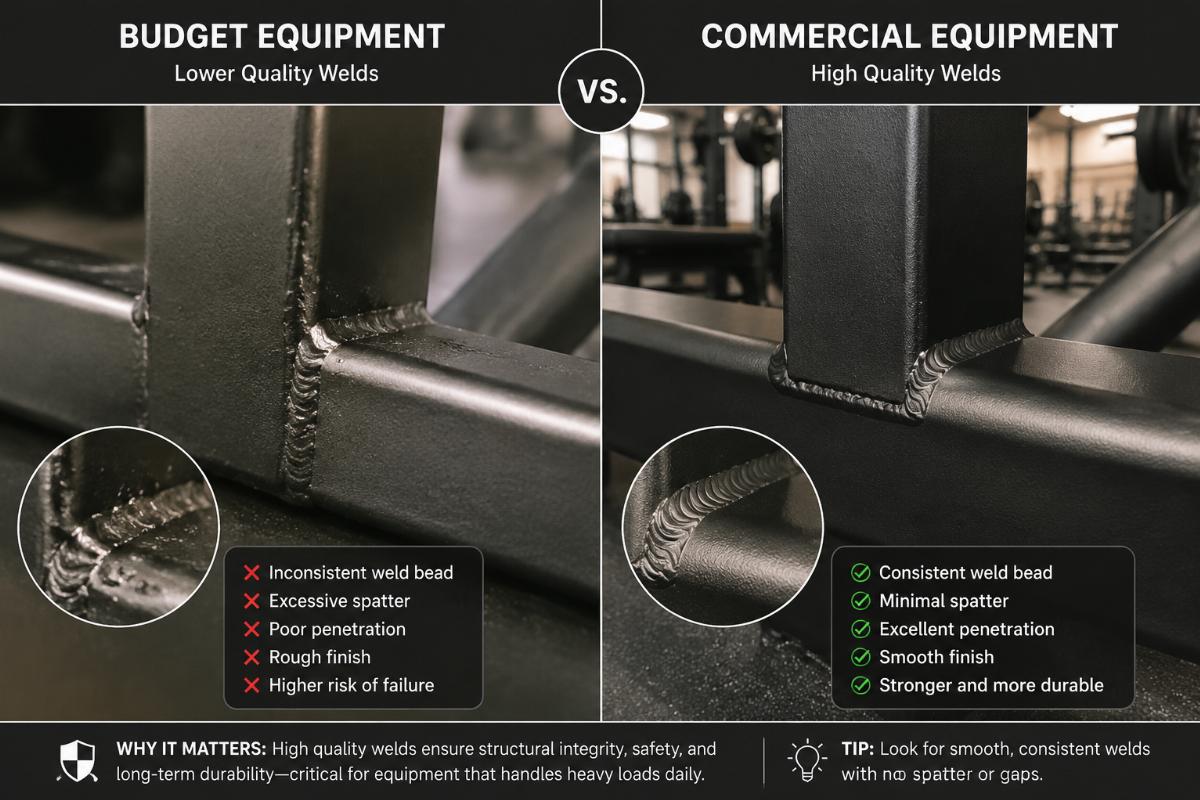
Here’s what most buyers get wrong: they focus on steel thickness alone and assume thicker equals stronger. In reality, a well-executed weld on a standard-gauge tube outperforms a poorly welded thick tube every time. The weld is the structural weak point, not the tube. [NEED_CITE: welding quality impact on structural integrity of fitness equipment frames]
When sourcing a Body-Solid back extension bench alternative, here’s the verification sequence I recommend:
-
Material Certificate Request — Ask for the mill test certificate for the steel tubes. It should specify grade (Q235 or equivalent), wall thickness, and dimensions. A factory that can’t provide this is cutting corners somewhere.
-
Welding Inspection Photos and Video — Request close-up photos of the weld seams before powder coating. You’re looking for full continuous welds with consistent bead width, no visible porosity, and no incomplete fusion. Spot welds or intermittent welds are a red flag for commercial use.
-
Weld Penetration Verification — For critical joints, ask if the factory performs destructive testing on sample pieces or uses ultrasonic testing. A factory confident in their welding will have no issue providing this evidence.
-
Static and Dynamic Load Test Report — The factory should be able to show a test report demonstrating the frame holds a static load at a defined safety coefficient above the rated user weight. [NEED_CITE: fitness equipment load testing safety coefficient standards per ISO 20957]
-
Third-Party Inspection — For larger orders, hire an independent inspection company to visit the factory before shipment. They can verify tube thickness with an ultrasonic gauge, check weld quality visually, and confirm finish thickness.
An African distributor I worked with started with a small trial order of five units. He specifically required material certificates and welding inspection documentation for each unit. The first batch passed his review, and he came back with a full container order of over fifty units under his own brand. The documentation requirement didn’t slow anything down — it just separated serious factories from trading companies guessing at specs.

The pad is another area where shortcuts hide. Body-Solid uses their proprietary Durafirm vinyl over high-density foam. A credible Body-Solid back extension bench alternative should use commercial-grade vinyl with high-density PU foam that resists compression set over time. Ask for foam density specifications and request a sample pad to test for rebound and long-term compression resistance. Thin foam feels fine on day one and bottoms out by month six.
Price Breakdown: Why China Factory Costs Significantly Less Than Body-Solid?
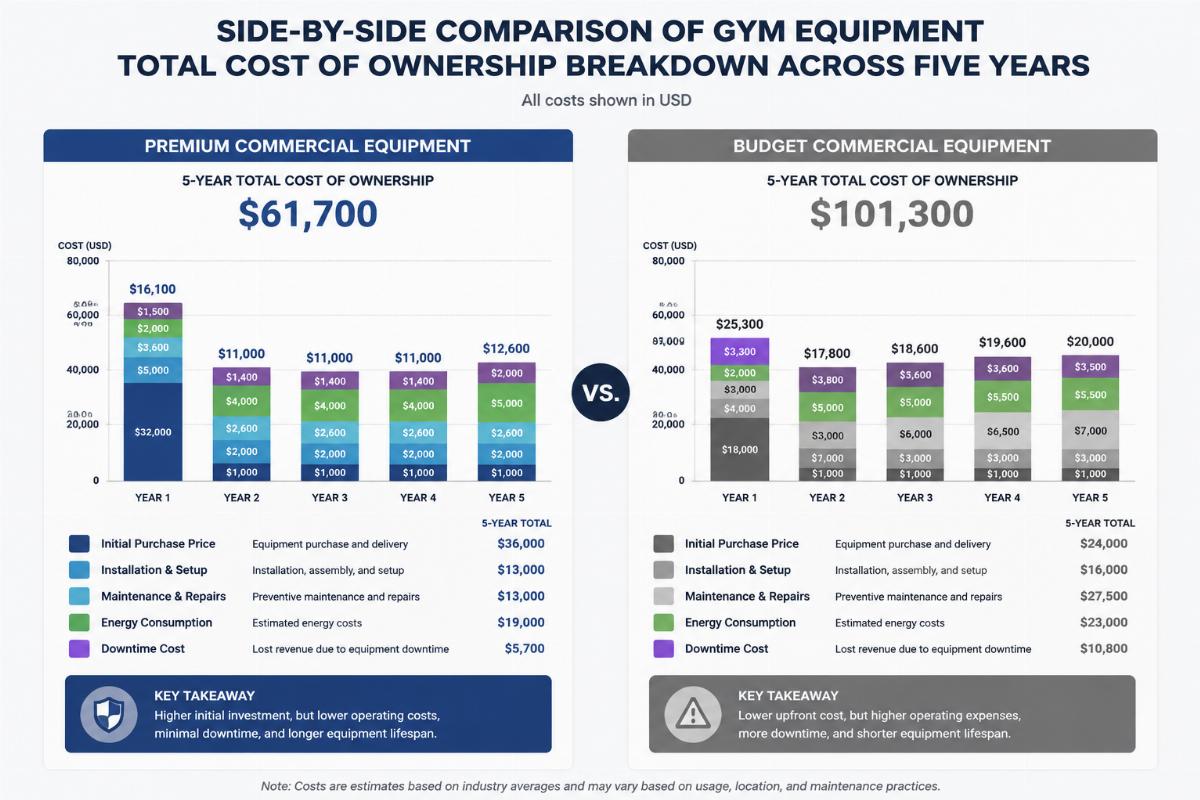
The price gap comes from brand premium, multi-layer distribution, and logistics structure — not from a manufacturing quality gap.
Buyers often assume a massive price difference means a massive quality difference. That’s not how fitness equipment manufacturing works. Let me break down where the money actually goes.
A Body-Solid back extension bench alternative from a Chinese factory typically costs a fraction of the branded retail price. Here’s what builds the international brand price:
-
Brand premium and marketing costs — International brands invest heavily in branding, catalog production, trade show presence, and dealer support networks. These costs are embedded in every unit sold.
-
Multi-layer distribution — The typical path goes factory → brand HQ → regional distributor → local dealer → gym buyer. Each layer adds margin. A direct factory purchase eliminates most of these steps.
-
Warehousing and inventory carrying costs — Brands maintain inventory in multiple regions, which ties up capital and adds storage costs.
-
Certification and compliance amortization — While Chinese factories also carry CE and other certifications, international brands often amortize additional market-specific compliance costs across their product line.
The actual manufacturing cost — steel, foam, vinyl, powder coating, labor — is similar whether the unit carries a Body-Solid label or ships direct from a Shandong factory. The Chinese factory’s labor cost advantage is real but modest; the larger savings come from eliminating the distribution chain. [NEED_CITE: fitness equipment supply chain cost structure analysis for commercial gym equipment]
A hotel project client needed back extension benches paired with abdominal/back dual-function units for a new fitness center. They compared the Body-Solid catalog price against our factory-direct quote for equivalent-spec units. The per-unit savings were substantial enough that they reallocated budget to add additional functional training equipment to the same space. The units met the same commercial durability requirements, and the lead time was actually shorter because there was no regional distributor scheduling layer.

This doesn’t mean every Chinese factory quote is a good deal. Trading companies posing as manufacturers will quote low and then subcontract to the cheapest workshop, losing quality control in the process. The key is verifying you’re dealing with an actual production facility — ask for factory audit reports, production line photos with your order in progress, and the ability to customize specifications rather than only offering catalog items.
MOQ, Lead Time & OEM Options: What Buyers Should Expect from Chinese Suppliers?
Flexible MOQ starting from single units, full OEM branding support, and container-load consolidation are standard from established fitness equipment factories.
International brands typically require buying through authorized dealers with set price tiers and limited customization. A Body-Solid back extension bench alternative from a direct Chinese factory operates on a completely different model.
MOQ flexibility — Established commercial fitness equipment factories in China can accommodate orders starting from a single unit for sample evaluation. This allows buyers to verify quality before committing to larger volumes. For branded or customized orders, MOQs typically start at a small batch quantity, which is accessible even for boutique studios or new distributors testing a market.
OEM and private label — Most factories offer full OEM services including custom logo placement, color matching to your brand guidelines, custom packaging, and even specification modifications. I’ve worked with distributors across multiple regions who started with a catalog-order sample, then moved to full private-label production with their own branding on the frame, pads, and packaging.
Lead time — Standard production lead time for a Body-Solid back extension bench alternative runs roughly thirty to forty-five days depending on order volume and customization level. This is competitive with or faster than the lead time for international brand orders that must pass through regional distribution scheduling. [NEED_CITE: typical production lead times for commercial strength equipment from Chinese manufacturers]
Container consolidation — One of the significant advantages of working directly with a Chinese factory is the ability to mix different equipment types in a single container order. A gym outfitting a full facility can combine strength machines, cardio equipment, free weights, and accessories in one shipment rather than coordinating with multiple brand-specific suppliers. This reduces per-unit shipping costs dramatically.
A boutique studio owner in Southeast Asia started by ordering a single back extension bench as a sample. After verifying the build quality, she placed a mixed container order combining strength equipment, functional training gear, and flooring for her new facility. The ability to consolidate everything from one factory simplified her logistics and reduced her overall equipment cost substantially compared to sourcing each category from a different international brand dealer.

After-sales support — Reputable factories provide spare parts supply and technical support for their equipment. Ask about warranty terms, spare parts availability, and whether the factory can provide assembly instructions or video support for your end users. This is especially important for distributors who need to support their own customers after resale.
Conclusion
A qualified Chinese factory can produce a back extension bench that matches Body-Solid’s core structural performance at a significantly lower price point — the buyer’s job is to verify, not assume.
The steel specs are equivalent, the welding can be verified through documentation, and the price gap reflects distribution structure rather than manufacturing capability. Focus your due diligence on material certificates, weld quality evidence, and load test reports rather than brand names on the frame.