
Buy Commercial Gym Equipment for OEM Buyers
Most OEM buyers think private labeling is just about swapping a logo. The real risk lies in mismatches between certificate model numbers and physical nameplate parameters, which routinely trigger customs holds at destination ports.
For OEM buyers sourcing commercial gym equipment, the core of a successful purchase is not chasing the lowest unit price. It is building a fully controllable chain from certification filing, nameplate parameter alignment, to logistics and customs clearance, ensuring that private-labeled products pass through destination port inspections smoothly and operate stably over the long term.
I once spent three days蹲ing around the Apapa port in Lagos, waiting on a container of Smith machines that got held up by customs. The cargo carried the buyer’s own brand labels, but the CE certificate model numbers did not match what was stamped on the nameplates. The port agent called me twice asking for supplementary documents, and both submissions were rejected. Only later did I fully grasp that OEM branding is far more than a cosmetic change. From nameplate parameters to certificate filings, every single link must be locked down in advance. My early career was spent handling shipping documents and customs declarations, working daily with bills of lading and packing lists. When I moved into trade, I realized that what buyers truly need is never "cheap goods," but an entire process that runs without a single hitch. Over the years, running gym projects across Africa, from hotel fit-outs in Addis Ababa to private training studios in Johannesburg, the lessons I learned from failed shipments outnumber the machines I actually delivered. Today, I am laying out the details that routinely cause OEM purchases to go wrong.

Let us break down the critical areas that separate a smooth OEM order from a costly disaster.
What Documents Do OEM Buyers Need for Customs Clearance?
The certification model number, nameplate parameters, and packing list must be perfectly aligned. Any inconsistency among the three will inevitably lead to cargo detention at the destination port.
When commercial gym equipment arrives at ports across West Africa, East Africa, or the Middle East, customs officers cross-check three documents against the physical goods. The CE certificate model number must match the model printed on the machine nameplate, and both must correspond exactly to the product description in the packing list and commercial invoice. A single character difference, a dash instead of a hyphen, a revision suffix missing, and the container gets flagged. [NEED_CITE: CE marking model designation requirements per EU Decision 768/2008/EC]
Consider a scenario I witnessed firsthand. A distributor in Nigeria ordered a full container of plate-loaded strength machines under his own brand. The factory had filed the CE certificate under an internal production code, but the buyer’s brand used a different commercial model series. The nameplates on the machines reflected the buyer’s model codes, not the certificate codes. At Apapa port, the customs inspector noticed the discrepancy immediately. The container sat in the bonded zone for weeks. The buyer paid demurrage fees that ended up costing several times the original savings from choosing a cheaper supplier.
| Document Element | Compliant Shipment | Non-Compliant Shipment |
|---|---|---|
| CE Certificate Model vs Nameplate | Fully matched | Mismatched or missing suffix |
| Packing List Description | Consistent with certificate | Generic or abbreviated naming |
| Multi-language Manual | Included with correct model ref | Missing or wrong model reference |
| Declaration of Conformity | Signed and dated, model-specific | Generic template without specifics |
The lesson here is straightforward. Before production begins, the OEM buyer must provide the manufacturer with the exact brand model codes, and the manufacturer must confirm that these codes are either already covered under existing certification filings or can be added through a formal modification. [NEED_CITE: CE technical file requirements for model variation under same product family]

How to Structure MOQ and Packaging Tiers for Private Label Orders?
Tiered MOQ combined with packaging customization cost sharing is the key mechanism for distributors to control first-order risk while building their own brand presence.
Many first-time OEM buyers assume that private labeling requires massive minimum orders. This is a misconception that causes them to either overcommit capital upfront or abandon branding altogether. The reality is that flexible OEM gym equipment manufacturers structure their MOQ in tiers, allowing buyers to test the market before scaling.
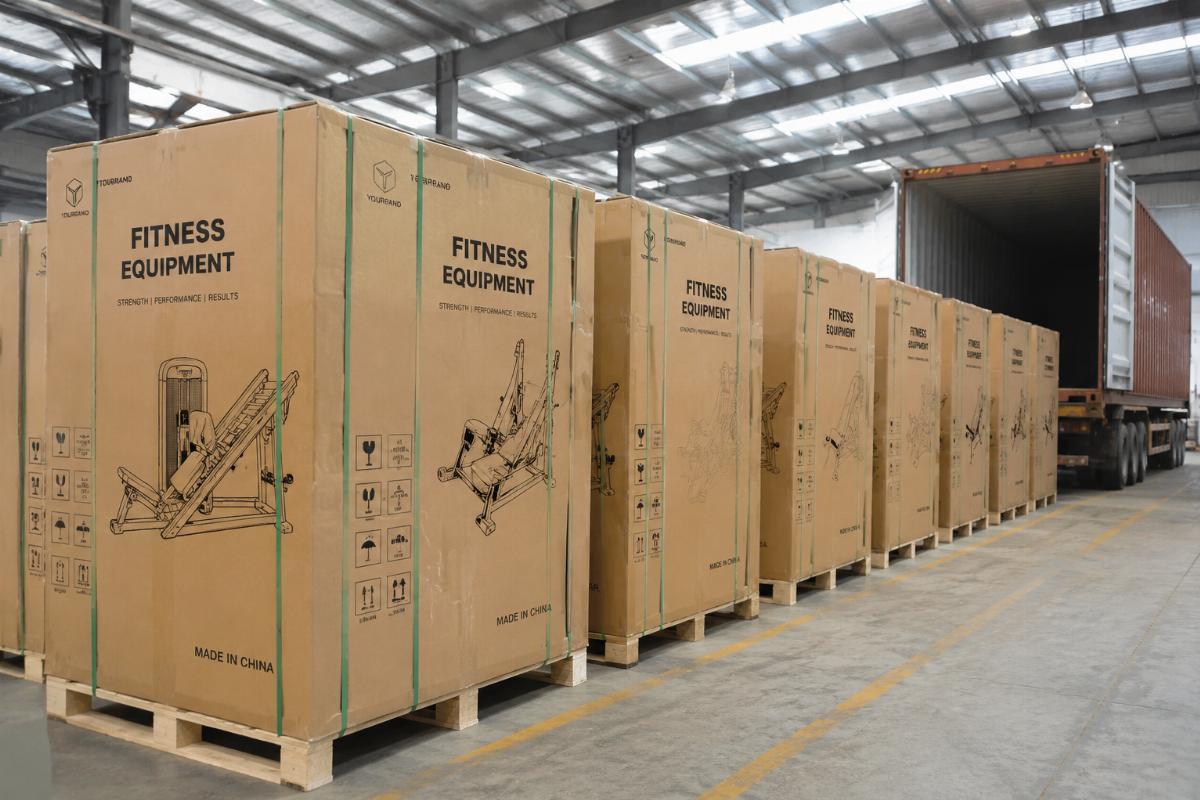
A distributor in South Africa approached us wanting to launch his own brand of commercial treadmills and strength equipment. He was hesitant about committing to a full container of a single SKU. We structured the order with a tiered approach. The initial order covered a mixed container with several cardio SKUs and a selection of strength machines, each carrying his brand labels and custom packaging. The packaging customization cost, including printed carton design and foam insert molding, was amortized across the mixed SKUs rather than loaded onto a single product line.
| MOQ Tier | Typical Scope | Packaging Customization | Branding Depth |
|---|---|---|---|
| Sample Tier | Single units for evaluation | Standard packaging with stick-on labels | Logo placement only |
| Trial Tier | Partial container, mixed SKUs | Custom carton printing, shared mold cost | Full brand identity on packaging |
| Full Container Tier | Dedicated container per category | Fully custom packaging, dedicated mold | Complete brand system including manuals |
This structure allowed the South African distributor to validate market response across multiple product categories without locking capital into a single product. When certain SKUs showed stronger demand, he increased volume on those lines in subsequent orders, and the packaging mold costs were already absorbed. [NEED_CITE: MOQ structuring best practices for private label fitness equipment sourcing]
The critical point is that packaging customization is not a fixed cost per unit. It is a project-level investment that decreases significantly as volume increases. Buyers should negotiate mold cost sharing and amortization schedules explicitly, rather than accepting a flat per-unit surcharge.
What Is the Optimal Container Mix for Multi-Category Gym Equipment?
The loading ratio between strength equipment and cardio equipment must be planned in advance to avoid excessive break-bulk sorting costs at the destination port.
A common assumption among new importers is that stuffing a container with as many product types as possible maximizes value. In practice, this approach creates a hidden cost trap. When a container arrives at the destination port packed with dozens of different SKUs, the consignee faces enormous sorting, warehousing, and distribution complexity.
I worked on a hotel fitness center project in East Africa where the client needed a complete gym setup including commercial treadmills, ellipticals, spin bikes, a full range of plate-loaded machines, free weights, and functional training accessories. The initial instinct was to load everything into one container in whatever arrangement fit. We instead planned a detailed loading scheme based on product dimensions, weight distribution, and the client’s phased installation schedule.
The container was loaded with heavy strength equipment positioned at the floor level for weight balance, while cardio machines were secured on elevated platforms. Free weights and accessories were packed in dedicated zones that could be unloaded first, since the client needed them immediately for the opening phase. The entire loading plan was documented in a detailed diagram shared with the client before sealing.
| Equipment Category | Loading Priority | Space Utilization Strategy |
|---|---|---|
| Plate-Loaded Strength | Base layer, floor level | Maximizes weight distribution |
| Cardio Machines | Elevated, secured with bracing | Nested where possible to reduce footprint |
| Free Weights and Accessories | Dedicated zone, accessible first | Packed in uniform cartons for quick sorting |
| Functional Training Gear | Flexible fill, gaps and corners | Fills residual space efficiently |
The result was a container that arrived at the Dar es Salaam port and was fully sorted and distributed within days, rather than weeks. The client avoided paying for extended bonded warehouse storage, which in East African ports can accumulate rapidly. [NEED_CITE: Container consolidation best practices for multi-category fitness equipment shipments]
For OEM buyers ordering mixed gym equipment packages, the recommendation is to request a detailed loading plan from the manufacturer before production. This plan should include a visual diagram showing exactly where each product category will be positioned in the container. Manufacturers with experience in container consolidation for gym equipment can optimize the mix to ensure that the heaviest items are properly distributed and that lighter, smaller items fill the gaps efficiently.

How to Verify OEM Supplier Capability Before Placing Orders?
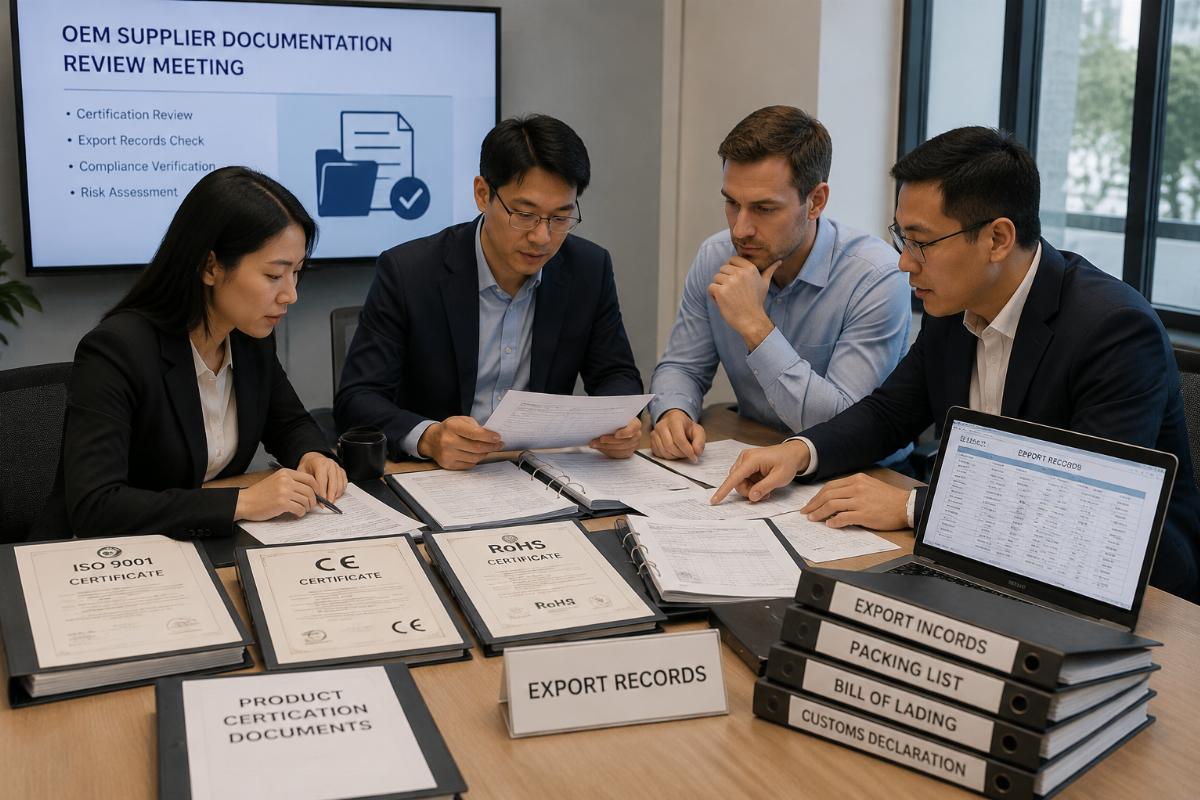
Require the supplier to provide historical export clearance records and certification filing documents for your specific destination country.
The most reliable way to assess whether an OEM gym equipment manufacturer can deliver a troubleless shipment is to ask for evidence of past successful shipments to your exact destination market. A supplier who has already navigated the customs requirements of your country, who has certification filings that align with your local regulations, and who can show documentation of clean clearance history is far more trustworthy than one who simply claims to export globally.
A distributor in the Middle East was evaluating several suppliers for a large private label order. One supplier quoted the lowest price but could not provide CE certificate copies that matched the specific models being ordered. Another supplier had CE certificates, but the filing country was not recognized by the distributor’s local standards authority. The third supplier provided complete documentation including CE certificates with exact model matches, test reports from accredited laboratories, and records of previous shipments cleared through the same destination port.
| Verification Item | What to Request | Red Flag |
|---|---|---|
| CE Certificate | Full copy with model numbers matching order | Certificate covers different product family |
| Test Reports | From accredited third-party laboratory | Self-issued or from unrecognized body |
| Export History | Bill of lading or clearance records to your country | No verifiable shipments to your region |
| Certification Body | Recognized under your local import regulations | Unknown or non-accredited certifier |
The distributor chose the third supplier, slightly higher in unit price, and the shipment cleared customs without a single issue. The other two options would have almost certainly resulted in delays, re-inspection fees, or even cargo rejection. [NEED_CITE: Import certification recognition requirements for fitness equipment across African and Middle Eastern markets]
When evaluating an OEM gym equipment manufacturer, look beyond the factory tour photos and product catalogs. Ask specific questions about certification model filing, ask to see actual clearance documents from past shipments, and verify that the supplier understands the regulatory landscape of your destination country. A manufacturer with genuine export experience will provide these documents willingly and transparently.
What After-Sales Support Infrastructure Should OEM Buyers Expect?
Spare parts supply cycle, multi-language technical documentation, and remote troubleshooting guidance form the foundation of long-term OEM partnerships.
The true cost of gym equipment is not just the purchase price. It is the total cost of ownership over years of operation, and that includes how quickly and effectively issues are resolved when they arise. OEM buyers who focus solely on unit price often discover too late that their supplier has no structured after-sales support, leaving them stranded when a critical component fails and the gym cannot operate.
A commercial gym operator in West Africa purchased a fleet of cardio and strength equipment from a supplier who offered an attractive price but provided minimal after-sales infrastructure. Within months, a treadmill electronic board failed. The supplier had no spare parts in stock, no technical documentation in English or French, and no remote support capability. The treadmill sat idle for weeks while the operator tried to source a replacement board locally. The revenue loss from that single machine being out of service far exceeded any initial price savings.
| After-Sales Element | What Buyers Should Expect | Why It Matters |
|---|---|---|
| Spare Parts Availability | Common wear parts stocked, shipped within reasonable lead time | Minimizes equipment downtime |
| Multi-Language Manuals | Installation, operation, and maintenance guides in buyer’s language | Reduces user error and maintenance mistakes |
| Remote Technical Support | Video call troubleshooting, wiring diagrams, error code guides | Enables local technicians to resolve issues independently |
| Warranty Documentation | Clear terms, claim process, and response time commitments | Protects buyer investment and sets expectations |
The manufacturer we work with maintains a structured spare parts inventory for all major component categories, provides technical documentation in multiple languages, and supports remote troubleshooting through video calls and detailed error code guides. This infrastructure is not an afterthought. It is built into the OEM partnership from day one. [NEED_CITE: After-sales support framework requirements for commercial fitness equipment OEM partnerships]
For OEM buyers, the recommendation is to evaluate after-sales support with the same rigor as product quality and pricing. Ask the supplier to detail their spare parts inventory policy, their technical documentation capabilities, and their remote support process. A supplier who cannot articulate these clearly is a supplier who will leave you stranded when problems arise.

Conclusion
OEM gym equipment purchasing succeeds or fails on documentation precision, not price alone. Aligning certification models with nameplate parameters, structuring MOQ tiers to manage risk, planning container mixes to minimize destination costs, verifying supplier export history, and securing after-sales infrastructure are the five pillars that determine whether a private label order becomes a profitable long-term partnership or an expensive lesson.


