
China Factory Direct Fitness Equipment Supplier for Indonesia
Identical nameplate parameters do not guarantee operational compatibility.
Sourcing from a China factory direct fitness equipment supplier for Indonesia requires matching local 220V/50Hz voltage standards, implementing triple-layer moisture protection for sea freight, and preparing SNI-aligned documentation to avoid port delays and equipment failure at Tanjung Priok.
I still remember standing in a Jakarta loading bay, watching a container of treadmills get unloaded for a local chain gym. The motors were rated for the right voltage on paper, but the frequency tolerance on the control boards had not been verified. Within weeks, multiple units burned out during peak hours. That same shipment included dumbbell racks wrapped only in standard stretch film. After weeks sitting in high-humidity conditions at the port, the chrome surfaces showed visible oxidation, and the buyer refused the lot. A fitness equipment supplier Indonesia operators trust has to look far beyond the product catalog. [NEED_CITE: voltage frequency mismatch impact on motor lifespan in tropical climates]

These are not isolated incidents. Across multiple gym outfitting projects I have tracked in Southeast Asia, the root causes of losses almost always trace back to three gaps: electrical adaptation, moisture protection during ocean transit, and customs documentation readiness. Addressing these gaps is what separates a smooth deployment from a costly write-off.
What Voltage and Power Specs Must Match for Indonesia?
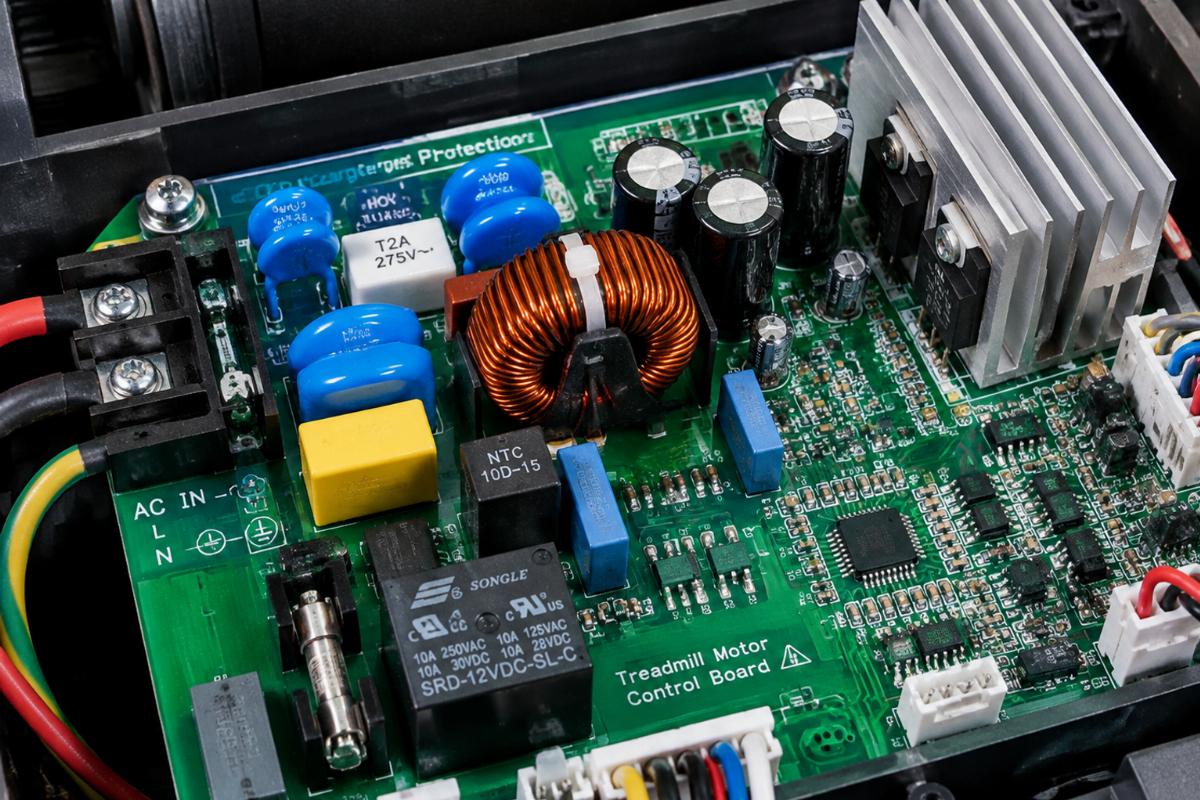
Indonesia operates on a 220V/50Hz electrical standard, but motor-driven cardio equipment requires deeper verification beyond the nameplate voltage.
Many buyers assume that because China also uses 220V/50Hz, the equipment will work identically. The reality is more nuanced. Motor windings, capacitor banks, and inverter boards in commercial treadmills and ellipticals are designed with frequency tolerance bands. A motor optimized for a tight frequency band may overheat and degrade prematurely when exposed to the voltage fluctuations common in Indonesian industrial power grids. [NEED_CITE: motor failure rate correlation with frequency tolerance in tropical grid conditions]
| Specification | Standard China Export | Indonesia-Adapted Config | Risk if Mismatched |
|---|---|---|---|
| Voltage | 220V | 220V | Low |
| Frequency | 50Hz | 50Hz | Low |
| Motor Frequency Tolerance | Narrow band | Wide band with thermal derating | Noticeably reduced motor lifespan |
| Control Board Capacitor | Standard rating | High-temperature rated | Vulnerable to premature failure |
| Plug Type | Type I / Hardwire | Type C / Type F / Hardwire | Connection incompatibility |
| Surge Protection | Basic | Integrated surge suppressor | Resistant to grid spikes |
A gym chain in Jakarta once received a full order of commercial treadmills from a generic overseas source. The nameplate read 220V/50Hz, matching local specs perfectly. However, the inverter boards were calibrated for a stable grid environment. Jakarta’s power grid experiences frequent micro-fluctuations, and the boards lacked adequate surge tolerance. The result was a wave of motor controller failures during the first month of operation. [NEED_CITE: Jakarta power grid voltage fluctuation patterns and impact on imported electronics]
When working with a China factory direct fitness equipment supplier for Indonesia, always request that the manufacturer confirms wide-band frequency tolerance on all motor-driven equipment. This means the motor and drive system can handle minor frequency deviations without thermal stress. For control boards, specify high-temperature rated capacitors and integrated surge protection. These adaptations add minimal cost but dramatically reduce field failure rates.
How to Prevent Equipment Damage During Sea Freight to Indonesia?
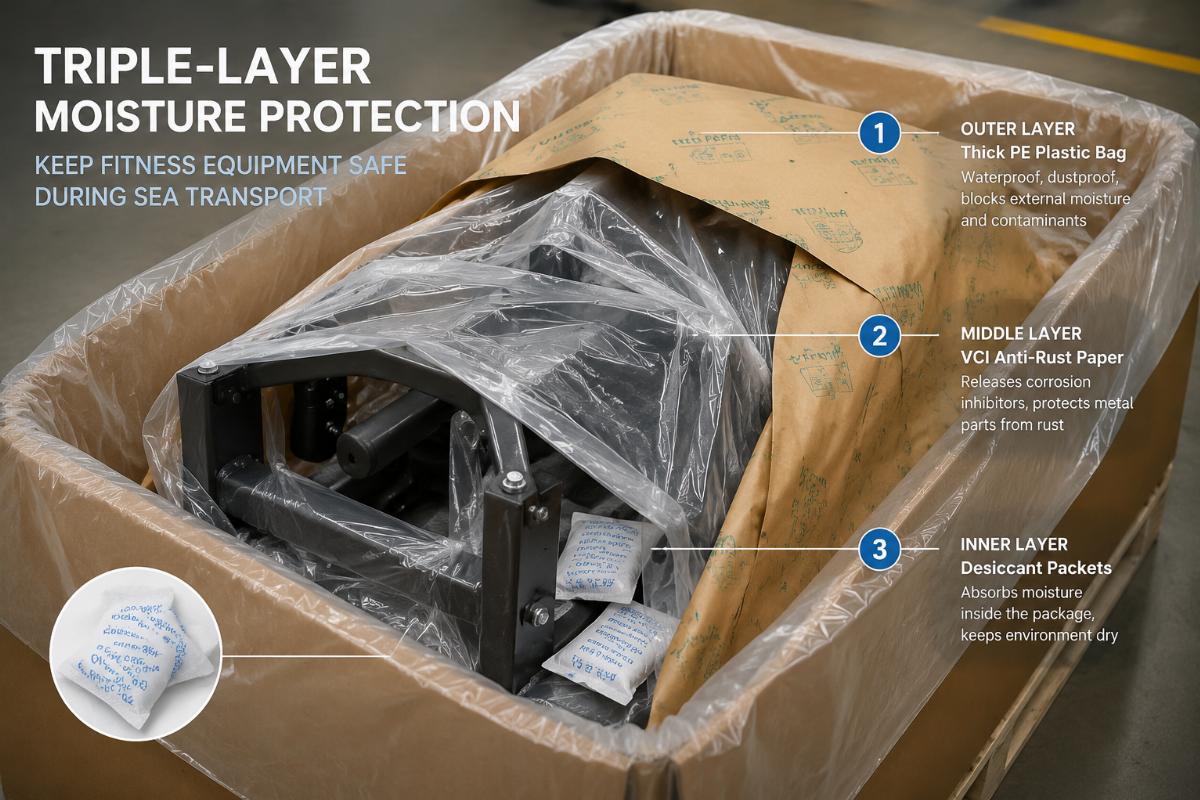
Standard export packaging is insufficient for Indonesia’s high-humidity port environment; triple-layer moisture protection combined with optimized container loading is essential.
The journey from a Shandong factory floor to a Jakarta gym involves roughly two to three weeks at sea, followed by variable dwell time at Tanjung Priok port. During this period, equipment is exposed to salt-laden air, temperature swings that cause condensation inside containers, and extended stays in open-air port yards. [NEED_CITE: container condensation mechanisms during tropical sea routes]
The protection protocol I have seen work reliably involves three layers. The innermost layer uses VCI (Vapor Corrosion Inhibitor) paper wrapped directly around all ferrous and chrome-plated surfaces. VCI paper releases a molecular-level protective vapor that prevents oxidation even in saturated air. The middle layer consists of desiccant packs sized proportionally to the enclosed air volume, absorbing residual moisture. The outermost layer is industrial-grade stretch wrap with UV resistance, sealed at all seams to create a moisture barrier.
| Packaging Element | Basic Export Standard | Tropical-Grade Protection |
|---|---|---|
| Metal Surface Treatment | Bare or light oil | VCI paper direct contact wrap |
| Moisture Absorption | None or minimal silica | Proportionally sized desiccant packs |
| Outer Wrap | Single-layer stretch film | UV-resistant sealed stretch wrap |
| Wooden Components | Untreated | Kiln-dried with anti-fungal treatment |
| Container Loading | Standard stacking | Humidity-controlled dunnage and ventilation |
A distributor importing free weight equipment once received a full container of dumbbell racks and plate-loaded machines. The racks were packed with standard stretch wrap only. After clearing customs, nearly a third of the chrome surfaces showed rust spots. The buyer rejected the affected units, and the resulting demurrage and replacement costs erased the margin on the entire shipment. [NEED_CITE: demurrage cost impact on fitness equipment import margins at Indonesian ports]
Container loading optimization matters equally. A fitness equipment supplier Indonesia buyers rely on should provide detailed loading plans that maximize cubic utilization while ensuring weight distribution complies with Indonesian road transport limits. Mixing equipment types in one container without a calculated loading sequence leads to shifting during transit, which causes cosmetic and structural damage. Proper dunnage and bracing reduce this risk substantially.
Which Fitness Equipment Categories Are Best Sourced from China?
Strength equipment and free weights offer the strongest value proposition from Chinese factories, while cardio equipment demands rigorous motor and electronics validation.
The Indonesian fitness market has expanded rapidly, with commercial gyms, hotel fitness centers, and boutique studios all competing for quality equipment at viable price points. Factory-direct sourcing from China typically delivers pricing well below established Western brands while maintaining commercial-grade durability, provided the buyer selects the right product categories and verifies critical specifications. [NEED_CITE: Southeast Asia fitness equipment market growth and sourcing trends]
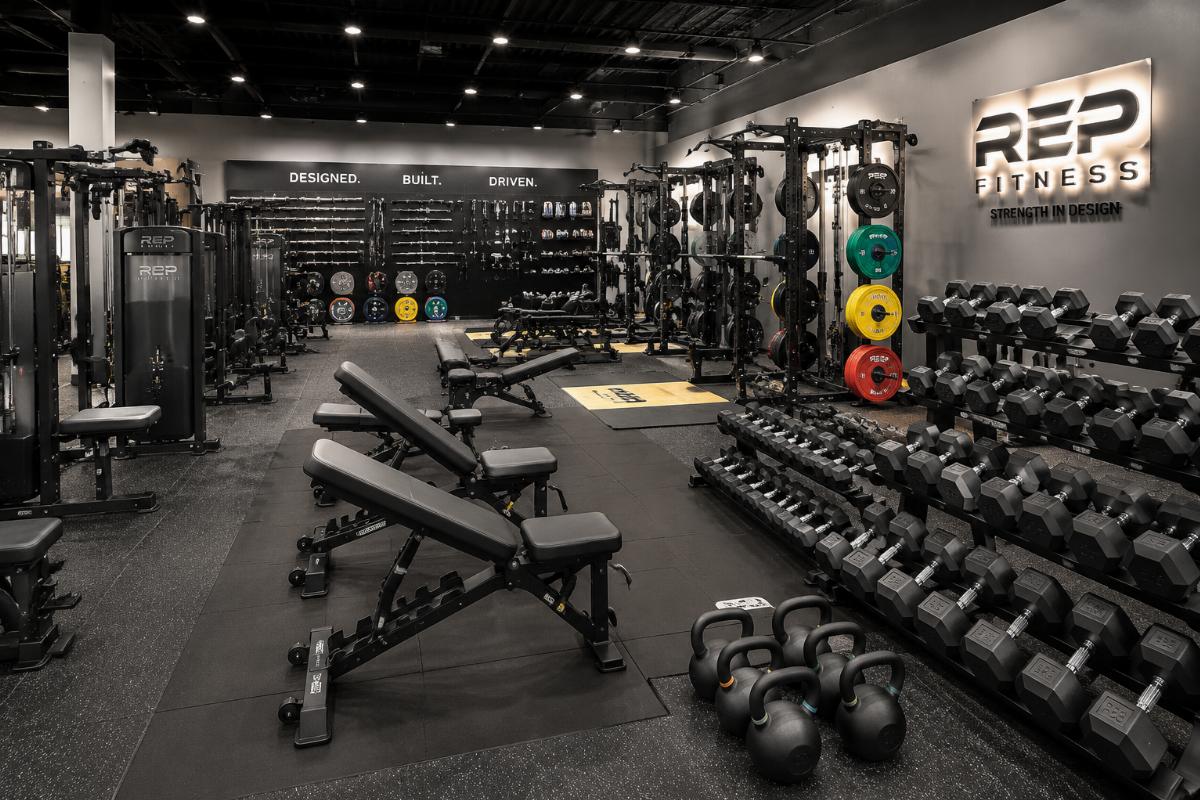
Strength machines, plate-loaded equipment, cable crossovers, Smith machines, and power racks are ideal candidates for direct factory sourcing. These products are mechanically simple, have no electronic components to adapt, and their durability depends primarily on steel gauge, weld quality, and bearing selection. A China factory direct fitness equipment supplier for Indonesia with proper OEM capability can produce these to commercial specifications at a fraction of branded pricing.
Free weights, including dumbbells, barbells, weight plates, and kettlebells, are another strong category. Rubber-coated hex dumbbells and competition-grade plates are high-volume items where factory-direct pricing makes a significant difference. The key is verifying rubber compound quality and coating adhesion, as cheap compounds crack and peel under tropical heat.
| Equipment Category | Sourcing Suitability | Key Verification Points |
|---|---|---|
| Plate-Loaded Strength Machines | High | Steel gauge, weld integrity, bearing grade |
| Cable Crossovers / Functional Trainers | High | Cable quality, pulley alignment, weight stack coating |
| Free Weights | High | Rubber compound durability, coating adhesion, dimensional accuracy |
| Commercial Treadmills | Moderate | Motor frequency tolerance, board surge protection, belt quality |
| Ellipticals / Spin Bikes | Moderate | Drive system sealing, electronics humidity resistance |
| Rowing Machines | Moderate | Rail sealing, resistance mechanism durability |
For cardio equipment, the sourcing calculus shifts. Motors, inverters, and display electronics must be validated for tropical operation and local grid conditions. A capable fitness equipment supplier Indonesia operators work with should offer full OEM customization on cardio lines, including motor specification adjustments and control board modifications. Bick, for example, covers the complete spectrum from heavy-duty strength equipment to fully customizable cardio machines, with the engineering flexibility to adapt electronics for specific destination markets.
What Documentation Is Required for Indonesia Customs Clearance?
Complete SNI-related documentation, certificate of origin, and accurate packing lists are mandatory to clear Indonesian customs within standard timelines.
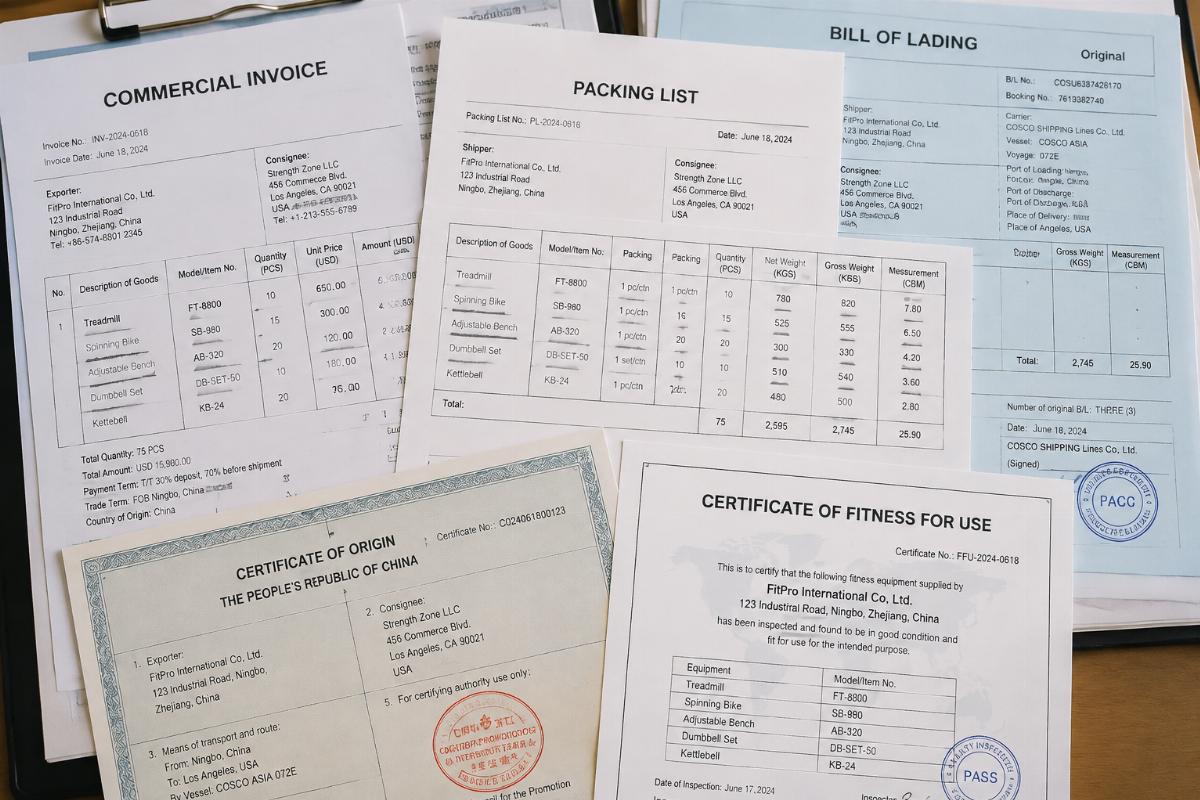
Indonesian customs at Tanjung Priok and other major ports enforce documentation requirements strictly. Incomplete or inaccurate paperwork leads to extended inspection holds, demurrage charges, and in some cases, cargo rejection. A fitness equipment supplier Indonesia importers depend on must either provide or guide the buyer through the full documentation package. [NEED_CITE: Indonesian customs documentation requirements for imported fitness and sports equipment]
The core documents include a commercial invoice with detailed product descriptions matching the Harmonized System codes, a packing list with gross weight, net weight, and package dimensions for every carton, and a certificate of origin issued by the relevant Chinese authority. For products subject to Indonesian National Standard requirements, the importer must hold valid SNI certification or applicable exemptions before the goods arrive.
| Document | Purpose | Consequence if Missing |
|---|---|---|
| Commercial Invoice | Customs valuation | Shipment held for manual assessment |
| Packing List | Physical verification | Extended inspection delay |
| Certificate of Origin | Tariff preference eligibility | Full tariff applied |
| SNI Certificate / Exemption | Product compliance | Cargo rejection or forced re-export |
| Bill of Lading | Title and release | Cannot claim cargo |
| Import License | Regulatory authorization | Shipment blocked at port |
A gym equipment importer once faced a multi-week delay because the packing list descriptions did not match the HS codes on the commercial invoice. The discrepancy triggered a red-line inspection, and the container sat at the port accumulating demurrage charges daily. The total extra cost was substantial enough to wipe out the profit margin on the entire order. [NEED_CITE: Indonesian customs red-line inspection triggers and demurrage cost structure]
Working with an experienced China factory direct fitness equipment supplier for Indonesia means the factory should prepare documentation that is internally consistent and aligned with Indonesian import requirements. This includes matching product descriptions across all documents, providing high-resolution product photos for customs reference, and ensuring that any wooden packaging materials carry ISPM-15 fumigation marks. These details seem minor but determine whether cargo clears in days or weeks.
Conclusion
Successful fitness equipment sourcing for Indonesia depends on electrical adaptation, moisture-proof logistics, category-smart selection, and documentation precision.
A China factory direct fitness equipment supplier for Indonesia that addresses all four dimensions transforms what could be a risky international purchase into a predictable, cost-effective deployment. The pricing advantage of factory-direct sourcing is real, but it only materializes when the equipment arrives functional, undamaged, and legally cleared.


