Commercial Chin-Up Station for Functional Training Studios | OEM Supplier
Heavier does not mean more stable — structural design and steel gauge distribution determine rig integrity under dynamic load, not raw weight.
When outfitting a functional training studio, selecting the right chin-up station requires evaluating load-rated steel gauge, footprint-to-function ratio, modular integration depth, and the supplier’s OEM documentation accuracy — not just comparing unit prices. [NEED_CITE: structural design factors governing commercial rig stability under dynamic loading]
I still remember a container of multi-grip rigs that arrived at a small CrossFit box in Dubai. The client had chosen based on total container cost alone. Within weeks, the J-cups on the pull-up section showed micro-deflection under kipping loads. The uprights were built from thinner gauge steel than the cross-members — a mismatch that no amount of bolt-tightening could fix. The real cost was not the replacement parts; it was the downtime during a peak membership month. That kind of failure is almost always traceable to gauge specification, not bad luck.

A chin-up station is the anchor point of any functional training zone. It sets the tone for workout density, class variety, and member retention. Choosing the wrong one — or choosing it the wrong way — creates problems that compound over years, not weeks.
What Load Capacity and Steel Gauge Should You Require for a Chin-Up Station?
Commercial-grade chin-up stations must use uprights rated for dynamic impact loads far exceeding static body weight, and steel gauge selection is the single most influential variable. [NEED_CITE: steel gauge specifications and load-bearing standards for commercial functional training rigs per EN and ASTM guidelines]
Most buyers focus on the "max user weight" printed on a spec sheet. That number is a static rating. In a functional training studio, athletes perform kipping pull-ups, muscle-ups, and hanging leg raises — all of which generate dynamic forces that multiply static load substantially. A rig rated for a static load may still fail at the weld joints or upright-to-base plate connection under repeated dynamic stress.
The gauge of the upright steel matters more than most procurement guides acknowledge. Thicker gauge uprights resist deflection and absorb vibration at the weld points. Cross-members and J-cups can be built from a slightly lighter gauge without compromising overall rigidity — provided the upright-to-crossmember joint design is engineered for the load transfer. I have seen rigs where the uprights were overbuilt but the gusset plates were undersized, creating a stress concentration that cracked within months.
A Middle East-based CrossFit affiliate once ordered a full container of functional rigs. They specified uniform gauge across all components because they assumed thicker steel everywhere meant better quality. The result was an unnecessarily heavy rig that drove up shipping cost per unit without improving performance where it mattered — at the joint connections. A more rational approach would have matched gauge to function: heavy-gauge uprights, mid-gauge cross-members, and reinforced gussets at every load-transfer node.
| Component | Minimum Gauge Tier | Load Role |
|---|---|---|
| Uprights | Heavy commercial grade | Primary vertical load and dynamic absorption |
| Cross-members | Standard commercial grade | Horizontal span and attachment support |
| Gusset plates | Reinforced tier | Stress distribution at joints |
| J-cups and safeties | Matched to upright tier | Dynamic catch and rack support |
The powder coating process also plays a structural role that buyers often overlook. A coating applied at insufficient thickness will chip at high-wear grip zones, exposing bare steel to sweat and humidity. In tropical and coastal gym environments, this accelerates corrosion at the very points where athletes grip hardest. A properly applied electrostatic powder coat with controlled curing delivers noticeably better long-term surface integrity. [NEED_CITE: powder coating thickness and corrosion resistance standards for commercial fitness equipment]
How to Balance Footprint with Multi-Function Integration in a Chin-Up Station?
Integrating too many functions into a single chin-up station raises the risk of single-point failure — compact design must be weighed against maintenance complexity, not just space savings.
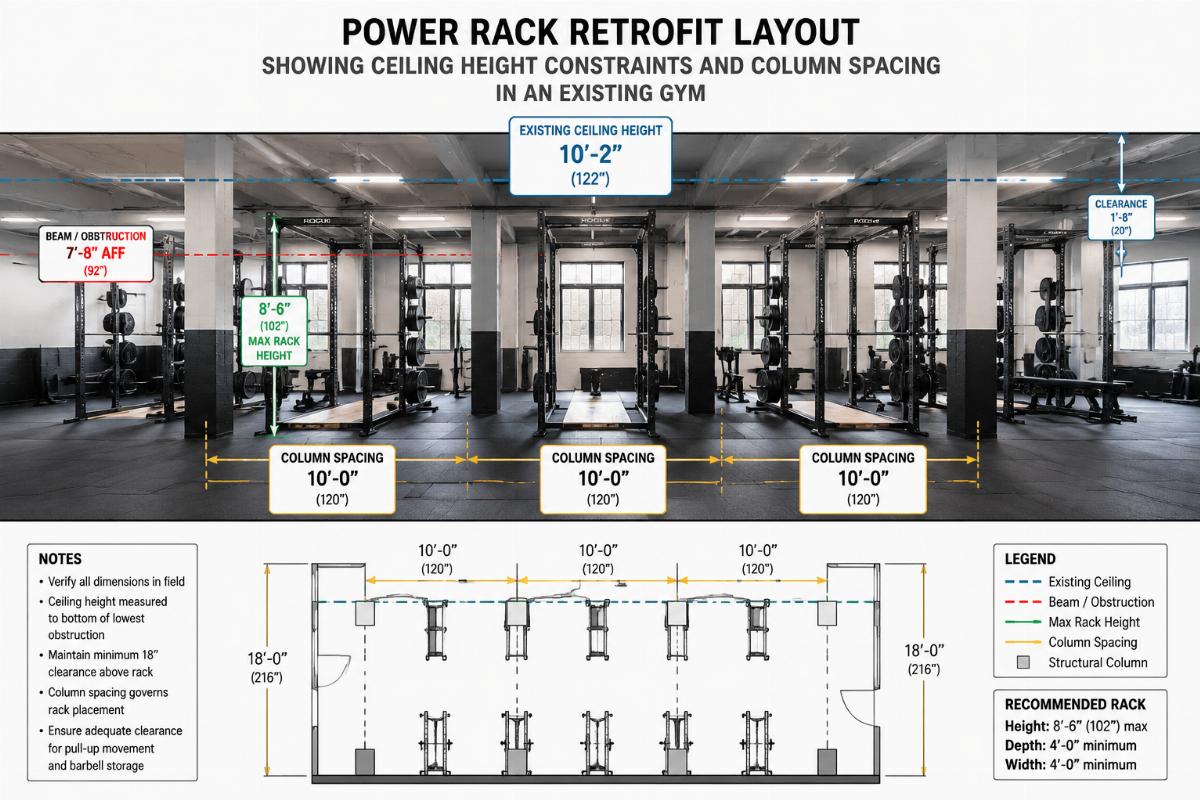
Functional training studios operate on tight square footage. Every square meter must generate revenue. This creates strong pressure to pack pull-up bars, dip stations, landmine anchors, band pegs, and gymnastic ring mounts into one footprint. The temptation is understandable, but over-integration introduces a hidden cost: when one attachment point fails or requires maintenance, the entire station goes offline.
I worked with a Southeast Asian boutique studio chain that wanted a single rig combining chin-up, dip, landmine, and rope climb functions. The design was elegant on paper. In practice, the rope climb mount generated lateral vibration that loosened the dip bar fasteners within weeks. The fix required redesigning the cross-bracing — something that could have been addressed at the specification stage if the vibration load path had been modeled.
A more resilient approach is modular zoning. A primary chin-up station handles pull-up and dip functions with reinforced joints. Secondary attachments — landmine, band pegs, storage horns — are mounted on adjacent standalone frames or on extended base sections that do not share load paths with the primary grip zones. This way, maintenance on one module does not disable the others.

For studio owners procuring through a chin-up station supplier, the key question to ask is not "how many functions can you fit" but "which functions share load paths and which are isolated." A supplier with genuine OEM capability will provide a load-path diagram showing how forces travel through the frame under different exercise configurations. If the supplier cannot produce this, the design has likely not been engineered for multi-function stress — it has merely been assembled from compatible parts. [NEED_CITE: modular rig design principles and load-path isolation in commercial functional training equipment]
Container-load procurement offers an advantage here. When ordering a full container, the layout can be customized so that the chin-up station, squat stands, and storage racks form a coherent functional zone with shared base plates and cross-bracing — reducing total footprint while maintaining structural independence between modules.
What OEM and After-Sales Support Should You Expect from a Chin-Up Station Supplier?
Long-term procurement cost is driven more by spare parts availability and technical documentation accuracy than by the initial unit price.
Price comparison is the default behavior in fitness equipment sourcing. It is also the least reliable indicator of total cost of ownership. A chin-up station that is inexpensive today but unavailable for replacement parts in two years becomes a liability. Weld joints fatigue. Grip coatings wear. Bolt holes elongate under dynamic load. These are not failures of design — they are normal wear patterns that require a supply chain behind the product.
A reliable chin-up station supplier should provide three things beyond the hardware itself:
First, a spare parts catalog with part numbers that match the original production batch. When a J-cup needs replacement, the buyer should be able to order an exact match without sending photos and waiting for the factory to identify which version was shipped.
Second, technical documentation in the buyer’s language — or at least in clear, unambiguous English — covering assembly torque specs, recommended inspection intervals, and weld inspection points. I have seen translation errors in assembly manuals that led to under-torqued bolts on dip stations, resulting in bar rotation during use. The injury risk and liability exposure from such errors far exceed the cost of proper documentation.
Third, a willingness to support OEM branding with consistent quality across production runs. A studio chain in Latin America ordered branded chin-up stations with laser-engraved logos and custom packaging. The first batch was excellent. The second batch, ordered from a different production line at the same factory, showed visible weld quality variation and a slightly different logo placement. The buyer had to reject the shipment. Consistency across batches — not just within a single order — is what separates a true OEM partner from a spot supplier. [NEED_CITE: OEM quality consistency standards and batch traceability in commercial fitness equipment manufacturing]

When evaluating a chin-up station supplier, ask for their batch tracking system. Can they trace a specific unit back to its production date, welder ID, and powder coat batch? If the answer is yes, the supplier operates at a level that supports long-term after-sales commitment. If the answer is vague, treat the relationship as transactional and plan accordingly.
How to Avoid Customs and Documentation Pitfalls When Importing a Chin-Up Station?
Incorrect HS codes and mismatched bill of lading details can trap a chin-up station shipment at port for weeks — documentation accuracy is as critical as product quality.
This is where I learned the hardest lesson in this business. A full container of strength equipment heading to Lagos had a bill of lading where the consignee name differed by a single letter from the letter of credit beneficiary. The HS code on the customs declaration did not match the actual product classification for commercial-grade strength equipment. The cargo sat at the port for an extended period. Warehouse demurrage accumulated to a sum that dwarfed the original freight cost. The buyer refused to pay the balance.
That single-letter discrepancy and one wrong code turned a profitable order into a total loss. Since then, I verify every document before the container leaves the factory floor.
The HS code for a chin-up station varies by destination country. Some customs authorities classify it under general sports equipment; others under commercial gym machinery. The difference affects duty rates and import license requirements. A chin-up station supplier familiar with export documentation should be able to confirm the correct code for the destination market — or at least flag the classification ambiguity so the buyer can consult their customs broker before shipment. [NEED_CITE: HS code classification guidelines for commercial strength training equipment across major import markets]
Beyond the HS code, several document details demand attention:
- The consignee name on the bill of lading must match the letter of credit beneficiary or the import license holder exactly — including middle initials and corporate suffixes.
- The product description on the commercial invoice must align with the HS code and the packing list. Vague descriptions like "gym equipment" invite customs scrutiny and delays.
- If the destination requires a certificate of origin, the issuing chamber of commerce must be specified in the letter of credit before production begins.
- Fumigation certificates for wooden packaging must be obtained and attached before container sealing — not after.
A US-based fitness distributor once received a chin-up station shipment where the commercial invoice listed the product as "home use fitness equipment" while the actual goods were commercial-grade rigs. The customs authority flagged the discrepancy, held the shipment, and required a formal amendment process that took weeks to resolve. The root cause was a template invoice that had not been updated for the commercial product line. [NEED_CITE: common documentation errors in fitness equipment import and customs clearance procedures]

The lesson is simple: product quality gets the equipment into the container. Documentation accuracy gets it out of the port. Both must be managed with equal rigor.
Conclusion
Selecting a chin-up station for a functional training studio is an engineering and supply chain decision, not a price comparison exercise. Steel gauge distribution, modular load-path design, OEM batch consistency, and export documentation precision together determine whether the investment performs over years or creates problems over months. A chin-up station supplier that can demonstrate competence across all four dimensions — not just product quality — is the partner worth building a long-term procurement relationship with.