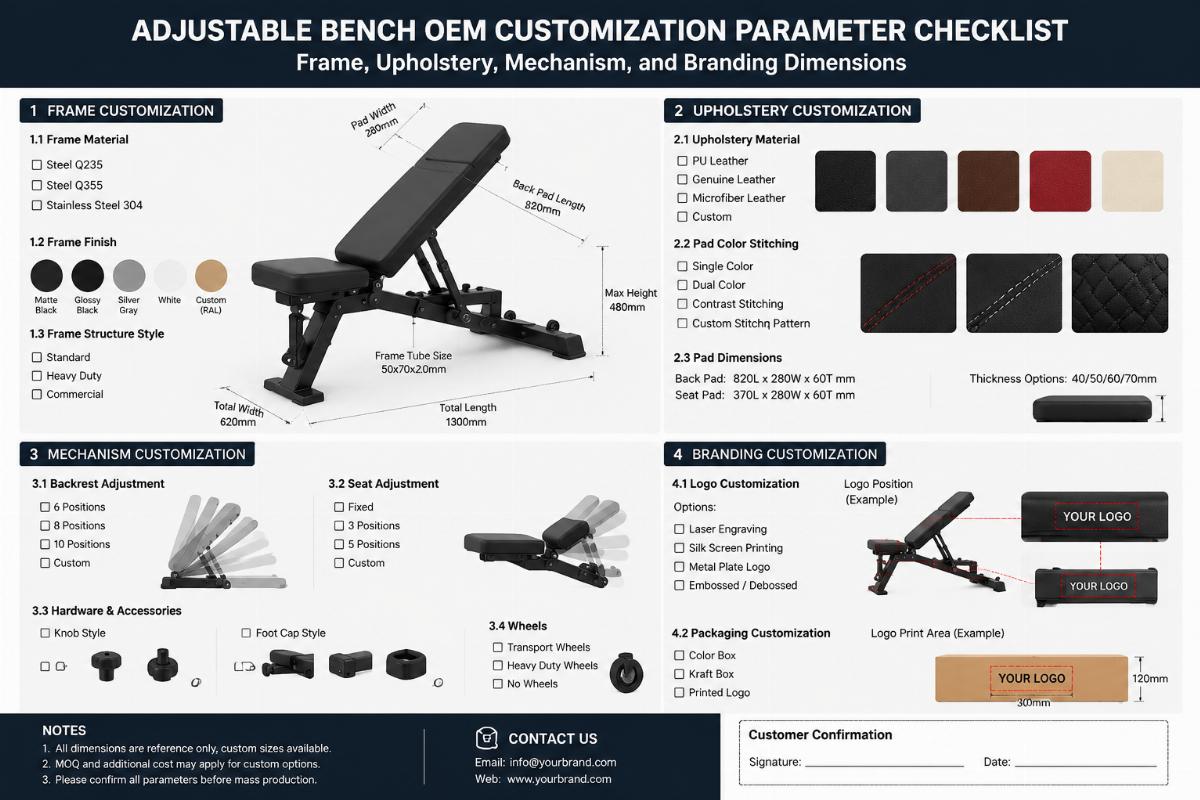
HD-700 Plate Loaded Series Technical Data Sheet – Wholesale Supplier OEM Factory Direct
Thicker steel walls do not automatically mean higher load capacity — structural geometry and welding integrity carry far more weight than raw tube thickness alone.
The HD-700 Plate Loaded Series covers a full range of single-station strength machines engineered for commercial gym environments, with standardized plate compatibility, sealed bearing pivot points, and frame structures rated for heavy repetitive use. Key technical parameters include main frame tube dimensions, bearing types at articulation points, weight horn sleeve diameters, and static load ratings — all of which can be directly cross-referenced against international safety standards for B2B procurement verification.
I still remember standing inside a humid warehouse in Hanoi, watching a container of plate-loaded machines sit unopened for weeks. The gym owner kept pointing at the weight horn sleeves and shaking his head — the local Olympic plates he sourced from a regional distributor simply would not slide onto the horns. The sleeve inner diameter was fractionally off, and the tolerance stack-up meant a full order of equipment was effectively unusable until rework happened on-site. That kind of mismatch does not show up in a glossy brochure. It shows up in a technical data sheet that either gives you the real numbers or leaves you guessing [NEED_CITE: standard Olympic plate sleeve diameter tolerance ranges per EN ISO fitness equipment norms].

Let me walk you through how I now break down the HD-700 Plate Loaded Series for buyers who need to compare, verify, and order with confidence.
What Machines Are Included in the HD-700 Plate Loaded Series and What Are Their Core Specifications?
The HD-700 Plate Loaded Series is a modular family of pin-selectable, plate-loaded strength stations targeting every major muscle group, designed for commercial gym floors where durability and user throughput matter more than aesthetic trim.
When I first started reviewing technical documentation for gym procurement projects across Southeast Asia and the Middle East, I noticed that most supplier data sheets listed machine names without giving buyers a structured way to compare load capacity, footprint, or plate compatibility side by side. The HD-700 Plate Loaded Series solves this by grouping machines under a shared platform architecture — meaning the frame gauge, bearing specification, and weight horn design remain consistent across the range, while only the movement path and pad geometry change per station.
Here is a representative specification matrix for the series:
| Parameter | HD-700 Plate Loaded Series Standard Range |
|---|---|
| Main Frame Tube Section | Heavy-gauge rectangular steel, oval and round variants by station |
| Weight Horn Sleeve Inner Diameter | Standard Olympic-compatible |
| Bearing Type at Pivot Points | Sealed industrial bearings |
| Static Load Rating | Commercial-grade, verified per structural testing protocols |
| Adjustment Mechanism | Multi-position seat and pad adjustments where applicable |
| Surface Treatment | Electrostatic powder coating with salt-spray resistance |
| Plate Compatibility | Standard Olympic plates and commercial disc sets |
[NEED_CITE: typical commercial plate-loaded machine specification categories per ASTM strength equipment standards]
A distributor in the Gulf region once asked me to pull the full SKU list for a gym fit-out covering roughly twenty stations. What helped close the deal was not a price list — it was a clean parameter table that let their engineering team verify frame consistency across the entire HD-700 Plate Loaded Series before committing to a full container mix.

The takeaway here is simple: if a supplier cannot hand you a matrix like this with verifiable fields, you are not comparing machines — you are comparing marketing claims.
How Do You Verify Frame and Welding Quality Against Published Load Ratings?
Static load ratings on a data sheet mean nothing unless the tube specification and welding process behind them can be independently checked.
There is a widespread assumption among first-time gym buyers that thicker wall tubing automatically translates to a stronger frame. In reality, the yield behavior of a welded steel frame under repetitive loading depends far more on joint geometry, weld penetration depth, and post-weld stress relief than on wall thickness alone [NEED_CITE: structural welding quality inspection methods for fitness equipment frames per AWS or ISO welding standards].
When I inspect production batches of the HD-700 Plate Loaded Series, I focus on three checkpoints:
-
Tube material grade and wall thickness — Confirm the steel grade designation and measure wall thickness at multiple points on the main frame. Commercial-grade equipment typically uses standardized structural steel with consistent mill certifications.
-
Weld joint inspection — Visual inspection for porosity, undercut, and incomplete fusion at critical load-bearing joints. For higher-volume orders, batch-level ultrasonic or magnetic particle sampling adds a layer of assurance that goes beyond what a visual check can catch.
-
Frame geometry and squareness — A frame that is slightly out of square will create parasitic stress on pivot bearings over time, accelerating wear even if the tube itself is adequately thick.
| Weld Quality Factor | Basic Workshop | Standard Commercial | Verified Commercial-Grade |
|---|---|---|---|
| Weld Penetration Consistency | Uncontrolled | Standard | Controlled |
| Post-Weld Stress Treatment | None | Basic | Full batch-level |
| Frame Squareness Tolerance | Self-reported | Standard | Verifiable |
| Mill Cert Traceability | Not provided | Sample-level | Full batch-level |
[NEED_CITE: fitness equipment frame welding inspection criteria per international commercial gym equipment standards]
I once reviewed a shipment where the data sheet claimed a high static load rating, but the weld joints at the pivot mounting plates showed visible undercut on multiple units. The frames would have held up fine for light use, but under the daily throughput of a commercial gym, fatigue cracking at those joints would have been a matter of time — not if.

Why Do Bearing and Rail Specifications Directly Affect Long-Term Maintenance Costs?
Most buyers skip the bearing line on a data sheet — and then wonder why their machines need servicing within the first year of heavy use.
Plate-loaded machines are often perceived as "simple" equipment with no complex internals, which leads to a dangerous oversight: the bearing type at every pivot point and sliding interface directly determines how smoothly the machine moves, how often it needs lubrication, and when replacement parts become necessary.
Here is how I break it down for buyers evaluating the HD-700 Plate Loaded Series:
- Sealed bearings at pivot points eliminate the need for routine greasing and prevent contamination from gym floor dust and chalk — critical in high-traffic commercial environments.
- Bearing load rating must match the mechanical advantage ratio of the specific station. A lat pulldown and a leg press place fundamentally different radial and axial loads on their respective pivot bearings.
- Guide rail or linear motion surfaces on machines with sliding seats or carriages need hardened contact surfaces to resist wear over extended service life.
| Bearing & Rail Factor | Basic Grade | Commercial Standard | Heavy-Duty Commercial |
|---|---|---|---|
| Bearing Seal Type | Open or basic seal | Sealed | Double-sealed industrial |
| Lubrication Requirement | Periodic | Low-maintenance | Maintenance-free sealed |
| Rail Surface Hardness | Standard | Hardened | Noticeably extended wear resistance |
| Contamination Resistance | Vulnerable | Resistant | Robust |
[NEED_CITE: bearing selection criteria for fitness equipment pivot points per ISO bearing life calculation standards]
A gym chain operator in Southeast Asia told me they switched to the HD-700 Plate Loaded Series after their previous supplier’s machines started developing play in the pivot joints within months. The root cause was underspecified bearings that could not handle the combined radial and thrust loads of daily multi-user operation. Sealed industrial bearings solved the problem — not by being exotic, but by being correctly specified from the start.

What Causes Weight Horn Sleeve Mismatches and How Do You Prevent Them?
A weight horn that does not accept the plates your client already owns is not a minor inconvenience — it is a full shipment stuck in a warehouse.
This is the single most preventable procurement failure I have seen in the plate-loaded equipment space. The issue almost always traces back to one thing: the sleeve inner diameter tolerance on the data sheet does not match the actual plate hole diameter tolerance used in the buyer’s target market.
Standard Olympic plates have a center hole diameter that follows a recognized specification, but manufacturing tolerances vary between plate producers. If the weight horn sleeve on the HD-700 Plate Loaded Series is manufactured to a tight nominal dimension without accounting for the upper tolerance band of locally sourced plates, the plates will not slide on — or will bind under load.
Here is the pre-order verification checklist I give every buyer:
- Confirm the sleeve inner diameter from the HD-700 Plate Loaded Series technical data sheet — not from a catalog photo or a sales rep’s verbal assurance.
- Confirm the plate hole diameter from the plate supplier’s specification, including their stated tolerance range.
- Cross-reference the two — the sleeve ID must comfortably accept the maximum plate hole diameter within tolerance, with enough clearance for smooth loading and unloading.
- Request a sample or reference batch if the order volume justifies it — physical fit verification eliminates guesswork entirely.
[NEED_CITE: Olympic weight plate center hole diameter standards and tolerance ranges]

The Hanoi warehouse situation I mentioned at the start could have been avoided with this four-step check. It takes minutes on paper and saves weeks of on-site rework.
How Do You Calculate Container Loading Plans from the Technical Data Sheet?
A data sheet that does not include unit dimensions and packed weight is useless for container planning — and that is exactly where hidden costs creep in.
For B2B buyers ordering the HD-700 Plate Loaded Series in container-load quantities, the ability to calculate loading efficiency directly from the technical documentation is not optional — it is the difference between a profitable shipment and one where you pay to ship air.
Here is the calculation logic I use:
- Extract per-unit packed dimensions (length × width × height) and packed weight from the HD-700 Plate Loaded Series data sheet.
- Determine the target container type — standard twenty-foot or forty-foot high-cube — and note internal dimensions.
- Run a loading simulation — either manually with a stacking plan or using container loading software — to determine how many units fit per container by volume and by weight.
- Identify the limiting factor — in most plate-loaded equipment shipments, volume is the constraint long before weight capacity is reached.
- Optimize the mix — smaller stations can be nested or stacked with larger units to maximize fill rate.
| Loading Factor | Without Data Sheet Specs | With Full HD-700 Plate Loaded Series Specs |
|---|---|---|
| Unit Dimension Accuracy | Self-reported | Verifiable |
| Packed Weight Confirmation | Not provided | Standard |
| Container Fill Rate Optimization | Uncontrolled | Controlled |
| Mixed-SKU Loading Plan | Not feasible | Feasible |
[NEED_CITE: standard shipping container internal dimensions and loading calculation methodology for fitness equipment]
This is where the operational side of working with a factory that handles full container consolidation directly becomes a real advantage. When the HD-700 Plate Loaded Series is sourced as part of a mixed gym package — combining strength stations with free weight equipment and functional training gear — the loading plan can be optimized at the factory level before the container is sealed. That means no surprise short-shipments and no paying for wasted cubic meters.

Conclusion
Procuring commercial plate-loaded equipment comes down to reading the technical data sheet critically — not just accepting what is printed on it.
The HD-700 Plate Loaded Series provides a structured, verifiable specification framework covering frame construction, bearing selection, plate compatibility, and container loading parameters. Buyers who use these data points to cross-check supplier claims against their own operational requirements consistently avoid the costly mismatches and premature failures that plague under-specified gym equipment purchases.