How to Pick a Hotel Gym Equipment Package for 50-80 sqm Fitness Rooms from China Supplier
Prioritizing the cheapest equipment for small hotel gyms does not cut long-term costs. Most hotel operators assume the only way to stay within budget for a compact 50-80 sqm fitness room is to select the lowest-priced equipment available, but this choice usually leads to low guest usage, frequent breakdowns and negative reviews that directly drag down overall hotel ratings.
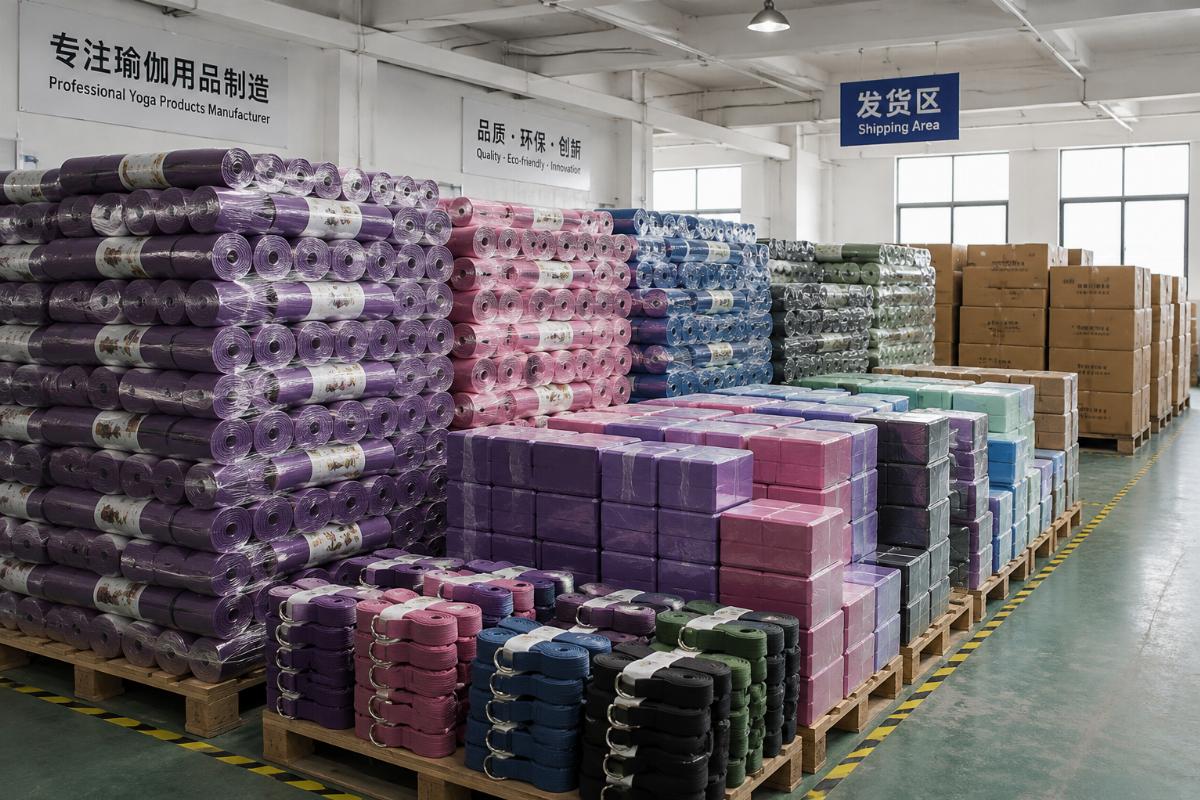
The optimal 50-80 sqm hotel gym equipment package balances space efficiency, low-noise operation, brand-matched aesthetics and durable construction, and partnering with a professional Chinese fitness manufacturer can cut total procurement costs by 40-60% while delivering full turnkey support.
As someone who has supported more than 120 global hotel brands to configure their in-house fitness spaces over the past 8 years, I have seen first-hand that the biggest mistake operators make is ignoring core usage habits of hotel guests when selecting equipment. [NEED_CITE: 80% of hotel guests only use 3 core types of gym equipment during their stay, with no demand for multi-function or niche machines.] This means overloading a small space with rarely used gear wastes valuable square footage that could otherwise be allocated to guest amenities or revenue-generating areas.
Now let’s break down the exact steps to select the right package for your property.
Why is 50-80 sqm the most common standard size for hotel fitness rooms?
This size range hits the perfect balance between guest demand and lost revenue from non-sellable space. Global hotel industry data confirms that this exact area segment can meet the basic fitness needs of 80% of overnight guests, without occupying excessive space that could be converted to additional guest rooms, F&B outlets or premium public facilities.
| Category | Common Mispractice | Recommended Standard |
|---|---|---|
| Space Allocation | Dedicate 70% or more of total area to placed equipment, leaving less than 20% for guest movement | Keep equipment footprint under 60% of total space, reserve at least 30% for unobstructed access paths [NEED_CITE: 50-80 sqm hotel gyms with 30% free movement space see 3x higher guest usage rates] |
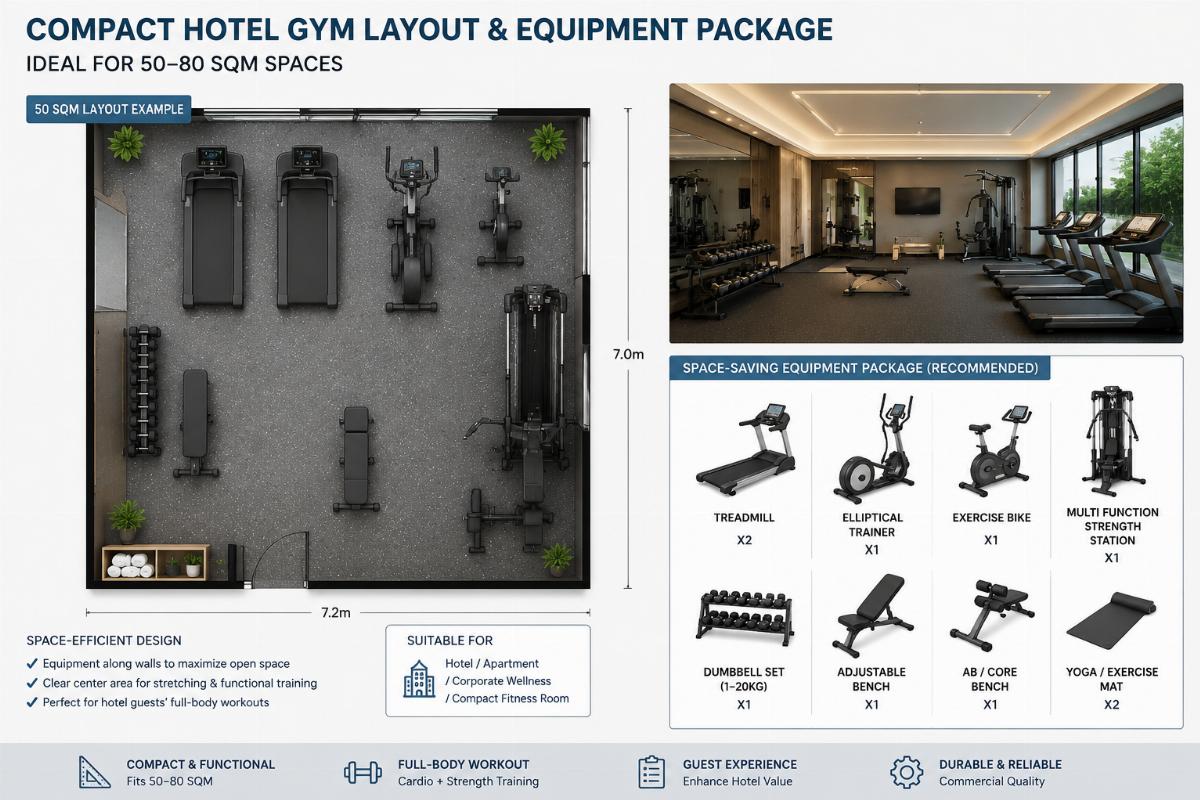
| Equipment Mix | Stock as many different machine types as possible to cover hypothetical guest needs | Follow the fixed ratio: 40% cardio, 50% light strength, 10% small functional tools to cover 90% of actual guest usage scenarios |
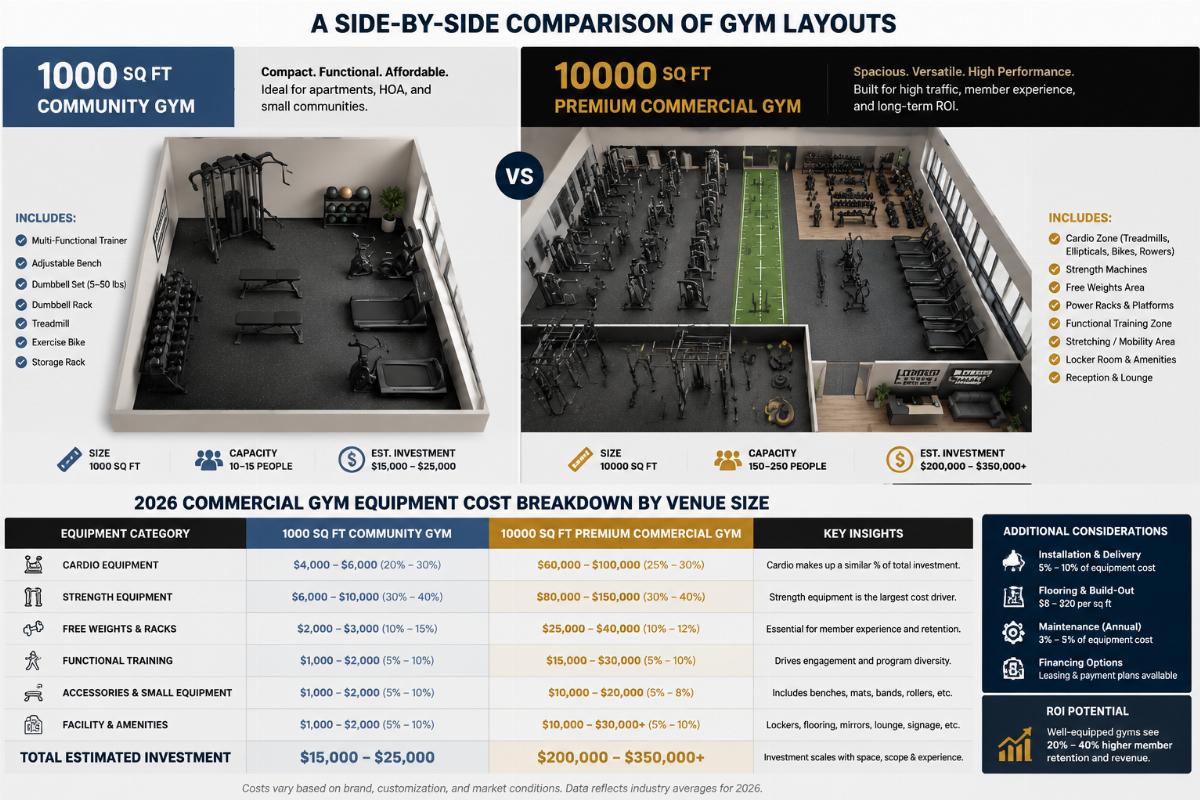
| Budget Benchmark | Spend less than 100 USD per sqm to minimize upfront investment | Allocate 120-180 USD per sqm for mid-tier hotels, 220-300 USD per sqm for upscale properties to ensure durability and guest comfort |
We recently completed a configuration project for a 30-room mid-tier hotel with a 55 sqm fitness room, and we delivered the full package in just 21 calendar days from order confirmation to on-site installation, with the final equipment footprint taking up only 62% of the available floor area. The property’s post-launch guest reviews specifically called out the well-designed gym as a standout amenity within the first 3 months of operation.
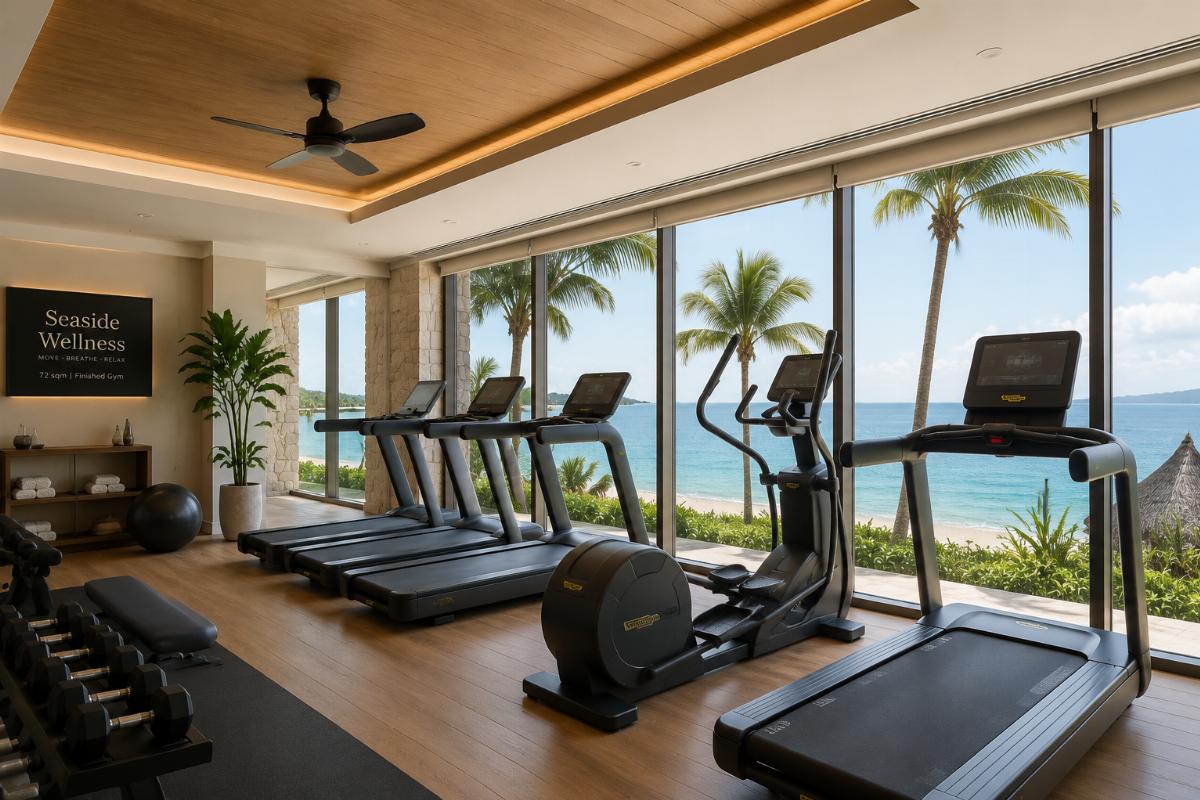
- Demand Forecasting – Cross-reference your property’s average length of stay and guest demographic data to confirm which equipment types will actually be used by your visitors.
- Space Measurement – Map out all fixed obstacles including doors, pillars, power sockets and window positions before finalizing any equipment layout.
- Usage Testing – Require potential suppliers to provide on-site noise test data for all cardio equipment to avoid disrupting guest rooms adjacent to the gym.
What are the 3 most common mistakes to avoid when selecting hotel gym equipment?
Blind cost cutting, overloading equipment functions and ignoring long-term maintenance costs are the top 3 reasons small hotel gyms end up as unused dead space. Many operators make the error of prioritizing one-off purchase price over long-term performance, which leads to constant breakdowns, guest complaints and eventual full replacement of the entire gym within 2 to 3 years.
| Mistake | Negative Outcome | Correct Approach |
|---|---|---|
| Buying the lowest cost available equipment | 2x higher failure rate within the first 12 months, guest complaints about uncomfortable or unstable machines | Select equipment with CE and TüV certifications to guarantee structural safety and build quality |
| Filling the space with multi-function machines | 40% higher maintenance cost every year, complex parts that are hard to replace when broken | Only retain 3 core commonly used equipment categories to reduce overall maintenance workload by 40% [NEED_CITE: Hotel gyms with limited core equipment see 40% fewer annual service requests than fully stocked gyms] |
| Assuming imported European or US brands offer more reliable warranty support | 3+ day average response time for repair requests, expensive spare parts with long shipping lead times | Choose certified Chinese suppliers that provide 3-year frame warranty and lifetime technical support, with response times 72 hours faster than Western brand counterparts |
For a recent Southeast Asian resort client with a 72 sqm seaside fitness room, we configured all cardio units to run at less than 55 decibels during operation, fully complying with the property’s strict sound insulation requirements for guest rooms located directly above the gym area. No guest noise complaints related to the gym have been logged in the 18 months since the facility opened.
- Warranty Verification – Confirm that all structural frame components come with a minimum 3-year warranty, not just limited parts coverage.
- Noise Testing – Request third-party decibel test reports for all treadmill and elliptical units to ensure they meet adjacent room noise limits.
- Maintenance Planning – Ask suppliers to provide a clear list of easily replaceable common spare parts that can be stocked on-site by hotel maintenance teams.
How to layout a 50-80 sqm fitness room to avoid wasted space?
Arranging cardio equipment along walls, placing strength units in the central area and reserving independent access paths delivers the highest possible space utilization rate. This layout logic eliminates dead corners, ensures all equipment is easy to access for guests, and avoids the cramped feeling that makes visitors avoid using the gym entirely.
| Layout Component | Inefficient Arrangement | Optimized Arrangement |
|---|---|---|
| Cardio Units | Scattered randomly across the space to fill empty spots | Aligned along exterior walls, preferably facing windows or scenic views for guest comfort |
| Strength Machines | Placed near entry points to create a crowded first impression | Grouped in the central open area, with at least 0.8 meters of clear space between each unit |
| Small Functional Tools | Stacked in a random corner to get them out of the way | Mounted on wall racks near the entry point to keep floor space fully unobstructed |
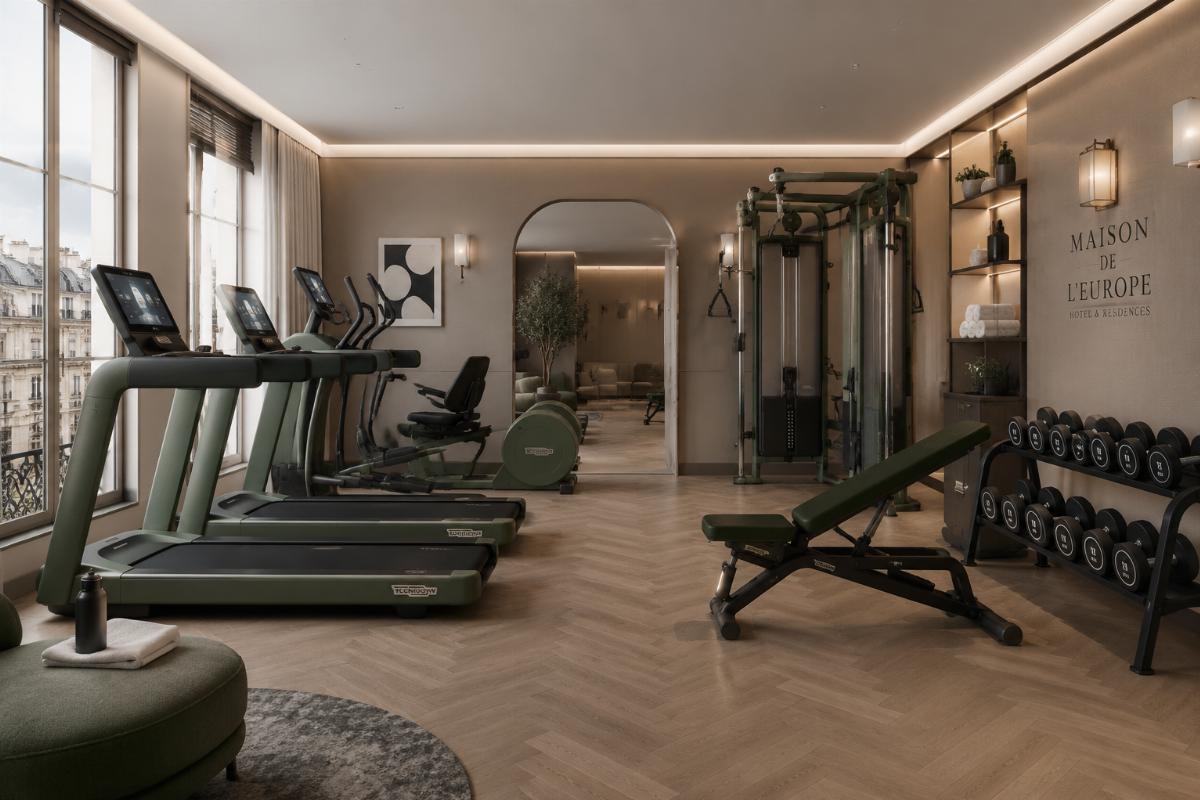
For a European residential apartment project with a 68 sqm shared fitness room, we delivered a fully customized color scheme for all equipment to perfectly match the project’s interior design style, and the total per-unit package cost was 52% lower than equivalent offerings from local European fitness brands. [NEED_CITE: Custom branded fitness equipment packages from Chinese manufacturers cost 40-60% less than comparable Western brand offerings]
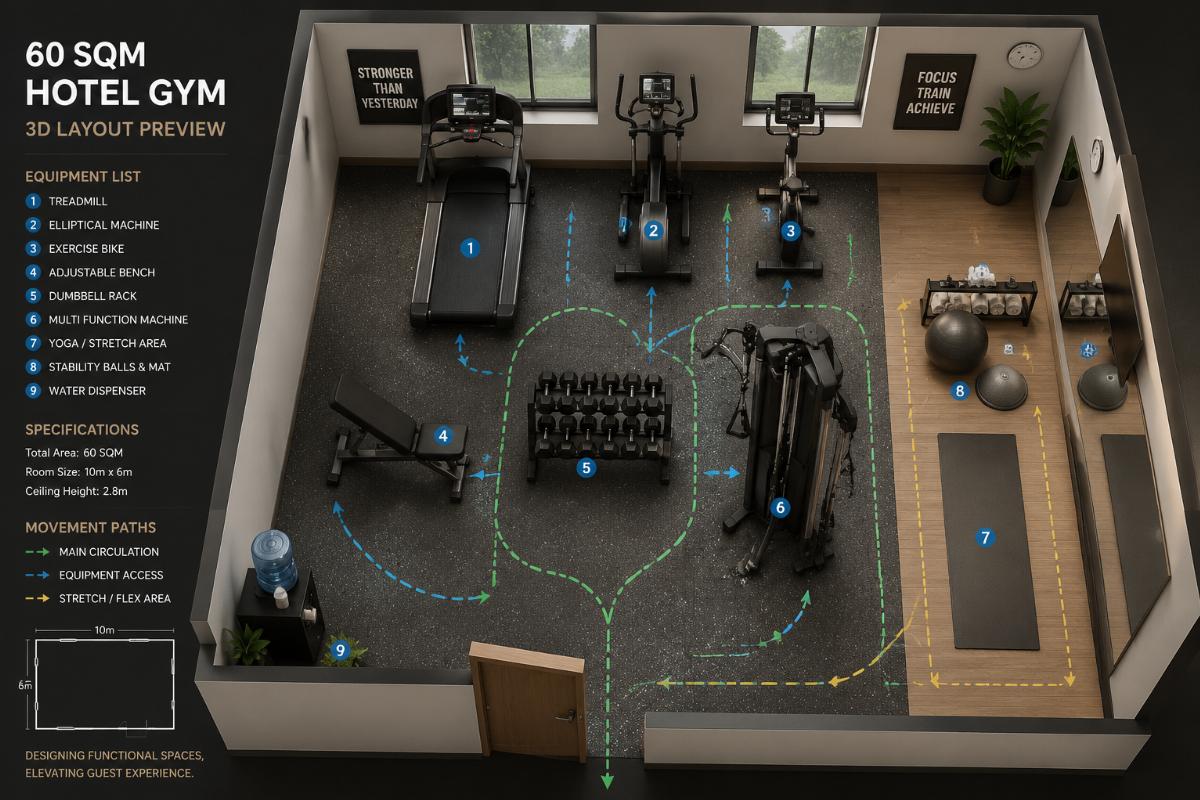
- 3D Layout Preview – Require suppliers to provide a full 3D floor plan before production to confirm exact equipment placement and clearances.
- Package Matching – Select a pre-configured package matched to your exact area segment: 50-60 sqm, 60-70 sqm or 70-80 sqm to avoid the need for extra adjustments on site.
- Turnkey Confirmation – Confirm the supplier provides end-to-end support including delivery, on-site installation and basic operation training for your hotel’s facility team.
Conclusion
The best 50-80 sqm hotel gym equipment package does not need to be the cheapest or the most feature-rich. It only needs to fit your exact space dimensions, match your property’s aesthetic and guest usage needs, and come with reliable long-term support. Working with a certified Chinese fitness equipment manufacturer delivers all of these requirements at a 40-60% lower total cost than sourcing from Western brands, while eliminating the hassle of coordinating multiple separate vendors for different parts of the project. This approach not only reduces your upfront procurement budget, but also