HR-400 Half Rack Sub-Series Container Loading and MOQ Wholesale Supplier
Most buyers think MOQ means "how many pieces." In reality, for a half rack series, MOQ is decided by how many cubic meters you can fill in a 20GP or 40HQ.
For the HR-400 half rack sub-series, a single 40HQ container typically holds between 28 and 36 units depending on packaging configuration, and the practical MOQ for wholesale pricing starts at one full container load. Mixed-model consolidation is available, allowing buyers to combine half racks with plate-loaded machines or free-weight accessories in a single shipment to reach the container threshold. [NEED_CITE: standard 40HQ internal dimensions and fitness equipment packaging volume ratios]
I remember standing inside a 40HQ at Qingdao port, watching a forklift operator try to squeeze the last two HR-400 frames into the nose of the container. The uprights had been bolted to the base in factory configuration, and the cross-members were eating nearly a third of the vertical clearance. We ended up pulling six units back out, disassembling the uprights from the base plates on the dock, and re-stacking them flat. That single decision freed enough space for twelve additional units and saved the buyer a second shipment that would have cost nearly as much as the racks themselves. That was the day I stopped thinking about MOQ in pieces and started thinking about it in cubic meters.
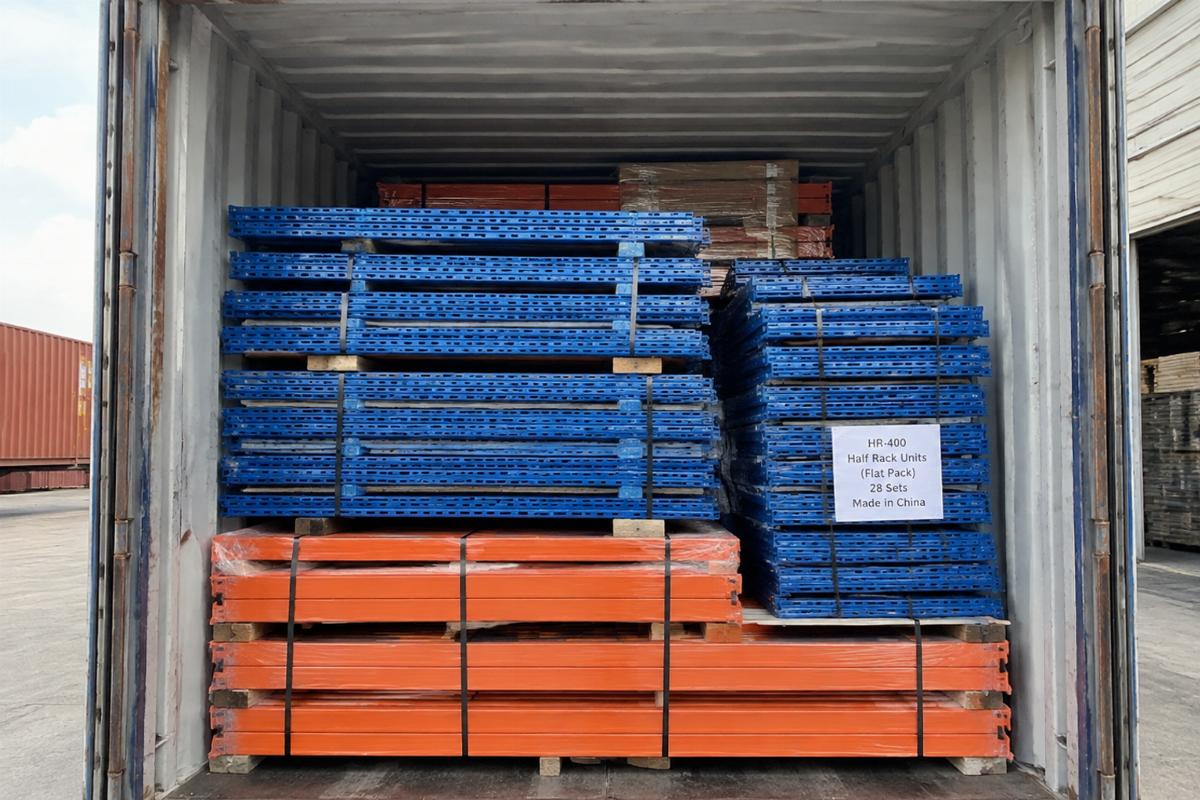
What follows is drawn from years of loading fitness equipment into containers bound for Dubai, Riyadh, and Doha, where commercial gym buildouts demand both volume pricing and precise space utilization.
How Does Packaging Configuration Change the Real MOQ for the HR-400 Half Rack?
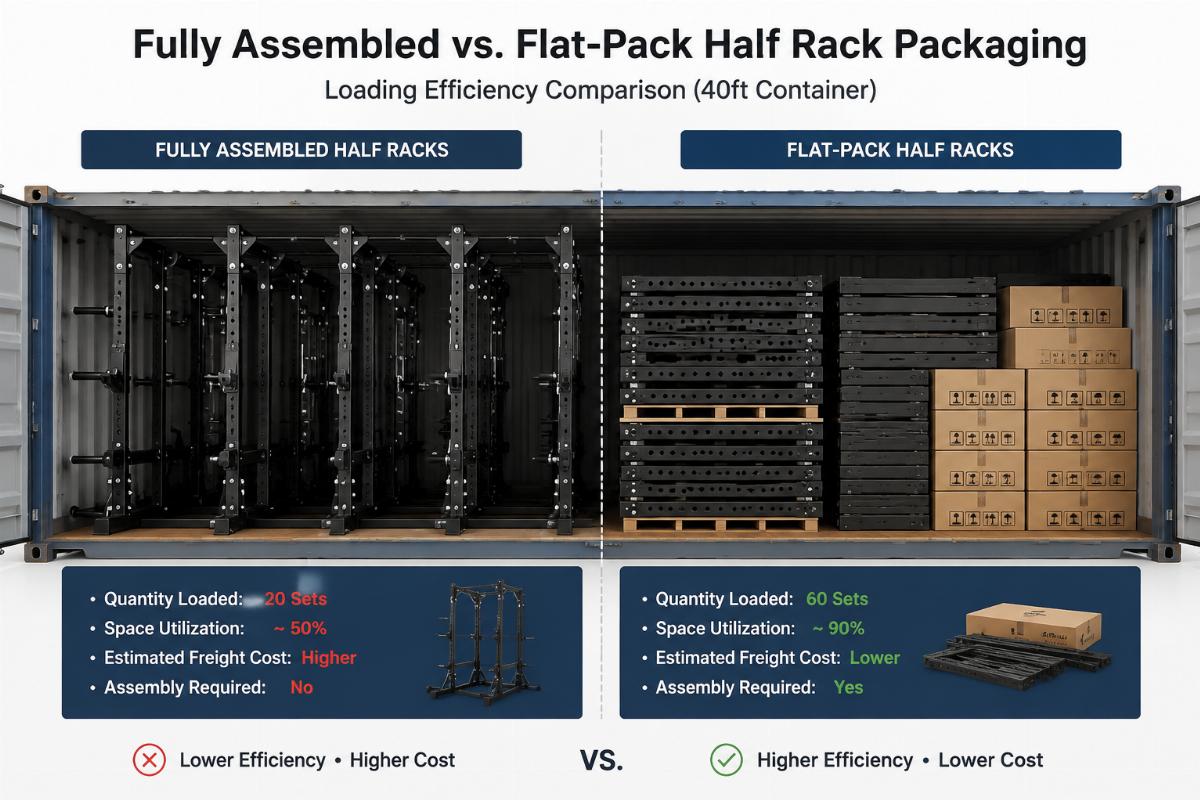
The difference between fully assembled and flat-pack packaging can shift the loadable quantity per container by as much as a third, which directly redefines what "minimum order" actually means for your budget.
When the HR-400 half rack ships with uprights permanently welded to the base frame, each unit occupies a fixed footprint with significant wasted air space above and between units. Switching to a knock-down configuration—where the uprights detach from the base plate and the J-cups, safety straps, and accessory mounts are boxed separately—allows the base frames to nest and the uprights to stack horizontally in layered bundles.
| Packaging Mode | Upright Configuration | Accessory Handling | Space Utilization | Effective Units per 40HQ |
|---|---|---|---|---|
| Fully Assembled | Welded to base | Pre-mounted | Low | Lower range |
| Semi-KD | Bolted detachable | Boxed separately | Moderate | Mid range |
| Full Flat-Pack | Detached and layered | Fully separated and nested | High | Upper range |
[NEED_CITE: container loading efficiency comparison between assembled and knock-down fitness equipment packaging]
A distributor in the UAE once ordered what they considered a "small trial" of half racks for a boutique studio chain. They expected twenty units. In fully assembled packaging, twenty units filled barely more than half a 40HQ. We reconfigured the order to full flat-pack, which brought the same twenty units down to roughly sixty percent of the container volume. That freed space for a full set of bumper plates and a set of adjustable benches—items the buyer had not originally budgeted for shipping separately. The per-unit landed cost dropped noticeably because the freight was now amortized across more product categories in the same container.
The risk of ignoring packaging configuration is straightforward: you either pay to ship air, or you underfill the container and lose the wholesale tier pricing that full-container volume unlocks. [NEED_CITE: freight cost amortization impact on per-unit landed cost for fitness equipment imports]
What Is the Actual MOQ Structure for the HR-400 Half Rack Sub-Series?
The wholesale MOQ for the HR-400 half rack is not a fixed piece count—it is a container-load threshold, and mixed-model consolidation is the mechanism that makes small buyers competitive with large gym chains.
In factory terms, a single production run of the HR-400 frame components reaches economic efficiency at a certain batch volume. However, the buyer-facing MOQ is structured around container capacity rather than production batch size. This means:
- Full-container orders of the HR-400 alone qualify for the deepest wholesale tier, whether the container holds the lower or upper range of unit counts depending on packaging.
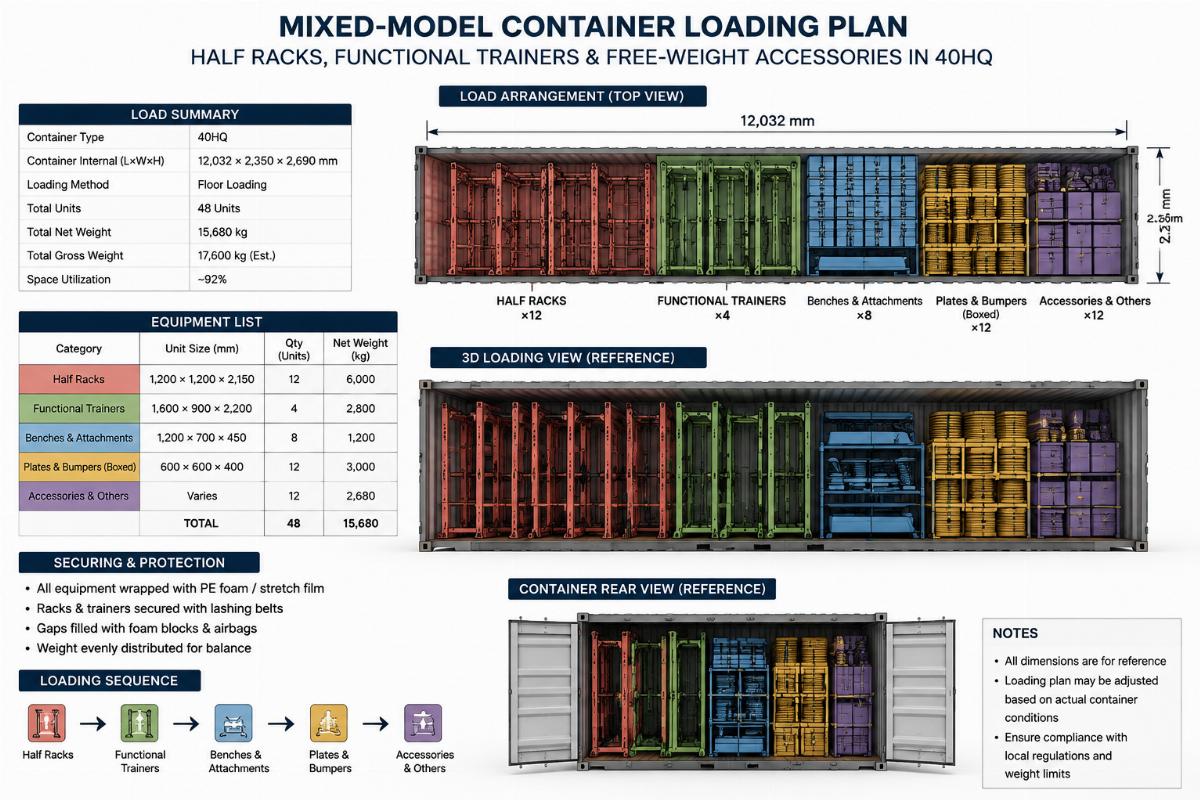
- Mixed-model consolidation allows buyers to combine HR-400 half racks with other strength equipment—Smith machines, cable crossovers, plate-loaded rows—in a single container. The combined volume reaches the container threshold, and the buyer accesses wholesale pricing across all SKUs in the shipment.
- Single-unit or small-quantity orders are available for sample evaluation or boutique studio补货 scenarios, but these ship at retail-adjacent pricing and are not considered wholesale MOQ fulfillment.
[NEED_CITE: fitness equipment manufacturer MOQ policy structure based on container load versus piece count]
A gym owner in Saudi Arabia was outfitting a mid-size commercial facility and needed a combination of half racks, functional trainers, and dumbbell sets. His half rack quantity alone did not reach a full container. By consolidating the HR-400 half racks with functional trainers and free-weight accessories into a single 40HQ, he met the container-load threshold and unlocked wholesale pricing on the entire order. The alternative—ordering half racks separately at a lower quantity—would have meant paying a significantly higher per-unit price and arranging a second shipment for the remaining equipment.
The critical point: MOQ flexibility through container-load consolidation is what separates a wholesale supplier from a retail reseller. If a supplier quotes you a piece-count MOQ without discussing container configuration, they are not thinking about your landed cost.
How Do You Calculate the Optimal Loading Pattern for a Mixed HR-400 Container?
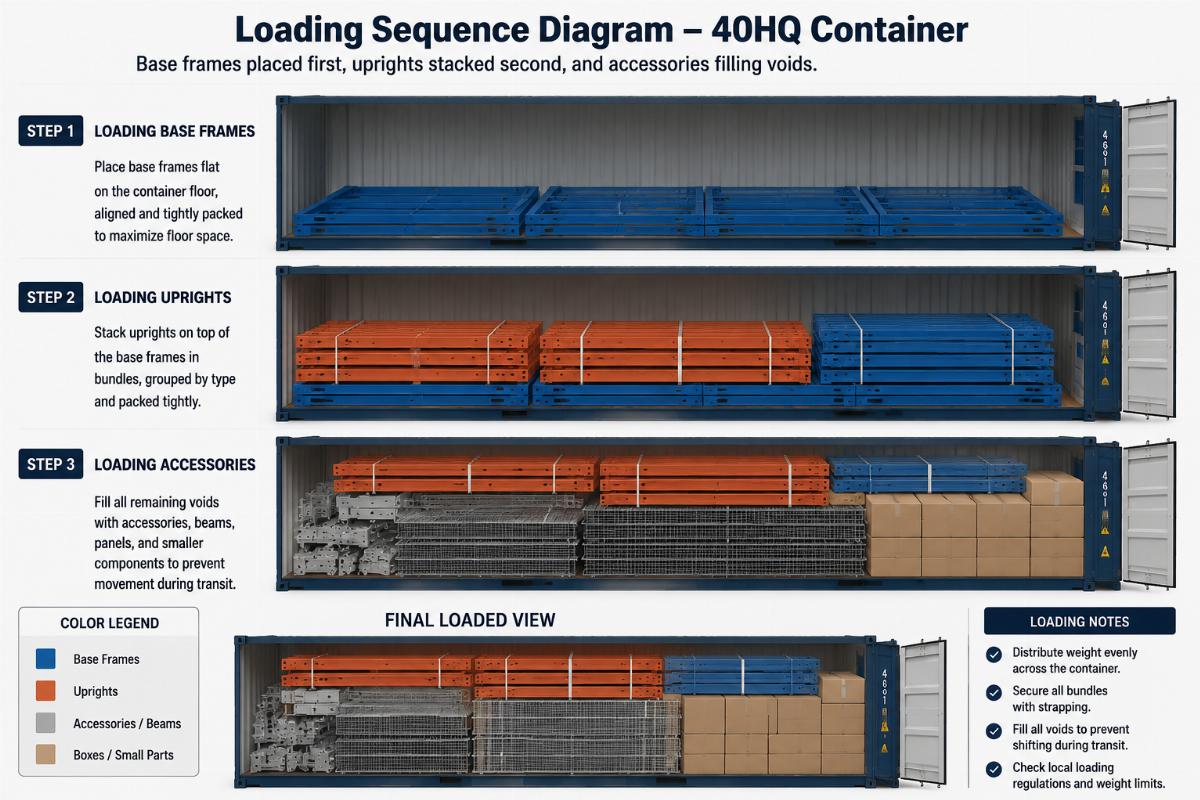
The optimal loading pattern is determined by working backward from the container’s internal dimensions, mapping the heaviest and most rigid items first, and filling voids with dense, stackable accessories.
The process follows a consistent sequence:
-
Establish the container’s usable internal volume. A standard 40HQ provides approximately 76 cubic meters of internal space, but the usable volume for fitness equipment is reduced by door clearance, forklift access paths, and weight distribution constraints. [NEED_CITE: 40HQ internal dimensions and practical usable volume for heavy equipment loading]
-
Map the HR-400 footprint in its configured packaging mode. In full flat-pack, each HR-400 base frame occupies a defined rectangular footprint, and the upright bundles have a separate stacked dimension. Calculate how many base frames fit in a single floor layer, and how many upright bundle layers can be stacked within the vertical clearance.
-
Place the half rack base frames along the container floor first. These are the heaviest and most rigid items. They form the foundation layer and should be positioned against the container walls and door end to maximize floor coverage.
-
Stack upright bundles and accessory boxes in the remaining vertical and lateral voids. The space above the base frames, between the uprights, and along the container ceiling is filled with boxed accessories—J-cups, safety straps, weight storage pegs, and small free-weight items.
-
Validate the weight distribution. A 40HQ has a maximum payload capacity. The HR-400 base frames are steel-heavy, and loading too many units in a single concentrated zone can exceed the axle weight limits for road transport at the destination port. [NEED_CITE: container weight distribution guidelines for heavy steel fitness equipment]
A loading error I witnessed early in my career involved a container bound for a gym project in the Gulf region. The half racks were loaded fully assembled, standing upright in the container. The forklift operator placed them tightly against the door end. When the container reached the destination and the doors were opened, the units had shifted during ocean transit because the uprights lacked lateral bracing against the container walls. Two frames had bent attachment points, and the buyer faced a weeks-long delay while replacement parts were air-shipped. The lesson: loading pattern is not just about volume—it is about structural integrity during transit.
What Risks Arise When Buyers Misunderstand MOQ and Container Loading for the HR-400?
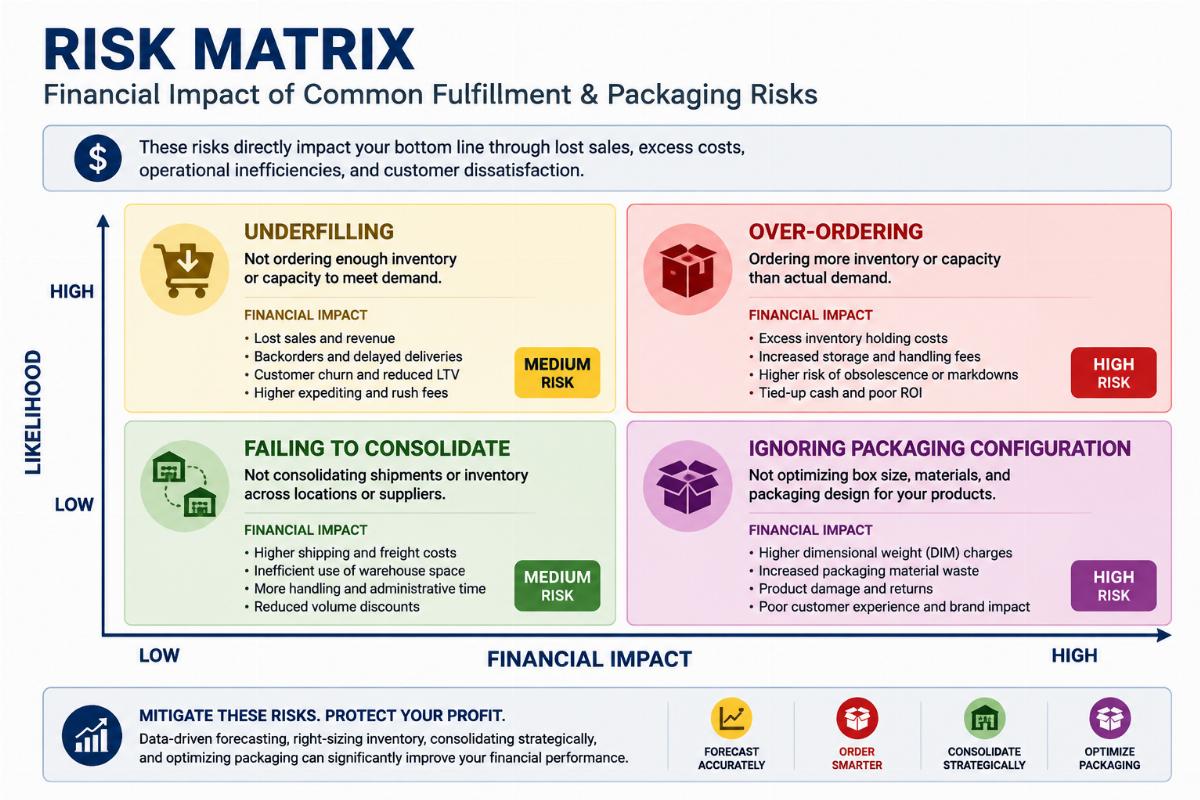
*The most common risks are financialesale order, or paying for a second container to complete a project that could have fit in one.**
The risk profile breaks down into several categories:
-
Underfilling the container. A buyer orders the exact number of HR-400 units needed for a project, but the total volume falls short of a full container. They pay for the entire container’s freight but only use a portion of the space. The per-unit freight cost rises substantially.
-
Over-ordering to reach MOQ. A buyer adds units they do not immediately need simply to reach the wholesale tier. The excess inventory sits in a warehouse, tying up capital and incurring storage costs that may exceed the wholesale savings.
-
Failing to consolidate models. A buyer orders half racks from one supplier and other equipment from another, resulting in two separate containers, two sets of customs clearance, and two freight bills. Consolidation into a single container from a single supplier with a full product range eliminates this duplication.
-
Ignoring packaging configuration. A buyer accepts fully assembled packaging because it seems more convenient, not realizing that the same number of units could ship at a lower freight cost per unit in flat-pack configuration.
[NEED_CITE: common procurement errors in fitness equipment container loading and their cost impact]
A commercial gym chain in the Middle East was expanding to a second location and needed to duplicate the equipment package from their first facility. The original order had been placed as two separate containers—one for strength equipment and one for cardio. For the second location, they consolidated the entire package with a single supplier. The strength equipment—including the HR-400 half racks—was loaded in flat-pack configuration alongside the cardio units in a single 40HQ. The freight savings from eliminating the second container and the wholesale pricing from the consolidated order covered a significant portion of the flooring and installation costs for the new facility.
Conclusion
MOQ for the HR-400 half rack sub-series is a container-load calculation, not a piece count, and packaging configuration is the variable that determines how many units fit within that threshold. Buyers who understand the relationship between flat-pack versus assembled packaging, mixed-model consolidation, and loading sequence unlock wholesale pricing and freight efficiency that piece-count thinking simply cannot reach. The suppliers who can walk you through a container loading plan before you place an order are the ones who understand that your real cost is not the unit price—it is the landed cost per cubic meter.