Lateral Raise Machine Storage Handling During Off-Season Wholesale Supplier
Most buyers assume selectorized strength machines are just welded steel frames that can survive any warehouse. That assumption is exactly what destroys them.
Off-season storage of lateral raise machines is not about piling inventory into a corner. The weight stack guide rods, selector pin holes, and cable routing paths are precision-machined interfaces with tight geometric tolerances. Improper stacking, uncontrolled humidity, and rough transport compress these components beyond their alignment limits, turning a warehouse stay into a permanent mechanical defect. Proper lateral raise machine storage handling during off-season requires separating structural load zones, controlling ambient moisture below condensation thresholds, and performing pre-commissioning verification on guide rod straightness, pin-hole coaxiality, and cable tension before the machine ever reaches the gym floor.
I still remember a container that arrived at a hotel project in the Gulf a few seasons back. The facility had been under construction for months, and the fitness equipment sat in a bonded warehouse before final delivery. When the installation team opened the crates, the lateral raise machines looked fine from the outside — powder coat intact, shrouds unscratched. But the moment a technician tried to adjust the weight stack, the selector pin would not drop into the hole. The entire stack was shifted by a couple of millimeters. Every single unit in that shipment had the same issue. We ended up paying a local machine shop to re-drill every plate on-site, and the labor bill dwarfed what the machines originally cost. That job changed how I approach lateral raise machine storage handling during off-season permanently. [NEED_CITE: failure mode distribution in selectorized equipment during extended storage per industry maintenance guidelines]
The lesson was simple but painful: a selectorized lateral raise machine is not a dumbbell rack. Its weight stack is a precision assembly, and treating it like a generic iron frame during storage is how you silently kill a shipment.
Why Lateral Raise Machines Are Vulnerable During Storage?
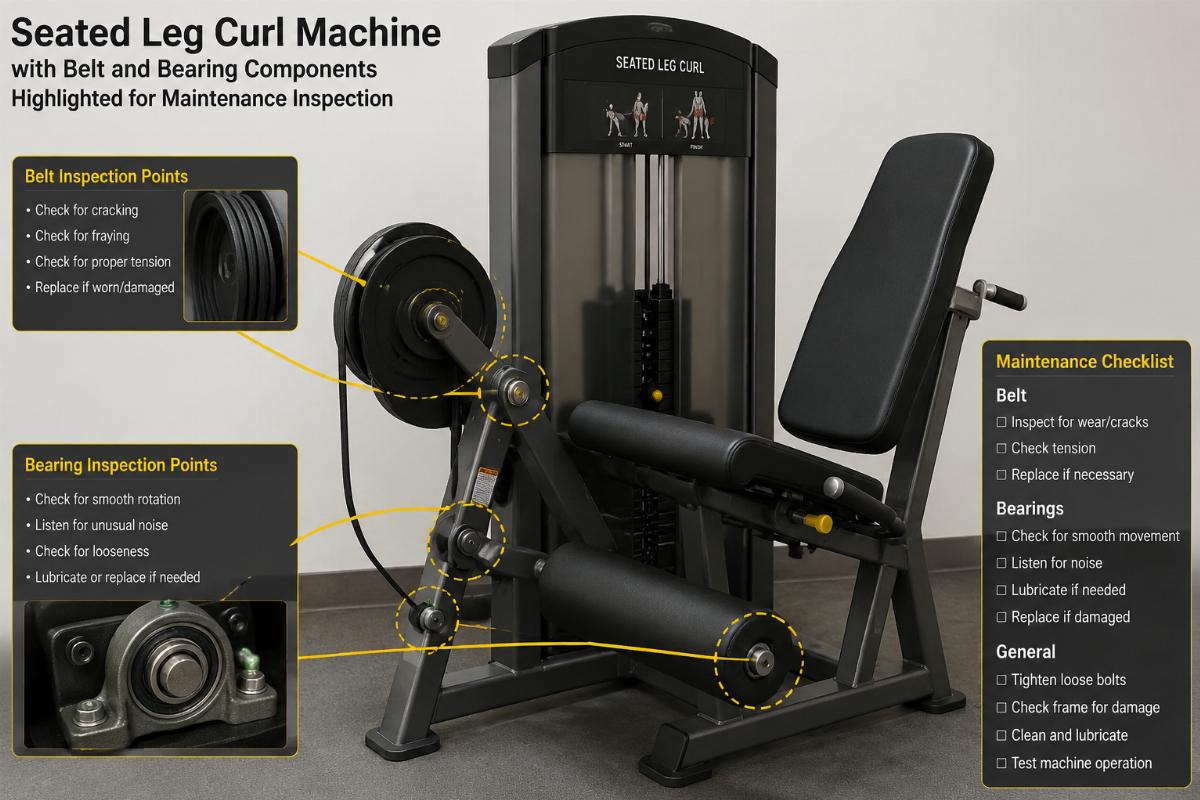
The vulnerability lies in the weight stack assembly, not the main frame tubing. Most buyers focus on frame thickness and weld quality when evaluating a selectorized machine, and they are not wrong to do so — but during storage, the frame is actually the strongest part. The real risk points are the guide rods that the weight plates slide on, the selector pin holes drilled through each plate, and the cable path that runs from the stack up through the pulley tower.
The guide rods are ground to a specific diameter tolerance so the plates glide without lateral play. The selector pin holes are punched or drilled in a jig to ensure coaxiality across the entire stack. When a stack is properly assembled at the factory, each hole aligns within a fraction of a millimeter. [NEED_CITE: geometric tolerance standards for selectorized weight stack assemblies per fitness equipment manufacturing specifications]
Now imagine dozens of these machines sitting in a warehouse for months. If they are stacked on top of each other, the weight of the upper units presses down on the lower ones. The main frame may hold, but the weight stack — which is essentially a column of plates on thin guide rods — has no business bearing that kind of compressive load. The guide rods bend slightly, the holes shift out of alignment, and the selector pin no longer drops cleanly. This is the single most common failure mode I have seen in off-season inventory.
Then there is the cable system. Lateral raise machines use a cable that routes through multiple pulleys to connect the weight stack to the pivot arm. If the machine is stored under load — meaning the stack is not fully lowered and the cable remains tensioned — the cable stretches over time. When it finally goes into service, the range of motion feels wrong, the stack hits the top stop too early, and the technician has to re-route or replace the cable entirely.
A distributor in Southeast Asia once stored a full container of selectorized machines — including lateral raise units — in an open-sided shed during monsoon season. They wrapped everything in stretch film, which seemed sensible at the time. But sealed film traps temperature swings: daytime heat expands the air inside, nighttime cooling creates condensation on every metal surface. By the time the machines were uncrated, the guide rods on the weight stacks had visible surface rust. The plates would not slide. The entire batch needed disassembly, rod replacement, and re-assembly — a process that took weeks and cost a small fortune in labor. [NEED_CITE: corrosion mechanism of sealed-film wrapping in tropical humidity cycles per materials science literature]
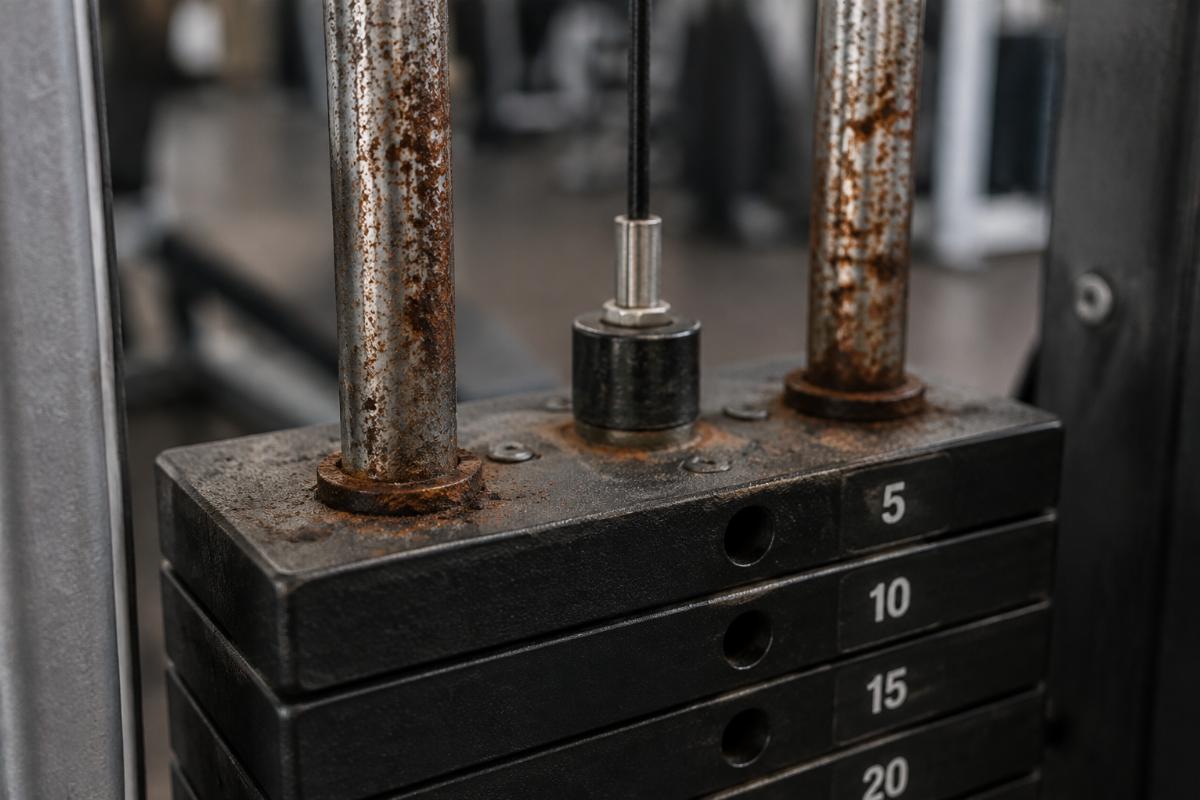
The takeaway is that lateral raise machine storage handling during off-season must treat the weight stack and cable system as the fragile core of the machine, not the frame.
How to Stack and Load Without Deforming the Frame?
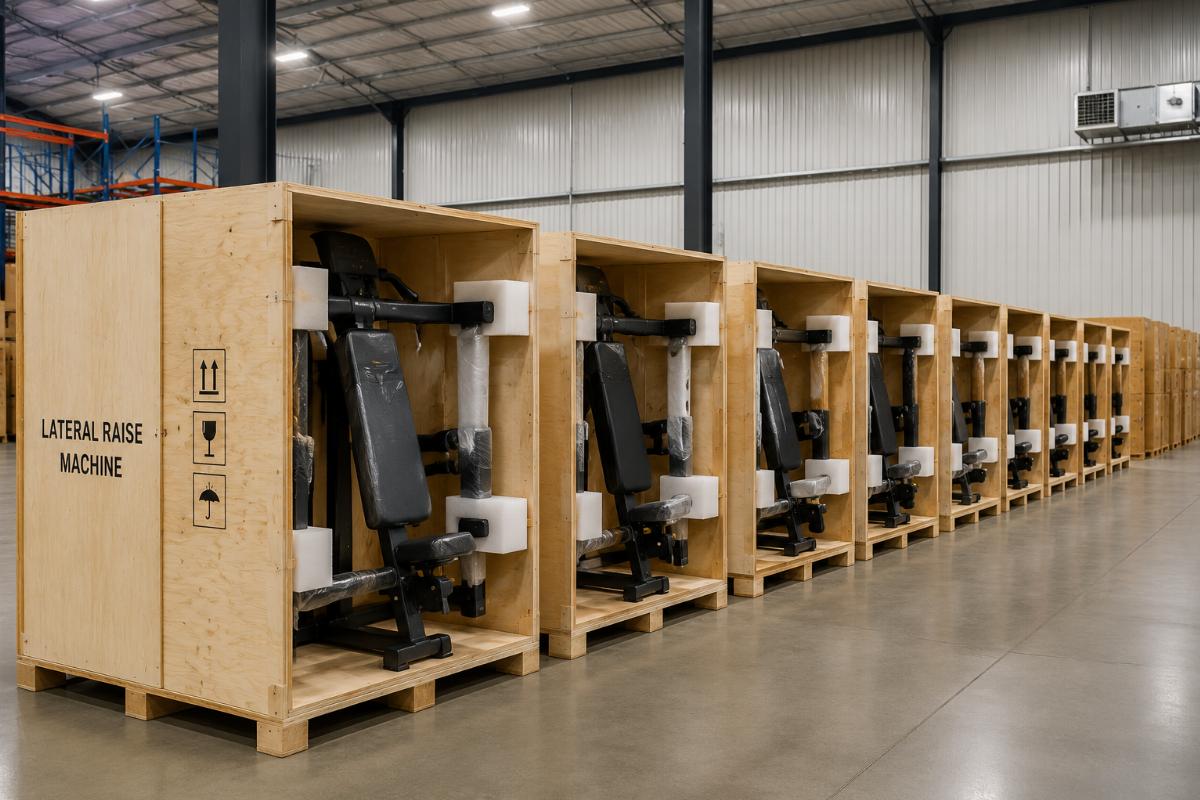
Never stack selectorized machines directly on top of each other without load-transfer spacers, and never exceed the stacking height the frame’s vertical columns are designed to support.
The principle here is straightforward: the main frame of a lateral raise machine is engineered to handle the dynamic loads of a user lifting weight, plus the static weight of the stack itself. It is not engineered to act as a pallet racking shelf for other machines. When you stack three or four units high in a container or warehouse, the bottom unit’s frame absorbs the cumulative weight of everything above it. Over weeks or months, that sustained compressive force can distort the upright columns just enough to throw the pulley tower alignment off — and then the cable tracks at an angle, wears unevenly, and fails prematurely.
The correct approach for lateral raise machine storage handling during off-season follows a few basic rules:
-
Store machines upright, in their operating orientation. Laying a selectorized machine on its side puts asymmetric stress on the frame and the weight stack housing. The guide rods were designed for vertical gravity, not lateral bending.
-
If stacking is unavoidable, use rigid spacer frames between units. The spacer must transfer load through the main frame’s structural nodes — the base plate and the top cross-member — rather than through the weight stack shroud or the pulley tower. This keeps the compressive force on the welded frame, not the precision internals. [NEED_CITE: load path analysis for stacked fitness equipment per structural engineering guidelines]
-
Limit stacking to two units maximum for selectorized machines. Beyond that, even with spacers, the risk of cumulative frame distortion rises noticeably. For lateral raise machines specifically, the narrow footprint and tall pulley tower make them less stable in multi-layer stacks than, say, a chest press or a leg extension.
-
Fully lower the weight stack before storage. This removes tension from the cable, eliminates compressive load on the bottom plate and its stop bumper, and lets the guide rods rest in their neutral state.
-
Secure each machine individually to the pallet or floor anchor. During transport and warehouse handling, a machine that shifts even slightly can scrape its guide rods against the housing, creating burrs that jam the plates later.
I worked with a hotel project buyer in the Middle East who received a shipment where the loading crew at the origin port had stacked the lateral raise machines three high without spacers. The containers sat at the destination port for weeks due to customs delays. When the machines were finally unloaded, the bottom-row units had visible bowing in the upright columns. The pulley alignment was off, the cables were tracking at an angle, and two machines had guide rods that had bent enough to permanently jam the weight stack. The supplier had to fly a technician out to assess the damage, and most of the affected units were written off. [NEED_CITE: deformation thresholds for welded steel frames under sustained static loading per structural engineering references]
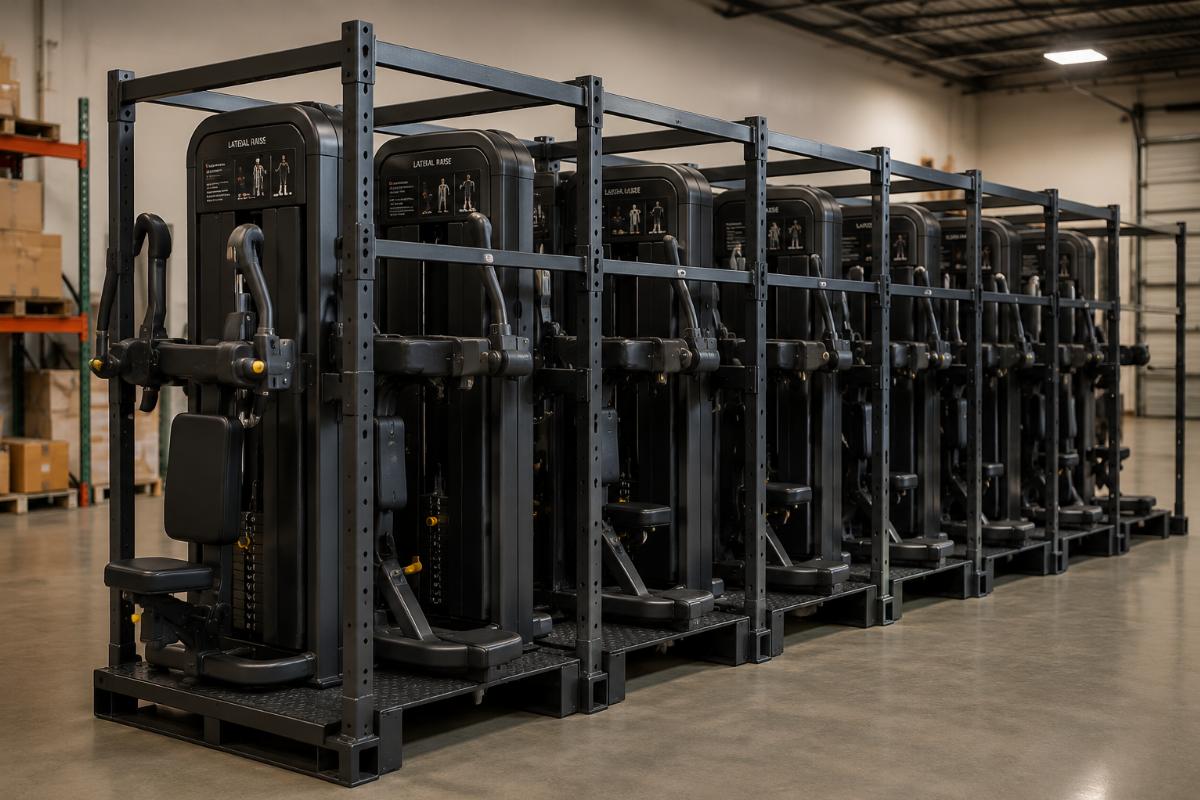
The discipline is simple: respect the geometry of the machine. The frame is strong, but the internals are not designed to be a structural element in a storage stack.
What Humidity and Temperature Controls Are Required?
Sealed plastic wrap does not protect against rust — it often makes it worse. Active humidity control is the only reliable defense during off-season storage.
This is one of the most counterintuitive points in lateral raise machine storage handling during off-season, and I have seen it go wrong more times than I can count. The instinct is to wrap machines in stretch film or shrink-wrap to keep moisture out. In a dry climate, that works fine. But in any environment where temperature swings between day and night — which is most warehouses, ports, and containers — sealed wrapping creates a micro-climate. Warm air holds more moisture. When the temperature drops at night, that moisture condenses on every cold metal surface inside the wrap: the guide rods, the selector pins, the cable, the inside of the weight stack housing. The wrap traps the condensation instead of letting it evaporate, and rust forms within days.
The correct approach requires controlling the ambient environment, not just sealing the product:
-
Maintain warehouse relative humidity below the condensation threshold for steel surfaces. For carbon steel components like guide rods and weight plates, sustained exposure above a certain humidity level initiates oxidation. The exact threshold depends on temperature and surface finish, but the general principle is to keep the environment dry enough that no condensation cycle can occur. [NEED_CITE: corrosion initiation thresholds for carbon steel in controlled environments per ISO atmospheric corrosion standards]
-
Use desiccants or active dehumidification inside sealed containers for long-term storage. If machines must be stored in a shipping container for an extended period — common in project-based deals where the gym build-out is delayed — passive desiccant bags are not enough for a full container volume. A small active dehumidifier or a continuous desiccant dehumidation unit rated for container use makes a measurable difference.
-
Apply vapor corrosion inhibitor (VCI) films or emitters on precision surfaces. VCI technology releases a molecular layer onto metal surfaces that inhibits oxidation without leaving residue. For lateral raise machines, VCI bags around the weight stack assembly or VCI emitters inside the shroud protect the guide rods and pin holes during storage. This is far more effective than plain stretch film. [NEED_CITE: effectiveness of VCI protection on precision-ground steel surfaces per corrosion engineering literature]
-
Avoid direct floor contact. Warehouse floors — especially concrete slabs — transmit ground moisture. Machines should sit on pallets or raised platforms, and the pallets themselves should be checked for moisture content if they are wooden.
-
Ventilate the storage area. Stagnant air accelerates localized corrosion. Even basic airflow across the stored machines reduces the risk of condensation pockets forming around the weight stack housing.
A gym equipment distributor in West Africa stored a container of selectorized machines — including lateral raise units — in a ground-level warehouse with no climate control during the rainy season. The machines were wrapped in plastic, sitting directly on the concrete floor. Within weeks, the concrete had sweated moisture into the pallets, the plastic wrap had trapped ambient humidity, and the guide rods on every lateral raise machine in the shipment had developed a fine layer of rust. The plates would not slide freely. The entire container had to be opened, every machine disassembled at the weight stack, rods cleaned or replaced, and the units re-assembled. The cost of that rework was several times the original savings from buying direct. [NEED_CITE: moisture migration through concrete slabs in tropical climates per building science references]
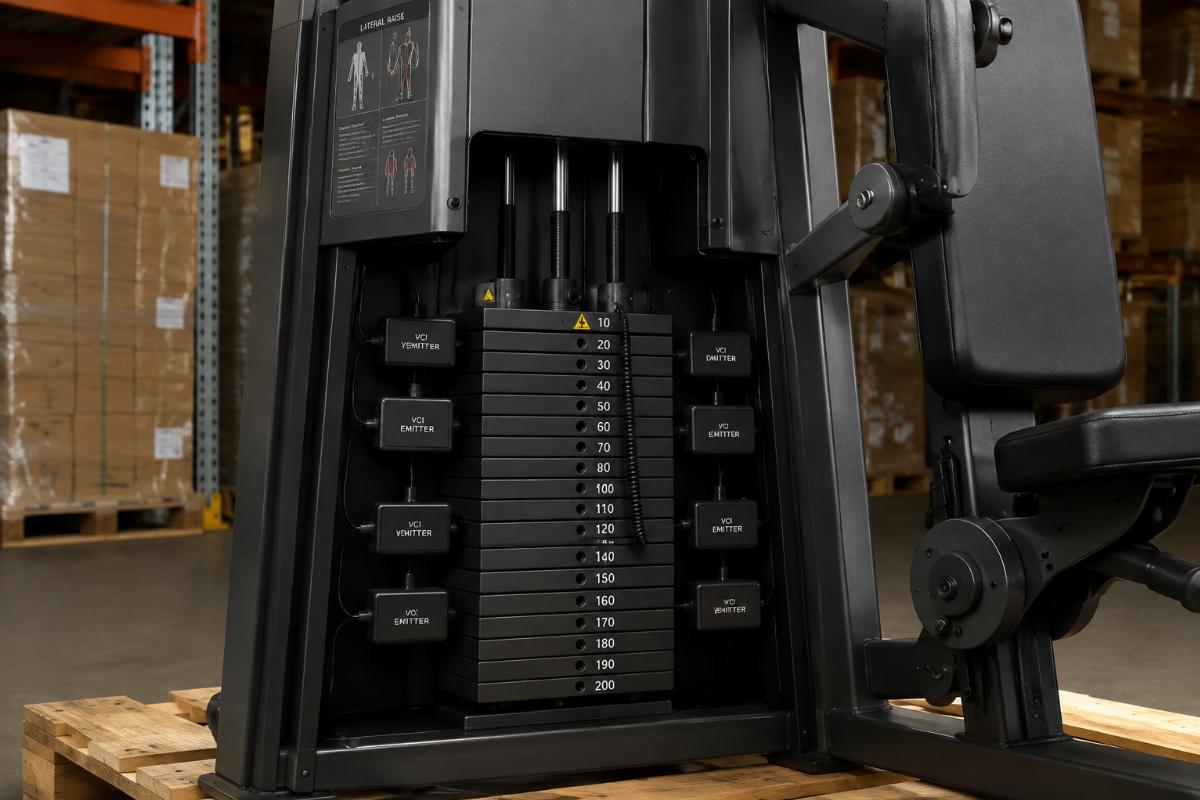
The principle is that moisture management during lateral raise machine storage handling during off-season is an active process, not a passive wrap-and-pray operation.
How to Inspect Before Re-Installation?
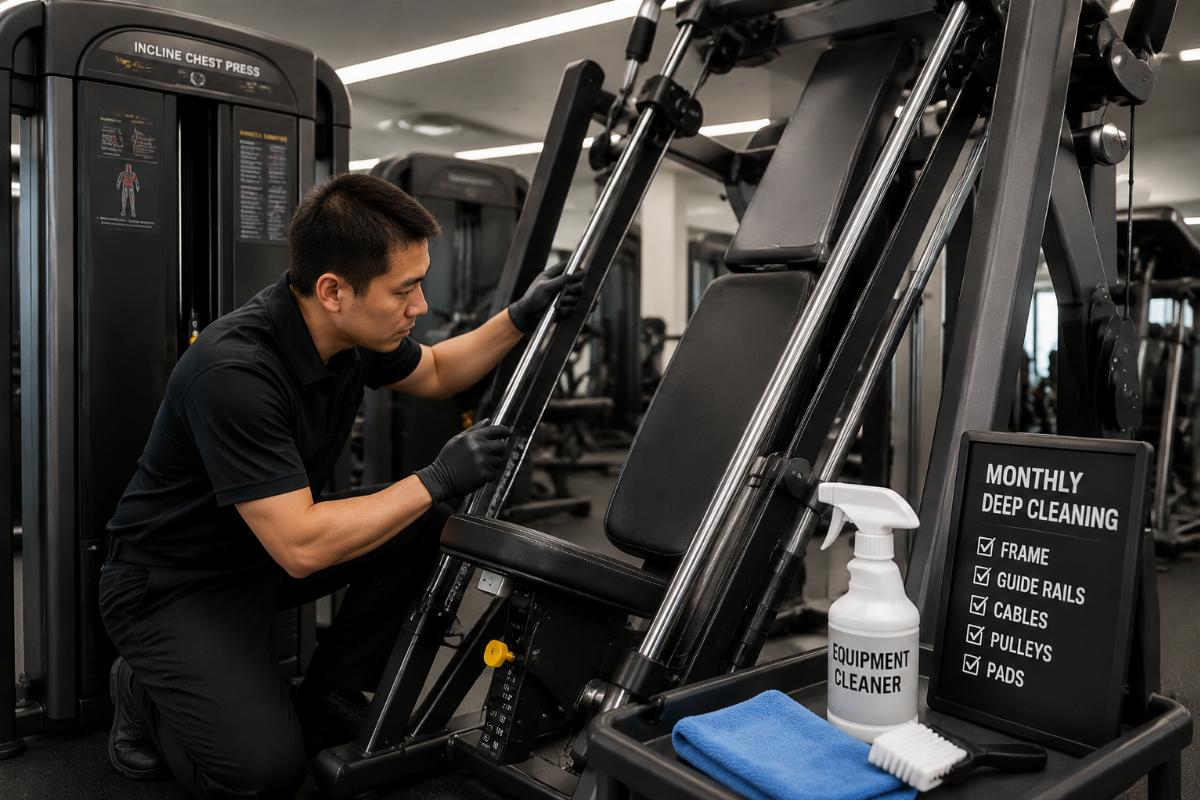
Every selectorized machine coming out of off-season storage must pass a pre-commissioning inspection before it is handed to the end user. Skipping this step is how you discover problems on the gym floor instead of in the warehouse.
The inspection protocol for lateral raise machine storage handling during off-season should cover three critical systems: the weight stack alignment, the guide rod condition, and the cable routing integrity. Each check takes only a few minutes per machine, but catching a problem at this stage saves enormous rework cost downstream.
-
Weight stack pin-hole coaxiality check. Insert the selector pin at the top plate and let it drop through the stack by gravity. It should pass through every plate cleanly, without binding or scraping. If it catches at any point, the stack has shifted — either the guide rods have bent, or the plates have been compressed out of alignment. Do not force it. Mark the machine for detailed inspection. [NEED_CITE: inspection procedures for selectorized weight stack alignment per fitness equipment service manuals]
-
Guide rod straightness and surface condition. Visually inspect the exposed length of each guide rod for bends, scratches, or corrosion. Run a clean cloth along the rod — any roughness or residue indicates surface damage that will cause plate binding during use. Light surface discoloration can be cleaned, but any pitting or measurable runout means the rod must be replaced.
-
Cable routing and tension check. Trace the cable from the weight stack attachment point, through every pulley, to the pivot arm. The cable should sit cleanly in each pulley groove without fraying or kinking. Pull the arm through its full range of motion — the stack should lift smoothly, and the return should be positive without slack or stutter. If the cable feels gritty or the stack does not return fully, the cable may have stretched during storage or a pulley bearing has seized.
-
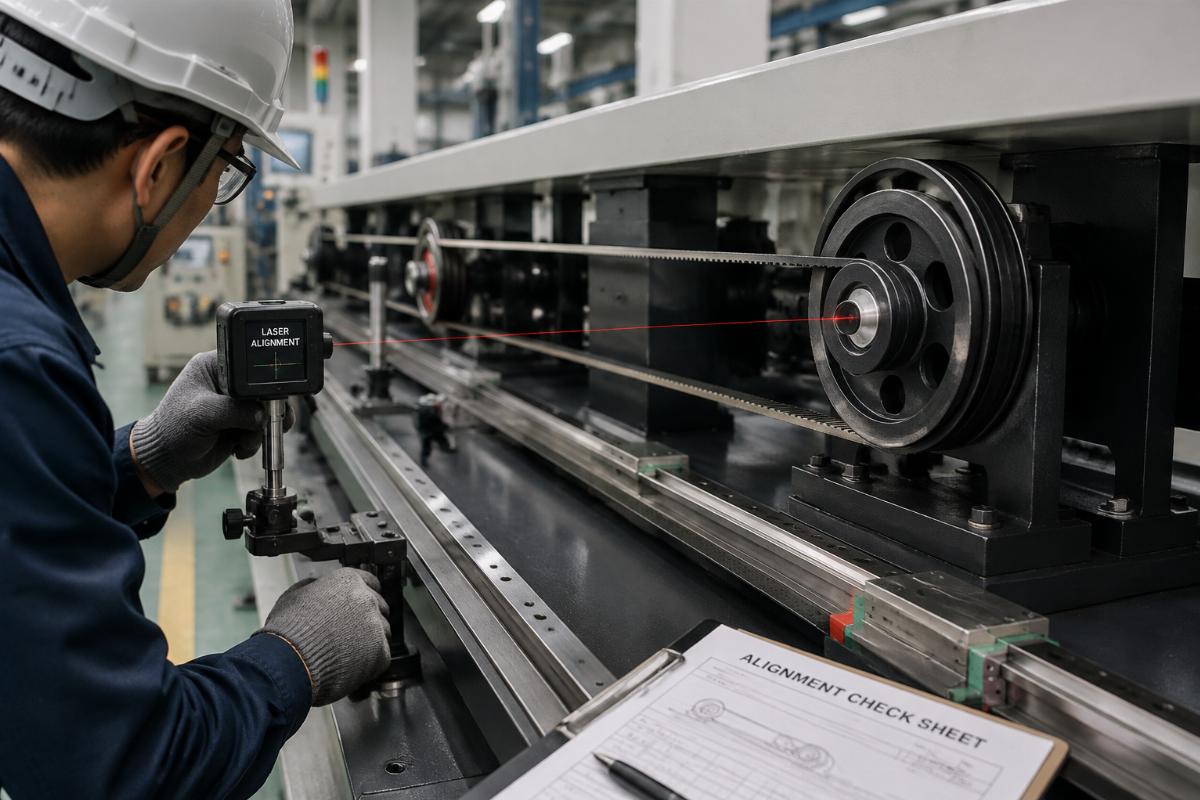
Pulley alignment and bearing check. Spin each pulley by hand. It should rotate freely without grinding or lateral play. Misaligned pulleys wear cables unevenly and create premature failure. If a pulley does not spin freely, the bearing needs service before the machine goes into use.
-
Frame squareness check. For machines that were stored in stacks or transported long distances, verify that the main frame is still square. Measure the diagonal distances between the base corners — if they differ noticeably, the frame has twisted, and the pulley tower alignment is compromised.
A commercial gym chain in Eastern Europe purchased a large batch of selectorized machines, including lateral raise units, for a series of hotel fitness centers. The machines were delivered and stored in a temporary warehouse for several months while the hotel construction finished. When the installation team began uncrating, they skipped the pre-commissioning inspection and sent the machines directly to the sites. Within the first week of operation, three lateral raise machines across different hotels had weight stack binding issues. The gym chain’s maintenance team had to travel to each site, disassemble the stacks on-site, and identify that the guide rods had bent during storage. The service cost — travel, labor, downtime — far exceeded what a simple warehouse inspection would have cost. [NEED_CITE: cost of field service calls versus pre-delivery inspection in commercial fitness equipment deployment per industry operational data]
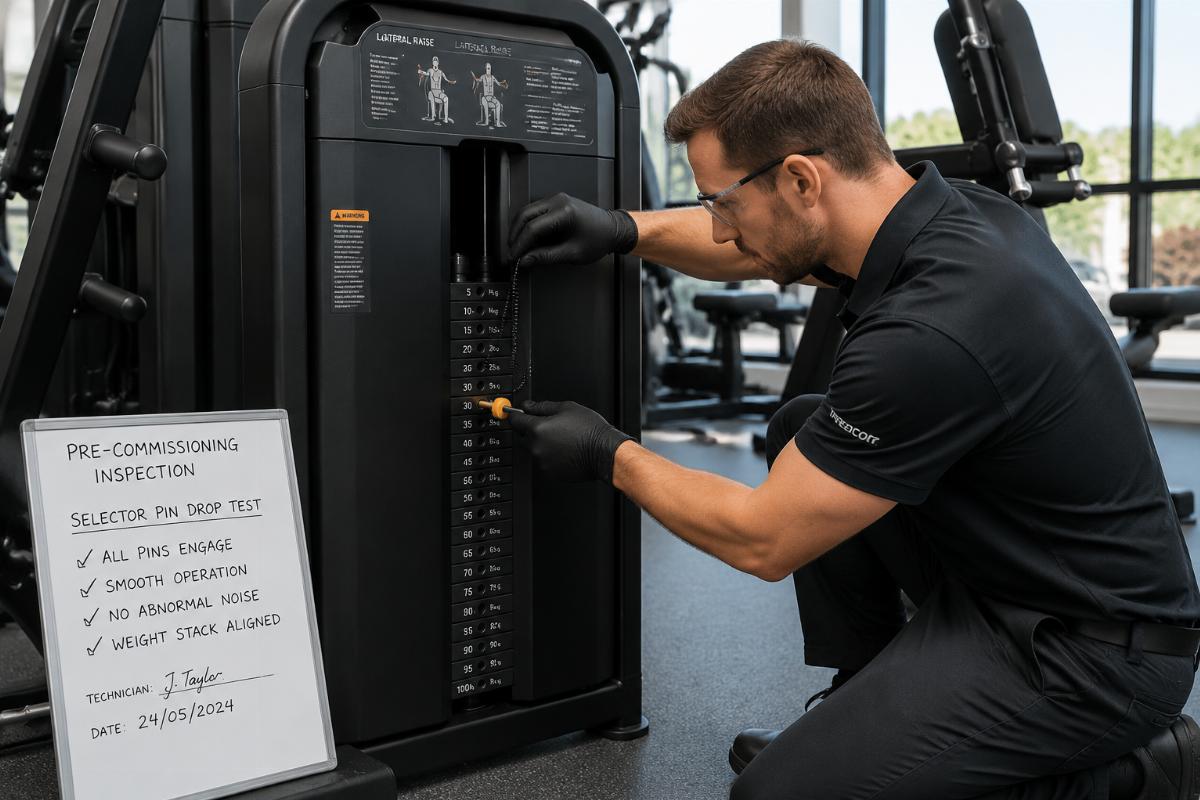
The discipline here is that inspection is not optional. Off-season storage is not a passive state — things happen to machines while they sit. The only way to know they are still fit for use is to check them before they reach the end user.
Conclusion
Lateral raise machine storage handling during off-season is a precision logistics challenge, not a bulk warehousing task. The weight stack guide rods, selector pin holes, and cable systems are the fragile core of the machine, and they demand controlled stacking, active humidity management, and mandatory pre-commissioning inspection. Treat these machines as the precision assemblies they are, and they will perform reliably when the gym doors open. Ignore the details, and the cost of rework will erase any savings from buying direct.