
Plyo Box Price Guide 2026: China Factory Direct Wholesale Supplier
Foam plyo boxes are not created equal, and neither are their wholesale prices — the gap between a genuine factory-direct quote and a middleman-marked-up one can swallow an entire container’s margin before the goods even reach the port.
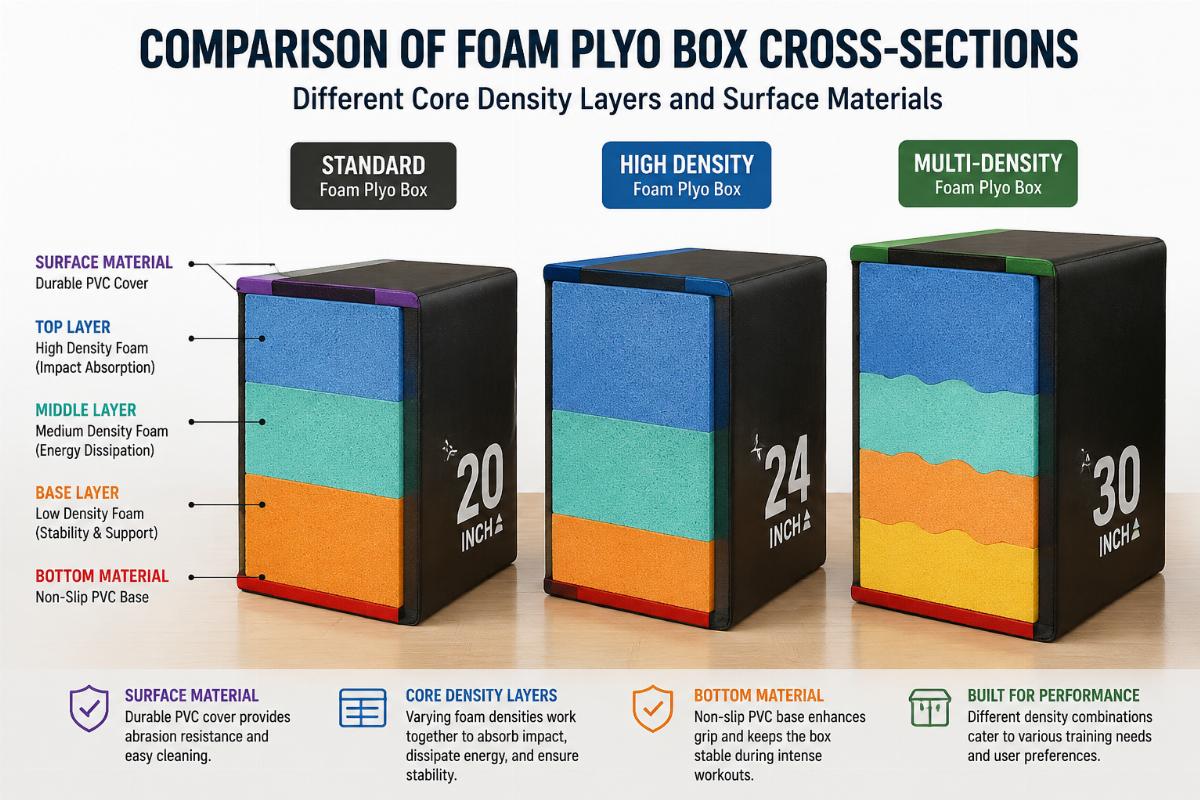
Commercial-grade foam plyo boxes from Shandong factories typically fall into three wholesale tiers: entry-level EVA core with PVC skin, mid-range high-density foam with vinyl covering, and premium multi-density laminated construction with reinforced stitching. A plyo box wholesale price for a standard three-tier adjustable unit ranges from budget-friendly single-height models to premium 3-in-1 configurations, with material density, surface durability, and packaging efficiency being the primary cost drivers that separate a sound investment from a costly return.
Back when I was sourcing functional training gear for gym chains across the Gulf, plyo boxes were the item that consistently caused the most confusion during price comparisons. Three suppliers would quote on the same-looking three-tier foam box, and the spread between the highest and lowest offer was genuinely disorienting. One shipment to a Riyadh fitness center arrived with boxes that looked identical on the outside but compressed noticeably after just a few weeks of class use — the core density was nowhere near what the spec sheet claimed. It was only after switching sides and working directly with manufacturing facilities in Shandong that the full cost structure became visible: the EVA density grade, whether the core is solid or layered, the abrasion resistance of the skin material, and critically, how the packaging is engineered for container loading — every single one of these variables moves the plyo box wholesale price in meaningful ways. [NEED_CITE: EVA foam density classification standards and load-bearing correlation in fitness equipment]
Understanding what actually drives pricing is the first step toward making informed purchasing decisions, and the material type you choose sets the baseline for everything that follows.
What Are the Main Types of Plyo Boxes and How Do Prices Compare?
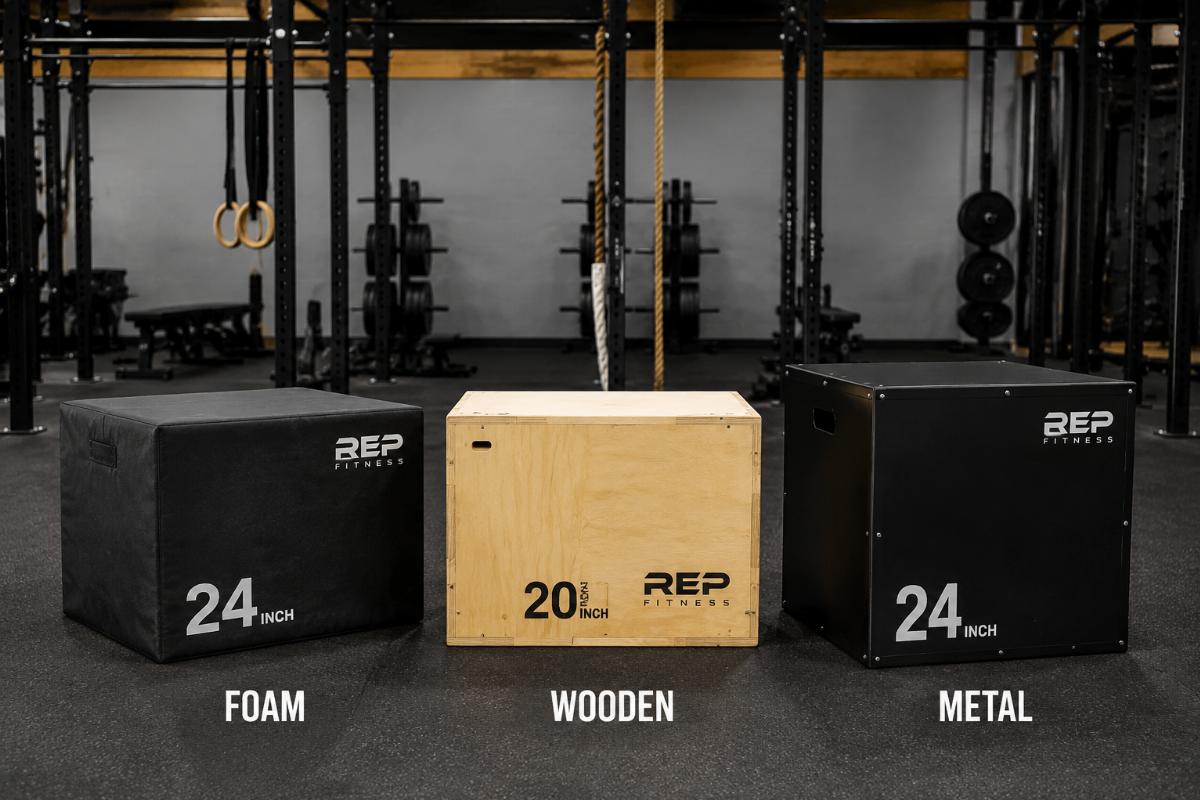
The three primary material categories — foam, wood, and metal — occupy distinct price positions, and 3-in-1 adjustable models command a noticeable premium over fixed-height single units across all material types.
When gym operators first contact a plyo box wholesale supplier, the most common mistake is comparing prices across material types without accounting for the fundamentally different construction methods and lifespan expectations. Each material serves a different operational profile, and the pricing reflects those differences clearly.
| Parameter | Foam Plyo Box | Wooden Plyo Box | Metal Plyo Box |
|---|---|---|---|
| Core Material | EVA foam (layered or solid) | Plywood or solid timber | Steel frame, hollow or reinforced |
| Surface Covering | PVC, vinyl, or leatherette | Raw, painted, or laminated | Powder-coated or galvanized |
| Weight Profile | Noticeably lighter, easy to reposition | Moderate, stable during use | Heaviest, highly stable |
| Impact Noise | Substantially reduced | Moderate | Noticeably higher |
| Injury Risk on Impact | Low — forgiving surface | Moderate — hard edges possible | Higher — rigid surface |
| Durability Under Heavy Use | Good with proper density | Good, susceptible to moisture | Excellent if rust-treated properly |
| Price Tier | Budget to mid-range | Mid-range | Mid to premium |
| Typical Use Case | CrossFit boxes, commercial gyms, studios | Home gyms, budget commercial | Heavy-duty commercial, outdoor |
The foam category dominates the commercial gym market for good reason: the reduced injury risk and lower noise output make them the default choice for high-traffic functional training areas. [NEED_CITE: commercial gym equipment injury prevention standards for plyometric training surfaces] Within the foam segment, the plyo box wholesale price is primarily determined by the density of the EVA core. Lower-density foam compresses faster and loses structural integrity sooner, which is why a budget foam box and a premium foam box can look similar externally but perform very differently over time.
Wooden plyo boxes occupy a middle ground. They are sturdy and offer a traditional aesthetic that some boutique studios prefer, but the pricing is heavily influenced by timber quality and whether the wood is treated for moisture resistance. Untreated plywood boxes shipped to humid climates can warp within months, turning a seemingly economical purchase into a replacement cycle headache.
Metal plyo boxes sit at the top of the price range for good reason — properly welded and treated steel frames last substantially longer than any other material. However, the critical variable here is not the metal itself but the welding quality and rust prevention treatment. A cheaply welded metal box with inadequate coating will show corrosion signs well before its expected lifespan, particularly in coastal or high-humidity gym environments. [NEED_CITE: powder coating durability standards for fitness equipment in humid environments]
The 3-in-1 adjustable design — where a single box offers three height options by rotating or reconfiguring panels — adds a premium to the plyo box wholesale price because of the additional engineering, reinforced hinge points, and more complex packaging requirements. For commercial gyms with limited floor space, this premium is usually justified by the versatility. For dedicated CrossFit boxes where boxes are used at fixed heights and stored in quantity, single-height models often deliver better value per unit.
What Cost Drivers Determine Plyo Box Wholesale Pricing?
Core material density, surface durability, and packaging efficiency are the three variables that create the widest price gaps between suppliers quoting what appears to be the same product.
During my time visiting gym procurement meetings in Dubai and Doha, I watched buyers compare quotes from multiple factories and struggle to understand why two seemingly identical foam plyo boxes carried vastly different price tags. The answer always lay in the details that spec sheets obscure.
The first and most significant driver is the EVA foam density. Foam used in plyo boxes is generally categorized into density grades, and the difference between a lower-density core and a higher-density core is not just about firmness — it directly affects how long the box maintains its shape under repeated jumping loads. A box built with insufficiently dense foam will feel acceptable on day one but will compress permanently after a few hundred uses, creating an uneven surface that is both ineffective for training and potentially hazardous. [NEED_CITE: EVA foam density grades and compression resistance testing in fitness equipment manufacturing] The plyo box wholesale price for a unit using properly graded, high-resilience foam is meaningfully higher than one using lower-density material, but the lifespan difference is dramatic.
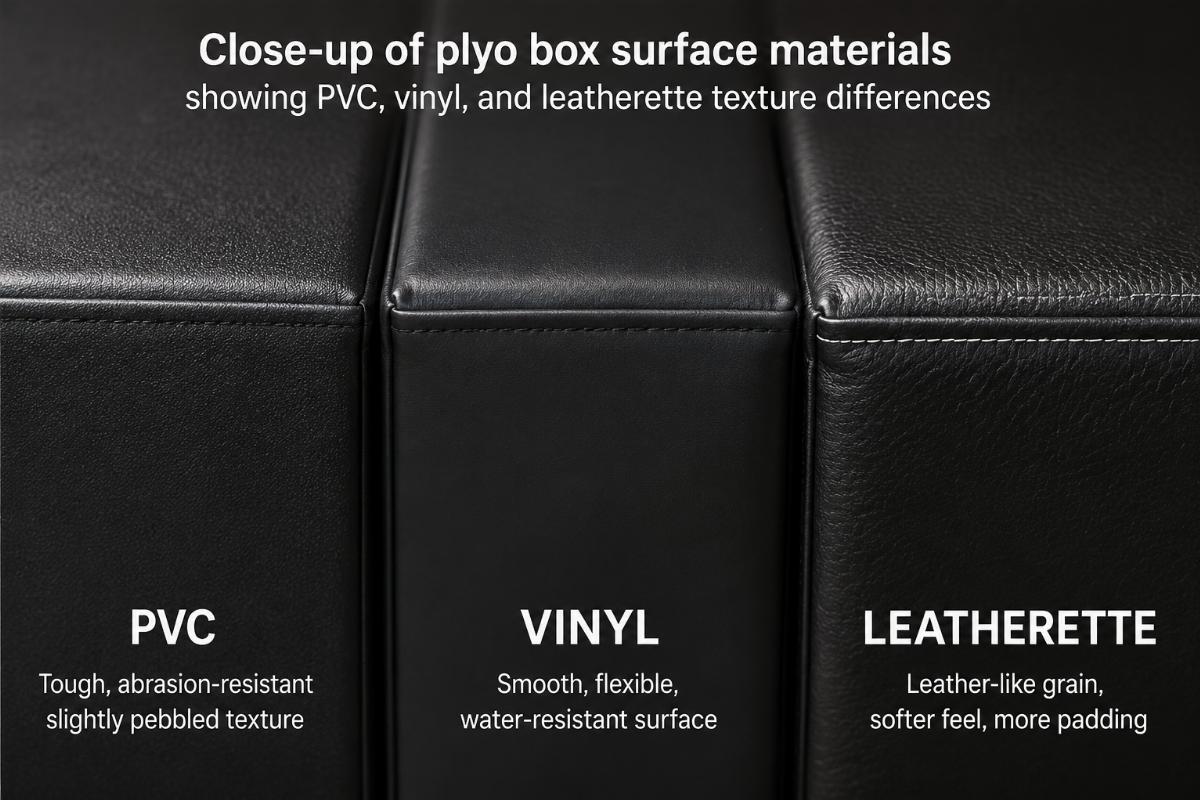
The second driver is the surface material. The covering on a foam plyo box faces constant abrasion from shoe contact, sweat exposure, and occasional dragging across gym flooring. PVC skins are the most economical option and work adequately in low-traffic environments. Vinyl coverings offer noticeably better abrasion resistance and are easier to clean, making them the standard choice for commercial gyms. Leatherette or premium synthetic leather options sit at the top of the cost range and are typically specified for boutique studios where aesthetics matter alongside durability. The surface material choice directly affects both the unit cost and the long-term replacement frequency.
The third driver — and the one most frequently overlooked by buyers — is packaging efficiency. Plyo boxes are bulky items, and how they are packed for shipping has an enormous impact on the effective landed cost. A non-adjustable foam box that ships fully assembled takes up a fixed volume in the container. A 3-in-1 box designed for flat-pack or knock-down assembly can be packed significantly more efficiently, allowing more units per container. [NEED_CITE: container loading optimization for bulky fitness equipment] I have seen scenarios where the packaging design difference between two suppliers resulted in one fitting substantially more units per container than the other, effectively reducing the per-unit shipping cost even when the FOB price appeared similar.
A Middle East gym chain once received quotes for the same three-tier foam plyo box from three different sources. The spread was significant. When the procurement team finally requested detailed material specification documents and packaging dimension sheets, the picture became clear: the lowest quote used a lower-density foam core with a basic PVC skin and shipped fully assembled, while the highest quote specified a layered high-density core with vinyl covering and flat-pack packaging that loaded more efficiently. The middle quote turned out to be from a trading company adding margin on top of a factory that was not substantially different from the lowest-priced direct source. The plyo box wholesale price only made sense once all three cost drivers were examined together.
How Does MOQ and Order Volume Affect Unit Price?
Full container loads reduce the per-unit cost noticeably, but mixed-product consolidation often beats single-SKU bulk orders when total landed cost is the real metric.
Minimum order quantity expectations vary considerably across plyo box wholesale suppliers, and the structure of those MOQs directly shapes the unit pricing you receive. Some factories require full container commitments for their best pricing tiers, while others offer more flexible arrangements that accommodate smaller gym operators or distributors testing a new market.
For large commercial gym chains outfitting multiple locations, the standard approach is to commit to full container loads of a single SKU or a small range of SKUs. This approach secures the most favorable per-unit plyo box wholesale price because the factory can optimize production runs and the shipping cost per unit drops significantly. The trade-off is reduced flexibility — you are committing to a large quantity of one configuration, which works well when you have confirmed demand across multiple sites.
For distributors and CrossFit box operators who need variety, a more nuanced approach often delivers better overall economics. Instead of filling an entire container with a single plyo box model, consolidating plyo boxes with other functional training products — medicine balls, battle ropes, slam balls, resistance bands — into a mixed container can optimize the volumetric weight calculation and reduce the effective per-unit landed cost. Plyo boxes are volumetrically large but relatively light, which means they can fill container space quickly without reaching weight limits. Pairing them with denser, heavier products like weight plates or kettlebells creates a balanced container that maximizes both space and weight utilization. [NEED_CITE: volumetric weight calculation methods for mixed fitness equipment container loading]
A distributor based in North Africa was initially focused on ordering plyo boxes exclusively in full container quantities to minimize the unit price. After reviewing the total landed cost breakdown — including the fact that the containers were nowhere near weight capacity — the approach shifted to mixed containers combining plyo boxes with other high-demand functional training items. The per-unit plyo box wholesale price was slightly higher than the full-container single-SKU rate, but the total cost per unit landed at the destination port was meaningfully lower because the shipping cost was distributed across a more efficiently loaded container.
MOQ flexibility also matters for boutique studios and smaller operators. Some plyo box wholesale suppliers offer single-pallet or even single-unit起订 options, which is valuable for testing product quality before committing to larger orders. The per-unit price at these low volumes is naturally higher, but the ability to order small quantities for evaluation purposes reduces the risk of committing to a large batch of product that does not meet expectations.

What Hidden Costs Should Buyers Factor Into Landed Pricing?
Shipping volume weight, customs certification requirements, and potential damage claims can add a meaningful percentage on top of the quoted FOB price, and these costs are frequently underestimated during initial budgeting.
The quoted plyo box wholesale price is only the starting point of the total cost equation. Several additional cost layers sit between the factory floor and the gym floor, and failing to account for them during the procurement planning stage leads to budget overruns and strained supplier relationships.
The most significant hidden cost for plyo boxes specifically is the volumetric shipping charge. Because plyo boxes are large relative to their weight, shipping lines and freight forwarders calculate charges based on volumetric weight rather than actual weight once a certain threshold is crossed. This means that a container full of foam plyo boxes may be charged at a rate that reflects the space occupied rather than the physical weight, and the effective per-unit freight cost can be substantially higher than for denser products. Understanding the volumetric weight calculation and factoring it into the per-unit landed cost comparison is essential for accurate budgeting. [NEED_CITE: international freight volumetric weight calculation standards for bulky goods]
Customs certification requirements represent another cost layer that varies by destination market. Certain regions require specific safety certifications or testing reports for fitness equipment imports, and obtaining these certifications involves both direct costs and lead time. A plyo box wholesale supplier experienced in exporting to your target market should be able to advise on which certifications are required and whether their products already carry the necessary documentation. Factories that routinely export to regulated markets typically have the certification infrastructure in place, which reduces both the cost and the delay for individual buyers.
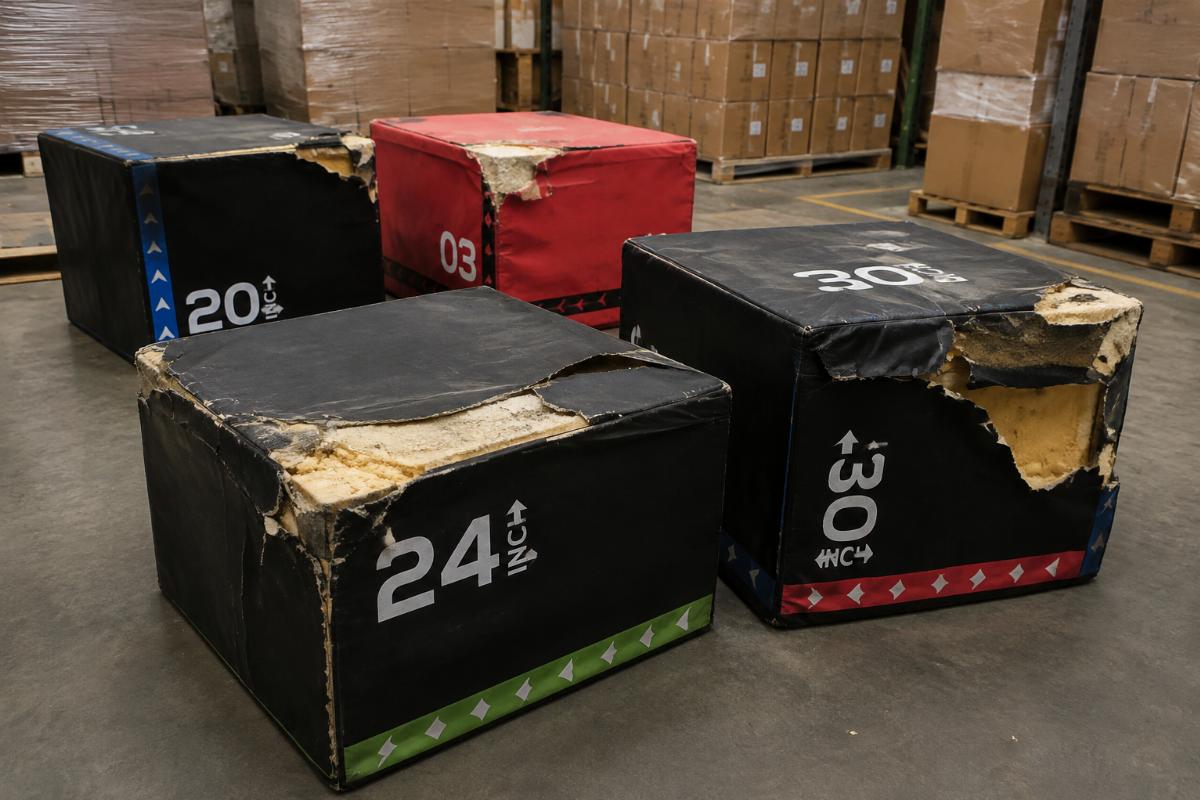
Damage during transit is a third hidden cost that disproportionately affects plyo boxes. Because they are large, relatively lightweight, and often have foam cores that can be compressed or dented under improper stacking, plyo boxes are vulnerable to damage if the container is not loaded correctly or if the packaging is insufficiently robust. A batch of plyo boxes that arrives with compressed corners or torn surface coverings may still be functional but will not meet the quality expectations of end users, leading to claims, replacements, and reputational damage. Requesting detailed packaging specifications — including corner protection, wrapping method, and stacking instructions — before confirming an order is a simple step that prevents costly post-arrival issues.
A gym operator in the Gulf region once received a shipment of foam plyo boxes where a significant portion arrived with visible compression damage to the foam core. The FOB price had been competitive, but the packaging had been designed for a shorter transit route and did not account for the extended ocean freight duration and multiple handling points involved in the actual shipment. The cost of processing claims, arranging partial replacements, and dealing with member complaints far exceeded the initial savings on the plyo box wholesale price.
How to Verify Factory-Direct Pricing vs Middleman Markups?
Requesting material specification sheets, factory audit documentation, and comparing packaging dimensions to calculate true per-unit shipping cost are the most reliable methods for distinguishing genuine factory-direct pricing from trading company markups.
The plyo box wholesale market includes both direct manufacturers and trading companies that source from factories and add a margin. Both can deliver quality products, but the pricing structures are fundamentally different, and buyers who assume they are dealing directly with a factory when they are actually working through an intermediary may be paying a premium without realizing it.
The first verification step is to request detailed material specification documents. A genuine manufacturer will be able to provide specific information about the foam density grade, the surface material composition, the stitching specifications, and the packaging dimensions. A trading company may be able to provide some of this information, but the depth and specificity of the documentation is typically a reliable indicator of whether you are dealing with the actual production source. [NEED_CITE: material specification documentation standards for fitness equipment manufacturing]
The second step is to request factory audit reports or arrange a virtual factory tour. Direct manufacturers have production facilities that can be inspected, and they typically have quality control documentation, production capacity records, and export history that can be verified. Trading companies do not have their own production lines and will either deflect audit requests or provide documentation from the factories they source from, which may not reflect the actual production conditions for your specific order.
The third verification method is to compare packaging dimensions and calculate the true per-unit shipping cost. A manufacturer who understands the logistics of their product will have optimized packaging that maximizes container loading efficiency. If the packaging dimensions provided by one supplier result in significantly fewer units per container than another supplier offering a similar product, the effective per-unit landed cost may be higher even if the FOB price appears lower. This calculation is straightforward but frequently skipped by buyers who focus exclusively on the unit price without considering the shipping implications.
A buyer in Southeast Asia was comparing plyo box wholesale prices from two suppliers and initially selected the one with the lower FOB quote. After requesting packaging specification sheets and running the container loading calculation, it became clear that the other supplier’s packaging design allowed substantially more units per container, which brought the per-unit landed cost below the initially cheaper option. The lower FOB price had been offset by less efficient packaging that increased the shipping cost per unit.

Conclusion
The plyo box wholesale price is shaped by material density, surface quality, packaging design, order structure, and logistics realities — not just the number on a quote sheet. Buyers who examine each of these variables systematically, request detailed specifications, and calculate true landed costs will consistently make better sourcing decisions than those who compare surface-level prices alone. The difference between a sound procurement outcome and a costly mistake lies in the depth of the evaluation, not the speed of the commitment.


