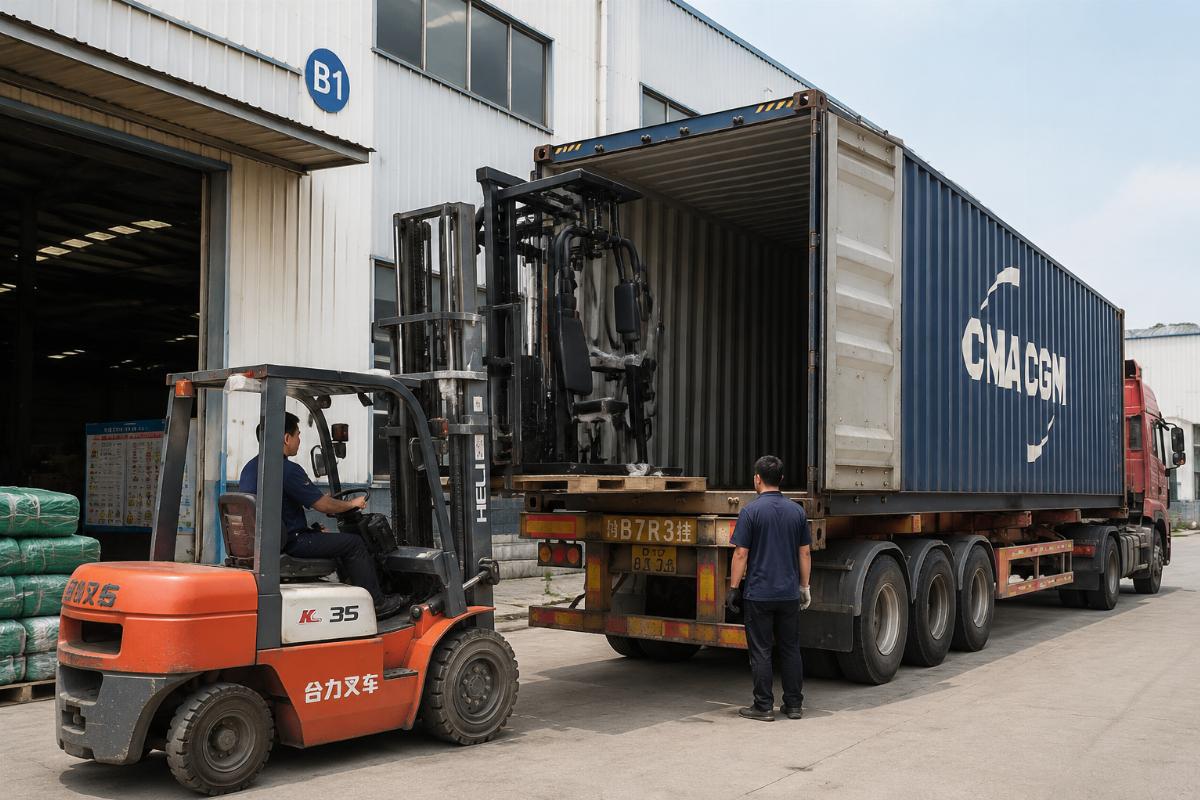
Preacher Curl Machine Import into Australia – Wholesale Supplier from China
Most buyers think the invoice price is the final price. It is not. The real cost hides in layers of freight, duty, GST, port charges, and compliance fees that can push your actual spend far above the FOB quote.
The landed cost of importing a preacher curl machine into Australia equals the FOB product price plus ocean freight, marine insurance, customs duty (typically five percent for strength equipment under HS 9506), ten percent GST calculated on the CIF-plus-duty value, terminal handling charges, inland transport, and any electrical compliance certification fees for smart modules. Skipping any single layer is the fastest way to blow your budget.
I still remember a shipment that taught me this the hard way. A private studio owner in Melbourne ordered a small batch of custom matte-black preacher curl units with integrated rep-counting displays. The factory price looked clean, the ocean freight was locked, and the buyer assumed GST would be calculated on the FOB value alone. When the container reached Melbourne Port, Australian Border Force held the cargo because the smart display modules fell under AS/NZS low-voltage electrical safety rules and carried no RCM mark. The buyer faced rework costs, storage demurrage, and a delayed studio opening that cost weeks of lost membership revenue. That single oversight turned a straightforward import into a financial headache [NEED_CITE: AS/NZS electrical safety compliance requirements for imported fitness equipment with electronic modules].
If you are sourcing commercial strength equipment from a Shandong manufacturing base and shipping into Australian ports, the rest of this guide walks through every cost layer you need to model before you place a factory order.
What Exactly Goes Into the Landed Cost of a Preacher Curl Machine in Australia?
Landed cost is the sum of every expense incurred from the moment goods leave the factory floor until they sit inside your gym, warehouse, or studio. It is never just the product price.
The standard formula used by experienced importers and freight forwarders is straightforward in structure but easy to underestimate in practice:
- FOB product cost
- Ocean freight (full container or shared container allocation)
- Marine insurance
- Customs duty
- GST (Goods and Services Tax)
- Port terminal handling charges (THC)
- Inland freight from port to final destination
- Compliance and certification fees (where applicable)
Each component interacts with the others. For example, ocean freight and insurance feed into the CIF value, which then becomes the base for customs duty, and the duty-inclusive CIF value becomes the base for GST. Miss one link and the entire chain is wrong [NEED_CITE: standard landed cost formula components for Australian imports].
A distributor in Brisbane once compared two trade terms side by side for the same matte-black custom preacher curl order. Under FOB terms, the buyer arranged freight and insurance independently and had full visibility of each cost line. Under DDP terms quoted by the factory, the single all-in price appeared convenient but bundled a freight markup and excluded the GST component, which the buyer still had to settle separately upon arrival. The DDP quote ended up costing noticeably more once the hidden GST liability was added on top. The lesson is simple: always break the landed cost into its individual layers, regardless of which Incoterm you choose.
How Much Customs Duty and GST Will You Pay on Strength Equipment?
Strength training machines classified under HS Code 9506 typically attract a five percent customs duty rate in Australia, and the ten percent GST is calculated on the CIF value plus duty, not on the FOB price alone.
This is where many first-time importers make their most expensive mistake. They calculate GST on the product invoice price and are shocked when the Australian Taxation Office assesses a higher amount. The correct GST tax base includes the cost of the goods, international freight, insurance, and the customs duty already paid. In other words, you are paying GST on GST indirectly [NEED_CITE: Australian GST calculation base for imported goods including CIF value and customs duty].
Here is how the layering works in practice:
- Start with the FOB value of the preacher curl machines.
- Add ocean freight and marine insurance to arrive at the CIF value.
- Calculate customs duty as a percentage of the CIF value.
- Add the duty to the CIF value to create the GST tax base.
- Calculate GST as ten percent of that combined total.
The difference between calculating GST on FOB alone versus on CIF-plus-duty is not trivial. On a full container load of commercial strength equipment, the gap can represent a meaningful percentage of the total shipment value. Over multiple shipments in a financial year, that gap compounds into a significant cash flow item that needs to be planned for.
Australian Border Force maintains a tariff classification database where importers can verify the exact HS code and duty rate for their specific product configuration. Strength machines with no electronic components generally fall cleanly under 9506.91 or 9506.99. Machines with integrated electronic consoles or smart modules may require additional classification review, which can affect both the duty rate and the compliance pathway [NEED_CITE: Australian Border Force tariff classification database for HS 9506 strength equipment].
Why Do Non-Electric Machines Still Trigger Compliance Costs?
Any add-on smart module, rep counter, or digital display attached to a preacher curl machine falls under Australian and New Zealand electrical safety standards and requires RCM certification before customs will release the cargo.
This is the single most counterintuitive cost trap for fitness equipment importers. A standard plate-loaded preacher curl machine is entirely mechanical. No motor, no power supply, no wiring. Most buyers assume it passes through customs with zero compliance overhead. That assumption holds true only if the machine stays purely mechanical.
The moment you add an electronic rep counter, a small LCD display showing set counts, or a Bluetooth-enabled load sensor, the product classification shifts. The Australian Competition and Consumer Commission treats any electrical component operating at low voltage as subject to AS/NZS electrical safety standards. The importer becomes the legal entity responsible for ensuring the RCM mark is applied and that a declaration of conformity exists in the Australian market [NEED_CITE: ACCC electrical safety requirements for imported low-voltage electronic modules in fitness equipment].
The compliance pathway typically involves:
- Engaging an accredited testing laboratory to assess the electronic module against applicable AS/NZS standards.
- Preparing a technical file with circuit diagrams, component specifications, and test reports.
- Registering the responsible supplier on the EESS (Electrical Equipment Safety System) database.
- Affixing the RCM mark to the product or its packaging before sale or installation.
The testing and registration costs are not enormous in absolute terms, but they arrive as an unexpected line item after the goods have already been manufactured and shipped. For a small studio ordering a handful of units, the per-unit compliance cost can be disproportionately high. For a distributor ordering container loads, the cost amortizes more evenly but still needs to be budgeted from day one.
A chain gym operator in Sydney learned this when a shipment of cable crossovers with integrated touchscreen consoles was held at port. The factory had CE marking documentation for the European market but no RCM certification for Australia. The cargo sat in a bonded warehouse while the importer scrambled to arrange local testing, costing both storage fees and delayed installation timelines across multiple club sites.
How Can You Reduce Landed Cost When Ordering from a Shandong Factory?
Consolidate container loads, negotiate trade terms with full cost transparency, and pre-verify all compliance documentation before production begins to avoid port demurrage and post-arrival rework.
Shandong Province is one of the largest manufacturing clusters for commercial fitness equipment globally. Factories in the region produce everything from plate-loaded strength machines to full cardio lines, and many have extensive export experience to markets with strict regulatory environments. Leveraging that experience is the most effective way to control your landed cost.
Container consolidation is the first lever. A boutique studio ordering a few preacher curl units, a set of adjustable benches, and a selection of dumbbells can combine all of these into a single shared container rather than paying for multiple less-than-container-load shipments. The per-unit freight allocation drops noticeably. A full container load of mixed strength equipment, including Smith machines, cable crossovers, and preacher curl stations, spreads the ocean freight and port charges across a larger number of SKUs, reducing the landed cost per machine.
Trade term negotiation is the second lever. FOB terms give the buyer control over freight selection and visibility of each cost component. DDP terms simplify logistics but often include freight markups and may not clearly separate the GST liability. The optimal choice depends on the buyer’s freight forwarding relationships and their comfort level with managing the import process independently.
Pre-verification of compliance documentation is the third lever, and arguably the most critical for the Australian market. Before production begins, confirm whether any electronic modules require RCM certification. If they do, engage the testing pathway early so that certification is completed before the goods ship, not after they arrive. Factories with export experience to regulated markets often hold CE certification as a baseline and can support OEM customization with pre-verified electronic modules, reducing the buyer’s post-arrival compliance burden.
A distributor in Melbourne once avoided a costly delay by requesting that the factory pre-install RCM-compliant smart modules on a batch of selectorized machines. The factory’s engineering team had already completed the necessary testing for the Australian market on similar products, so the certification process was streamlined. The goods cleared customs without hold-up, and the distributor met their installation deadline for a new commercial gym fit-out.
Conclusion
Landed cost is a layered calculation, not a single number. Every component from FOB price to compliance certification contributes to the final amount you pay before the equipment is ready for use.
Importing a preacher curl machine into Australia requires modeling ocean freight, customs duty at five percent under HS 9506, ten percent GST on the CIF-plus-duty base, port handling charges, inland transport, and any electrical compliance costs for smart modules. Buyers who calculate each layer explicitly and pre-verify compliance documentation before production avoid the budget overruns and delivery delays that catch unprepared importers.