01 / Scenario
STUDIO
P
High-End Pilates Studios
Premium aesthetics meet quiet operation for boutique studio environments.

ISO
9001
CE
Certified
OEM
Available
10YR
Warranty
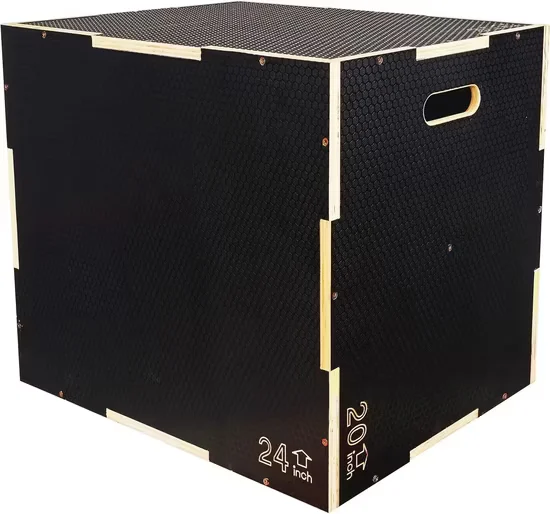
Premium Adjustable Anti-Slip Black Wooden Jump Box, Solid Wood Frame, Anti-Slip Surface — engineered with reinforced lamination for repetitive high-impact landings across 12×14×16, 16×20×24, and 20×24×30 inch configurations, featuring edge reinforcement to prevent chipping under commercial training volume. Every unit undergoes load testing before shipment from BICKFIT's 15,000㎡ vertically integrated facility with 17 years of manufacturing heritage.
// Spec Highlights
• Direct from Manufacturer · No Middlemen · Worldwide Shipping
01
// Material
Imported Solid Wood
Premium hardwood frames sourced for density and visual warmth.
02
// Hardware
Medical-Grade Silent
Whisper-quiet pulleys and springs for clinical environments.
03
// Customization
Appearance OEM
Color, upholstery, and branding tailored to your studio.
04
// Service
Layout Design
Free venue planning for studios and rehab institutions.
Every component is selected for longevity, performance, and aesthetic harmony - from imported hardwood frames to silent medical-grade accessories.
// Features
Reinforced Lamination Integrity — Multi-ply wood core bonded under pressure to resist delamination from repetitive high-impact landings, with anti-slip surface treatment that maintains traction through years of commercial use.
| Parameter | Value |
|---|---|
| Product Type | Plyo Box |
| Model NO. | PB-3200 |
| Available Configurations | 12×14×16 inch / 16×20×24 inch / 20×24×30 inch |
| Material | Solid wood construction |
| Surface Treatment | Anti-slip finish |
| Color | Black |
| Logo | Customized Logo Available |
| MOQ | 50 PCS |
| Certification | ISO 9001:2015, CE, SGS |
| Production Capacity | 10,000 units/year |
| Facility Type | Typical Use |
|---|---|
| Commercial gym functional training zone | Plyometric power development and box jump progressions |
| CrossFit box metabolic conditioning area | High-volume WOD jump stations and step-up circuits |
| University athletic performance center | Sport-specific explosive power training |
| Hotel and resort fitness center | Guest-accessible plyometric conditioning |
| Personal training studio | One-on-one explosive movement coaching |
Plyo boxes marketed as commercial grade often conceal particle board cores wrapped in thin decorative veneer — the adhesive bond fails within months of repetitive box jumps, creating splintered edges and unstable landing surfaces that endanger athletes mid-movement. Solid wood lamination with mechanical fastening maintains structural coherence under thousands of impact cycles.
The failure pattern is predictable: veneer lifts at corners first, where foot strikes concentrate force, then moisture from sweat and cleaning solutions accelerates adhesive breakdown. Athletes land on compromised surfaces during high-volume metabolic conditioning, and the resulting instability shifts ankle loading into dangerous inversion positions [NEED_CITE: dynamic impact forces in plyometric training equipment]. The commercial wooden plyo box must survive not just static load ratings, but the cumulative fatigue of daily high-traffic use across multiple height configurations.
This commercial wooden plyo box occupies the explosive power development zone, covering vertical displacement patterns across three height options that accommodate progressive overload from beginner step-ups through advanced depth jumps. The multi-height configuration allows a single unit to serve diverse training populations — from rehabilitation clients requiring minimal elevation to competitive athletes demanding maximum box jump challenges. In facility layouts, these units pair with sled tracks, turf zones, and cable stations to create complete metabolic conditioning circuits. The anti-slip surface maintains consistent traction whether athletes wear training shoes or barefoot, critical for facilities serving diverse user preferences.
Plyometric training generates impact forces significantly exceeding static body weight — landing from a 30-inch box jump produces ground reaction forces that multiply athlete mass several times over. The commercial wooden plyo box must absorb these repeated shock loads without frame deflection, joint loosening, or surface degradation. Corner joints experience the highest stress concentration, where vertical and horizontal members meet at right angles under eccentric loading patterns. Wood grain orientation and lamination direction determine whether the structure distributes force or concentrates it at weak points. Surface abrasion from shoe rubber and cleaning equipment gradually wears anti-slip textures, requiring surface treatments that penetrate wood fibers rather than sitting as topical coatings [NEED_CITE: wear resistance of anti-slip surfaces in high-traffic fitness equipment].
The three available height configurations — 12×14×16 inch, 16×20×24 inch, and 20×24×30 inch — serve distinct training purposes. The lowest profile accommodates rehabilitation protocols and beginner plyometric introductions, where minimal elevation reduces joint stress while teaching landing mechanics. Mid-height options support general athletic development across most training populations. The tallest configuration challenges advanced athletes performing depth jumps and maximum-effort box jumps, where structural integrity becomes non-negotiable. Solid wood construction throughout all configurations ensures consistent performance regardless of selected height, unlike hollow-core alternatives that compromise stability at elevated positions. The anti-slip surface treatment must withstand not just foot traction demands, but also frequent cleaning with disinfectant solutions that degrade inferior coatings.
Facilities that prioritize initial purchase price over structural specification face predictable downstream costs. Thin veneer over composite cores delaminates within the first year of commercial use, creating liability exposure when athletes land on compromised surfaces. Non-sealed wood surfaces absorb moisture from sweat and cleaning solutions, causing swelling that warps landing platforms and creates uneven contact points. Replacement cycles compress as structural degradation accelerates — what appeared to be cost savings on initial procurement becomes recurring capital expenditure plus facility downtime during equipment swaps. Anti-slip surfaces that rely on topical applications rather than penetrating treatments wear smooth in high-traffic zones, forcing premature replacement or dangerous surface refinishing that takes equipment offline [NEED_CITE: surface maintenance requirements for commercial plyometric equipment].
The commercial wooden plyo box benefits from BICKFIT’s vertically integrated manufacturing approach, where wood selection, lamination processes, and surface treatment occur under controlled conditions rather than outsourced to subcontractors with varying quality standards. Every unit undergoes load testing before shipment, verifying that structural connections withstand dynamic forces exceeding typical training loads. The 15,000㎡ production facility maintains consistent material sourcing and process control across production runs, ensuring that the 51st unit matches the first. Customized logo options allow facilities to brand equipment while maintaining structural specifications. BICKFIT provides 2D-3D facility planning support, positioning plyo boxes within functional zones to maintain safe clearance distances between jump stations and adjacent equipment.
Provide your functional training zone dimensions and equipment list to receive 2D-3D layout planning that positions the commercial wooden plyo box within safe clearance parameters. Specify daily usage volume and target user population to match structural configuration to actual demand. Indicate customization requirements including logo placement and color preferences to ensure procurement aligns with facility branding standards.
Q: How do I distinguish commercial-grade plyo boxes from light-duty alternatives?
A: Commercial wooden plyo box construction uses solid wood lamination with mechanical fastening at stress points, while light-duty versions rely on veneer over composite cores. Examine corner joint construction — commercial units show visible fasteners and reinforced connections rather than adhesive-only bonds. Surface treatment should penetrate wood fibers for lasting traction rather than sitting as a topical coating that wears smooth under commercial use conditions.
Q: What wood material selection impacts durability and weight capacity?
A: Solid wood species selection determines impact resistance and long-term structural integrity under repetitive jumping loads. Hardwood laminations resist denting and splintering better than softwood alternatives. The lamination process itself matters — pressure-bonded layers with cross-grain orientation distribute force more effectively than single-piece construction, reducing the risk of cracking along grain lines under repeated high-impact landings.
Q: Which height configurations suit different training populations?
A: The 12×14×16 inch configuration serves rehabilitation clients and beginners learning landing mechanics with minimal joint stress. The 16×20×24 inch option accommodates general athletic development across most training populations. The 20×24×30 inch configuration challenges advanced athletes performing depth jumps and maximum-effort plyometric work. Facilities serving diverse populations benefit from stocking multiple heights to match equipment to user capability.
Q: What surface maintenance considerations apply to high-traffic facilities?
A: Anti-slip surfaces require cleaning with pH-neutral solutions to preserve traction properties — harsh chemicals degrade surface treatments over time. Inspect for wear patterns monthly, particularly at center landing zones where foot contact concentrates. Commercial wooden plyo box surfaces that penetrate wood fibers maintain traction longer than topical coatings. Rotate unit orientation periodically to distribute wear evenly across all landing surfaces and extend service life.
Premium aesthetics meet quiet operation for boutique studio environments.
Medical-grade silence and precision for sports & postpartum recovery.
Furniture-grade craftsmanship for premium residential installations.
Compact premium setups for one-on-one and small-group training.
Aesthetic Pilates integration for hybrid wellness studio programming.
Multi-unit deployment with instructor-grade reliability for certification programs.
Tell us about your project. Our team will respond within 24 hours with pricing, customization options, and shipping details.
// Sales Director
William
+86 132 2531 1800
// Export Manager
Bella
+86 198 5412 8032
william@bickfit.com