01 / Scenario
STUDIO
P
High-End Pilates Studios
Premium aesthetics meet quiet operation for boutique studio environments.
ISO
9001
CE
Certified
OEM
Available
10YR
Warranty
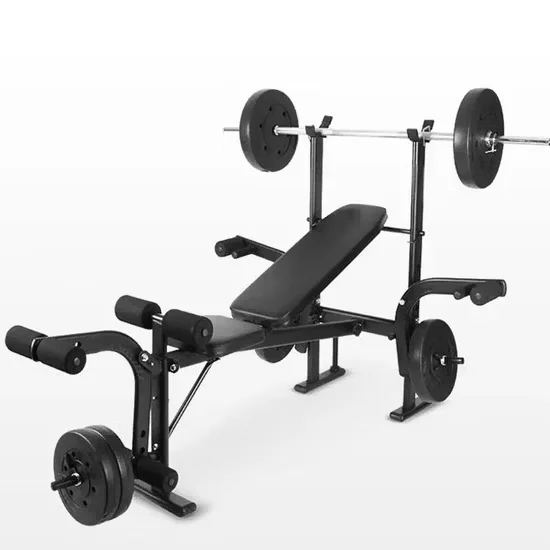
Adjustable Weight Bench, ≥200kg Max Bearing, 150×105×50cm Dimensions — engineered with reinforced steel frame and multi-position backrest for incline, decline, and flat training. Adjustment mechanism designed for stable load distribution across angles, with high-density upholstery resistant to tearing under daily commercial use. Every unit undergoes load testing before shipment, backed by a 10-year frame warranty for high-traffic environments.
// Spec Highlights
• Direct from Manufacturer · No Middlemen · Worldwide Shipping
01
// Material
Imported Solid Wood
Premium hardwood frames sourced for density and visual warmth.
02
// Hardware
Medical-Grade Silent
Whisper-quiet pulleys and springs for clinical environments.
03
// Customization
Appearance OEM
Color, upholstery, and branding tailored to your studio.
04
// Service
Layout Design
Free venue planning for studios and rehab institutions.
Every component is selected for longevity, performance, and aesthetic harmony - from imported hardwood frames to silent medical-grade accessories.
// Features
Reinforced Pivot Joints — The adjustment mechanism uses ladder-style positioning with hardened steel pins to eliminate play after repeated angle changes in daily commercial use.
| Parameter | Value |
|---|---|
| Product Type | Adjustable Bench |
| Load Capacity | ≥200kg |
| Material | Metal (Steel Frame) |
| Product Dimensions | 150×105×50cm |
| Net Weight | 26kg |
| Color | Black (Customizable) |
| Foldable | No |
| Condition | New |
| Logo | Customized Logo Accept |
| Upholstery | Standard or high-density options available |
| Frame Steel | 11-gauge, 3×3 inch tube |
| Welding Type | Robotic MIG, continuous weld |
| Powder Coating | 200μm scratch-resistant finish |
| Adjustment Positions | Multi-angle (incline, decline, flat) |
| Certification | ISO 9001:2015, CE, SGS verified |
| Warranty | 10-year frame warranty |
| Facility Type | Typical Use |
|---|---|
| Commercial Gym Strength Floor | Primary dumbbell pressing station for chest, shoulder, and incline work |
| Hotel Fitness Center | Multi-user adjustable bench for diverse guest strength routines |
| University Strength & Conditioning Room | High-density bench deployment for team training circuits |
| Rehabilitation & Performance Center | Controlled-angle positioning for progressive load rehabilitation |
Many adjustable benches advertise "commercial grade" without verifiable steel specifications — thin-gauge frames flex under heavy dumbbell work, and adjustment pins wear loose within months of daily use. A commercial adjustable weight bench must resist deflection at the pivot joint and maintain pin-lock integrity across thousands of angle transitions. When frame tubing is undersized or steel grade is unspecified, the main beam warps under repeated eccentric loading. Spot welds at stress concentration points crack before visible deformation occurs, creating sudden structural failure during use. [NEED_CITE: structural steel gauge requirements for dynamic loading in fitness equipment]
This commercial adjustable weight bench serves as the central dumbbell pressing station across incline, decline, and flat planes, covering pectoral, deltoid, and triceps engagement patterns. In a strength-focused facility layout, it pairs with plate-loaded chest machines and cable crossover systems to create a complete pressing ecosystem. The multi-angle adjustment accommodates users ranging from 155cm to 195cm in height, with seat height and backrest angle calibrated for natural joint alignment. The fixed footprint requires 80cm clearance on all sides for safe dumbbell loading and dismounting.
Commercial adjustable weight bench frames endure three stress categories: static load during isometric holds, impact load during dumbbell placement, and eccentric load during controlled lowering phases. The pivot joint where the backrest connects to the base frame experiences the highest cyclic fatigue, as every angle adjustment shifts the load vector. Continuous robotic MIG welding at this junction distributes stress along the full weld seam rather than concentrating it at discrete spot weld points. Sealed bearings at adjustment pivot points resist contamination from gym floor dust and sweat, preventing the play that develops in unsealed bushings within the first year. Upholstery density directly affects compression set — low-density foam collapses permanently after six months of heavy use, while high-density options maintain structural support across thousands of compression cycles. The 200μm powder coating resists chipping at contact points where barbells or dumbbells rest against the frame, preventing bare steel exposure and subsequent corrosion. [NEED_CITE: weld classification and fatigue performance in structural steel joints]
Frame steel gauge and tube dimensions determine the deflection threshold under dynamic loading. An 11-gauge steel tube with 3×3 inch cross-section provides significantly higher moment of inertia than 14-gauge alternatives, resisting bending under off-center dumbbell placement. The ladder-style adjustment mechanism with hardened steel pins eliminates the rotational play that develops in pin-lock systems after repeated use. Robotic MIG welding produces continuous weld seams with consistent penetration depth, eliminating the cold joints and incomplete fusion that characterize manual spot welding. Sealed industrial bearings at pivot points maintain smooth adjustment action in environments contaminated by chalk dust, sweat, and cleaning chemicals. The 200μm powder coating thickness, applied after sandblast surface preparation, provides scratch resistance at contact points and corrosion protection in humid facility environments. High-density upholstery options resist permanent compression set, extending replacement cycles in high-traffic commercial settings.
Thin-wall tubing flexes visibly under heavy dumbbell work, creating unstable pressing platforms that compromise exercise form and increase injury risk. Spot welds at frame joints pass visual inspection but crack under repeated cyclic loading, creating sudden failure without warning signs. Unsealed bearings develop play within months of commercial use, requiring frequent adjustment or complete replacement. Low-density upholstery compresses permanently, forcing facilities to replace pads every six to twelve months at recurring cost. Thin powder coating chips at contact points, exposing bare steel to sweat and humidity, accelerating corrosion and creating unsightly rust stains. Non-standard hardware dimensions make replacement parts unavailable from third-party suppliers, forcing complete frame replacement when components fail. [NEED_CITE: maintenance cost analysis of commercial fitness equipment structural components]
The 11-gauge frame steel with mill certification traceable to the coil ensures verifiable material specifications rather than vague "commercial grade" claims. Robotic MIG welding produces continuous weld lines at every structural joint, eliminating spot weld weak points that fail under cyclic loading. Every unit undergoes load testing before shipment, verifying structural integrity rather than relying on sample-based inspection. The 200μm industrial powder coating provides scratch and corrosion resistance at high-contact areas. The 10-year frame warranty reflects confidence in structural durability under commercial use conditions. 2D-3D CAD site planning support ensures this commercial adjustable weight bench integrates into your facility layout with proper clearance and traffic flow. OEM customization options allow color, logo, and upholstery specification to match facility branding.
Provide your strength area dimensions and equipment list to receive 2D-3D CAD layout planning optimized for traffic flow and safety clearance. Specify daily user volume to confirm this commercial adjustable weight bench meets your facility’s structural demands. Indicate target user height range to verify adjustment mechanism accommodates your member demographics. Custom color, logo, and upholstery specifications available for facility branding alignment.
Q: How do I distinguish commercial-grade adjustable benches from light-commercial alternatives?
A: Commercial-grade benches use 11-gauge or heavier steel with verifiable mill certification, not vague "commercial grade" claims. Frame tubes measure 3×3 inch minimum cross-section. Welding is continuous robotic MIG, not spot weld. Adjustment mechanisms use ladder-style positioning with hardened pins, not simple pin-lock systems. Load capacity exceeds 200kg with unit-by-unit testing, not sample-based inspection.
Q: What frame steel gauge is necessary for heavy dumbbell pressing?
A: For commercial dumbbell pressing with loads exceeding 40kg per hand, 11-gauge steel (approximately 3mm wall thickness) in 3×3 inch tube cross-section provides adequate rigidity. Thinner gauges like 14-gauge flex under heavy eccentric loading, creating unstable pressing platforms. Steel grade must be mill-certified Q235 or Q345, not unspecified mild steel. The 3×3 inch tube dimension provides higher moment of inertia than round tubes of equivalent weight.
Q: How many adjustment positions and what angle range provide exercise versatility?
A: Multi-angle adjustment covering incline (15° to 75°), decline (-15° to -30°), and flat (0°) positions supports comprehensive pressing variations. Ladder-style positioning with 7° increments provides precise angle selection. Hardened steel pins eliminate play at each position. Seat angle adjustment complements backrest positioning for proper lumbar support across all inclinations.
Q: What is the upholstery replacement cycle for commercial use?
A: Standard-density upholstery typically requires replacement every 12-18 months under high-traffic commercial use due to permanent compression set and vinyl tearing. High-density foam options extend service life significantly, maintaining support through thousands of compression cycles. Vinyl thickness and stitching quality affect tear resistance. Replacement pads should be readily available from the manufacturer to minimize equipment downtime.
Q: What footprint dimensions and spacing are required for bench stations?
A: The bench footprint measures 150×105×50cm. Minimum 80cm clearance on all sides allows safe dumbbell loading, user dismounting, and traffic flow. In high-density layouts, maintain 120cm between bench rows for equipment access and emergency egress. Floor mounting is not required, but rubber flooring protects both equipment and subfloor from dumbbell impact damage.
Premium aesthetics meet quiet operation for boutique studio environments.
Medical-grade silence and precision for sports & postpartum recovery.
Furniture-grade craftsmanship for premium residential installations.
Compact premium setups for one-on-one and small-group training.
Aesthetic Pilates integration for hybrid wellness studio programming.
Multi-unit deployment with instructor-grade reliability for certification programs.
Tell us about your project. Our team will respond within 24 hours with pricing, customization options, and shipping details.
// Sales Director
William
+86 132 2531 1800
// Export Manager
Bella
+86 198 5412 8032
william@bickfit.com