01 / Scenario
STUDIO
P
High-End Pilates Studios
Premium aesthetics meet quiet operation for boutique studio environments.
ISO
9001
CE
Certified
OEM
Available
10YR
Warranty
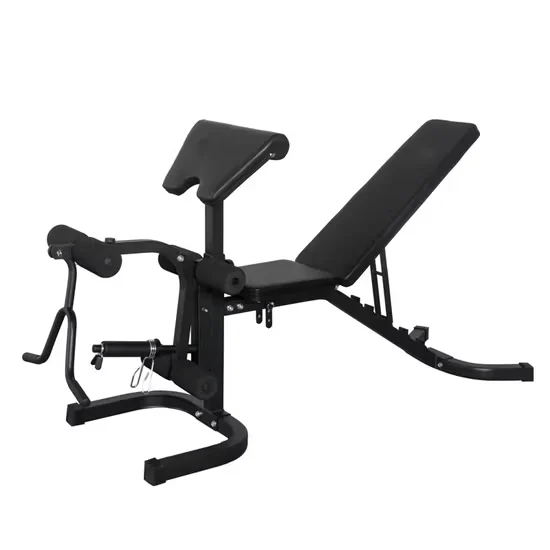
Adjustable Weight Bench with Leg Extension, Multi-Position Backrest, 150kg-200kg Load Capacity — constructed with steel frame tubing and continuous welded base joints for stable dumbbell pressing without flex. Integrated leg extension attachment and adjustment ladder bar maintain alignment under repeated commercial use. Every unit undergoes individual load testing before shipment, backed by a 10-year frame warranty and floor planning support for high-density layouts.
// Spec Highlights
• Direct from Manufacturer · No Middlemen · Worldwide Shipping
01
// Material
Imported Solid Wood
Premium hardwood frames sourced for density and visual warmth.
02
// Hardware
Medical-Grade Silent
Whisper-quiet pulleys and springs for clinical environments.
03
// Customization
Appearance OEM
Color, upholstery, and branding tailored to your studio.
04
// Service
Layout Design
Free venue planning for studios and rehab institutions.
Every component is selected for longevity, performance, and aesthetic harmony - from imported hardwood frames to silent medical-grade accessories.
// Features
Precision-Welded Frame Integrity — Every joint on this adjustable bench is completed with continuous robotic MIG welding, eliminating the spot-weld fractures that typically appear after months of heavy dumbbell pressing in commercial environments.
| Parameter | Value |
|---|---|
| Product Type | Adjustable Weight Bench with Leg Extension |
| Frame Material | Steel (Q235 industrial grade) |
| Load Capacity | 150kg–200kg |
| Product Dimensions | 185×122×66 cm |
| Adjustment | Multi-position adjustable backrest |
| Foldable | No |
| Certification | CE, ISO, RoHS |
| Customization | Custom logo available |
| Condition | Available in new or verified pre-owned |
| Facility Type | Typical Use |
|---|---|
| Commercial gym strength floor | Dumbbell pressing, seated isolation, and leg extension movements in high-traffic free weight zones |
| Hotel fitness center | Versatile bench station for guests performing upper and lower body exercises |
| University athletic facility | Strength and conditioning rooms supporting daily team and individual training sessions |
| Fitness studio | Compact bench platform for small-group and personal training environments |
Many units marketed as commercial adjustable weight bench with leg extension options rely on vague steel claims and thin-wall frames that visibly flex under loaded dumbbell presses, while adjustment ladder bars loosen and pivot points develop lateral play within the first season of daily use. This bench addresses that failure mode with a steel frame engineered for structural rigidity across all backrest positions. Operators who have replaced benches every eighteen months due to frame deflection or pivot wobble recognize that the gauge of the steel and the continuity of the weld at the base joints, backrest pivot, and leg extension mount are what determine whether a bench survives commercial volume. [NEED_CITE: structural steel gauge requirements for stationary fitness equipment under dynamic loading]
This commercial adjustable weight bench with leg extension attachment occupies the intersection of pressing, seated isolation, and lower-body extension work, making it a dense-use anchor in any strength floor layout. It complements power racks, dumbbell racks, and plate-loaded machines by covering the movement patterns those stations cannot address without a dedicated bench platform. The multi-position backrest and integrated leg extension allow a single footprint to serve users across a wide stature range, which matters in facilities where square meter cost per station is a primary constraint.
A bench in a high-traffic gym endures static compression from loaded pressing, eccentric impact when users drop into the seat, and off-center forces during unilateral dumbbell work. The welds at the base-to-column joint and the leg extension mounting bracket experience the highest cyclic stress, and any discontinuity in the weld profile becomes a fatigue initiation point over thousands of daily cycles. The pivot mechanism of the backrest adjustment and the leg extension hinge are also subject to wear, particularly when dust, chalk, and sweat migrate into the bearing surfaces. Upholstery contact points degrade from compression and cleaning chemicals, while the powder coat at grip edges and foot contact zones is the first area to show chip-through if coating thickness is insufficient. [NEED_CITE: weld classification and fatigue performance in structural steel joints]
The load capacity range of 150kg to 200kg reflects the combined user and implement weight the frame is rated to support without permanent deflection, but the real differentiator is the steel gauge and tube cross-section behind that number. Heavier gauge steel with a larger cross-sectional dimension raises the deflection threshold, meaning the frame resists flex during heavy dumbbell presses even at the most extended backrest angles. The multi-position adjustment mechanism, whether ladder bar or pin-lock, determines how tightly the backrest locks under load and how much lateral play develops over time. Welding method matters equally: continuous robotic MIG welds produce a uniform throat thickness along the entire joint, whereas spot welds leave unwelded gaps that become stress concentrators. Upholstery density and vinyl gauge dictate how long the pad retains shape under daily commercial compression before replacement is needed.
Facilities that purchase benches based on price alone often discover that thin-wall tubing flexes noticeably under loads above a moderate dumbbell weight, creating instability during pressing and increasing the risk of user injury. Spot-welded joints at the base and pivot points crack under repeated cycling, and the repair cost or full replacement frequently exceeds the original savings. Non-sealed adjustment mechanisms allow chalk and moisture to enter, accelerating wear and producing the audible play that signals imminent failure. Low-density upholstery compresses permanently within weeks in a commercial setting, forcing operators to source replacement pads that may not match the original mounting pattern. Coating that chips at contact points exposes bare steel to sweat and cleaning agents, initiating surface corrosion that spreads beneath adjacent coating. [NEED_CITE: powder coating adhesion and corrosion resistance in high-traffic fitness environments]
The frame is constructed from mill-certified Q235 industrial steel with traceable coil origin, ensuring that the gauge and grade match the rated load capacity rather than a marketing claim. Robotic MIG welding produces continuous weld lines at every structural joint, removing the spot-weld weak points that fail under commercial cycling. Every unit undergoes load testing before shipment, not sample-based inspection, so the bench you receive has been verified against its rated capacity. The 200μm industrial powder coating provides chip and scratch resistance at high-contact edges, extending the visual and protective life of the finish. A 10-year frame warranty covers the structural integrity of the steel, giving operators long-term confidence in the investment. For facilities planning a full strength floor, 2D-3D CAD layout support ensures this commercial adjustable weight bench with leg extension is positioned with correct spacing and safe clearance from adjacent stations. OEM customization including logo placement is available for chain operators and private-label programs.
Provide the total strength area dimensions and the equipment list for your facility to receive a 2D-3D CAD layout showing how this commercial adjustable weight bench with leg extension integrates with adjacent stations. Indicate the expected daily user volume so the structural grade can be matched to your traffic density. Specify the target user stature range to confirm that the multi-position backrest and seat height accommodate your membership profile. Customization requests for color, logo placement, or upholstery options can be included in the same inquiry.
Q: How do I distinguish a commercial-grade adjustable bench from a light-commercial model?
A: Examine the frame steel gauge and tube dimensions rather than relying on the term commercial grade alone. A commercial bench uses heavier gauge steel with a larger cross-section that resists flex under loaded dumbbell pressing, and the adjustment mechanism locks tightly without lateral play. Continuous robotic welding at all structural joints, rather than spot welds, is another indicator of commercial durability.
Q: What frame steel gauge is needed for heavy dumbbell pressing on an adjustable bench?
A: Heavier gauge steel with a larger tube cross-section raises the deflection threshold, meaning the frame remains rigid during pressing even at extended backrest angles. The rated load capacity should reflect the combined user and implement weight, and the steel grade should be traceable to mill certification rather than stated as a generic commercial claim.
Q: How do adjustment mechanism types affect long-term durability?
A: Ladder bar and pin-lock mechanisms differ in how tightly they secure the backrest under load and how much play develops over repeated adjustment cycles. A well-machined mechanism with precise tolerances maintains a firm lock and resists wobble, while loose tolerances allow movement that accelerates wear and creates instability during pressing.
Q: What determines the replacement cycle for bench upholstery in a commercial setting?
A: Upholstery density and vinyl thickness determine how long the pad retains shape under daily compression. High-density foam resists permanent deformation longer than low-density alternatives, and replacement availability depends on whether the manufacturer stocks matching pads with the correct mounting pattern for the specific bench model.
Q: What footprint and spacing requirements apply to bench stations in a commercial gym?
A: The bench footprint of 185×122×66 cm requires adequate clearance on all sides for safe user access, dumbbell loading, and movement during exercises. Spacing between adjacent benches and nearby equipment should allow users to enter, exit, and perform movements without interference, following recognized layout standards for commercial strength floors.
Premium aesthetics meet quiet operation for boutique studio environments.
Medical-grade silence and precision for sports & postpartum recovery.
Furniture-grade craftsmanship for premium residential installations.
Compact premium setups for one-on-one and small-group training.
Aesthetic Pilates integration for hybrid wellness studio programming.
Multi-unit deployment with instructor-grade reliability for certification programs.
Tell us about your project. Our team will respond within 24 hours with pricing, customization options, and shipping details.
// Sales Director
William
+86 132 2531 1800
// Export Manager
Bella
+86 198 5412 8032
william@bickfit.com

![Commercial Smith Machine Power Rack for Home Gym [WARN] draft identifier mismatch](https://bickgym.com/wp-content/uploads/2026/08/commercial-smith-machine-power-rack-for-home-gym-warn-draft-identifier-mismatch-94c335.webp)