01 / Scenario
STUDIO
P
High-End Pilates Studios
Premium aesthetics meet quiet operation for boutique studio environments.
ISO
9001
CE
Certified
OEM
Available
10YR
Warranty
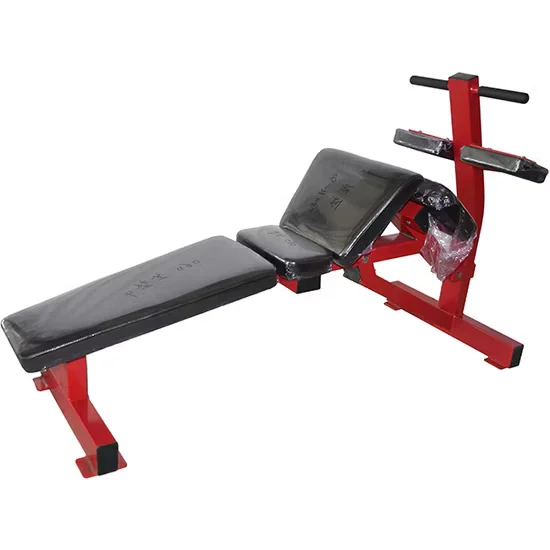
Commercial Abdominal Board, 1670×600×790mm, 60kg Net Weight, Manual Bodyweight Loading — engineered with industrial steel frame and robotic MIG continuous welding to eliminate stress concentration points under repetitive flexion loads. Sealed bearings resist sweat corrosion, while 200μm powder coating prevents chipping at contact zones in high-traffic environments. Every unit undergoes individual load testing before shipment, backed by 10-year frame warranty and free floor planning CAD support.
// Spec Highlights
• Direct from Manufacturer · No Middlemen · Worldwide Shipping
01
// Material
Imported Solid Wood
Premium hardwood frames sourced for density and visual warmth.
02
// Hardware
Medical-Grade Silent
Whisper-quiet pulleys and springs for clinical environments.
03
// Customization
Appearance OEM
Color, upholstery, and branding tailored to your studio.
04
// Service
Layout Design
Free venue planning for studios and rehab institutions.
Every component is selected for longevity, performance, and aesthetic harmony - from imported hardwood frames to silent medical-grade accessories.
// Features
Robotic continuous MIG welds — every joint on this commercial abdominal board gym equipment uses full-penetration continuous welds, eliminating the crack-prone spot welds found in lighter alternatives.
| Parameter | Value |
|---|---|
| Product Type | Abdominal Trainer |
| Frame Material | Q235 Industrial Steel |
| Frame Tube Size | 3×3 inch |
| Welding Type | Robotic MIG Continuous Weld |
| Loading Type | Bodyweight |
| Product Dimensions | 1670×600×790mm |
| Net Weight | 60kg |
| Assembly State | Unfolded |
| Power Source | Manual |
| Powder Coating | 200μm Scratch-Resistant |
| Certification | ISO 9001, CE |
| OEM/ODM | Available |
| Transport Package | Plywood Case |
| Facility Type | Typical Use |
|---|---|
| Commercial Gym Strength Floor | Core isolation station between plate-loaded and selectorized rows |
| Hotel Fitness Center | Low-maintenance bodyweight core station for transient user populations |
| University Strength & Conditioning Room | High-repetition core circuit endpoint |
| Rehabilitation & Performance Center | Controlled supine flexion for post-injury core reconditioning |
| CrossFit Box Functional Zone | Supplementary core station adjacent to rig area |
Continuous robotic welds distribute cyclic stress across the entire joint, not a single fusion dot.
Abdominal flexion equipment endures repetitive eccentric loading as users lower their torsos against gravity. Markets flooded with units labeled "commercial grade" use vague tube gauge claims and spot-welded joints that pass visual QC but develop micro-cracks within months of high-traffic use [NEED_CITE: weld classification and fatigue performance in structural steel]. The commercial abdominal board gym equipment you specify must survive thousands of load-unload cycles at the hip pivot point, where bending moments concentrate.
This commercial abdominal board gym equipment occupies the supine core-flexion plane, targeting rectus abdominis through a fixed-path hip-flexion arc. It pairs naturally with hyperextension benches and cable crunch stations to provide complete sagittal-plane core coverage. The 1670×600mm footprint fits between rack bays without disrupting traffic flow, and the bodyweight loading eliminates plate-change downtime during peak hours. User height accommodation spans a broad range through the angled board geometry, making it suitable for mixed-population facilities.
Daily commercial environments subject the frame to repeated eccentric-concentric cycles concentrated at the pivot axis and seat-to-frame junction. Static bodyweight loads may seem modest, but the dynamic deceleration phase at the bottom of each repetition generates impact forces that multiply at welded joints [NEED_CITE: EN 957 structural requirements for stationary training equipment]. Non-sealed bearings in competitor units allow sweat and chalk dust to infiltrate, creating abrasive paste that accelerates wear. The 200μm powder coating on this unit resists the corrosive combination of sweat and alkaline gym cleaners that strip thinner finishes bare within a single summer season.
The 3×3 inch Q235 steel tube provides a section modulus that resists lateral deflection during off-center loading — a common occurrence when fatigued users shift their weight mid-set. Robotic MIG continuous welding produces uniform penetration depth along the entire seam, removing the stress-riser geometry inherent in spot welds where the heat-affected zone transitions abruptly to base metal. The 60kg net weight anchors the unit against walking during use without requiring floor bolting, while the 1670mm length ensures adequate range of motion for taller athletes. Sealed industrial bearings at the pivot point exclude contaminants that would otherwise degrade rotation smoothness within the first year of heavy use.
Thin-wall tubing flexes visibly under repeated loading, creating a perception of instability that erodes user confidence and accelerates metal fatigue at weld toes. Spot welds that fracture during use create sharp edges and sudden structural failure — a liability exposure no gym operator should accept [NEED_CITE: fatigue failure mechanisms in welded steel structures]. Non-sealed bearings require replacement within eighteen months in humid climates, adding maintenance labor and downtime. Low-density foam upholstery compresses permanently after weeks of commercial use, forcing premature replacement and leaving the unit out of service.
Every commercial abdominal board gym equipment unit ships with mill-certified Q235 steel traceable to the original coil, confirming gauge and chemistry claims. Robotic MIG welding produces continuous joints verified by three-stage QC inspection, not visual spot-checks. Each unit undergoes individual load testing before shipment — not batch sampling — documenting structural integrity at the serial-number level. The 200μm industrial powder coating withstands contact-point abrasion and chemical exposure that chips thinner finishes. BICKFIT provides 2D-3D CAD floor planning to ensure this 1670×600mm unit integrates with proper safety clearances in your strength zone layout. A 10-year frame warranty backs the structural engineering, and OEM private-label programs accommodate branding requirements.
Provide your strength area dimensions and equipment list to receive a 2D-3D CAD floor plan showing optimal placement of this commercial abdominal board gym equipment with code-compliant safety clearances. Specify your daily user volume to confirm the structural grade matches your traffic density. Indicate target user height ranges to verify the board geometry accommodates your population. Custom color, logo placement, and upholstery options are available through the OEM program.
Q: How does continuous robotic welding differ from spot welding in long-term durability?
A: Continuous robotic MIG welding creates a uniform fusion seam along the entire joint length, distributing cyclic stress evenly. Spot welds concentrate force at discrete points where heat-affected zones become fatigue initiation sites. Under thousands of abdominal flexion cycles, continuous welds resist crack propagation while spot welds develop micro-fractures that eventually compromise structural integrity in high-traffic commercial environments.
Q: What steel specification ensures the frame resists deformation under repetitive loading?
A: This unit uses Q235 industrial steel in 3×3 inch tubing, providing adequate section modulus to resist lateral deflection during off-center bodyweight loading. The material offers consistent yield behavior under cyclic stress without the warping seen in thin-wall alternatives. Mill certification traceable to the coil confirms gauge and chemistry, preventing suppliers from substituting unspecified "commercial grade" tube that lacks verifiable structural properties.
Q: How do sealed bearings affect maintenance intervals in commercial settings?
A: Sealed industrial bearings exclude sweat, chalk dust, and humidity from the pivot mechanism, preventing abrasive contamination that accelerates wear. Non-sealed alternatives allow particulate infiltration that creates grinding paste, causing play and noise within months. Sealed units maintain smooth rotation through extended service intervals, reducing downtime for bearing replacement and eliminating the squeaking that signals impending failure to gym members.
Q: What floor space and clearance does this abdominal trainer require?
A: The unit measures 1670×600×790mm and requires minimum 600mm clearance on all sides for safe user mounting, dismounting, and emergency exit. This positions the total footprint at approximately 2870×1800mm including safety zones. BICKFIT provides 2D-3D CAD floor planning to integrate this equipment into your layout while maintaining compliant traffic aisles and ensuring proper spacing between adjacent strength stations.
Premium aesthetics meet quiet operation for boutique studio environments.
Medical-grade silence and precision for sports & postpartum recovery.
Furniture-grade craftsmanship for premium residential installations.
Compact premium setups for one-on-one and small-group training.
Aesthetic Pilates integration for hybrid wellness studio programming.
Multi-unit deployment with instructor-grade reliability for certification programs.
Tell us about your project. Our team will respond within 24 hours with pricing, customization options, and shipping details.
// Sales Director
William
+86 132 2531 1800
// Export Manager
Bella
+86 198 5412 8032
william@bickfit.com