01 / Scenario
STUDIO
P
High-End Pilates Studios
Premium aesthetics meet quiet operation for boutique studio environments.
ISO
9001
CE
Certified
OEM
Available
10YR
Warranty
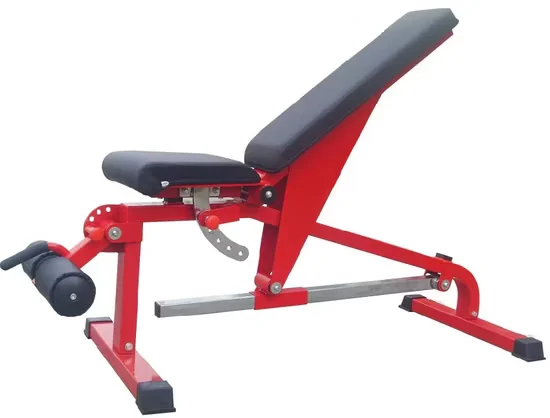
Commercial Adjustable Bench, 1865×700×1420 mm, 58 kg Net Weight — engineered with reinforced steel frame and multi-position backrest adjustment for heavy dumbbell and barbell pressing in high-traffic commercial environments. Industrial-grade upholstery resists splitting under daily use, while continuous welded construction eliminates flex and joint fatigue. Each unit undergoes load testing before shipment, backed by a 10-year frame warranty and free floor planning support for optimal free weight zone layout.
// Spec Highlights
• Direct from Manufacturer · No Middlemen · Worldwide Shipping
01
// Material
Imported Solid Wood
Premium hardwood frames sourced for density and visual warmth.
02
// Hardware
Medical-Grade Silent
Whisper-quiet pulleys and springs for clinical environments.
03
// Customization
Appearance OEM
Color, upholstery, and branding tailored to your studio.
04
// Service
Layout Design
Free venue planning for studios and rehab institutions.
Every component is selected for longevity, performance, and aesthetic harmony - from imported hardwood frames to silent medical-grade accessories.
// Features
Steel Traceability — 11-gauge frames built from Q345 industrial coils with documentation traceable to the mill, ensuring every bench in the free weight zone meets the same structural baseline.
| Parameter | Value |
|---|---|
| Product Type | Adjustable Bench |
| Frame Steel Gauge | 11-gauge |
| Frame Tube Size | 3×3 inch |
| Steel Grade | Q235 / Q345 industrial steel |
| Welding Type | Robotic continuous MIG |
| Adjustment Positions | Multi-position ladder pin |
| Upholstery | High-density commercial vinyl, optional thickness |
| Powder Coating | 200μm scratch-resistant finish |
| Product Dimensions | 1865 × 700 × 1420 mm |
| Net Weight | 58 kg |
| Certification | ISO 9001, CE |
| Warranty | 10-year frame |
| Facility Type | Typical Use |
|---|---|
| Commercial gym free weight zone | Primary dumbbell and barbell pressing platform for general membership |
| Hotel and resort fitness center | Heavy-duty pressing station built to withstand varied user technique and maintenance gaps |
| University strength and conditioning room | Adjustable pressing surface accommodating athletes across weight classes and movement requirements |
| CrossFit box functional zone | Flat-to-incline bench for accessory pressing work within programmed strength cycles |
| Rehabilitation and performance center | Stable, multi-angle pressing surface for controlled return-to-training protocols |
A bench that flexes during a heavy dumbbell press compromises the lifter’s control before the muscle reaches failure.
The commercial adjustable bench market is saturated with units labeled "commercial grade" but built from thin-wall tubing that deflects under asymmetric loading. When a lifter holds 50kg dumbbells in each hand, the frame endures forces that multiply well beyond the static weight. Thin-gauge steel combined with spot-welded joints creates stress concentrations that fatigue over months of daily use [NEED_CITE: structural deflection thresholds in tubular steel under dynamic asymmetric loading]. Spot welds pass a visual inspection on day one but develop micro-fractures that propagate under cyclic loading, eventually compromising the joint entirely. The result is a bench that wobbles during the most critical phase of a pressing movement, forcing the lifter to stabilize the equipment rather than train the target musculature.
The commercial adjustable bench anchors the pressing section of a free weight zone, bridging the gap between flat benches and dedicated incline stations. Its multi-position backrest supports movements targeting the pectorals, anterior deltoids, and triceps across multiple angles of inclination. In a typical gym layout, this unit pairs with a dumbbell rack and a set of Olympic flat benches to create a complete pressing ecosystem. It accommodates users ranging from novice lifters learning basic pressing mechanics to advanced athletes executing heavy dumbbell work, making it a high-traffic asset in facilities with diverse membership.
A bench in a busy gym sees dozens of users daily, each loading and unloading weight asymmetrically, dropping dumbbells onto the uprights, and shifting body position across the pad surface. The primary fatigue points concentrate at the junction where the backrest frame meets the base, and where the ladder-pin adjustment mechanism engages under load [NEED_CITE: fatigue cycle analysis in welded steel fitness equipment joints]. Continuous robotic MIG welding distributes stress across a full weld bead rather than concentrating it at discrete spot-weld locations, reducing the likelihood of crack initiation at these high-cycle junctions. The 200μm powder coating resists chipping at contact points where dumbbells and barbells are racked, maintaining corrosion protection where sweat and cleaning chemicals accumulate. High-density upholstery resists compression set and surface splitting, which are the most common aesthetic failures in high-traffic bench pads.
The 11-gauge frame steel paired with a 3×3 inch tube profile establishes a deflection threshold that keeps the bench rigid under heavy dumbbell loads. Thinner wall thicknesses allow the tube to ovalize under bending stress, which transfers movement to the backrest and destabilizes the lifter’s pressing path. The robotic continuous MIG welding process ensures every joint receives a full-penetration weld bead, eliminating the cold joints and incomplete fusion defects common in manual spot-welding operations. A ladder-pin adjustment mechanism provides positive engagement at each backrest position, preventing the drift and play that pop-pin systems develop after thousands of cycles. The high-density upholstery foam resists permanent compression, maintaining pad shape and user comfort through years of daily use, while the vinyl cover withstands repeated contact with sweat, chalk, and commercial cleaning agents.
Thin-wall tubing on a bench may reduce unit cost initially, but it introduces ongoing replacement expense as frames fatigue and deform under commercial use. Spot-welded joints that crack under cyclic loading create liability exposure when a lifter loses stability during a heavy set. Low-density upholstery compresses and splits within months in a busy gym, requiring pad replacements that add labor cost and downtime. Thin powder coatings chip at the contact points where dumbbells are racked, exposing bare steel to sweat and cleaning chemicals that accelerate corrosion. When a facility specifies structure based on initial price rather than lifecycle durability, the cumulative cost of replacements, repairs, and liability management exceeds the upfront savings within a few operational years [NEED_CITE: lifecycle cost analysis of commercial fitness equipment under high-frequency use].
The 11-gauge frame with mill-certified steel traceability means every batch of benches in a facility meets the same documented structural standard, eliminating the variability that plagues generic sourcing. Robotic continuous MIG welding on the main frame junctions ensures weld integrity that survives years of asymmetric dumbbell loading without crack propagation. Each unit undergoes load testing before shipment, confirming structural performance on a per-bench basis rather than relying on sample-based quality assumptions. The 200μm scratch-resistant powder coating maintains appearance and corrosion protection through years of contact with dumbbells, sweat, and cleaning agents. A 10-year frame warranty reflects confidence in the structural design, and 2D-3D floor planning CAD support ensures the bench integrates into the free weight zone with safe clearance for dumbbell movement and user traffic flow. OEM options for color, logo, and upholstery allow facility branding without compromising structural specifications.
Provide the total square footage and existing equipment list for the free weight area to receive a 2D-3D floor plan that integrates the adjustable bench with safe clearance for dumbbell traffic. Specify expected daily user volume and peak-hour density so the structural grade matches the operational demand. Indicate the target user population’s body size range to confirm the adjustment positions accommodate the full membership. Detail any customization requirements for frame color, logo placement, or upholstery material to align the bench with facility branding.
Q: How do you differentiate a true commercial adjustable bench from a light-commercial unit?
A: Request the mill-certified steel specification showing gauge and grade. True commercial benches use 11-gauge or thicker tubing with documented traceability, continuous MIG welding, and per-unit load testing. Light-commercial units typically rely on thinner tubing, spot welding, and sample-based quality checks that do not guarantee structural consistency across production batches.
Q: What frame specifications are necessary for heavy dumbbell pressing on an adjustable bench?
A: An 11-gauge frame with a 3×3 inch tube profile provides the deflection resistance needed when lifters handle heavy dumbbells. The tube wall thickness prevents ovalization under bending stress, while continuous welds at the backrest-to-base junction distribute cyclic loads without developing fatigue cracks at discrete stress points.
Q: How does the adjustment mechanism affect long-term reliability?
A: A ladder-pin system provides positive mechanical engagement at each backrest angle, preventing the gradual play and positional drift that pop-pin mechanisms develop after repeated cycling. This matters in commercial settings where a loose backrest compromises lifter stability and requires frequent maintenance intervention to remain operational.
Q: What upholstery specifications withstand daily commercial use?
A: High-density foam resists permanent compression and maintains pad shape through thousands of loading cycles. A thick vinyl cover with reinforced stitching withstands daily contact with sweat, chalk, and cleaning chemicals. Confirm that replacement pads are available as spare parts, as upholstery is the highest-wear component on any bench in a busy free weight zone.
Q: How should adjustable benches be spaced within a free weight zone for safe operation?
A: Each bench requires lateral clearance for dumbbell arcs and spotter positioning, typically matching the width of the user’s extended arms plus movement margin. A floor plan that accounts for bench footprint, dumbbell rack proximity, and traffic lanes prevents congestion during peak hours and reduces collision risk between adjacent training stations.
Premium aesthetics meet quiet operation for boutique studio environments.
Medical-grade silence and precision for sports & postpartum recovery.
Furniture-grade craftsmanship for premium residential installations.
Compact premium setups for one-on-one and small-group training.
Aesthetic Pilates integration for hybrid wellness studio programming.
Multi-unit deployment with instructor-grade reliability for certification programs.
Tell us about your project. Our team will respond within 24 hours with pricing, customization options, and shipping details.
// Sales Director
William
+86 132 2531 1800
// Export Manager
Bella
+86 198 5412 8032
william@bickfit.com