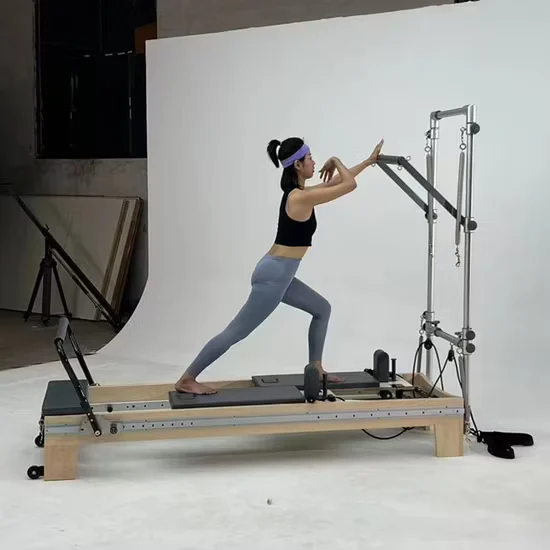
01 / Scenario
STUDIO
P
High-End Pilates Studios
Premium aesthetics meet quiet operation for boutique studio environments.
ISO
9001
CE
Certified
OEM
Available
10YR
Warranty
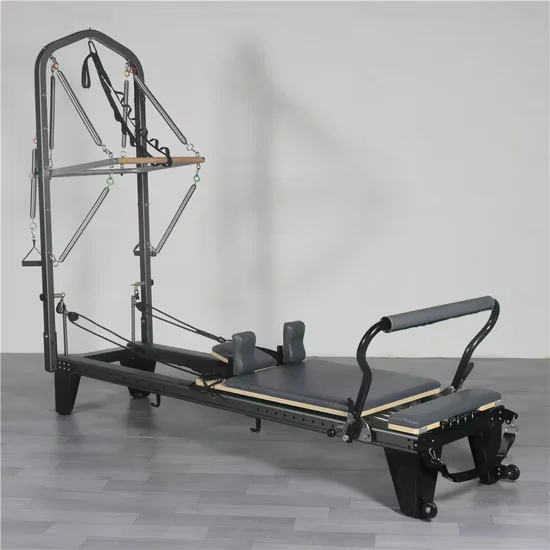
Pilates Reformer with Tower, 2390×900×1960mm, 120kg Net Weight — aluminium alloy frame delivers structural rigidity while reducing overall mass for flexible studio layouts. Includes Long Box, Jump Board, and Platform for complete exercise programming across commercial and rehabilitation environments. Every unit undergoes 32-point inspection and full load testing before shipment to ensure commercial-grade reliability.
// Spec Highlights
• Direct from Manufacturer · No Middlemen · Worldwide Shipping
01
// Material
Imported Solid Wood
Premium hardwood frames sourced for density and visual warmth.
02
// Hardware
Medical-Grade Silent
Whisper-quiet pulleys and springs for clinical environments.
03
// Customization
Appearance OEM
Color, upholstery, and branding tailored to your studio.
04
// Service
Layout Design
Free venue planning for studios and rehab institutions.
Every component is selected for longevity, performance, and aesthetic harmony - from imported hardwood frames to silent medical-grade accessories.
// Features
Load-Tested Commercial Frames — every unit undergoes full load testing before leaving the factory, ensuring structural integrity for studio environments.
| Parameter | Value |
|---|---|
| Product Type | Pilates Reformer with Tower |
| Model NO. | SRY-11 |
| Frame Material | Aluminium Alloy |
| Net Weight | 120 kgs |
| Dimensions | 2390 × 900 × 1960 mm |
| Accessories Included | Long Box, Jump Board, Platform |
| Warranty | 3 Years |
| Custom Branding | Logo Customization Available |
| Target User | Adult, Unisex |
| Facility Type | Typical Use |
|---|---|
| Commercial Pilates Studio | Group and private sessions across multiple daily time slots |
| Boutique Fitness Studio | Branded class environments with customized equipment appearance |
| Rehabilitation and Physiotherapy Center | Controlled low-impact movement and progressive resistance work |
| Hotel and Resort Wellness Facility | Guest-accessible wellness programming in spa and fitness areas |
| Private Home Studio | Dedicated personal practice space with full accessory range |
Lighter frames allow instructors to reconfigure studio layouts between classes without equipment dolly or extra staff.
Many studio owners have moved reformers that were spec’d as commercial grade, only to find the steel frames weigh too much for quick repositioning and the weld joints show stress marks within months of pivoting the carriage under spring tension. A commercial aluminium pilates reformer with tower solves this by cutting frame mass while maintaining rigidity across the rail system, which matters when a studio runs back-to-back classes and needs to switch between mat-adjacent and reformer configurations several times a day. The real cost of a heavy, poorly balanced reformer is not the purchase price — it is the instructor time and floor damage from dragging equipment that was never designed to move [NEED_CITE: EN 957 structural requirements for stationary training equipment].
This reformer with tower configuration supports the full spectrum of Pilates repertoire, from supine footwork through standing tower exercises that engage the posterior chain and lateral stabilizers. In a studio layout, it pairs with mat zones and smaller apparatus like stability chairs to create circuit-style class formats. The 2390 mm length accommodates users across a wide height range without requiring carriage extension adjustments mid-class, which keeps session flow uninterrupted in high-schedule environments. A commercial aluminium pilates reformer with tower belongs at the center of any studio floor plan where space permits permanent or semi-permanent placement.
Spring-loaded carriage systems generate cyclic tension and release across hundreds of repetitions daily, concentrating fatigue at the carriage mounting points and rail contact surfaces. In a studio running six to eight classes per day, the aluminium frame must resist micro-deflection at the tower junction where lateral forces from arm and leg spring work create torsional load. Sealed bearing performance directly determines whether the carriage maintains smooth travel or develops the lateral play that instructors notice as wobble during single-leg footwork [NEED_CITE: bearing classification and fatigue performance in cyclic loading applications]. Upholstery contact points on the shoulder rests and headrest compress repeatedly under body weight, and low-density foam breaks down visibly within months of commercial scheduling.
Aluminium alloy framing delivers a strength-to-weight ratio that lets a 120 kg reformer stay stable during jump board work while remaining movable by one person for floor cleaning and layout changes. The 2390 × 900 mm footprint provides adequate carriage travel for tall users without extending into adjacent station clearance zones. Net weight at 120 kgs sits in the range where the frame mass absorbs vibration from spring recoil without requiring floor anchoring, which matters in leased commercial spaces where bolt-down installations are restricted. The three-year warranty window aligns with typical studio equipment refresh cycles and signals the manufacturer expects the frame and rail system to survive the warranty period without structural intervention [NEED_CITE: material fatigue standards for aluminium alloy structural components].
Thin-walled aluminium tubing bends under jump board impact, and once the rail alignment shifts, the carriage drags and the pulley cables wear unevenly. Non-sealed bearings in the carriage wheels accumulate chalk dust and sweat residue, developing play that instructors feel as lateral carriage movement during precision work. Low-density upholstery on the shoulder blocks compresses flat within a season of heavy booking, and replacement pads are often unavailable from suppliers who treat accessories as an afterthought. Powder coating that chips at the tower mounting bracket exposes bare aluminium to oxidation, which is cosmetic on steel but structurally concerning on alloy frames where surface corrosion accelerates fatigue cracking.
Mill-certified aluminium alloy sourcing means the frame material is traceable to the production batch, not a generic alloy blend with unknown fatigue properties. Robotic MIG welding at the tower junction produces continuous weld lines without the cold joints that hand welding leaves at high-stress intersections. Every unit is load tested before shipment, which catches carriage alignment issues and frame deflection problems that sample-based QC misses. The 200μm powder coating protects the aluminium frame from sweat corrosion and cleaning chemical exposure in studio environments where equipment is wiped down between every session. A three-year warranty on this commercial aluminium pilates reformer with tower is backed by a manufacturing process designed to deliver consistent structural output across production runs.
Provide your studio floor dimensions and current class schedule density to receive a 2D layout showing reformer placement with safe clearance zones. Specify daily session count and average user profile so we can confirm the structural specification matches your usage pattern. Share your branding requirements including logo placement and color preferences to review customization options for your commercial aluminium pilates reformer with tower order.
Q: How does an aluminium frame compare to steel for daily studio use?
A: Aluminium alloy reduces overall reformer weight, making layout changes between classes manageable for one instructor. The frame maintains rigidity under spring tension and jump board impact when the alloy grade and tube wall thickness meet commercial specifications. Steel frames are heavier and more resistant to impact damage but harder to reposition on studio floors where flexibility matters.
Q: What defines a reformer as truly commercial grade?
A: Commercial-grade reformers use traceable frame materials, sealed bearings rated for continuous cyclic loading, and upholstery density that holds shape across thousands of compression cycles. The warranty period should reflect expected studio use rather than home-use assumptions. Load testing on every unit, not just production samples, separates commercial equipment from light-duty alternatives [NEED_CITE: EN 957 classification for commercial fitness equipment].
Q: What exercises does the tower attachment enable?
A: The tower adds vertical spring resistance for standing leg work, seated arm exercises, and assisted stretching positions that a flat reformer cannot support. It expands the class repertoire to include exercises targeting the posterior chain, lateral hip stabilizers, and overhead shoulder mobility. Tower-based movements require adequate ceiling height and lateral clearance around the reformer footprint.
Q: How often should springs and cables be replaced in a studio?
A: Springs lose tension consistency after extended cyclic use, and cables develop fraying at pulley contact points under daily scheduling. Monthly visual inspection catches early wear, and replacement intervals depend on session volume and user load patterns. Keeping replacement springs and cables in stock prevents class cancellations when a component reaches end of life.
Premium aesthetics meet quiet operation for boutique studio environments.
Medical-grade silence and precision for sports & postpartum recovery.
Furniture-grade craftsmanship for premium residential installations.
Compact premium setups for one-on-one and small-group training.
Aesthetic Pilates integration for hybrid wellness studio programming.
Multi-unit deployment with instructor-grade reliability for certification programs.
Tell us about your project. Our team will respond within 24 hours with pricing, customization options, and shipping details.
// Sales Director
William
+86 132 2531 1800
// Export Manager
Bella
+86 198 5412 8032
william@bickfit.com