01 / Scenario
STUDIO
P
High-End Pilates Studios
Premium aesthetics meet quiet operation for boutique studio environments.
ISO
9001
CE
Certified
OEM
Available
10YR
Warranty
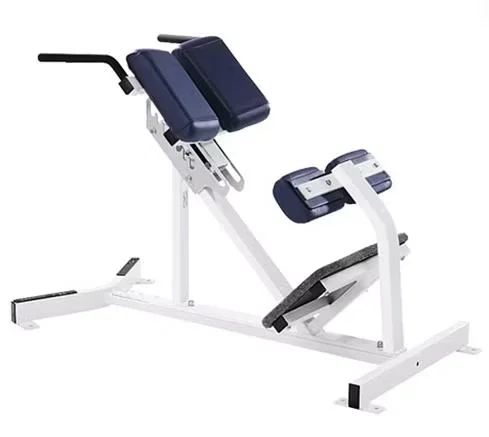
Commercial Back Extension Machine, Steel Frame, 1552×771×876mm, 42kg — engineered with adjustable pad positioning to accommodate diverse user anthropometry for targeted posterior chain development. ISO9001 and CE certified for international commercial deployment. Every unit undergoes load testing before shipment, backed by a 10-year frame warranty and direct manufacturer support.
// Spec Highlights
• Direct from Manufacturer · No Middlemen · Worldwide Shipping
01
// Material
Imported Solid Wood
Premium hardwood frames sourced for density and visual warmth.
02
// Hardware
Medical-Grade Silent
Whisper-quiet pulleys and springs for clinical environments.
03
// Customization
Appearance OEM
Color, upholstery, and branding tailored to your studio.
04
// Service
Layout Design
Free venue planning for studios and rehab institutions.
Every component is selected for longevity, performance, and aesthetic harmony - from imported hardwood frames to silent medical-grade accessories.
// Features
Traceable Mill Steel — every 11-gauge tube on this commercial back extension machine traces back to the coil certificate, not just a supplier invoice.
| Parameter | Value |
|---|---|
| Product Type | Back Extension Machine |
| Frame Steel Gauge | 11-gauge |
| Frame Tube Size | 3×3 inch |
| Steel Grade | Q235 / Q345 industrial steel, mill-certified |
| Welding Type | Robotic MIG, continuous weld lines |
| Loading Type | Manual / Bodyweight resistance |
| Bearing Type | Sealed industrial bearings |
| Upholstery | Standard or high-density options available |
| Powder Coating | 200μm scratch-resistant, sandblast pretreatment |
| Product Dimensions | 1552 × 771 × 876 mm |
| Net Weight | 42 kg |
| Adjustment Positions | Pad adjustment for user height |
| Certification | ISO 9001, CE |
| Warranty | 10-year frame |
| Facility Type | Typical Use |
|---|---|
| Commercial gym strength floor | Posterior chain warm-up and accessory work between compound lifts |
| CrossFit box functional zone | High-rep glute-ham conditioning in class programming |
| Hotel and resort fitness center | Low-maintenance lower back station for diverse guest demographics |
| University strength and conditioning room | Athlete posterior chain development under S&C coach supervision |
| Rehabilitation and performance center | Controlled lumbar extension for return-to-play protocols |
Continuous MIG welds distribute load across the full joint, eliminating the single-point fractures that end equipment life prematurely.
The pivot area on a back extension machine endures repetitive eccentric loading every time a user lowers their torso past horizontal. Spot-welded joints at this stress concentration pass visual inspection in the showroom but develop micro-cracks within months of commercial-frequency use. [NEED_CITE: weld classification and fatigue performance in structural steel] Once the crack propagates through the heat-affected zone, the pivot develops lateral play that members feel immediately — and gym owners face a liability question, not just a maintenance ticket. A commercial back extension machine built with robotic continuous welds removes this failure mode entirely.
This station targets the lumbar erectors, glutes, and hamstrings through a hip-hinge movement pattern that complements free-weight deadlifts and good mornings without duplicating their axial loading. On a commercial strength floor, it fills the gap between heavy compound platforms and isolation machines, giving members a controlled posterior chain option during peak hours when racks are occupied. The footprint suits medium-to-high traffic zones where members cycle through accessory work in circuits. Pad adjustment accommodates users across a wide height range, so the station stays in rotation rather than sitting idle for shorter or taller members.
The dominant load on this commercial back extension machine is eccentric: the user’s torso weight creates a moment arm that peaks at the horizontal position, transferring force through the pivot bearing into the main frame tube. [NEED_CITE: EN 957 structural requirements for stationary training equipment] At high traffic volumes, this produces thousands of load cycles per week concentrated at the weld joint where the pivot bracket meets the upright. Sealed bearings prevent sweat and chalk dust from penetrating the race, maintaining smooth rotation long after unsealed bushings would develop detectable play. The contact pad endures both compressive force and shear from users bracing their hips, making upholstery density and stitch pattern direct determinants of replacement intervals. Powder coating at high-wear adjustment points must resist chipping from repeated pad repositioning and exposure to cleaning chemicals applied multiple times daily.
An 11-gauge steel tube at 3×3 inches provides a deflection threshold that keeps the frame rigid under the dynamic moment created during controlled lowering and explosive extension. Thinner gauges may hold static loads but flex perceptibly during use, which members interpret as instability and which accelerates fatigue at welded joints. Robotic MIG welding produces consistent penetration depth across the full weld length, avoiding the cold joints and incomplete fusion that manual welding introduces at pivot brackets. Sealed industrial bearings at the pivot point maintain their tolerance in environments where chalk dust, sweat, and cleaning solvents are constant — a sealed unit prevents contaminant ingress that degrades bushing surfaces within the first year of heavy rotation. The 200μm powder coating, applied over sandblast pretreatment, creates mechanical adhesion that resists chipping at the pad adjustment slots where metal-on-metal contact occurs during repositioning.
A frame built from thinner-gauge tubing may look identical in a catalog photo but flexes under the eccentric load of a heavy user lowering past horizontal, transferring that movement into the weld joints where fatigue cracking begins. [NEED_CITE: structural steel fatigue under cyclic eccentric loading] Unsealed pivot bearings require scheduled maintenance intervals that pull the station off the floor — and when maintenance is deferred, as it often is in high-traffic facilities, the resulting play creates a movement feel that members avoid. Low-density upholstery compresses within months, exposing the pad board beneath and forcing replacement orders that leave the station unusable while waiting for parts. Insufficient powder coating thickness at adjustment contact points chips down to bare steel, where sweat-driven corrosion starts spreading beneath the surrounding finish before it becomes visible.
The 11-gauge frame steel arrives with mill certification traceable to the coil, not a generic material claim, so the tube wall thickness is verifiable on every unit produced. Robotic MIG welding at the pivot bracket and base joints produces continuous weld lines with consistent penetration, removing the human variability that creates cold joints on manually welded frames. Every commercial back extension machine undergoes load testing before crating — not sample-based batch testing, but individual unit verification that the pivot and frame assembly holds under applied force. The 200μm industrial powder coating over sandblast pretreatment protects adjustment contact points and high-sweat zones from the chipping and corrosion that shortens service life in humid gym environments. The 10-year frame warranty reflects confidence in these specifications rather than a marketing addition. Floor planning CAD support provides exact clearance dimensions for safe user passage around the station’s footprint during use.
Provide your strength zone dimensions and current equipment list to receive a 2D or 3D floor plan showing exact placement and safe clearance distances around this station. Specify your facility’s average daily traffic volume so the structural grade can be matched to expected load cycles. Confirm the height range of your primary user population to verify the pad adjustment positions cover the full spectrum. Indicate any customization requirements including frame color, logo placement, or upholstery material preference for brand consistency across the floor.
Q: What frame specifications differentiate commercial-grade from light-commercial back extension equipment?
A: Commercial-grade units use 11-gauge steel with mill-certified traceability and continuous robotic MIG welds at all pivot and base joints. Light-commercial frames often rely on thinner gauge tubing and spot welds that pass initial inspection but develop fatigue cracks under daily high-frequency use. The difference appears within the first year of commercial traffic.
Q: How do sealed bearings versus bushings affect maintenance requirements?
A: Sealed industrial bearings prevent sweat, chalk dust, and cleaning solvents from penetrating the pivot race, maintaining smooth rotation for years without scheduled service. Bushings allow contaminant ingress that creates measurable play within months, requiring replacement parts and floor downtime. Sealed bearings eliminate this maintenance cycle entirely.
Q: What pad adjustment range is needed to accommodate diverse user heights?
A: Effective adjustment covers users from approximately 155 cm to 195 cm by repositioning the hip pad relative to the pivot axis. The mechanism must lock securely at each position without slippage during use, and the contact surface must maintain compression resistance across the full adjustment range under repetitive loading.
Q: How should back extension machines be spaced within a commercial gym floor plan?
A: Allow clearance on all sides for users to mount, dismount, and complete full range of motion without encroaching on adjacent stations. The exact footprint plus safety margins should be confirmed through CAD layout planning that accounts for traffic flow patterns and ADA accessibility requirements in the strength zone.
Premium aesthetics meet quiet operation for boutique studio environments.
Medical-grade silence and precision for sports & postpartum recovery.
Furniture-grade craftsmanship for premium residential installations.
Compact premium setups for one-on-one and small-group training.
Aesthetic Pilates integration for hybrid wellness studio programming.
Multi-unit deployment with instructor-grade reliability for certification programs.
Tell us about your project. Our team will respond within 24 hours with pricing, customization options, and shipping details.
// Sales Director
William
+86 132 2531 1800
// Export Manager
Bella
+86 198 5412 8032
william@bickfit.com