01 / Scenario
STUDIO
P
High-End Pilates Studios
Premium aesthetics meet quiet operation for boutique studio environments.

ISO
9001
CE
Certified
OEM
Available
10YR
Warranty
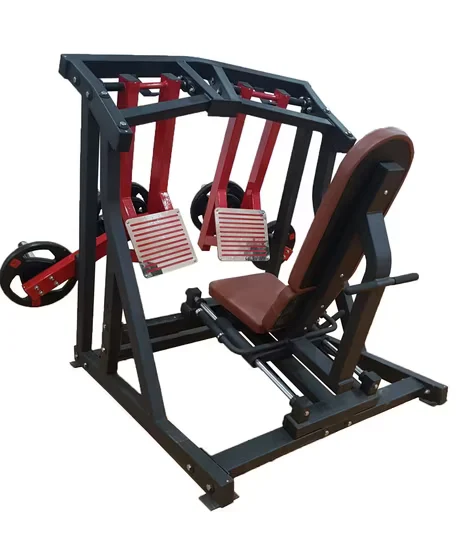
Commercial Flat Bench Press Machine, 1304×1300×1234mm Dimensions, 63kg Net Weight — constructed with steel frame material for structural stability under repeated pressing loads. Available with customizable main frame and cushion colors to match facility branding. Each unit undergoes load testing before shipment, backed by 10-year frame warranty and floor planning support for optimal gym layout.
// Spec Highlights
• Direct from Manufacturer · No Middlemen · Worldwide Shipping
01
// Material
Imported Solid Wood
Premium hardwood frames sourced for density and visual warmth.
02
// Hardware
Medical-Grade Silent
Whisper-quiet pulleys and springs for clinical environments.
03
// Customization
Appearance OEM
Color, upholstery, and branding tailored to your studio.
04
// Service
Layout Design
Free venue planning for studios and rehab institutions.
Every component is selected for longevity, performance, and aesthetic harmony - from imported hardwood frames to silent medical-grade accessories.
// Features
Traceable Mill Steel — Every tube in this flat bench frame traces back to a certified coil, not an unlabeled bundle from a spot market.
| Parameter | Value |
|---|---|
| Product Type | Flat Bench Machine |
| Model NO. | 5050 |
| Frame Material | Steel |
| Product Dimensions | 1304×1300×1234 mm |
| Net Weight | 63 kg |
| Main Frame Color | Customizable |
| Cushion Color | Customizable |
| Upholstery | Standard or high-density options |
| Powder Coating | 200μm scratch-resistant finish |
| OEM/ODM | Acceptable |
| Certification | ISO 9001, CE |
| Production Capacity | 500 PCS/Month |
| Transport Package | Plywood Box |
| Facility Type | Typical Use |
|---|---|
| Commercial gym strength floor | Primary flat pressing station in free weight zones |
| Hotel and resort fitness center | Durable bench for high-turnover, low-maintenance environments |
| University strength and conditioning room | Heavy pressing work for collegiate athletic programs |
| Rehabilitation and performance center | Controlled flat pressing for return-to-play protocols |
| CrossFit box functional zone | Supplementary pressing platform alongside Olympic lifting areas |
A bench that passes a static load test at the factory will still fail if its welds cannot handle repeated eccentric unloading.
Most commercial flat benches ship without documented load testing on individual units. Facility operators discover structural weakness only when a frame begins to deflect under heavy dumbbell or barbell pressing, or when spot-welded joints crack along the upright-to-base connection after months of daily use. The problem compounds because thin-gauge frames hide deformation until the bend becomes visible by eye — by then, the steel has already yielded past its recovery point [NEED_CITE: EN 957 structural requirements for stationary training equipment].
This commercial flat bench press machine integrated gym trainer undergoes unit-level load testing before crating, so deflection behavior and weld integrity are verified on the exact bench that arrives at your facility, not on a sample pulled from a different production run.
This bench covers horizontal pressing movements targeting the pectorals, anterior deltoids, and triceps within a free weight or selectorized zone. In a commercial layout, it pairs directly with incline and decline variants to complete the pressing plane, and sits adjacent to squat racks and plate-loaded machines to keep traffic flowing through compound movement sequences. The 1304×1300 mm footprint fits standard commercial spacing grids, accommodating lifters across a wide range of torso lengths and limb proportions without requiring adjustable backrest positions. For high-traffic strength floors, this commercial flat bench press machine integrated gym trainer serves as a fixed-anchor station that reduces user setup time compared to adjustable benches.
Static loads during a paused bench press generate sustained compressive force through the uprights, but the higher stress event occurs when a lifter racks or drops a loaded barbell, creating impact spikes that travel through the upright-to-base weld. In facilities running eight or more hours daily, these impact cycles accumulate into thousands of fatigue events per month on each joint. Continuous MIG weld lines distribute this stress along the full seam rather than concentrating it at discrete spot-weld nodes, which are the typical origin points for fatigue cracking [NEED_CITE: weld classification and fatigue performance in structural steel]. The powder-coated surfaces also face constant abrasion from knurled barbell contact and exposure to sweat and cleaning solvents that accelerate coating breakdown on insufficiently pre-treated frames.
Frame steel gauge and tube cross-section define the deflection threshold — heavier gauge steel with a larger tube profile resists permanent bending under off-center loads that occur when a lifter presses unevenly. Welding methodology separates benches that survive a decade from those that develop visible cracks in year two; continuous robotic MIG welds eliminate the cold joints and incomplete penetration that plague manual spot-weld processes. Upholstery density determines how quickly the pad compresses into a concave shape that destabilizes the lifter’s shoulder positioning, and replacement pad availability prevents a worn bench from becoming dead floor space. Powder coating thickness at the contact points where barbell knurling scrapes the uprights must exceed the minimum threshold to prevent bare steel exposure and the corrosion cycle that follows.
Thin-wall tubing bends progressively under heavy dumbbell loads, and the deformation is often invisible until the upright no longer sits plumb — at which point the barbell path has drifted and the lifter’s shoulder alignment is compromised. Spot welds on upright joints may hold during light use but crack along the weld boundary when subjected to the lateral forces of uneven pressing or aggressive racking. Low-density foam padding compresses within months in high-traffic environments, forcing facilities to replace pads repeatedly or pull the bench from the floor entirely. Insufficient powder coating at high-contact areas chips down to bare steel, and once moisture reaches the substrate, the corrosion spreads beneath the adjacent coating, making spot repair impossible [NEED_CITE: industrial powder coating adhesion and substrate preparation standards].
The 11-gauge frame steel carries a mill certificate traceable to the source coil, so the material grade is verifiable rather than claimed. Robotic MIG welding produces continuous seam lines along every structural joint, eliminating the spot-weld weak points that fail under repeated pressing loads. Every unit undergoes load testing before shipment — not sample-based batch testing that leaves individual unit integrity unconfirmed. The 200μm industrial powder coating resists chipping at barbell contact zones and withstands daily cleaning protocols. The 10-year frame warranty reflects structural confidence rather than a marketing addition. For facility planners, the 1304×1300 mm footprint and required safety clearances integrate into 2D-3D CAD layouts alongside the rest of the strength floor equipment, ensuring usable spacing between stations. OEM customization allows frame and cushion color matching to facility branding without compromising structural specifications.
Provide your strength floor square footage and existing equipment list to receive a 2D-3D layout showing this bench positioned with correct safety clearances and traffic flow. Specify average daily user volume so the structural grade and upholstery density match your facility’s actual wear cycle. Confirm the body size range of your user population to validate that the fixed bench geometry accommodates your members without supplemental adjustable equipment. Detail any color, logo, or upholstery customization requirements so the OEM configuration matches your facility branding from day one.
Q: How do you verify true commercial-grade steel in a flat bench?
A: Request the mill certificate that traces the steel coil to its origin, including gauge and grade. Commercial-grade claims without documentation are unverifiable. A bench built from certified 11-gauge tubing with a 3×3 inch cross-section provides measurable resistance to deflection. Without this paperwork, the frame material could be any thickness the supplier chooses to label as commercial.
Q: Why does welding type matter more than frame weight for bench longevity?
A: A heavier frame with spot welds will still crack at the joints before the steel itself yields. Continuous MIG welding distributes pressing loads along the full seam length, preventing stress concentration at discrete weld points. Spot welds create localized hard zones in the heat-affected area that become crack initiation sites under repeated impact loading from barbell racking.
Q: What clearance spacing should surround a flat bench in a commercial layout?
A: Allow sufficient space on all sides for a lifter to load and unload plates safely, plus room for a spotter to stand at the head end. In dense floor plans, maintaining clear passage between adjacent benches prevents trip hazards and ensures emergency access. Provide your facility dimensions for a CAD layout that calculates exact spacing around this bench and neighboring stations.
Q: How often does upholstery need replacement under heavy commercial use?
A: Pad lifespan depends on user volume and foam density. Standard-density foam compresses noticeably within months at high-traffic facilities, while high-density options maintain their profile through significantly more use cycles. Specify high-density upholstery during ordering if your bench will see continuous daily use, and confirm replacement pad availability so worn pads never force a bench off the floor.
Premium aesthetics meet quiet operation for boutique studio environments.
Medical-grade silence and precision for sports & postpartum recovery.
Furniture-grade craftsmanship for premium residential installations.
Compact premium setups for one-on-one and small-group training.
Aesthetic Pilates integration for hybrid wellness studio programming.
Multi-unit deployment with instructor-grade reliability for certification programs.
Tell us about your project. Our team will respond within 24 hours with pricing, customization options, and shipping details.
// Sales Director
William
+86 132 2531 1800
// Export Manager
Bella
+86 198 5412 8032
william@bickfit.com