01 / Scenario
STUDIO
P
High-End Pilates Studios
Premium aesthetics meet quiet operation for boutique studio environments.
ISO
9001
CE
Certified
OEM
Available
10YR
Warranty
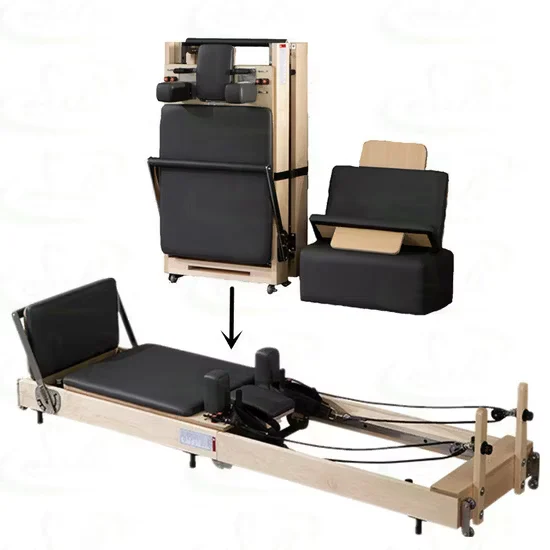
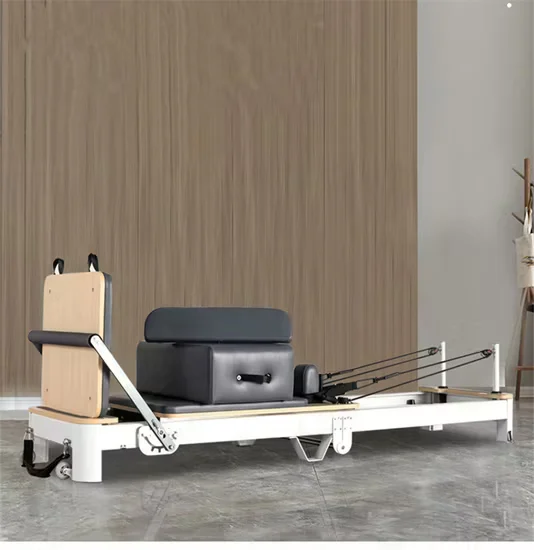
Folding Aluminum Alloy Pilates Reformer, 2570×730×270mm, 90kg Net Weight — aluminum-alloy frame reduces mass while preserving rail rigidity under repetitive studio loading; folding hinge enables dense floor planning without compromising carriage alignment or wheel-to-rail interface. Includes long box, jump board, and platform for full-spectrum studio programming. Every unit undergoes carriage load testing before shipment, with replacement padding and springs available as wear items.
// Spec Highlights
• Direct from Manufacturer · No Middlemen · Worldwide Shipping
01
// Material
Imported Solid Wood
Premium hardwood frames sourced for density and visual warmth.
02
// Hardware
Medical-Grade Silent
Whisper-quiet pulleys and springs for clinical environments.
03
// Customization
Appearance OEM
Color, upholstery, and branding tailored to your studio.
04
// Service
Layout Design
Free venue planning for studios and rehab institutions.
Every component is selected for longevity, performance, and aesthetic harmony - from imported hardwood frames to silent medical-grade accessories.
// Features
Every Unit Load-Tested — Each Pilates reformer undergoes carriage load verification before shipment, ensuring rail alignment and folding hinge repeatability under commercial cycling.
| Parameter | Value |
|---|---|
| Product Type | Pilates Reformer |
| Frame Material | Aluminum Alloy |
| Color | White |
| Accessories | Long Box, Jump Board, Platform |
| Product Dimensions | 2570×730×270mm |
| Net Weight | 90kg |
| Warranty | 3 Years |
| Production Capacity | 80 Pieces/Month |
| Facility Type | Typical Use |
|---|---|
| Commercial Pilates Studio | High class turnover with daily reformer scheduling |
| Boutique Fitness Studio | Multi-modal class formats requiring rapid floor reconfiguration |
| Rehabilitation and Conditioning Center | Post-injury movement retraining with controlled spring resistance |
| Hotel and Resort Wellness Studio | Guest-accessible sessions with frequent layout changes |
Folding reformers either hold tolerance or they do not — there is no middle ground after six months of studio use.
Studios that run four to six classes a day fold and unfold their reformers hundreds of times each month. When the hinge mechanism lacks precision-machined tolerance, the carriage rail drifts laterally, and wheels develop play that clients feel immediately as wobble or noise. I have seen reformers pulled from service because the folding joint introduced a half-millimeter offset that compounded across the rail length [NEED_CITE: EN 957 structural requirements for stationary training equipment]. A commercial folding aluminum pilates reformer must treat the hinge as a structural element, not a convenience feature.
This reformer fills the primary apparatus role in group class formats and one-on-one conditioning sessions. It pairs with Cadillac towers and chair units for comprehensive programming across movement planes. The folding capability matters most in studios where floor space doubles for mat work or functional training between reformer blocks. The carriage length and spring configuration accommodate users across a broad height and weight range, while the aluminum frame keeps unit weight manageable for instructor-led reconfiguration. A commercial folding aluminum pilates reformer in this configuration supports both classical and contemporary repertory without requiring separate dedicated machines.
The carriage endures repetitive eccentric loading as clients push through footwork sequences and pull through arm series under spring tension. Each session cycles the carriage across hundreds of repetitions, concentrating wear at the wheel-to-rail interface and the spring anchor points. Sealed bearings prevent dust and fiber contamination from increasing rolling resistance over time. The aluminum carriage plate must resist deflection under loaded users without adding excessive mass that accelerates wheel wear. Upholstery compression at the shoulder blocks and headrest shows fatigue first in high-turnover environments [NEED_CITE: fatigue performance of aluminum alloys under cyclic loading].
Aluminum alloy frames reduce overall unit weight significantly compared to steel construction, which directly affects how easily instructors reposition equipment between classes. The trade-off demands that tube wall thickness and cross-sectional geometry compensate for aluminum’s lower modulus of elasticity. Rail surfaces require consistent finish treatment to maintain low-friction carriage travel without generating particulate debris. Folding joints machined from solid stock maintain lock-position repeatability far better than bent-plate hinges. The powder coating must bond to aluminum substrate differently than steel, requiring pre-treatment chemistry matched to the alloy specification.
Reformers built with undersized aluminum tubing flex under loaded users, creating a sensation of instability that erodes client confidence within weeks. Non-sealed carriage bearings accumulate chalk dust and sweat residue, developing audible grinding and lateral play that demands premature replacement. Thin padding on the carriage platform compresses permanently under daily use, requiring upholstery service far sooner than the frame itself wears out. Hinge pins machined to loose tolerances allow the folding section to settle slightly off-axis, transferring misalignment directly into the carriage rail path. These failures compound [NEED_CITE: maintenance cost analysis for commercial fitness equipment].
Aluminum alloy stock is traceable to mill certification, verifying alloy grade and temper condition before fabrication begins. Robotic welding ensures continuous bead profiles on all structural joints rather than intermittent tack welds that concentrate stress. Every unit receives carriage load testing before crating, confirming that the folding mechanism locks positively and the rail runs true under deflection. Industrial powder coating at specified thickness protects the aluminum surface from corrosion in humid studio environments. A commercial folding aluminum pilates reformer backed by a three-year frame warranty reflects confidence in these fabrication choices. Floor planning support provides studios with clearance dimensions for folded storage and operational spacing between units during class sessions.
Provide your studio floor dimensions and class schedule density so we can map folded and operational clearances accurately. Specify your typical user population to confirm that the carriage travel range and spring resistance progression match your programming needs. Indicate any branding requirements including custom color or logo placement on the aluminum frame.
Q: How do I judge studio-grade versus light-commercial Pilates reformer construction?
A: Inspect the carriage rail interface for sealed bearings rather than open bushings, check that the folding hinge uses machined pins with positive lock positions, and verify that the aluminum frame tube wall thickness is stated with mill certification rather than described generically as commercial grade.
Q: What are the durability differences between aluminum and steel reformer frames?
A: Aluminum frames reduce unit weight for easier studio reconfiguration while requiring careful wall thickness design to maintain rigidity. Steel frames resist deflection more readily but add mass that complicates daily folding. Both materials perform well when engineered to appropriate structural specifications for their load requirements.
Q: How does folding mechanism tolerance affect long-term carriage alignment?
A: Imprecise hinge tolerances allow the folding section to settle slightly off-axis each time the reformer is deployed, gradually shifting the carriage rail out of parallel. Machined hinge components with repeatable lock positions prevent this drift and maintain smooth carriage travel across the full rail length.
Q: What is the spring resistance replacement cycle under commercial use?
A: Springs in daily studio environments lose calibrated tension progressively as metal fatigue accumulates through thousands of compression cycles. Monitoring resistance consistency across the spring set and replacing units that show measurable deviation from specification keeps client experience uniform across all reformers in the studio.
Q: How should I plan floor clearance for folding reformers in a high-density studio?
A: Account for both the operational footprint with the reformer fully deployed and the folded storage position, plus instructor walking space between units during active class sessions. Wall-mounted storage or stacking configurations require additional ceiling height and structural anchoring considerations.
Premium aesthetics meet quiet operation for boutique studio environments.
Medical-grade silence and precision for sports & postpartum recovery.
Furniture-grade craftsmanship for premium residential installations.
Compact premium setups for one-on-one and small-group training.
Aesthetic Pilates integration for hybrid wellness studio programming.
Multi-unit deployment with instructor-grade reliability for certification programs.
Tell us about your project. Our team will respond within 24 hours with pricing, customization options, and shipping details.
// Sales Director
William
+86 132 2531 1800
// Export Manager
Bella
+86 198 5412 8032
william@bickfit.com