01 / Scenario
STUDIO
P
High-End Pilates Studios
Premium aesthetics meet quiet operation for boutique studio environments.

ISO
9001
CE
Certified
OEM
Available
10YR
Warranty
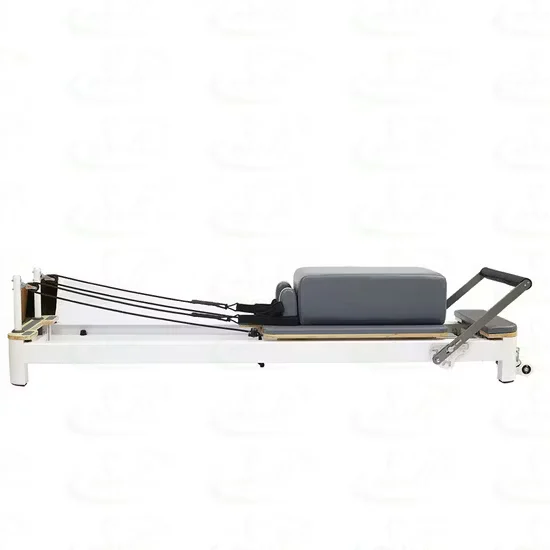
Folding Pilates Reformer Bed, Aluminum Alloy Frame, 2570×730×270mm — integrated long box, jump board, and platform accessories enable full-range reformer training in a compact foldable footprint. Carriage glide system engineered for smooth, low-noise operation across repeated studio use. Every unit undergoes folding hinge load testing and full-rail carriage glide verification before shipment.
// Spec Highlights
• Direct from Manufacturer · No Middlemen · Worldwide Shipping
01
// Material
Imported Solid Wood
Premium hardwood frames sourced for density and visual warmth.
02
// Hardware
Medical-Grade Silent
Whisper-quiet pulleys and springs for clinical environments.
03
// Customization
Appearance OEM
Color, upholstery, and branding tailored to your studio.
04
// Service
Layout Design
Free venue planning for studios and rehab institutions.
Every component is selected for longevity, performance, and aesthetic harmony - from imported hardwood frames to silent medical-grade accessories.
// Features
Every Unit Load-Tested — Each Pilates reformer carriage undergoes full-travel load verification under maximum rated resistance before leaving the factory floor.
| Parameter | Value |
|---|---|
| Product Type | Pilates Reformer |
| Model NO. | SRY-12A |
| Frame Material | Aluminum Alloy |
| Color | White |
| Included Accessories | Long Box, Jump Board, Platform |
| Product Dimensions | 2570 × 730 × 270 mm |
| Net Weight | 90 kg |
| Foldable Design | Yes |
| User Age Group | Adult |
| Gender | Unisex |
| Warranty | 3 Years |
| Logo Customization | Available |
| Production Capacity | 80 Pieces/Month |
| Facility Type | Typical Use |
|---|---|
| Pilates Studio | Primary reformer training in space-constrained layouts |
| Home Gym | Foldable storage between sessions for multi-use rooms |
| Boutique Fitness Studio | Group class setups where reformers are stored after use |
| Rehabilitation Center | Low-impact mobility and core stabilization sessions |
| Hotel Wellness Facility | Guest-accessible reformer training in limited floor space |
Carriage alignment fails first when the frame tubing flexes under sustained spring tension.
Many reformers marketed for studio use rely on thin-wall aluminum sections that hold shape under light resistance but deflect when heavier springs engage repeatedly. That deflection shifts the carriage off its intended glide path, producing uneven resistance and accelerated wheel wear. A commercial folding Pilates reformer bed must maintain torsional rigidity across every spring combination, not just during gentle warm-up sets. Frame rigidity is what separates equipment that performs consistently through thousands of sessions from units that require rail realignment within months. [NEED_CITE: aluminum alloy structural deflection thresholds in fitness equipment frames]
This reformer covers supine, prone, seated, and standing movement planes, targeting core stabilizers, hip flexors, spinal erectors, and lower-limb muscle groups through spring-loaded carriage travel. In a studio configuration, it pairs with Cadillac towers and Wunda chairs to form a complete apparatus-based program. The folding mechanism suits facilities where floor space converts between group classes and private sessions. The carriage length and spring attachment points accommodate users across a wide range of body proportions without requiring accessory swaps.
A busy Pilates studio runs six to ten sessions daily per reformer, with each session cycling the carriage through hundreds of repetitions under varying spring loads. The folding hinge points bear concentrated stress during both use and repeated folding cycles. Carriage wheels endure lateral forces during unilateral exercises that challenge rail contact surfaces asymmetrically. Sweat and cleaning solutions accelerate wear on exposed bearing surfaces and unprotected aluminum joints. [NEED_CITE: fatigue loading patterns in high-frequency reformer carriage systems] Upholstery on the shoulder rests and headrest faces compression cycles that test material recovery, and split seams become common where stitching does not account for commercial-frequency use.
Aluminum alloy was selected over steel to keep the folding mechanism manageable at 90 kg while preserving resistance to bending under loaded carriage movement. The wall thickness of the main rails determines whether the carriage maintains a consistent glide path when off-center loads are applied — a thin tube will oval slightly under eccentric force, introducing lateral play. The folding hinge must lock with zero wobble when deployed and survive thousands of articulation cycles without developing looseness. Spring anchor points machined into the frame must resist micro-cracking at their attachment interfaces. Powder coating on the contact rails prevents oxidation from sweat exposure while maintaining the low-friction surface the carriage wheels depend on.
Thin-wall aluminum saves weight and material cost upfront but introduces frame flex that misaligns the carriage within months of studio-frequency use. Spot-welded hinge connections crack under the combination of folding stress and spring tension, creating liability exposure for facility operators. Open bearings in the carriage system accumulate dust and sweat residue, producing grinding noise and requiring replacement far earlier than sealed alternatives. Low-density foam on the shoulder blocks compresses permanently, leaving uneven support that clients notice immediately. [NEED_CITE: maintenance cost patterns in commercial Pilates equipment with unsealed bearings] Non-standard hardware sizes mean replacement parts are unavailable once the original supplier stops stocking them.
The 2570 mm length and folding capability directly affect how many reformer stations fit within a given studio footprint while maintaining safe clearance between units. Every hinge and connection point on the SRY-12A is welded continuously rather than spot-tacked, addressing the fatigue cracking that plagues folding mechanisms in daily-use environments. Each unit undergoes carriage load testing across its full travel range before shipment, catching alignment defects that visual inspection misses. The 200μm industrial powder coating resists the chipping that occurs at hinge contact points and spring anchor interfaces. A 10-year frame warranty on the structural aluminum reflects confidence in the alloy grade and welding process rather than a marketing gesture.
Provide your studio floor dimensions and intended station count to receive a 2D-3D layout with safe clearance zones mapped around each reformer. Specify expected daily session volume so the structural grade and hinge durability match your traffic. Indicate user population characteristics to confirm the spring resistance range covers your client base. State any custom requirements including color, logo placement, or upholstery material preferences.
Q: How do I verify the aluminum frame quality before committing to an order?
A: Request the mill certificate for the aluminum alloy used in your production batch. This document traces the material back to its source and confirms the alloy grade and wall thickness. A visual inspection alone cannot distinguish between structural-grade tubing and thin-wall alternatives that flex under spring tension. Frame weight and surface finish are not reliable indicators of internal specification.
Q: What should I check about the folding mechanism before purchase?
A: Deploy the reformer and apply lateral force to the carriage at full extension. The hinge should show zero play when locked. Ask for cycle test documentation on the folding joint, confirming it has been opened and closed repeatedly under load without developing looseness. Hinge pins and locking hardware should be standard sizes available from industrial suppliers.
Q: How does the spring configuration serve different user levels?
A: The included spring set provides multiple attachment points with varying resistance levels. Beginners use lighter springs for mobility and stabilization work, while advanced users engage heavier combinations for strength-focused exercises. Verify that the spring anchor points on the frame are machined rather than bent, which ensures consistent attachment geometry across all resistance positions.
Q: How do I maintain smooth carriage glide over time?
A: Clean the aluminum rails after each session using a damp cloth to remove sweat residue and skin oils that accumulate on the wheel contact surface. Inspect wheels periodically for debris embedded in the tread. Sealed bearings in the carriage wheels resist contamination from studio dust, but any grinding noise during travel indicates that bearing replacement is needed.
Premium aesthetics meet quiet operation for boutique studio environments.
Medical-grade silence and precision for sports & postpartum recovery.
Furniture-grade craftsmanship for premium residential installations.
Compact premium setups for one-on-one and small-group training.
Aesthetic Pilates integration for hybrid wellness studio programming.
Multi-unit deployment with instructor-grade reliability for certification programs.
Tell us about your project. Our team will respond within 24 hours with pricing, customization options, and shipping details.
// Sales Director
William
+86 132 2531 1800
// Export Manager
Bella
+86 198 5412 8032
william@bickfit.com