01 / Scenario
STUDIO
P
High-End Pilates Studios
Premium aesthetics meet quiet operation for boutique studio environments.

ISO
9001
CE
Certified
OEM
Available
10YR
Warranty
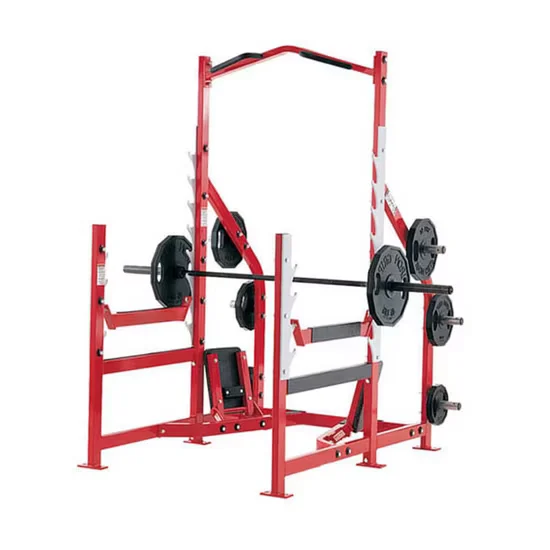
Commercial Barbell Rack, Steel Frame, 50kg Net Weight — engineered with industrial-grade steel construction and full powder-coated finish to resist plate contact abrasion in high-traffic free weight zones. Robotic MIG welding ensures continuous weld lines without spot-weld fatigue points under repeated loading cycles. Every unit undergoes load testing before shipment, backed by a 10-year frame warranty for long-term structural integrity.
// Spec Highlights
• Direct from Manufacturer · No Middlemen · Worldwide Shipping
01
// Material
Imported Solid Wood
Premium hardwood frames sourced for density and visual warmth.
02
// Hardware
Medical-Grade Silent
Whisper-quiet pulleys and springs for clinical environments.
03
// Customization
Appearance OEM
Color, upholstery, and branding tailored to your studio.
04
// Service
Layout Design
Free venue planning for studios and rehab institutions.
Every component is selected for longevity, performance, and aesthetic harmony - from imported hardwood frames to silent medical-grade accessories.
// Features
Mill-Certified Steel — Every tube in this barbell rack traces back to the coil batch, so you know exactly what is holding your barbells.
| Parameter | Value |
|---|---|
| Product Type | Barbell Rack |
| Frame Tube Size | 1000 × 750 × 1430 mm |
| Frame Steel | 11-gauge, 3×3 inch structural tube |
| Steel Grade | Q235 / Q345 industrial steel, mill-certified |
| Welding Type | Robotic MIG, continuous weld lines |
| Loading Type | Plate loaded / Barbell storage |
| Powder Coating | 200μm scratch-resistant, sandblast pre-treated |
| Product Dimensions | 1000 × 750 × 1430 mm |
| Net Weight | 50 Kg |
| Color Options | Optional per facility branding |
| Certification | ISO 9001, CE |
| OEM | Available |
| Customization | Available |
| Assembly State | Unfolded |
| Transport Package | Plywood Box |
| Warranty | 10-year frame |
| Facility Type | Typical Use |
|---|---|
| Commercial gym strength floor | High-density barbell storage for daily heavy rotation across multiple Olympic bars |
| CrossFit box functional zone | Centralized rack for Olympic barbells and specialty bars during WOD prep and cleanup |
| Hotel fitness center | Compact, durable storage for moderate-traffic environments with varied guest usage |
| University strength and conditioning room | Organized barbell staging for team training sessions with rapid load-and-go cycles |
| Rehabilitation and performance center | Clean barbell organization for controlled loading protocols under staff supervision |
The tube gauge sets the ceiling — welding can only hold what the steel allows.
Most barbell rack quotes arrive with vague "commercial grade" labels and no traceable steel specification. When a rack built from undersized tubing absorbs daily barbell loading and unloading, the frame flexes at stress concentrations long before any weld gives way. That flex cycles thousands of times per week in a busy free weight zone, and the fatigue damage is invisible until a joint separates under load [NEED_CITE: EN 957 structural requirements for stationary training equipment]. A commercial barbell rack must specify gauge, tube dimensions, and steel grade — anything less leaves the buyer guessing at the structural margin.
This unit serves as the anchor storage point for Olympic barbells, specialty bars, and pre-loaded training bars in the free weight area. It complements plate storage racks, dumbbell racks, and power racks by consolidating barbell inventory into a single footprint that athletes and members can access without crossing active lifting lanes. The rack suits high-density commercial floors where every square meter of usable space matters and supports a full range of user body types since barbell retrieval is a standing, walk-up action with no seat or pad adjustment required. Proper placement of a commercial barbell rack keeps the flow between squat stations and platform areas clear.
Every barbell placed on or removed from the cradle produces an impact load that cycles through the horizontal support arms and down into the vertical uprights. In a busy gym, that cycle repeats dozens of times per hour, concentrating stress at the arm-to-upright junction and the base gussets. The welding at those junctions must be continuous, not intermittent spot welds, to distribute the fatigue load across the full joint length rather than pinning it to isolated contact points [NEED_CITE: weld classification and fatigue performance in structural steel]. The powder coating at the cradle contact surface also endures repeated abrasion from barbell knurling and sleeve rotation, demanding adequate thickness and proper surface pre-treatment to prevent bare steel exposure.
The 11-gauge, 3×3 inch tube section provides the bending resistance needed for horizontal arms that hold multiple loaded barbells without progressive sag. Wall thickness and cross-sectional area together determine how much the arm deflects under asymmetric loading — when one end of the rack carries more bars than the other, the frame must resist torsional twist without transferring that twist to the weld joints. Robotic MIG welding produces a continuous bead with consistent penetration depth, eliminating the cold joints and incomplete fusion that hand-welded spot patterns leave behind in high-cycle applications. The 200μm powder coating, applied over sandblast pre-treatment, creates a mechanical bond to the steel surface that withstands knurling abrasion and sweat-induced corrosion far longer than thin decorative finishes.
Thin-wall tube deflects under sustained barbell weight, gradually bending the support arms downward until bars no longer sit level in the cradles. Spot-welded joints develop hairline cracks that propagate invisibly through the heat-affected zone, creating a liability event when a loaded arm fails during use. Undersized powder coating chips at barbell contact points within months, exposing raw steel to humidity and sweat that accelerate corrosion in the free weight area. Non-standard hardware and proprietary fastener sizes mean replacement cradle pads or end caps become impossible to source once the original supplier stops responding, turning a repairable rack into scrap. These failures compound [NEED_CITE: fatigue cracking mechanisms in cyclically loaded steel structures] and quietly inflate the total cost of ownership.
The 11-gauge frame steel arrives with mill certification traceable to the coil, so every tube in your commercial barbell rack has a verified origin. Robotic MIG welding runs continuous beads along every joint — no spot-weld shortcuts that crack under daily barbell handling cycles. Each unit undergoes load testing before shipment, confirming the frame holds beyond its rated capacity without deflection or joint separation. The 200μm industrial powder coating resists knurling abrasion at cradle contact points and stands up to daily cleaning chemicals. A 10-year frame warranty backs the structural integrity, and 2D-3D CAD floor planning support ensures this rack fits your free weight zone with safe aisle clearances between stations and traffic paths.
Share your free weight zone dimensions and current equipment list to receive a 2D or 3D floor plan showing optimal rack placement with safe aisle spacing. Specify your daily member traffic volume so the structural grade matches actual cyclic loading demands. Confirm any branding requirements including frame color, logo placement, or custom cradle configurations to align the unit with your facility identity.
Q: How do I verify a barbell rack is truly commercial grade rather than light-commercial?
A: Request the mill-certified steel specification showing gauge, tube dimensions, and steel grade. True commercial units use 11-gauge or thicker structural tubing with continuous weld lines, not spot welds. Inspect weld joints for uniform penetration and confirm the powder coating thickness reaches at least 200μm. Vague "commercial grade" labels without traceable documentation typically indicate lighter construction underneath.
Q: What steel gauge and tube size should a barbell rack have for a high-traffic gym?
A: An 11-gauge frame with 3×3 inch tube sections provides the bending resistance needed for repeated barbell loading across multiple cradle positions. The wall thickness prevents progressive arm deflection under asymmetric loads. Pair that with Q235 or Q345 industrial steel and continuous MIG welding to ensure joints survive thousands of daily load-and-unload cycles without fatigue cracking.
Q: How should I plan rack placement and aisle clearance in the free weight zone?
A: Measure the rack footprint and add minimum clearance on all sides for members to retrieve and return barbells without stepping into active lifting lanes. Request a 2D or 3D CAD layout from the manufacturer that shows the rack positioned relative to plate storage, platforms, and power racks. Proper spacing prevents congestion during peak hours and reduces collision risk.
Q: What powder coating process ensures the rack survives daily barbell abrasion?
A: The coating must be applied over sandblast pre-treatment at a minimum thickness of 200μm to resist chipping at cradle contact points where barbell knurling repeatedly scrapes the surface. Thinner coatings or those applied without proper surface preparation peel within months in high-traffic free weight areas, exposing bare steel to corrosion and creating sharp flake edges.
Q: What warranty and replacement support should I expect from the manufacturer?
A: A commercial barbell rack should carry a minimum 10-year frame warranty covering structural failure under normal use. Confirm that replacement cradle pads, end caps, and hardware are available as spare parts with standard sizing, not proprietary fittings. The manufacturer should also provide load testing records for each individual unit shipped.
Premium aesthetics meet quiet operation for boutique studio environments.
Medical-grade silence and precision for sports & postpartum recovery.
Furniture-grade craftsmanship for premium residential installations.
Compact premium setups for one-on-one and small-group training.
Aesthetic Pilates integration for hybrid wellness studio programming.
Multi-unit deployment with instructor-grade reliability for certification programs.
Tell us about your project. Our team will respond within 24 hours with pricing, customization options, and shipping details.
// Sales Director
William
+86 132 2531 1800
// Export Manager
Bella
+86 198 5412 8032
william@bickfit.com