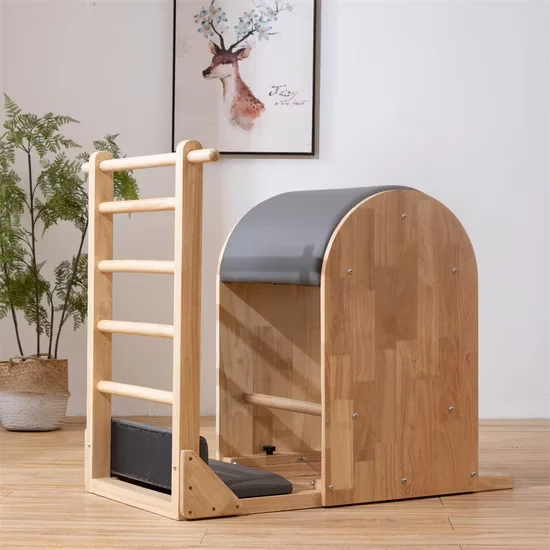
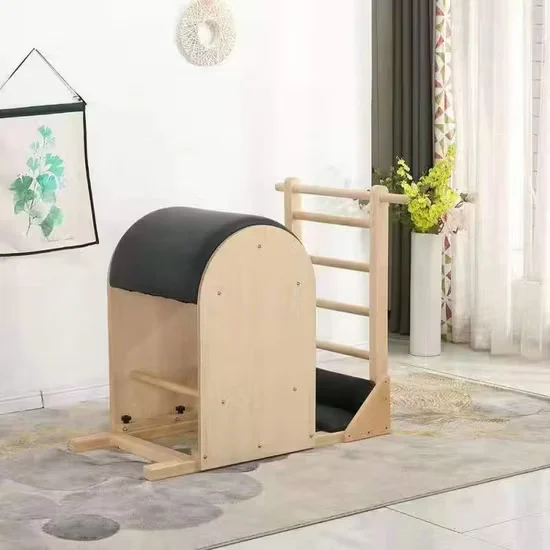
01 / Scenario
STUDIO
P
High-End Pilates Studios
Premium aesthetics meet quiet operation for boutique studio environments.
ISO
9001
CE
Certified
OEM
Available
10YR
Warranty
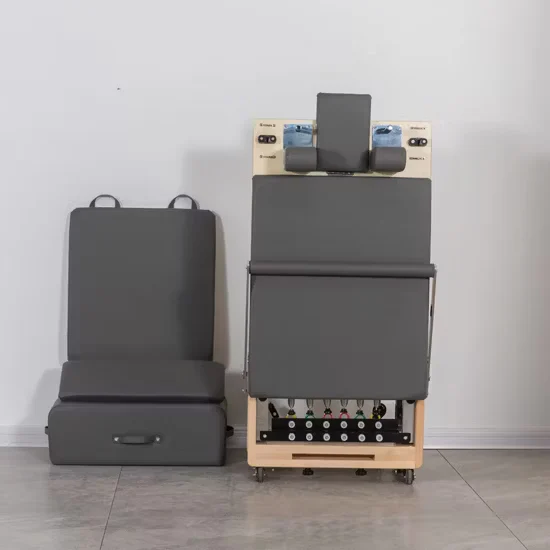
Wooden Folding Portable Pilates Reformer Bed, Solid Wood Frame, 2300×690×580mm — engineered with solid wood construction to resist warping under sustained spring tension, featuring a reinforced folding joint for space-efficient studio storage. Includes long box, jump board, and platform accessories to expand exercise versatility without additional apparatus. Custom logo available for studio branding consistency. Every unit undergoes 32-point inspection and full load testing before shipment to ensure carriage alignment and structural durability.
// Spec Highlights
• Direct from Manufacturer · No Middlemen · Worldwide Shipping
01
// Material
Imported Solid Wood
Premium hardwood frames sourced for density and visual warmth.
02
// Hardware
Medical-Grade Silent
Whisper-quiet pulleys and springs for clinical environments.
03
// Customization
Appearance OEM
Color, upholstery, and branding tailored to your studio.
04
// Service
Layout Design
Free venue planning for studios and rehab institutions.
Every component is selected for longevity, performance, and aesthetic harmony - from imported hardwood frames to silent medical-grade accessories.
// Features
Solid Wood Integrity — Solid wood frame resists warping under sustained spring tension where engineered plywood fails.
| Parameter | Value |
|---|---|
| Product Type | Pilates Reformer |
| Frame Material | Solid Wood |
| Product Dimensions | 2300×690×580mm |
| Net Weight | 65kgs |
| Foldable Design | Yes, reinforced folding joints |
| Accessories Included | Long Box / Jump Board / Platform options |
| Color Options | Solid Color |
| Customization | Available (Logo and finish) |
| Warranty | 3 Years |
| Age/Gender | Adult / Unisex |
| Facility Type | Typical Use |
|---|---|
| Boutique Pilates studio | Daily group and private reformer sessions with fold-away storage between classes |
| Hotel and resort wellness center | Multi-use wellness rooms requiring portable apparatus for scheduled programming |
| Rehabilitation and physiotherapy clinic | Client-specific recovery sessions needing portable, adjustable resistance equipment |
| Home studio | Space-constrained residential environments requiring foldable storage after use |
| Functional training facility | Supplementary mobility and core work alongside primary strength programming |
A wooden folding portable pilates reformer bed built on engineered plywood or veneer-over-MDF will warp under sustained spring load, especially in humidity-fluctuating studio environments. Solid wood construction maintains dimensional stability where composite cores delaminate.
I’ve seen reformer frames come back with bowed carriage rails after a few months of heavy spring tension — the root cause was always a cost-cut switch from solid stock to thin-walled composite board. When spring resistance increases for athletic clients, the lateral force on the frame multiplies, and hollow-core construction simply cannot hold alignment. The carriage begins to track off-center, wheels bind, and the whole unit requires structural intervention [NEED_CITE: structural performance of solid wood vs engineered board under sustained tension loads]. This is why verifying wood species and grade matters before committing to a bulk order.
The wooden folding portable pilates reformer bed serves as the primary apparatus for supine, seated, and standing movement patterns targeting core stabilization, lower-body alignment, and spinal articulation. In a studio layout, it pairs with Cadillac and Wunda Chair units to cover the full Pilates repertoire without redundancy. Facilities with limited floor square footage benefit from the foldable design, allowing the reformer to be stored vertically between class blocks. The platform and jump board accessories extend the exercise range into plyometric and standing balance work. Users across a wide body-type range can perform controlled movements on the carriage without frame deflection.
Static loading on the carriage rail, combined with repetitive fold-unfold cycles, concentrates fatigue at the hinge mechanism and rail mounting points. Spring tension during jump board use introduces impact loading that tests the frame’s torsional rigidity — each landing transmits force through the rail-to-frame interface. Carriage wheels tracking along the rail under load create continuous friction wear, making wheel material and rail straightness tolerance critical to long-term smoothness. Upholstery contact points on the shoulder blocks and headrest experience compression cycling that demands material rated for commercial frequency. Surface finishes on the wood frame must withstand daily exposure to sweat, cleaning agents, and humidity swings without degrading [NEED_CITE: fatigue testing standards for folding mechanisms in exercise equipment].
Solid wood frame construction provides resistance to warping that engineered plywood cannot match — the continuous grain structure distributes spring tension forces along the full length of the rail mounting zone rather than concentrating stress at adhesive bond lines. Reinforced folding joints must withstand thousands of fold cycles while maintaining carriage alignment repeatability; a hinge that develops play will cause the carriage to track unevenly and accelerate wheel wear. Carriage wheel material directly affects maintenance intervals — sealed bearing wheels on precision-straight rails track smoothly under loaded conditions, while unsealed nylon wheels develop lateral play as dust and sweat infiltrate the bearing race. Spring system configuration, including the number of springs and their progressive resistance calibration, determines whether the reformer can serve both rehabilitation clients needing light resistance and athletic users requiring higher loading scenarios without spring replacement.
Switching from solid wood to thin-walled MDF-core construction saves material cost upfront but introduces warping risk that compounds with every spring-loaded session. A reformer frame that bows under tension forces the carriage off its tracking path, accelerating wheel and rail wear until the unit requires full rebuild. Non-sealed carriage bearings in a high-sweat studio environment corrode internally, creating grinding noise and uneven resistance that clients notice immediately. Thin surface finishes on wood frames chip at contact points where accessories mount and dismount repeatedly, exposing raw wood to moisture absorption and dimensional instability. When folding joint hardware is underspecified, the mechanism loosens over time, creating lateral play that compromises carriage stability during dynamic movements like jump board sequences [NEED_CITE: failure modes in folding exercise equipment under repeated load cycles].
BICKFIT’s 11-gauge steel frame standard applies to our commercial strength lines, and the same structural discipline governs how we evaluate reformer frame integrity — we verify solid wood specification against mill-grade documentation rather than accepting supplier claims at face value. Robotic MIG welding principles from our strength equipment translate to demanding continuous, reinforced joints at every folding hinge point. Every unit undergoes load testing before shipment, not sample-based QC, ensuring carriage alignment and spring tension calibration meet specification on the actual unit you receive. The 200μm industrial coating standard we apply to steel frames informs our expectations for wood frame surface protection against studio humidity and cleaning chemicals. Our 10-year frame warranty philosophy extends to demanding verifiable structural longevity from every apparatus bearing our name. 2D-3D floor planning CAD support helps determine optimal reformer placement with safe clearance distances for accessory use and client passage. OEM customization including logo application and finish color supports studio branding consistency across your equipment fleet.
Provide your studio floor dimensions and existing equipment list to receive a 2D-3D layout plan that positions each reformer with proper clearance for accessory deployment and instructor circulation. Specify your expected daily session volume so we can confirm the structural grade matches your usage intensity. Communicate your target client demographic and body-type range to verify the carriage travel and spring resistance configuration serves your programming needs. Detail any customization requirements including logo placement, frame color, or upholstery selection to ensure branding alignment across your equipment order.
Q: How can I confirm the frame is solid wood rather than veneer over MDF?
A: Request a cross-section sample or detailed material specification sheet that identifies wood species and grade. Solid wood shows continuous grain through the full thickness, while MDF-core construction reveals a uniform composite interior beneath a thin veneer layer. Inspect the frame edge where accessory mounting hardware attaches — exposed core material at drill points indicates engineered board rather than solid stock.
Q: What folding joint specifications indicate durability under daily studio use?
A: Look for reinforced metal hinge plates with through-bolt fastening rather than surface-mounted screws. The joint should include a positive locking mechanism that prevents any lateral play when the reformer is deployed. Request documentation of repeated fold-cycle fatigue testing that simulates years of daily fold-and-store operation under loaded conditions.
Q: How do carriage wheel material and rail tolerance affect long-term maintenance?
A: Sealed bearing wheels resist contamination from studio dust and sweat, maintaining smooth tracking far longer than unsealed nylon alternatives. Rail straightness tolerance directly determines whether the carriage tracks without binding or lateral wobble under loaded movement. Precision-machined rails paired with sealed bearings minimize the maintenance intervals required to keep the reformer operating smoothly.
Q: Which reformer models support jump board and platform additions safely?
A: Confirm that the frame includes reinforced mounting points specifically engineered for jump board impact loading, not just standard accessory attachment holes. The frame must maintain torsional rigidity when the jump board is installed and subjected to repetitive landing forces. Request load testing documentation that verifies structural stability with each accessory mounted under dynamic use conditions.
Premium aesthetics meet quiet operation for boutique studio environments.
Medical-grade silence and precision for sports & postpartum recovery.
Furniture-grade craftsmanship for premium residential installations.
Compact premium setups for one-on-one and small-group training.
Aesthetic Pilates integration for hybrid wellness studio programming.
Multi-unit deployment with instructor-grade reliability for certification programs.
Tell us about your project. Our team will respond within 24 hours with pricing, customization options, and shipping details.
// Sales Director
William
+86 132 2531 1800
// Export Manager
Bella
+86 198 5412 8032
william@bickfit.com