01 / Scenario
STUDIO
P
High-End Pilates Studios
Premium aesthetics meet quiet operation for boutique studio environments.
ISO
9001
CE
Certified
OEM
Available
10YR
Warranty
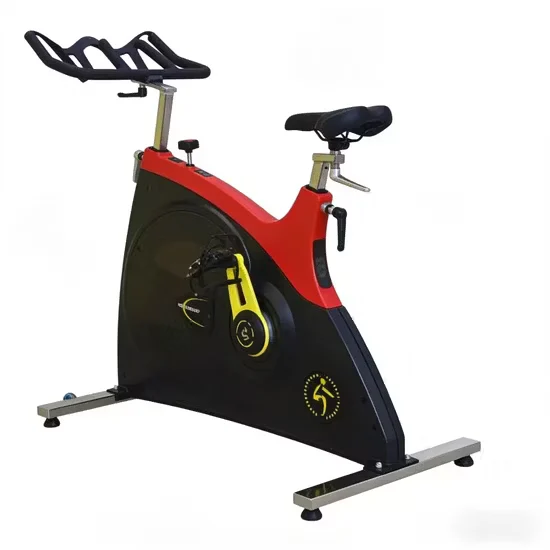
Commercial Indoor Cycling Spinning Bike, 150kg Max Load, 48-53kg Net Weight — engineered for high-traffic group training with power-style resistance adjustment and unfolded configuration for studio durability. CE, GS, RoHS, FCC certified for commercial gym environments. Every unit undergoes load testing before shipment, backed by 10-year frame warranty and factory-direct pricing from 17 years of manufacturing heritage.
// Spec Highlights
• Direct from Manufacturer · No Middlemen · Worldwide Shipping
01
// Material
Imported Solid Wood
Premium hardwood frames sourced for density and visual warmth.
02
// Hardware
Medical-Grade Silent
Whisper-quiet pulleys and springs for clinical environments.
03
// Customization
Appearance OEM
Color, upholstery, and branding tailored to your studio.
04
// Service
Layout Design
Free venue planning for studios and rehab institutions.
Every component is selected for longevity, performance, and aesthetic harmony - from imported hardwood frames to silent medical-grade accessories.
// Features
Seamless Weld Integrity Under Continuous Load — robotic MIG welding eliminates spot-weld failure points on the commercial indoor cycling spinning bike for gym studio frames, ensuring structural continuity through thousands of high-intensity pedal strokes.
| Parameter | Value |
|---|---|
| Product Type | Indoor Cycling Spinning Bike |
| Frame Steel Gauge | 11-gauge |
| Frame Tube Size | 3×3 inch |
| Steel Grade | Q235 / Q345 industrial steel |
| Welding Type | Robotic MIG continuous weld |
| Load Capacity | 150 kg |
| Resistance Mechanism | Power-Style Resistance Adjustment |
| Net Weight | 48–53 kg |
| Product Dimensions | 1060 × 110 × 380 mm |
| Powder Coating | 200μm scratch-resistant industrial finish |
| Bearing Type | Sealed industrial bearings |
| Certification | CE, GS, RoHS, FCC |
| Warranty | 10-year frame warranty |
| Facility Type | Typical Use |
|---|---|
| Commercial gym studio | High-frequency indoor cycling group classes |
| Boutique fitness studio | Small-group structured cycling sessions |
| Hotel and resort fitness center | Guest-accessible cardio training area |
| University athletic department | Student conditioning and team preparation |
| Corporate wellness facility | Employee group fitness programming |
Many products labeled "commercial grade" avoid publishing actual tube gauge or steel grade, leaving buyers unable to verify whether the frame will survive daily class loads. 11-gauge 3×3 inch frame steel with mill-certified Q235/Q345 sourcing is the baseline for structural predictability.
When a spinning bike enters a studio running six classes per day, the frame endures repeated eccentric loading at the bottom bracket and seat post junction. Without verified wall thickness, these joints become the first fatigue points — and the first warranty disputes. [NEED_CITE: structural fatigue behavior of thin-wall steel tubes under cyclic loading]
The commercial indoor cycling spinning bike for gym studio occupies the high-density group training footprint, typically arranged in rows of eight to twelve units. It complements selectorized cardio lines by offering instructor-led, rhythm-driven sessions that fill peak-hour scheduling gaps. The 150 kg load capacity and 48–53 kg net weight anchor the unit against lateral sway during standing climbs, accommodating a wide range of rider sizes without frame flex.
Studio cycling generates repetitive impact loading at the pedal spindle, seat rail, and handlebar post — three stress concentration zones that expose weak welds and thin tubing. Sealed industrial bearings resist sweat and chalk dust infiltration that would otherwise degrade smooth rotation within months. The 200μm powder coating withstands daily wipe-down with commercial disinfectants without chipping at contact points. [NEED_CITE: corrosion resistance of industrial powder coatings in high-humidity fitness environments]
The 3×3 inch 11-gauge tube provides a section modulus that resists bending at the seat post sleeve — the most common failure point on lighter bikes. Robotic MIG continuous welding distributes stress along the entire joint rather than concentrating it at discrete spot locations. Sealed bearings eliminate the need for periodic grease replenishment, reducing maintenance downtime between class blocks. The power-style resistance mechanism uses a friction pad or magnetic system that avoids the cable stretch and pulley wear associated with band-resistance designs.
Reducing tube wall thickness by even half a millimeter lowers the moment of inertia at critical joints, accelerating fatigue crack initiation under repeated standing efforts. Spot-welded frames may pass visual inspection but develop subsurface cracks that propagate unpredictably, creating liability exposure for facility operators. Non-sealed bearings require quarterly disassembly and regreasing — labor costs that compound across a fleet of twenty or more units. Low-density upholstery compresses permanently within months, forcing premature replacement that disrupts class scheduling. [NEED_CITE: weld joint fatigue classification in structural steel applications]
Every commercial indoor cycling spinning bike for gym studio rolls off the line with 11-gauge frame steel traceable to the original coil certification. Robotic MIG welding produces continuous bead lines with no cold joints or spot-weld weak points. Each unit undergoes individual load testing before shipment — not sample-based抽检. The 200μm industrial powder coating resists chipping at pedal and handlebar contact zones. A 10-year frame warranty backs the structural investment. 2D-3D CAD layout support ensures proper spacing between bikes for safe instructor movement and emergency egress. OEM private label options allow branding alignment with your studio identity.
Provide your studio square footage and desired bike count to receive a 2D-3D CAD layout showing optimal spacing and traffic flow. Specify average daily class frequency so we can confirm the structural grade matches your usage intensity. Indicate rider height range to verify seat and handlebar adjustment travel covers your participant demographics. Share any branding requirements for custom frame color or logo placement on the shroud.
Q: How do I verify a spinning bike is truly commercial grade versus light commercial?
A: Check the published frame tube gauge and steel grade — genuine commercial units specify 11-gauge or thicker with mill-certified Q235/Q345 steel. Light commercial bikes often omit these details or list only "steel frame" without gauge. Verify that welding is described as continuous MIG rather than spot weld, and confirm individual load testing rather than batch sampling.
Q: What frame tube size and gauge combination handles daily studio class loads?
A: A 3×3 inch 11-gauge tube provides sufficient section modulus to resist bending at the seat post and bottom bracket junctions under repeated standing efforts. Thinner walls or smaller cross-sections reduce the moment of inertia, accelerating fatigue crack initiation. The combination of wall thickness and tube dimension together determine long-term structural rigidity.
Q: How does the resistance mechanism type affect long-term maintenance requirements?
A: Power-style resistance systems using friction pads or magnetic elements avoid the cable stretch and pulley wear inherent in band-resistance designs. Friction pads require periodic replacement but are inexpensive and quick to swap. Magnetic systems offer contactless resistance adjustment with minimal wear components, reducing scheduled maintenance frequency across a fleet.
Q: What spacing should I plan between bikes in a studio cycling room?
A: Maintain at least 600 mm lateral spacing between adjacent bikes to allow safe mounting and dismounting without elbow contact. Rear clearance should reach 900 mm to accommodate instructor movement along the front row and emergency egress. A 2D-3D CAD layout from the manufacturer accounts for these clearances plus storage zones for towels and water bottles.
Q: How often do sealed bearings need inspection or replacement on studio bikes?
A: Sealed industrial bearings typically require annual inspection for play or abnormal noise under load. Unlike open bearings, sealed units do not accept regreasing — replacement involves swapping the entire cartridge. High-humidity environments or aggressive disinfectant use may shorten service intervals, so monitor for rotation roughness during pre-class checks.
Premium aesthetics meet quiet operation for boutique studio environments.
Medical-grade silence and precision for sports & postpartum recovery.
Furniture-grade craftsmanship for premium residential installations.
Compact premium setups for one-on-one and small-group training.
Aesthetic Pilates integration for hybrid wellness studio programming.
Multi-unit deployment with instructor-grade reliability for certification programs.
Tell us about your project. Our team will respond within 24 hours with pricing, customization options, and shipping details.
// Sales Director
William
+86 132 2531 1800
// Export Manager
Bella
+86 198 5412 8032
william@bickfit.com