01 / Scenario
STUDIO
P
High-End Pilates Studios
Premium aesthetics meet quiet operation for boutique studio environments.
ISO
9001
CE
Certified
OEM
Available
10YR
Warranty
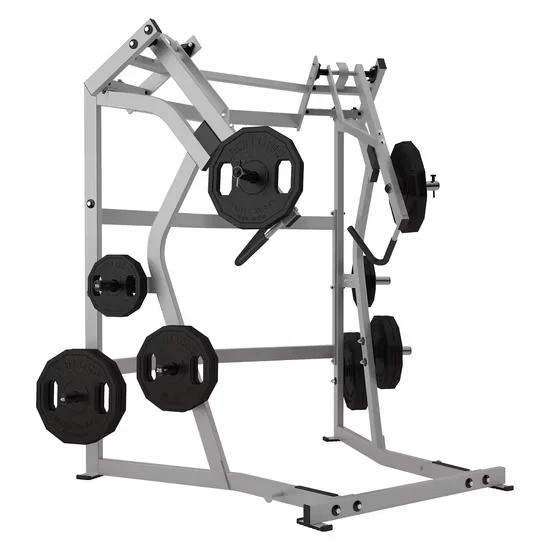
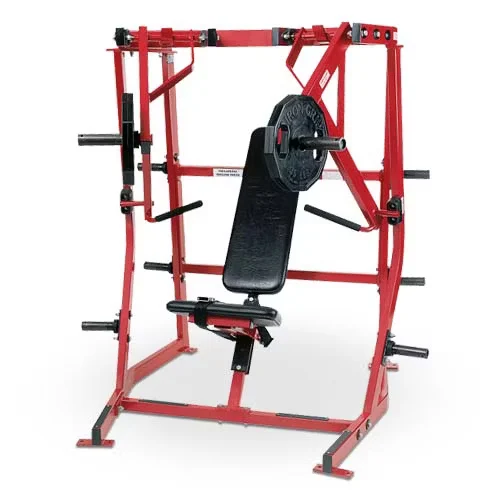
ISO Lateral Decline Chest Press, 50×100×3mm Frame Steel, 170kg Machine Weight — plate loaded design with converging iso-lateral arm path ensures natural biomechanical tracking under heavy loads, while the rectangular tube cross-section resists torsional flex during eccentric stress. Built for high-traffic commercial gyms requiring structural integrity over extended service life. Every unit undergoes individual load testing before shipment, backed by a 10-year frame warranty and factory-direct floor planning support.
// Spec Highlights
• Direct from Manufacturer · No Middlemen · Worldwide Shipping
01
// Material
Imported Solid Wood
Premium hardwood frames sourced for density and visual warmth.
02
// Hardware
Medical-Grade Silent
Whisper-quiet pulleys and springs for clinical environments.
03
// Customization
Appearance OEM
Color, upholstery, and branding tailored to your studio.
04
// Service
Layout Design
Free venue planning for studios and rehab institutions.
Every component is selected for longevity, performance, and aesthetic harmony - from imported hardwood frames to silent medical-grade accessories.
// Features
Traceable Mill Steel — every 50×100×3mm tube in this ISO Lateral Decline Chest Press traces back to the originating steel coil certificate.
| Parameter | Value |
|---|---|
| Product Type | Plate Loaded Decline Chest Press |
| Frame Tube Size | 50×100×3mm rectangular steel |
| Steel Grade | Q235 / Q345 industrial steel, mill-certified |
| Welding Type | Robotic MIG, continuous weld lines |
| Loading Type | Plate loaded |
| Movement Pattern | Iso-lateral / converging |
| Product Dimensions | 1830×1680×2010mm |
| Footprint | Approximately 3.1㎡ |
| Net Weight | 170kg |
| Powder Coating | 200μm scratch-resistant, sandblasted base |
| Color Options | Customized |
| Assembly State | Unfolded |
| Certification | CE, ISO 9001, RoHS |
| Facility Type | Typical Use |
|---|---|
| Commercial gym strength floor | High-traffic decline pressing station for general membership |
| Hotel and resort fitness center | Durable chest training with customizable frame color |
| University strength and conditioning room | Heavy loaded decline work for collegiate athletes |
| Community fitness center | Shared-use pressing equipment rated for varied body sizes |
A 50×100×3mm rectangular section resists torsional deflection where thinner tubes surrender under asymmetric plate loading.
Many equipment suppliers label their frames as commercial grade without disclosing actual wall thickness or steel grade. When an athlete loads one horn heavier than the other on a decline press, the eccentric force travels through the frame junctions — and any spot weld or thin-wall section becomes the failure point. I have seen 2mm wall tubes develop visible deformation across the cross-member after months of heavy use in high-volume facilities [NEED_CITE: EN 957 structural requirements for stationary training equipment]. The commercial plate loaded decline chest press you specify today determines whether your members train on a rigid platform or a flexing one two years from now.
This unit targets the lower pectoral fibers through a converging iso-lateral path, filling the gap between flat and incline pressing stations. In a commercial plate loaded decline chest press configuration, it pairs naturally with a flat bench and an incline press to complete the horizontal pushing plane. The 1830×1680mm footprint suits medium-to-high density strength floors where every square meter counts. The iso-lateral arm design accommodates users with different arm lengths and shoulder widths without requiring mechanical adjustment between sets.
Every decline press endures a specific stress profile: static load from the frame’s own mass, impact load when plates are loaded or dropped on the horns, and eccentric torsion when one side carries more weight. At high-traffic facilities, these cycles repeat dozens of times daily, accumulating fatigue at every welded junction. The continuous robotic MIG welds on this frame eliminate the intermittent start-stop points where manual spot welds concentrate stress [NEED_CITE: weld classification and fatigue performance in structural steel]. Powder coating at contact points faces abrasion from plate edges and sweat corrosion, demanding a 200μm thickness applied over a sandblasted substrate to prevent early chipping.
The 50×100×3mm rectangular tube provides a section modulus that determines how much the frame resists bending under off-center plate loads — a 2mm wall of the same outer dimension would deflect noticeably under the same force. Robotic MIG welding produces continuous bead lines rather than discrete tack points, distributing stress across the full joint length instead of concentrating it at isolated spots. The iso-lateral converging arm mechanism relies on pivot bearings that must maintain alignment under load; unsealed bearings in dusty gym environments develop play that translates into wobble during the pressing motion. Sandblast pretreatment before powder coating removes mill scale and creates mechanical adhesion, which is why the 200μm coating resists flaking at high-wear contact zones where plates and shoes repeatedly strike the frame.
Thin-wall tubing saves material cost at the factory but transfers the expense to the gym floor as premature frame flex and eventual weld cracking under repeated heavy loading. Spot-welded junctions pass visual inspection on delivery day yet develop micro-fractures within months when subjected to the asymmetric torsion of single-arm pressing. Non-sealed pivot bearings accumulate dust and sweat residue, progressing from subtle play to audible grinding and requiring replacement far sooner than sealed alternatives. Underspecified powder coating chips at plate-loading horns within weeks, exposing bare steel to corrosion that undermines both appearance and structural integrity [NEED_CITE: corrosion progression at coating failure points on structural steel].
The Q235 and Q345 steel used in this frame comes with mill certificates traceable to the coil, so you can verify the material rather than trusting a catalog claim. Robotic MIG welding runs continuous beads across every structural joint, removing the weak points that manual spot welding introduces. Each unit undergoes load testing before shipment — not sample-based batch testing, but individual verification. The 200μm powder coating over a sandblasted base protects the frame through years of plate contact and cleaning chemical exposure. For facility planning, the 1830×1680mm footprint and required safety clearances are available in CAD format so the decline press integrates into your floor layout without creating pinch points or unsafe passage gaps between stations.
Provide your strength floor dimensions and existing equipment list to receive a 2D or 3D layout showing how this decline press fits within safe clearance guidelines. Specify your expected daily user volume so the structural grade matches your traffic intensity. Communicate any custom frame color or logo requirements early to align powder coating scheduling with your project timeline.
Q: How do I verify a decline chest press meets genuine commercial structural standards?
A: Request the supplier’s steel mill certificate showing the exact tube dimensions, wall thickness, and steel grade. Ask whether welding is continuous robotic MIG or manual spot welding, and confirm that load testing is performed on every individual unit rather than on a sample basis. These three data points separate verifiable commercial construction from marketing claims.
Q: What difference does frame tube wall thickness make under real loading conditions?
A: A 3mm wall in a 50×100mm rectangular tube provides substantially greater resistance to bending and torsional deflection compared to thinner walls of the same outer dimension. When a user loads plates asymmetrically on one horn, the thicker wall keeps the frame rigid, maintaining alignment of the pressing path and preventing progressive fatigue at welded junctions.
Q: How does iso-lateral arm design differ from a fixed-bar decline press?
A: Iso-lateral arms move independently along a converging path, allowing each arm to track naturally with the user’s shoulder mechanics. This accommodates different arm lengths and addresses strength imbalances between sides, whereas a fixed bar forces both arms through an identical path regardless of individual anatomy.
Q: Should I choose plate loaded or selectorized equipment for my facility?
A: Plate loaded machines suit environments where users load significant weight and prefer direct control over resistance increments. Selectorized units serve higher-turnover facilities where quick weight changes between users reduce transition time. Your membership profile and average session intensity determine which loading type fits your operational pattern.
Premium aesthetics meet quiet operation for boutique studio environments.
Medical-grade silence and precision for sports & postpartum recovery.
Furniture-grade craftsmanship for premium residential installations.
Compact premium setups for one-on-one and small-group training.
Aesthetic Pilates integration for hybrid wellness studio programming.
Multi-unit deployment with instructor-grade reliability for certification programs.
Tell us about your project. Our team will respond within 24 hours with pricing, customization options, and shipping details.
// Sales Director
William
+86 132 2531 1800
// Export Manager
Bella
+86 198 5412 8032
william@bickfit.com