01 / Scenario
STUDIO
P
High-End Pilates Studios
Premium aesthetics meet quiet operation for boutique studio environments.

ISO
9001
CE
Certified
OEM
Available
10YR
Warranty
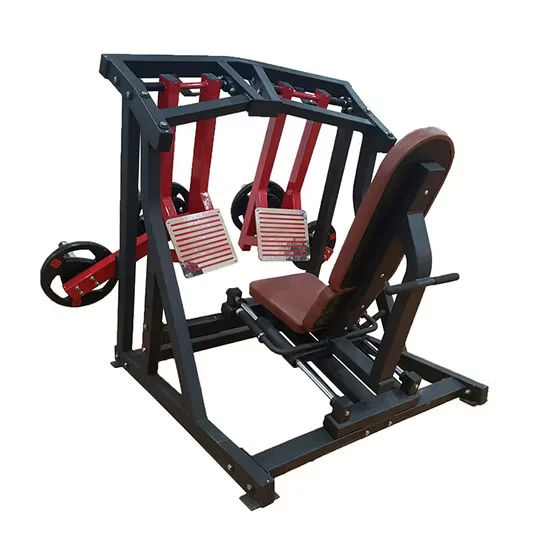
Linear Leg Press Machine, 2375×1500×1475mm, 250kg Net Weight — constructed with industrial steel frame and continuous robotic welding for high-traffic commercial environments, featuring precision guide rails to prevent binding under off-center loading. Each unit undergoes individual load testing before shipment, backed by a 10-year frame warranty and factory-direct floor planning support.
// Spec Highlights
• Direct from Manufacturer · No Middlemen · Worldwide Shipping
01
// Material
Imported Solid Wood
Premium hardwood frames sourced for density and visual warmth.
02
// Hardware
Medical-Grade Silent
Whisper-quiet pulleys and springs for clinical environments.
03
// Customization
Appearance OEM
Color, upholstery, and branding tailored to your studio.
04
// Service
Layout Design
Free venue planning for studios and rehab institutions.
Every component is selected for longevity, performance, and aesthetic harmony - from imported hardwood frames to silent medical-grade accessories.
// Features
Industrial-Grade Structural Integrity — Every unit undergoes full load testing beyond rated capacity before leaving the production floor.
| Parameter | Value |
|---|---|
| Product Type | Linear Leg Press Machine |
| Model NO. | 5039 |
| Frame Steel | 11-gauge, 3×3 inch tube |
| Steel Grade | Q235 / Q345 industrial steel, mill-certified |
| Welding Type | Robotic MIG, continuous weld lines |
| Load Capacity | Tested beyond 500kg |
| Loading Type | Plate loaded |
| Bearing Type | Sealed industrial bearings |
| Powder Coating | 200μm scratch-resistant |
| Upholstery | High-density commercial grade, multiple color options available |
| Product Dimensions | 2375×1500×1475mm |
| Net Weight | 250kg |
| Certification | ISO 9001, CE |
| Warranty | 10-year frame |
| Facility Type | Typical Use |
|---|---|
| Commercial gym strength floor | Primary lower-body compound movement station in high-traffic zones |
| University strength and conditioning room | Athlete off-season and in-season leg development programs |
| Hotel and resort fitness center | Durable lower-body option for diverse guest demographics |
| Rehabilitation and performance center | Controlled linear-path leg strengthening under supervision |
| Community fitness center | Heavy-use lower-body station for adult membership bases |
A leg press frame either holds geometry under load or it does not — there is no middle ground at 400kg.
The commercial linear leg press machine category is crowded with equipment described as "commercial grade" without specifying what that actually means structurally. We have seen 10-gauge and even 12-gauge tubes marketed under the same label, and the difference becomes visible within months under sustained heavy use. Spot-welded joints on leg press frames are particularly dangerous because the loading vector is almost entirely axial — when a weld fails mid-set, the carriage drops without warning [NEED_CITE: EN 957 structural requirements for stationary training equipment]. This is why our frames use robotic MIG welding with continuous bead lines across every structural joint, eliminating the cold joints and incomplete penetration that plague manual spot-weld assemblies.
The linear leg press targets the quadriceps, glutes, and hamstrings through a fixed sagittal-plane path, making it a high-value compound station for any commercial lower-body zone. In a strength floor layout, this commercial linear leg press machine pairs naturally with free-weight squat racks and hip-dominant machines like leg curls and back extensions, creating a complete posterior and anterior chain training sequence. The 2375mm length and 1500mm width footprint requires planning for safe loading clearance on both sides of the carriage sled. It accommodates a wide range of user body sizes through the adjustable seat and footplate positions, which matters in facilities serving mixed demographics from university athletes to general-population hotel guests.
Leg press machines endure a specific fatigue profile: high static load at the bottom of each rep, sudden deceleration at lockout, and eccentric loading during the controlled descent phase. On a busy commercial floor with eight or more hours of daily use, these cycles accumulate rapidly at the carriage guide rails and the main frame-to-base junction. [NEED_CITE: weld classification and fatigue performance in structural steel] The continuous robotic MIG welds distribute this cyclic stress along the full joint length rather than concentrating it at discrete spot-weld points. Sealed bearings on the guide rail system prevent sweat, chalk dust, and cleaning chemicals from degrading the sliding surface, which is the most common cause of carriage binding in poorly maintained leg press units.
The 11-gauge steel frame with 3×3 inch tube cross-section provides a deformation threshold that holds geometry stable even under maximum loaded carriage weight. Wall thickness in rectangular tubing directly governs the moment of inertia — meaning the frame resists bending and twisting proportionally to how thick the steel walls are. Robotic MIG welding produces continuous penetration along each joint, which is critical because leg press forces are not static; they spike during each lockout and reversal. The Q235 and Q345 steel grades we source are mill-certified and traceable to the coil, so there is no ambiguity about what is actually in the frame. The 200μm powder coating applied over sandblasted surfaces protects high-contact areas from chipping and exposing bare steel to moisture and sweat corrosion.
Facilities that purchase leg press machines with thin-wall tubing or spot-welded frames typically face structural callbacks within the first eighteen months of heavy use. A frame that flexes under load does not just feel unstable — it accelerates wear on guide rail bearings and causes uneven carriage travel that users notice immediately. Spot welds that crack require full equipment teardown and re-welding, which means extended floor downtime and potential liability exposure. Non-sealed bearings on the carriage system develop play and require frequent lubrication and eventual replacement, adding maintenance labor costs that compound over the equipment lifespan. [NEED_CITE: comparative maintenance intervals for sealed versus unsealed bearing systems in commercial fitness equipment] Low-density upholstery on the back pad compresses within months under daily commercial loading, forcing facilities into re-upholstery cycles that could have been avoided with proper initial specification.
The 11-gauge frame steel on this machine is sourced with full mill certification traceable to the original coil — not purchased from intermediary stock with unverifiable origin. Every structural joint is welded by robotic MIG systems producing continuous bead lines, which we verify visually and through load testing rather than relying on welder self-reporting. Each unit is load tested beyond its rated capacity before crating, not batch-sample tested after production. The 200μm industrial powder coating is applied after sandblasting to ensure adhesion, providing long-term protection in environments where sweat, chalk, and cleaning agents are constant. The 10-year frame warranty reflects confidence in the structural system rather than a marketing addition. For facility planning, we provide 2D and 3D CAD layouts that account for this machine’s 2375×1500mm footprint plus required safety clearances on all sides, ensuring the commercial linear leg press machine integrates properly into high-density strength floors.
Share your strength floor square footage and equipment list to receive a 2D or 3D CAD layout that accounts for this leg press footprint, carriage loading clearance, and user circulation paths. Specify your expected daily user volume so we can confirm the structural specification matches your traffic profile. Provide your target user demographic and body-size range so we can verify the seat and footplate adjustment positions cover your membership base. Let us know any custom requirements including frame color, logo placement, or upholstery material to align the equipment with your facility branding.
Q: How can buyers tell the difference between true commercial-grade and light-commercial leg press machines?
A: Request the specific steel gauge and tube dimensions rather than accepting "commercial grade" as a description. Verify that welding is continuous robotic MIG rather than manual spot welding. Ask whether load testing is performed on every individual unit or only on production samples. True commercial equipment provides mill-certified steel documentation traceable to the coil.
Q: What frame steel gauge is necessary for a leg press used in a high-traffic commercial gym?
A: For sustained daily use under heavy loads, 11-gauge steel with a minimum 3×3 inch rectangular tube cross-section provides the deformation resistance needed. Thinner gauges flex under axial loading and accelerate guide rail wear. The steel grade should be documented — Q235 or Q345 industrial grades are standard for structural fitness equipment frames in high-traffic environments.
Q: How does welding quality affect long-term reliability of a leg press under repeated heavy loading?
A: Leg press frames experience cyclic stress at every rep, with peak forces at lockout and reversal points. Spot welds concentrate this stress at discrete locations and develop cracks over time. Continuous robotic MIG welding distributes load along the full joint length, significantly extending fatigue life. Inspecting weld bead consistency and penetration depth at frame junctions reveals the actual construction quality.
Q: What maintenance do the guide rails and carriage bearings require in high-traffic environments?
A: Sealed industrial bearings require minimal maintenance compared to unsealed alternatives, but guide rails should be wiped clean of chalk dust and debris regularly. Quarterly visual inspection of bearing housings for play or unusual wear patterns is recommended. Using pH-neutral cleaners on the rails prevents corrosion from sweat residue and maintains smooth carriage travel over the equipment lifespan.
Q: How should equipment spacing be planned around a linear leg press in a commercial layout?
A: Account for the full machine dimensions plus a minimum clearance zone on both sides for safe plate loading and user entry. Consider the carriage travel path and ensure no adjacent equipment or structural columns interfere. Proper spacing also affects user comfort and safety during heavy sets where spotters or training partners may need access to the carriage area.
Premium aesthetics meet quiet operation for boutique studio environments.
Medical-grade silence and precision for sports & postpartum recovery.
Furniture-grade craftsmanship for premium residential installations.
Compact premium setups for one-on-one and small-group training.
Aesthetic Pilates integration for hybrid wellness studio programming.
Multi-unit deployment with instructor-grade reliability for certification programs.
Tell us about your project. Our team will respond within 24 hours with pricing, customization options, and shipping details.
// Sales Director
William
+86 132 2531 1800
// Export Manager
Bella
+86 198 5412 8032
william@bickfit.com