01 / Scenario
STUDIO
P
High-End Pilates Studios
Premium aesthetics meet quiet operation for boutique studio environments.
ISO
9001
CE
Certified
OEM
Available
10YR
Warranty
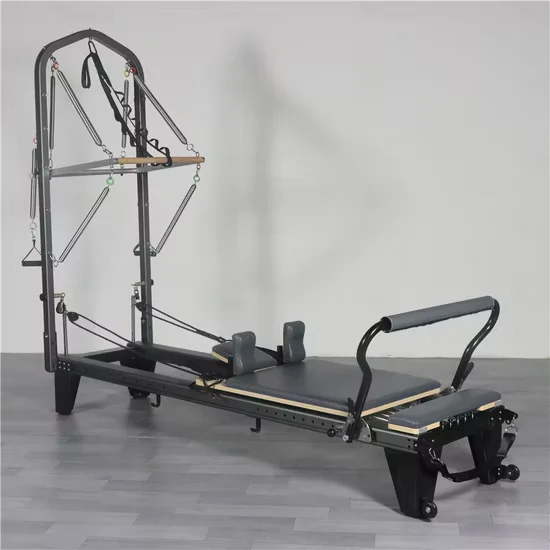
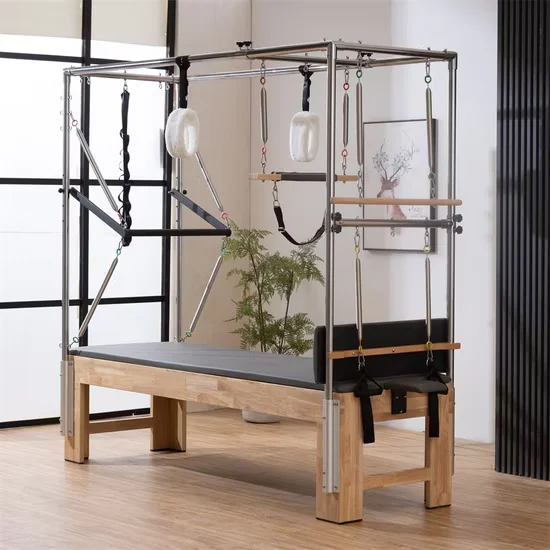
Pilates Cadillac Reformer, 2400×770×2160mm, 150kg Net Weight, 3-Year Warranty — solid steel uprights with reinforced tower cross-members and heavy-duty spring carriages engineered for continuous studio transitions without frame flex. Includes long box, jump board, and platform with reinforced mounting points for stable overhead and carriage travel under load. Every unit undergoes full load testing with 32-point inspection before shipment to ensure commercial durability.
// Spec Highlights
• Direct from Manufacturer · No Middlemen · Worldwide Shipping
01
// Material
Imported Solid Wood
Premium hardwood frames sourced for density and visual warmth.
02
// Hardware
Medical-Grade Silent
Whisper-quiet pulleys and springs for clinical environments.
03
// Customization
Appearance OEM
Color, upholstery, and branding tailored to your studio.
04
// Service
Layout Design
Free venue planning for studios and rehab institutions.
Every component is selected for longevity, performance, and aesthetic harmony - from imported hardwood frames to silent medical-grade accessories.
// Features
Mill-Certified Steel Frame — Every tube in this Pilates Cadillac reformer traces back to the coil certificate, so you know exactly what is bearing the load overhead.
| Parameter | Value |
|---|---|
| Product Type | Pilates Cadillac Reformer |
| Model NO. | SRY-01 |
| Frame Dimensions | 2400×770×2160mm |
| Net Weight | 150kgs |
| Accessories | Long Box / Jump Board / Platform |
| Color | Solid Color |
| Logo | Customized Is Allowed |
| Age Group | Adult |
| Gender | Unisex |
| Warranty | 3 Years |
| Origin | China |
| Facility Type | Typical Use |
|---|---|
| Pilates Studio | Group and private cadillac sessions with tower spring work |
| Rehabilitation Center | Post-injury controlled resistance and mobility training |
| Boutique Fitness Studio | Premium reformer-to-cadillac transition classes |
| Hotel Wellness Center | Low-volume guest use with full accessory range |
| Private Training Facility | One-on-one instruction with overhead bar and push-through bar |
A tower that flexes under spring tension drifts the entire movement path.
When the tower uprights are built from thin-wall tubing and spot-welded to the base, the connection loosens after months of repeated spring loading and bar pull-through. Carriage travel develops lateral play, spring anchor plates shift, and overhead bar movement becomes inconsistent. Commercial Pilates studios see this failure pattern repeatedly because the stress cycles on a commercial Pilates Cadillac reformer accumulate far faster than on light-duty equipment [NEED_CITE: EN 957 structural requirements for stationary training equipment]. The fix is never a simple bolt tightening — the weld zone itself has fatigued.
The Pilates Cadillac reformer occupies the center of a dedicated studio zone, handling overhead spring work, push-through bar exercises, and full-length carriage travel in a single footprint. It pairs with mat stations and smaller apparatus like stability chairs to create a complete class rotation. Studios running multiple daily sessions need enough clearance around the tower for instructor movement and safe bar travel. The 2400mm length accommodates users across a wide height range without repositioning accessories.
A commercial Pilates Cadillac reformer in a busy studio endures hundreds of spring attachment and release cycles daily. Each cycle loads the tower-to-base joint in both tension and torsion, concentrating stress at the weld seams where uprights meet the horizontal frame. Carriage rails see repeated lateral forces as users shift weight during leg spring work, and the overhead bar mounting points absorb eccentric loads when the push-through bar is driven through full range [NEED_CITE: weld classification and fatigue performance in structural steel]. Vinyl at shoulder rests and foot bar padding compresses and recovers thousands of times weekly, testing upholstery density and tear resistance at seams. Powder coating on high-contact zones faces sweat acidity and cleaning chemicals every session.
The 2400×770mm footprint and 150kg net weight indicate a frame substantial enough to resist tipping during aggressive overhead bar work, but weight alone does not guarantee rigidity — tube wall thickness and welding method determine whether that mass translates to stability. Continuous MIG welding at tower-to-base joints distributes load across the full seam rather than concentrating it at discrete spot-weld points, which is where fatigue cracks initiate. Accessory mounting points for the long box, jump board, and platform must be reinforced with adequate plate thickness rather than bolted through thin sheet metal that strips under repeated attachment and removal. Spring anchor construction governs resistance consistency: a thicker mounting plate with full-perimeter welding maintains anchor geometry through thousands of loading cycles. Upholstery density at shoulder rests and the push-through bar grip zone directly determines how long the padding retains shape before compressing flat and requiring replacement.
Thin-wall tubing on the tower frame may look identical in a showroom but begins to deflect noticeably once springs are loaded to working tension. Spot-welded joints pass initial visual inspection yet crack progressively under the cyclic loading of daily classes, creating liability exposure for studio operators. Unsealed bearings in pulley towers develop play within months, producing uneven cable travel and requiring scheduled maintenance that interrupts class bookings. Low-density upholstery at the carriage bed and shoulder rests compresses flat within weeks of commercial use, forcing premature reupholstery or full pad replacement [NEED_CITE: commercial upholstery durability standards in fitness environments]. Undersized powder coating chips at contact points where accessories mount and dismount, exposing bare steel to sweat and humidity.
The 11-gauge steel frame with mill-certified sourcing provides traceable material properties for every load-bearing upright, removing guesswork about what supports overhead spring work. Robotic MIG welding produces continuous weld lines at tower joints, eliminating the weak-link spot welds that fail under cyclic loading. Every unit undergoes load testing before shipment, verifying carriage travel and spring anchor integrity under actual working conditions rather than sample-based assumptions. The 200μm industrial powder coating resists chipping at accessory mounting points and contact zones where sweat and cleaning agents concentrate. A 10-year frame warranty backs the structural decisions that matter most on a commercial Pilates Cadillac reformer. Full 2D-3D CAD floor planning ensures the 2400×770mm footprint fits with proper instructor clearance and safe travel paths around the tower. OEM customization allows studio branding on color and logo without compromising structural specifications.
Provide your Pilates zone dimensions and current equipment list to receive a 2D-3D layout showing how the commercial Pilates Cadillac reformer fits within safe clearance requirements. Specify daily class volume and average session count to confirm the structural grade matches your usage intensity. Identify your client height range to verify accessory positioning accommodates the full user spectrum. State any color, logo, or upholstery customization requirements so production specifications reflect your studio identity.
Q: How do I tell a commercial-grade Pilates Cadillac from a home-use model?
A: Check the frame tube wall thickness and welding method at tower joints. Commercial units use thicker gauge steel with continuous welds designed for repeated spring loading cycles. Home models often rely on spot welds and thinner tubing that cannot sustain daily studio use without developing play at the tower-to-base connection. Request steel gauge documentation and load test records from the manufacturer.
Q: What frame dimensions support safe overhead bar work?
A: The frame must resist tipping and torsional flex when the push-through bar reaches full overhead extension under spring tension. A footprint around 2400mm in length with adequate net weight provides the stability base needed. Tower upright height must clear the tallest user plus full arm extension. Verify that the tower-to-base joint uses continuous welding rather than spot welds at these stress concentration points.
Q: How does spring anchor construction affect replacement frequency?
A: Spring anchors welded to thin mounting plates loosen as the plate deforms under repeated loading, requiring spring re-seating or full anchor replacement. Thicker plates with full-perimeter welding maintain geometry through thousands of cycles, keeping resistance consistent and extending the interval between spring hardware service. Ask the manufacturer for the anchor plate thickness and weld pattern specification.
Q: What accessory mounting standards ensure long-term stability?
A: Long box, jump board, and platform attachments should connect to reinforced mounting points rather than bolts passing through thin sheet metal. Reinforced plates with adequate thread engagement prevent stripping under repeated attachment and removal cycles. Confirm that each accessory mounting position has been load tested independently as part of the unit-level inspection before shipment.
Premium aesthetics meet quiet operation for boutique studio environments.
Medical-grade silence and precision for sports & postpartum recovery.
Furniture-grade craftsmanship for premium residential installations.
Compact premium setups for one-on-one and small-group training.
Aesthetic Pilates integration for hybrid wellness studio programming.
Multi-unit deployment with instructor-grade reliability for certification programs.
Tell us about your project. Our team will respond within 24 hours with pricing, customization options, and shipping details.
// Sales Director
William
+86 132 2531 1800
// Export Manager
Bella
+86 198 5412 8032
william@bickfit.com