01 / Scenario
STUDIO
P
High-End Pilates Studios
Premium aesthetics meet quiet operation for boutique studio environments.
![Commercial Pilates Reformer Trapeze Machine Bed Core Timber Training [WARN] draft identifier mismatch](https://bickgym.com/wp-content/uploads/2026/08/commercial-pilates-reformer-trapeze-machine-bed-core-timber-training-warn-draft-identifier-mismatch-84929b.webp)
ISO
9001
CE
Certified
OEM
Available
10YR
Warranty
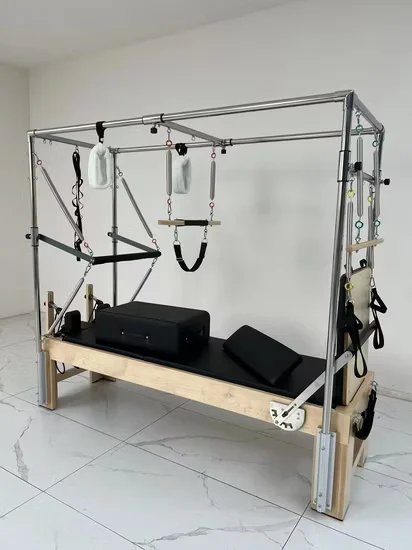
Commercial Pilates Reformer with Trapeze Tower, 2460×730×680mm, 100kg Net Weight — solid timber carriage paired with long box, jump board, and platform for progressive studio programming. Reinforced tower frame supports dynamic trapeze and push-through bar work under repeated class loads. 3-year frame warranty and custom logo options available for studio operators.
// Spec Highlights
• Direct from Manufacturer · No Middlemen · Worldwide Shipping
01
// Material
Imported Solid Wood
Premium hardwood frames sourced for density and visual warmth.
02
// Hardware
Medical-Grade Silent
Whisper-quiet pulleys and springs for clinical environments.
03
// Customization
Appearance OEM
Color, upholstery, and branding tailored to your studio.
04
// Service
Layout Design
Free venue planning for studios and rehab institutions.
Every component is selected for longevity, performance, and aesthetic harmony - from imported hardwood frames to silent medical-grade accessories.
// Features
Traceable Timber Carriage — Solid timber rail with verifiable supplier certification ensures glide consistency through thousands of daily studio repetitions.
| Parameter | Value |
|---|---|
| Product Type | Pilates Reformer with Trapeze Tower |
| Model NO. | SRY-24 |
| Product Dimensions | 2460×730×680mm |
| Net Weight | 100kgs |
| Carriage Material | Solid timber |
| Tower Frame | Reinforced steel-timber hybrid |
| Accessory Included | Long Box / Jump Board / Platform |
| Color | Solid color options available |
| Logo | Customized logo available |
| Warranty | 3 Years |
| Production Capacity | 80 Pieces/Month |
| Facility Type | Typical Use |
|---|---|
| Commercial Pilates studio | Reformer and trapeze tower group classes |
| Rehabilitation and physical therapy center | Movement re-education and post-injury protocols |
| Boutique fitness facility | Hybrid reformer-barre programming |
| Hotel wellness center | Private and semi-private pilates sessions |
Sealed spring housings maintain tension consistency across hundreds of daily repetitions.
Many pilates reformers marketed for commercial use rely on unsealed spring compartments that accumulate chalk dust and moisture over time. Within months of daily class scheduling, the springs lose tension predictability and the resistance curve drifts. Studio operators end up replacing spring sets far earlier than expected, disrupting class flow and increasing maintenance overhead. A commercial pilates reformer trapeze machine that cannot guarantee spring housing integrity will quietly erode class quality. [NEED_CITE: EN 957 structural requirements for stationary training equipment]
The reformer-tower combination covers the full sagittal and frontal movement planes, addressing core stabilization, spinal articulation, and lower-limb alignment work. In a studio equipment plan, it complements cadillac units and chair apparatus by bridging supine-to-upright progression without requiring a second footprint. It suits high-scheduling studios running back-to-back group classes. The carriage length accommodates users across a wide anthropometric range, making it practical for facilities serving mixed-ability memberships. This commercial pilates reformer trapeze machine anchors the reformer zone while reducing total unit count.
Repeated jump board impacts generate cyclic shock loads through the carriage rail and end-stop hardware. Trapeze bar work introduces eccentric lateral forces on the tower uprights, concentrating stress at the base joint and cross-brace connections. Spring attachment points endure continuous tension-release cycles that can fatigue low-grade spring steel. Upholstery contact zones on the long box and carriage pad compress under body weight multiple times per hour, demanding foam density that resists permanent deformation. The timber carriage surface must withstand perspiration and cleaning agents without surface degradation. [NEED_CITE: fatigue performance criteria for cyclic-loaded fitness equipment frames]
The solid timber carriage provides a dense, dimensionally stable glide surface that resists warping under humidity fluctuations common in studio environments. Timber species selection determines grain tightness and long-term wear resistance — harder species maintain rail smoothness through extended use cycles. The tower frame’s reinforced construction must resist lateral deflection when users apply off-center forces through the push-through bar and trapeze straps. Joint geometry at the tower base dictates whether the frame racks under dynamic loading or stays square. Spring grade consistency ensures that a "medium" spring delivers the same resistance whether it is the first or the five-hundredth repetition of the day. Accessory mounting interfaces on the carriage must lock the long box and jump board firmly without developing play over repeated swaps.
Laminated plywood carriages may look identical in photos but delaminate at the rail contact edge after sustained load cycling, creating uneven glide and requiring full carriage replacement. Unsealed spring housings invite dust ingress that accelerates spring fatigue and causes inconsistent resistance feedback to users. Low-density foam on the carriage pad compresses permanently within months, forcing reupholstery costs that compound across a fleet of reformers. Thin or poorly cured finishes on timber surfaces chip under jump board impact, exposing raw wood to moisture absorption and dimensional swelling. Non-standard hardware on accessory mounts means replacement parts are unavailable when wear develops, turning minor maintenance into equipment downtime. [NEED_CITE: material fatigue and degradation patterns in commercial studio equipment]
The solid timber carriage is sourced with supplier traceability, so the timber species and grade are verifiable — not an anonymous import batch. Tower frame joints use reinforced connections tested under lateral load to prevent racking during trapeze work. Every unit undergoes load testing before shipment, confirming spring tension accuracy and carriage glide under weighted conditions. The powder-coated steel components receive a 200μm industrial coating that resists chipping from accessory swaps and cleaning chemicals. A 3-year warranty covers the frame, and our 2D-3D floor planning support ensures correct spacing between reformer units for safe instructor circulation in group class layouts. Custom logo and color options let studio operators align equipment aesthetics with brand identity without delaying production.
Provide your studio floor dimensions and target reformer count to receive a 2D-3D layout plan with safe circulation clearances. Specify expected daily class volume and average participant weight range to confirm spring configuration and carriage load rating. Indicate branding requirements including custom logo placement and color preferences for frame and upholstery to align with your studio identity.
Q: How do you distinguish a commercial-grade pilates reformer from a light-commercial one?
A: Commercial-grade reformers use solid timber or high-density engineered carriages with verifiable material certification, sealed spring housings that prevent dust contamination, and reinforced tower joints rated for continuous group class use. Light-commercial units often rely on laminated plywood carriages and open spring compartments that degrade under daily scheduling. Request load test documentation and material traceability records before purchasing.
Q: What are the trade-offs between timber and aluminum carriages?
A: Timber carriages offer superior dimensional stability and a smoother glide surface that resists warping in humid studio environments, but require periodic surface maintenance. Aluminum carriages are lighter and moisture-impervious yet can develop surface scoring that degrades glide quality over time. The choice depends on studio climate control and maintenance capacity.
Q: How does spring resistance progression accommodate different user levels?
A: The spring set includes multiple tension ratings that can be combined to create progressive resistance levels. Beginners start with lighter springs for controlled movement patterns while advanced users stack heavier springs for strength-focused exercises. Spring interchangeability allows instructors to adjust resistance within a single class without equipment swaps.
Q: What ceiling height is needed for safe trapeze tower use?
A: The tower extends above the reformer footprint and requires overhead clearance for full-range trapeze bar and strap exercises. Operators should measure from the floor to the lowest ceiling obstruction and confirm minimum clearance with the manufacturer. Insufficient height restricts exercise selection and creates safety hazards during overhead movements.
Q: How often should upholstery and accessories be replaced under studio conditions?
A: Upholstery on the carriage pad and long box endures constant compression and friction during group classes, typically showing seam stress and surface wear within a predictable service window. Replacement pads and accessory components are available as individual spare parts, allowing targeted maintenance without replacing the full unit. Establish a 90-day inspection cycle to track wear progression.
Premium aesthetics meet quiet operation for boutique studio environments.
Medical-grade silence and precision for sports & postpartum recovery.
Furniture-grade craftsmanship for premium residential installations.
Compact premium setups for one-on-one and small-group training.
Aesthetic Pilates integration for hybrid wellness studio programming.
Multi-unit deployment with instructor-grade reliability for certification programs.
Tell us about your project. Our team will respond within 24 hours with pricing, customization options, and shipping details.
// Sales Director
William
+86 132 2531 1800
// Export Manager
Bella
+86 198 5412 8032
william@bickfit.com