01 / Scenario
STUDIO
P
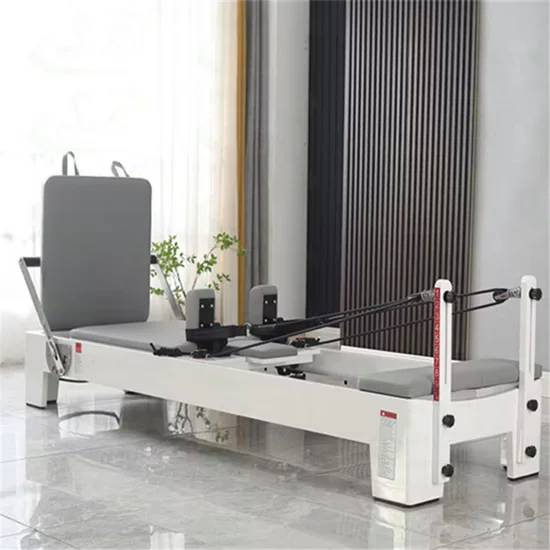
High-End Pilates Studios
Premium aesthetics meet quiet operation for boutique studio environments.
ISO
9001
CE
Certified
OEM
Available
10YR
Warranty
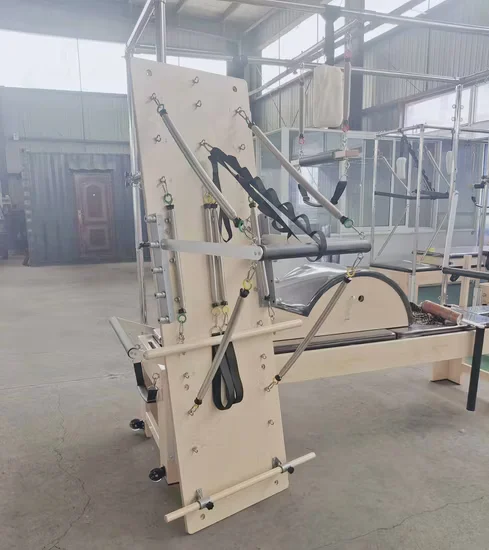
Pilates Spring Board Wall Unit, Solid Wood Construction, 1850×560×75mm — engineered with integrated spring resistance system for high-repetition commercial use; wall-mounted design maximizes floor space while maintaining structural rigidity under dynamic loading. Compatible with Long Box, Jump Board, and Platform accessories for versatile programming. Backed by 3-year warranty and full OEM customization for studio branding.
// Spec Highlights
• Direct from Manufacturer · No Middlemen · Worldwide Shipping
01
// Material
Imported Solid Wood
Premium hardwood frames sourced for density and visual warmth.
02
// Hardware
Medical-Grade Silent
Whisper-quiet pulleys and springs for clinical environments.
03
// Customization
Appearance OEM
Color, upholstery, and branding tailored to your studio.
04
// Service
Layout Design
Free venue planning for studios and rehab institutions.
Every component is selected for longevity, performance, and aesthetic harmony - from imported hardwood frames to silent medical-grade accessories.
// Features
Mill-Traceable Solid Wood — Every board sourced with species and grade documentation traceable to the supplier, eliminating veneer-over-particle failures in cyclic spring loading.
| Parameter | Value |
|---|---|
| Product Type | Pilates Equipment |
| Material | Solid Wood |
| Dimensions | 1850 × 560 × 75 mm |
| Net Weight | 35 kg |
| Accessories | Long Box / Jump Board / Platform |
| Mounting | Wall-mounted integrated system |
| Customization | Available |
| Logo | Customized is allowed |
| Warranty | 3 Years |
| Facility Type | Typical Use |
|---|---|
| Commercial Pilates studio | Daily group and private spring board sessions |
| Rehabilitation and physical therapy center | Low-impact resistance training for patient recovery |
| Boutique fitness facility | Supplemental resistance work alongside reformer and mat areas |
| Hotel and resort wellness area | Guest-accessible Pilates conditioning with minimal floor footprint |
Solid wood construction eliminates the most common failure mode in wall-mounted spring boards used at commercial volume.
Equipment marketed as studio grade frequently uses thin veneer bonded over particle board or MDF. Under repeated spring tension cycles, the substrate absorbs moisture from sweat and cleaning solutions, swelling at the fastener points. Within months, the veneer lifts at the edges and the anchor hardware begins to pull free from the degraded core. For facilities running back-to-back classes, this is not a cosmetic issue — it is a structural liability that forces unplanned equipment replacement. [NEED_CITE: EN 957 structural requirements for stationary training equipment]
The commercial Pilates spring board wall unit occupies a specific role in studio floor planning: it delivers standing and supine spring resistance work without the footprint of a full reformer or tower. In a mixed-equipment layout, it complements mat zones and reformer rows by handling exercises that require vertical spring vectors — scapular stabilization, standing leg work, and overhead resistance patterns. For rehabilitation centers, it provides a transitional station between mat-based therapy and full apparatus work, accommodating patients across a wide range of body sizes and mobility levels. The wall-mounted configuration keeps the training floor clear for traffic flow between stations.
Every spring engagement applies a tensile pull to the anchor hardware, and each release transfers a shock load back into the board. In a studio running eight sessions daily, each anchor point may experience thousands of tension cycles per week. Solid wood distributes these loads across the grain structure rather than concentrating stress at a single density layer, as particle board does. The critical wear zones are the spring attachment points and the wall-mount interface — where the fasteners transfer dynamic loads into the building framing. Over time, the wood around these points either holds its density or begins to compress, and the difference determines service life. [NEED_CITE: fatigue performance in structural wood under cyclic fastener loading]
Solid wood is not a single specification — the species, grade, and moisture content at the time of fabrication all determine how the board performs under commercial conditions. Hardwoods with higher Janka density ratings resist fastener pull-out and surface denting from accessory attachments. Board thickness at 75 mm provides the cross-sectional depth needed to prevent flexing when springs are loaded asymmetrically across the width. The accessory mounting points for the Long Box, Jump Board, and Platform must be reinforced at the joinery level, not just surface-screwed, to handle the lateral forces these attachments introduce during use. Finish selection matters as well — a sealed surface prevents moisture ingress from cleaning protocols without creating a slick contact surface.
Facilities that purchase spring boards based on appearance alone often face a predictable failure sequence. The veneer surface looks identical to solid wood at installation. Within a season of commercial use, humidity cycling causes the core material to expand and contract at a different rate than the veneer skin, opening gaps at the edges. Spring anchor hardware, initially secure, begins to wobble as the particle board substrate compresses around the fastener threads. Once the anchor points develop play, spring tension becomes inconsistent and the board must be pulled from service. Replacement costs compound when the facility has standardized on a single vendor and must retrain instructors on whatever substitute is available. [NEED_CITE: comparative failure modes of engineered wood versus solid wood in fitness equipment]
Our manufacturing process applies the same structural discipline to wood components as it does to steel frames. The steel sourcing protocol — Q235 and Q345 industrial steel with mill certification — extends to wood procurement with species and grade documentation from the supplier. Robotic MIG welding on our strength lines translates here to precision-machined anchor points and continuous-load joinery rather than spot-fastened connections. Every unit undergoes load testing before shipment, verifying spring tension consistency across all attachment points. The 200μm industrial powder coating used on our steel frames is matched by a commercial-grade sealed finish on the wood surface, resisting moisture from daily cleaning. Our 10-year frame warranty on steel equipment reflects the same engineering standard applied to the spring board’s structural warranty. OEM customization allows facilities to match the finish and logo to their studio identity.
Provide your Pilates studio or rehab facility square footage and current equipment list to receive a 2D-3D layout showing placement and clearance requirements. Specify daily session volume so we can confirm the spring system matches your usage intensity. Indicate target user demographics to verify accessory configuration covers the appropriate range of body sizes. Communicate finish color and logo requirements for branding alignment with your existing equipment.
Q: How do I evaluate wood quality in commercial Pilates spring boards?
A: Request the wood species identification and Janka hardness rating from the supplier. Inspect the end grain for consistent density without voids or filler patches. Check that anchor hardware is embedded into solid wood rather than a glued insert. Ask for moisture content documentation at the time of fabrication, as boards shipped at improper moisture levels will warp or crack in climate-controlled studio environments over the first year.
Q: What causes spring tension inconsistency over time?
A: Spring steel fatigues at the hook attachment point where stress concentrates during loading cycles. Inconsistent tension across a board’s spring bank usually indicates uneven usage patterns rather than manufacturing defects. Rotating spring positions periodically across the anchor points extends service life. When replacement is needed, matched-tension sets from the original manufacturer maintain calibrated resistance levels across the board.
Q: What are the structural requirements for wall-mount installation?
A: The wall-mount bracket must anchor into structural framing — wood studs or steel members — not drywall alone. A structural engineer should verify the wall can handle dynamic pull loads generated during spring exercises at full extension. Concrete or masonry walls require rated expansion anchors. The installation guide specifies fastener type, spacing, and minimum embedment depth for each wall construction type.
Q: How do accessories attach and what is the expected wear at connection points?
A: The Long Box, Jump Board, and Platform connect through reinforced mounting points built into the board’s joinery. These attachment mechanisms use metal-on-metal interfaces rather than wood-threaded fasteners to prevent stripping under repeated installation and removal. Inspect the receiver slots and pins for lateral play after extended use and replace worn hardware before it affects exercise alignment.
Premium aesthetics meet quiet operation for boutique studio environments.
Medical-grade silence and precision for sports & postpartum recovery.
Furniture-grade craftsmanship for premium residential installations.
Compact premium setups for one-on-one and small-group training.
Aesthetic Pilates integration for hybrid wellness studio programming.
Multi-unit deployment with instructor-grade reliability for certification programs.
Tell us about your project. Our team will respond within 24 hours with pricing, customization options, and shipping details.
// Sales Director
William
+86 132 2531 1800
// Export Manager
Bella
+86 198 5412 8032
william@bickfit.com