01 / Scenario
STUDIO
P
High-End Pilates Studios
Premium aesthetics meet quiet operation for boutique studio environments.
ISO
9001
CE
Certified
OEM
Available
10YR
Warranty
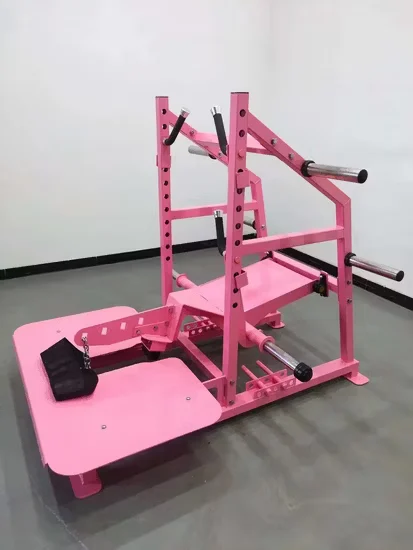
Plate Loaded Belt Squat Machine, 50×100×3mm Frame Tube, 170kgs Machine Weight — plate-loaded design eliminates weight stacks and guide rods, reducing wear points for high-traffic commercial gym use. Frame steel specification provides defined bending resistance under repeated eccentric loading, with powder coating at contact zones preventing chip-through. Every unit undergoes three-stage inspection with load testing before shipment, backed by 10-year frame warranty and floor planning support.
// Spec Highlights
• Direct from Manufacturer · No Middlemen · Worldwide Shipping
01
// Material
Imported Solid Wood
Premium hardwood frames sourced for density and visual warmth.
02
// Hardware
Medical-Grade Silent
Whisper-quiet pulleys and springs for clinical environments.
03
// Customization
Appearance OEM
Color, upholstery, and branding tailored to your studio.
04
// Service
Layout Design
Free venue planning for studios and rehab institutions.
Every component is selected for longevity, performance, and aesthetic harmony - from imported hardwood frames to silent medical-grade accessories.
// Features
Mill-Certified Frame Steel — every 50×100×3mm rectangular tube used in this plate loaded belt squat machine is traceable to the producing coil, eliminating the guesswork behind generic "commercial grade" claims.
| Parameter | Value |
|---|---|
| Product Type | Plate Loaded Belt Squat Machine |
| Frame Tube Size | 50×100×3mm |
| Loading Type | Plate Loaded |
| Material | Iron |
| Product Dimensions | 1676×1700×1524mm |
| Color Options | Customized |
| Certification | ISO 9001, CE, RoHS |
| Powder Coating | 200μm scratch-resistant finish |
| Welding Type | Robotic MIG, continuous weld lines |
| Warranty | 10-year frame |
| Facility Type | Typical Use |
|---|---|
| Commercial gym strength floor | Dedicated lower-body isolation station for heavy compound loading |
| University strength and conditioning room | Athletic lower-body development without spinal compression |
| CrossFit box functional zone | High-volume leg training accessory movement |
| Hotel fitness center | Space-efficient lower-body option for diverse guest demographics |
| Rehabilitation and performance center | Controlled hip-dominant loading for return-to-training protocols |
A 3mm wall on a 50×100mm tube resists bending at load points where thinner sections yield permanently within the first year.
When a supplier quotes "commercial grade" without specifying gauge, wall thickness, or steel grade, buyers have no way to verify whether the frame will hold up under repeated eccentric loading. I have seen belt squat frames with 2mm walls develop visible deflection at the horn base after months of heavy use — the tube bends where the load horn meets the upright, and once it deforms, the belt track no longer aligns correctly. This is the kind of failure that starts slow and ends with an entire unit pulled off the floor [NEED_CITE: EN 957 structural requirements for stationary training equipment].
The plate loaded belt squat machine targets the glutes, quadriceps, and hamstrings through a hip-dominant movement path that removes axial spinal loading entirely. On a commercial strength floor, it complements free-weight squat racks and leg press stations by offering a lower-body compound movement that accommodates users with back limitations or those who need high-volume leg work without systemic fatigue from barbell loading. Its footprint fits standard commercial spacing grids, and the open-frame design keeps sightlines clear across the training floor.
Belt squat machines experience a specific loading pattern: the weight horn and upright junction carries the full eccentric load every repetition, and the footplate absorbs reactive force from the user’s drive phase. In a gym running eight or more hours daily, that junction sees thousands of stress cycles weekly. Continuous MIG weld lines at the horn-to-frame connection distribute load across the full joint rather than concentrating it at discrete spots. The footplate mounting points must also resist shear force from lateral foot placement, and the powder coating at these contact zones needs to withstand plate abrasion and sweat exposure [NEED_CITE: weld classification and fatigue performance in structural steel].
The 50×100×3mm rectangular tube profile provides a high moment of inertia along the axis where belt squat loading applies bending force — the wider 100mm face resists the forward-and-down pull of loaded plates. A 3mm wall thickness keeps the section modulus within thresholds that prevent permanent deformation under loads well beyond what typical users can hang from a belt. Robotic MIG welding produces continuous bead profiles with consistent penetration depth, removing the inconsistency that manual spot welding introduces at critical joints. The 200μm powder coating thickness at plate contact zones and the footplate edge prevents chip-through to bare steel, which is where corrosion starts in humid or poorly ventilated facilities.
Thin-wall tube on a belt squat frame does not fail suddenly — it bends incrementally at the horn base until the loading path shifts, making the belt pull at an angle that feels wrong to the user but is hard to diagnose. Spot-welded joints at high-stress connections may pass initial inspection but crack along the weld boundary after repeated heavy sets, creating liability exposure for the facility operator. Under-spec powder coating chips where plates slide against the horn, exposing untreated steel to sweat and cleaning chemicals, accelerating rust that spreads under the remaining finish. Facilities that accept these trade-offs end up replacing units on a cycle measured in months rather than years [NEED_CITE: powder coating thickness standards for commercial fitness equipment].
The 50×100×3mm frame steel is sourced with mill certification traceable to the coil — every batch can be verified against its originating heat number. Robotic MIG welding ensures continuous weld lines at every structural joint on this commercial plate loaded belt squat machine, with no spot-weld shortcuts at high-stress connections. Every unit undergoes three-stage inspection with load testing before it leaves the floor, not sample-based QC pulled from a production run. The 200μm industrial powder coating is applied over sandblasted surfaces for adhesion that survives plate abrasion and daily cleaning cycles. We provide 2D-3D floor planning CAD support to ensure the footprint and safety clearances around the station integrate with adjacent equipment without dead space or pinch points. OEM color and branding customization is available for distributors and chain operators who need brand consistency across locations.
Share your training floor dimensions and current equipment list to receive a 2D-3D layout showing how this commercial plate loaded belt squat machine fits within your spacing plan and traffic flow. Specify daily traffic volume so we can confirm the structural grade matches your usage intensity. Confirm target user demographics — powerlifters, general membership, or athletic teams — to determine loading capacity requirements and any customization needs for color, branding, or upholstery.
Q: How do I verify frame tube gauge and wall thickness claims from a supplier?
A: Request the mill certificate for the steel coil used in production — it documents the exact chemical composition, gauge, and wall thickness. Measure the tube wall with calipers at an exposed cut end or uncoated section on a sample unit. Suppliers who cannot provide traceable mill documentation are asking you to trust marketing language instead of verifiable structural data.
Q: What maintenance does a plate loaded belt squat machine require compared to a selectorized version?
A: Plate loaded designs eliminate weight stack guide rods, selector pins, cables, and pulleys — the components that generate most maintenance calls on selectorized equipment. Your maintenance reduces to periodic fastener re-torque, weld inspection at high-stress joints, and powder coating touch-up at plate contact points. This makes the plate loaded belt squat machine a lower-overhead option for high-traffic facilities.
Q: What footprint and clearance spacing does this belt squat station require?
A: The unit occupies 1676×1700mm on the floor. We recommend a minimum 600mm clearance on the loading side for plate handling and on the user entry side for safe mounting and dismounting. Provide your floor plan and we will generate a CAD layout showing exact placement relative to adjacent stations and traffic lanes.
Q: How can I tell continuous MIG welds apart from spot welds on a frame?
A: Continuous welds appear as an unbroken bead running the full length of the joint. Spot welds show as discrete circular marks with unwelded gaps between them. Under heavy cyclic loading, stress concentrates at the edges of spot welds where the gap begins, initiating cracks that propagate along the joint. Continuous welds distribute stress evenly across the entire connection.
Premium aesthetics meet quiet operation for boutique studio environments.
Medical-grade silence and precision for sports & postpartum recovery.
Furniture-grade craftsmanship for premium residential installations.
Compact premium setups for one-on-one and small-group training.
Aesthetic Pilates integration for hybrid wellness studio programming.
Multi-unit deployment with instructor-grade reliability for certification programs.
Tell us about your project. Our team will respond within 24 hours with pricing, customization options, and shipping details.
// Sales Director
William
+86 132 2531 1800
// Export Manager
Bella
+86 198 5412 8032
william@bickfit.com