01 / Scenario
STUDIO
P
High-End Pilates Studios
Premium aesthetics meet quiet operation for boutique studio environments.

ISO
9001
CE
Certified
OEM
Available
10YR
Warranty
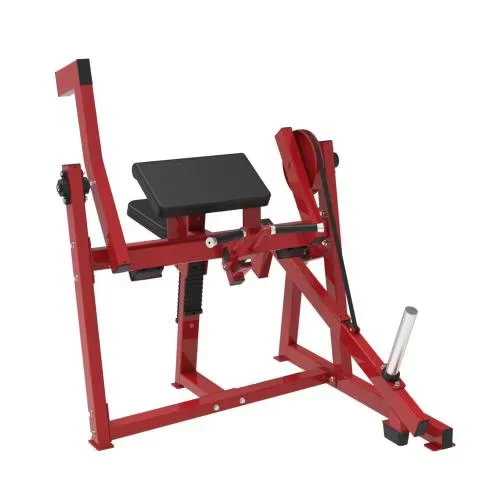
Plate Loaded Calf Raise Machine, 70kg Net Weight, 1300×1260×1495mm — built with industrial steel frame and robotic MIG continuous welding to eliminate pivot-point fatigue under repetitive heavy loading. Sealed pivot bearings ensure long-term smoothness with minimal maintenance in high-traffic environments. Every unit undergoes full load testing before shipment, backed by a 10-year frame warranty and floor planning support.
// Spec Highlights
• Direct from Manufacturer · No Middlemen · Worldwide Shipping
01
// Material
Imported Solid Wood
Premium hardwood frames sourced for density and visual warmth.
02
// Hardware
Medical-Grade Silent
Whisper-quiet pulleys and springs for clinical environments.
03
// Customization
Appearance OEM
Color, upholstery, and branding tailored to your studio.
04
// Service
Layout Design
Free venue planning for studios and rehab institutions.
Every component is selected for longevity, performance, and aesthetic harmony - from imported hardwood frames to silent medical-grade accessories.
// Features
Steel Traceability — Every tube in this commercial plate loaded calf raise machine traces back to the mill coil certificate, with grade and gauge documented before cutting begins.
| Parameter | Value |
|---|---|
| Product Type | Plate Loaded Calf Raise Machine |
| Exercise Part | Calf |
| Loading Type | Plate loaded |
| Frame Material | Q235 industrial steel |
| Frame Steel Gauge | 11-gauge |
| Frame Tube Size | 3×3 inch |
| Welding Type | Robotic MIG continuous weld |
| Load Capacity | Tested beyond 500kg |
| Bearing Type | Sealed industrial bearing |
| Powder Coating | 200μm scratch-resistant |
| Upholstery | Standard or high-density options available |
| Product Dimensions | 1300×1260×1495mm |
| Net Weight | 70kg |
| Certification | ISO 9001, CE |
| Warranty | 10-year frame |
| Facility Type | Typical Use |
|---|---|
| Commercial gym strength floor | Dedicated calf station in plate loaded zone |
| Hotel and resort fitness center | Compact lower-body complement to leg press |
| University strength and conditioning room | Athlete calf development alongside squat racks |
| Rehabilitation and performance center | Controlled ankle loading for return-to-play protocols |
Continuous MIG welds at the pivot joint eliminate the crack initiation points that spot welds leave behind.
A calf raise concentrates load into a small pivot area. When the shoulder pad mounting and pivot bracket rely on spot welds, each repetition introduces a fatigue cycle at an unfused boundary. Over months of heavy commercial use, those boundaries propagate micro-cracks that remain invisible until sudden failure. I have pulled machines off gym floors where the pivot bracket separated cleanly along a spot weld line — the steel itself was fine, the joint was not [NEED_CITE: weld classification and fatigue performance in structural steel]. Robotic MIG continuous welding fuses the entire joint perimeter, distributing stress across a unified bead rather than discrete weld points.
The standing calf raise occupies the terminal lower-body position in a plate loaded circuit, typically placed after squat racks and leg presses where athletes finish posterior chain work. It targets the gastrocnemius and soleus through a loaded ankle plantarflexion path that no compound lift fully replicates. In high-density commercial layouts, this commercial plate loaded calf raise machine sits against a wall or partition, using its compact footprint to fill a zone that larger stations cannot occupy. The shoulder pad and footplate accommodate users across a wide height range without adjustment complexity.
Every repetition drives compressive force through the shoulder pads into the pivot axis, creating a repeating load cycle that tests both weld integrity and bearing tolerance. In high-traffic gyms, a single station may see hundreds of sets daily, each one a full compression and release through the pivot mechanism. The shoulder pad mounting bracket endures concentrated shear at its attachment points, while the pivot bearing absorbs rotational stress under eccentric loading [NEED_CITE: EN 957 structural requirements for stationary training equipment]. Sweat and cleaning chemicals accelerate corrosion at any exposed metal surface, making powder coating adhesion critical at these high-contact zones. The footplate also experiences repeated impact as users drop weight onto the platform between sets.
The 3×3 inch 11-gauge tube section provides a high moment of inertia, resisting bending deflection when loaded plates create asymmetric force on the lever arm. Robotic MIG continuous welding at the pivot bracket and shoulder pad mount ensures the full tube perimeter participates in load transfer, rather than relying on intermittent fusion points. Sealed industrial bearings at the pivot axis prevent sweat and chalk dust from entering the raceway, maintaining smooth rotation through extended service intervals. The 200μm powder coating, applied over sandblasted steel, resists chipping where plates contact the frame and where users grip the handles during heavy sets.
Thin-gauge tubing flexes visibly under heavy plate loads, shifting the movement path away from the intended pivot geometry and placing uneven stress on the user’s ankle joint. Spot-welded pivot brackets may pass initial inspection but develop fatigue cracks within the first year of commercial use, creating a liability event rather than a maintenance task. Unsealed bearings accumulate chalk dust and moisture, developing rotational play that degrades movement quality and forces premature replacement [NEED_CITE: bearing seal integrity and maintenance intervals in commercial fitness equipment]. Low-density upholstery compresses permanently within months, exposing the backing plate and creating an uncomfortable contact surface that members avoid. Insufficient powder coating chips at plate contact points, exposing bare steel to sweat-driven corrosion.
The 11-gauge frame with mill-certified Q235 steel means every tube in this calf raise machine is traceable from coil to finished frame. Robotic MIG continuous welding is applied at every structural joint, not just visible seams. Each unit undergoes load testing beyond 500kg before leaving the factory, catching deflection or bearing issues that sample-based QC would miss. The 200μm industrial powder coating survives daily plate contact and chemical cleaning without exposing substrate steel. A 10-year frame warranty backs the structural assembly. For facility planning, the 1300×1260mm footprint allows safe clearance calculation around adjacent stations, and 2D-3D CAD layouts are available to integrate this unit into a complete plate loaded zone.
Provide your strength zone floor area and existing equipment list to receive a 2D-3D placement plan that accounts for safe clearance around this calf station. Specify average daily user volume so we can confirm the structural grade matches your traffic level. Share your target member demographic to verify the shoulder pad range accommodates your user base. Indicate any custom requirements for frame color, logo placement, or upholstery density.
Q: How do I distinguish a commercial-grade calf raise machine from a light-commercial one?
A: Check the frame steel gauge and tube dimension first — commercial units specify gauge number and cross-section, while light-commercial frames often describe material vaguely. Verify the welding method at pivot joints: continuous welds resist fatigue cracking far better than spot welds under repeated heavy loading. Request mill certification documentation that traces the steel back to its source coil.
Q: What frame specification is needed for heavy plate loaded calf training?
A: An 11-gauge steel frame with a 3×3 inch tube section provides the structural rigidity needed to resist deflection under concentrated plate loads. The pivot bracket must use continuous welding rather than spot welds to handle the repeating stress cycles. Sealed bearings at the pivot axis prevent contamination from chalk and sweat, maintaining smooth operation through extended high-traffic use.
Q: How does plate loaded compare to selectorized for calf machines in maintenance?
A: Plate loaded calf machines eliminate weight stack guide rods, cables, and selector pins — the components that generate most service calls on selectorized units. The load path is direct from plates through the lever arm to the pivot bearing, reducing the number of wear points. Maintenance focuses on the pivot bearing and structural fasteners rather than pulley alignment and cable replacement.
Q: What floor clearance is required around a standing calf raise station?
A: Allow minimum passage space on all sides for user entry and plate loading, with additional clearance behind the unit for plate storage if bumper plates are used. The compact footprint fits wall-adjacent placement in dense layouts. Request a 2D-3D CAD plan that maps safe zones around the station relative to adjacent equipment and traffic pathways.
Premium aesthetics meet quiet operation for boutique studio environments.
Medical-grade silence and precision for sports & postpartum recovery.
Furniture-grade craftsmanship for premium residential installations.
Compact premium setups for one-on-one and small-group training.
Aesthetic Pilates integration for hybrid wellness studio programming.
Multi-unit deployment with instructor-grade reliability for certification programs.
Tell us about your project. Our team will respond within 24 hours with pricing, customization options, and shipping details.
// Sales Director
William
+86 132 2531 1800
// Export Manager
Bella
+86 198 5412 8032
william@bickfit.com