01 / Scenario
STUDIO
P
High-End Pilates Studios
Premium aesthetics meet quiet operation for boutique studio environments.
ISO
9001
CE
Certified
OEM
Available
10YR
Warranty
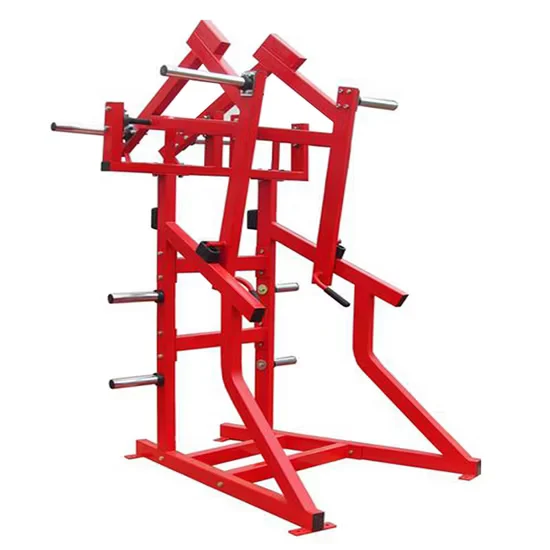
Commercial Plate Loaded Combo Decline Machine, 3×3 inch Frame Tube, 163kg Net Weight — built on mill-certified Q235 steel with robotic MIG continuous welding to eliminate spot-weld weak points, sealed industrial bearings ensure zero-play operation under heavy cyclic loading, and 200μm scratch-resistant powder coating with sandblast pre-treatment prevents chipping at contact points. Every unit undergoes individual load testing before shipment, backed by a 10-year frame warranty and free floor planning support.
// Spec Highlights
• Direct from Manufacturer · No Middlemen · Worldwide Shipping
01
// Material
Imported Solid Wood
Premium hardwood frames sourced for density and visual warmth.
02
// Hardware
Medical-Grade Silent
Whisper-quiet pulleys and springs for clinical environments.
03
// Customization
Appearance OEM
Color, upholstery, and branding tailored to your studio.
04
// Service
Layout Design
Free venue planning for studios and rehab institutions.
Every component is selected for longevity, performance, and aesthetic harmony - from imported hardwood frames to silent medical-grade accessories.
// Features
Sealed bearing track system — The decline seat rail uses sealed industrial bearings instead of basic bushings, preventing play accumulation during repetitive high-volume decline pressing sessions.
| Parameter | Value |
|---|---|
| Product Type | Plate Loaded Combo Decline Machine |
| Frame Tube Size | 3×3 inch (75×75mm) |
| Frame Steel Gauge | 11-gauge |
| Steel Grade | Q235 |
| Welding Type | Robotic MIG continuous welding |
| Loading Type | Plate loaded |
| Bearing Type | Sealed industrial bearings |
| Powder Coating | 200μm scratch-resistant industrial coating |
| Product Dimensions | 1650×1300×2440mm |
| Net Weight | 163kg |
| Certification | ISO 9001:2015, CE |
| Facility Type | Typical Use |
|---|---|
| Commercial gym strength floor | Primary decline pressing station for hypertrophy and strength blocks |
| University strength and conditioning room | High-throughput lower-body and core accessory work between team sessions |
| Hotel and resort fitness center | Compact footprint decline station for space-constrained strength zones |
| Rehabilitation and performance center | Controlled-angle decline pressing for progressive load reintroduction |
Suppliers quote "commercial grade" tubing without mill traceability, and spot-welded joints pass visual inspection but develop fatigue cracks within months of heavy decline pressing use.
This commercial plate loaded combo decline machine uses 11-gauge Q235 steel with robotic MIG continuous welding and sealed industrial bearings to eliminate the structural failure points that plague high-traffic decline stations. [NEED_CITE: weld classification and fatigue performance in structural steel]
In decline pressing, the seat rail and frame junction absorb eccentric loads repeatedly as users load plates and adjust positioning. Spot welds create localized heat-affected zones where micro-cracks propagate under cyclic stress — a failure mode invisible until the joint separates under load. Sealed bearings on the decline track prevent contamination ingress from chalk, sweat, and floor debris that would otherwise accelerate wear in unsealed bushing systems.
This commercial plate loaded combo decline machine targets the lower pectoral fibers and anterior deltoid through a fixed-angle decline pressing path, combining multiple grip positions on a single frame footprint. It pairs with flat and incline plate loaded pressing stations to complete a full pressing arc across the strength floor. The plate loaded design allows progressive overload without weight stack limitations, suiting facilities where advanced lifters regularly exceed standard stack capacities. The decline angle accommodates a broad user height range through seat position adjustment along the bearing-equipped rail.
Decline pressing generates significant eccentric force at the bottom of the movement, concentrating stress at the seat rail mounting points and the base-to-upright weld junctions. In facilities running 8+ hours daily, these joints experience thousands of load cycles per week, making weld continuity critical to long-term frame integrity. [NEED_CITE: fatigue behavior of welded steel joints under cyclic loading] The sealed industrial bearings on the seat track face constant exposure to chalk dust and cleaning chemical residue — environments that degrade unsealed bushings rapidly, introducing lateral play that compromises pressing stability. The 200μm powder coating must resist chipping at plate loading horns and contact points where barbell colliders and user hands create repeated impact.
The 3×3 inch 11-gauge frame tube provides a specific section modulus that determines how much the uprights deflect under off-center plate loading — thinner wall or smaller diameter tubes flex visibly when users load plates asymmetrically. Robotic MIG continuous welding produces uniform penetration along the entire joint length, distributing stress evenly rather than concentrating it at discrete spot weld locations. [NEED_CITE: structural steel welding codes for load-bearing fitness equipment] Sealed industrial bearings incorporate contact seals that exclude particulate contamination while retaining lubricant, maintaining smooth seat rail travel far beyond the service life of open bushings in the same environment. The 200μm powder coating applied over sandblast pre-treatment creates a mechanical bond profile that resists chipping at high-contact areas — thin coatings applied directly to unprepared steel chip at plate horn edges within months, exposing bare Q235 steel to sweat-induced corrosion.
Thin-wall frame tubes deflect under heavy plate loads, creating a perceptible flex that undermines user confidence and accelerates weld fatigue at stress concentration points. Spot-welded joints that fail mid-use create immediate liability exposure — a separated upright under a loaded decline press poses serious injury risk. Unsealed bearings that develop play within months require full rail replacement rather than simple bearing swaps, driving maintenance costs and equipment downtime. Low-density upholstery that compresses permanently within weeks forces premature replacement cycles, while inadequate powder coating that chips at contact points allows corrosion to spread beneath adjacent coating, requiring full strip and recoat rather than touch-up repair. [NEED_CITE: corrosion progression under compromised powder coating on structural steel]
Every unit is built on 11-gauge Q235 steel with mill certification traceable to the coil origin, providing verifiable material specification rather than vague "commercial grade" claims. Robotic MIG continuous welding eliminates spot-weld weak points across every frame joint, and every commercial plate loaded combo decline machine undergoes individual load testing before shipment — not sample-based inspection. The 200μm industrial powder coating with sandblast pre-treatment resists chipping at plate loading horns and high-contact structural edges. BICKFIT provides 2D-3D CAD floor planning support to optimize this decline station’s placement relative to adjacent pressing equipment, ensuring safe clearance for plate loading and user egress without wasted floor space.
Provide your strength zone dimensions and current equipment list to receive a 2D-3D CAD layout showing optimal placement of this decline station with appropriate clearances. Specify your average daily user volume so the structural configuration matches your traffic intensity. Indicate target user height range to confirm seat rail adjustment compatibility, and note any custom color, logo, or upholstery requirements for facility branding alignment.
Q: How does 11-gauge frame steel compare to unspecified "commercial grade" tubing?
A: 11-gauge refers to a specific wall thickness on the 3×3 inch frame tube, providing measurable resistance to deflection under heavy plate loads. Unspecified "commercial grade" claims offer no verifiable thickness or steel grade, leaving buyers unable to assess whether the frame will resist flex during decline pressing with substantial loads. Mill certification traces the Q235 steel to its coil origin for material accountability.
Q: What maintenance do sealed industrial bearings require on the decline seat rail?
A: Sealed bearings are maintenance-free under normal commercial use because contact seals exclude chalk dust, sweat, and cleaning chemicals from the bearing race. Unlike open bushings that require periodic lubrication and still degrade from contamination ingress, sealed units maintain smooth rail travel until wear necessitates replacement. Inspect quarterly for lateral play as the primary wear indicator.
Q: Can this plate loaded decline machine accommodate users of different heights?
A: The seat rail with sealed industrial bearings allows smooth position adjustment along the decline track, accommodating a range of user torso lengths for proper pressing alignment. The fixed decline angle suits most adult users, while plate loading lets each individual select appropriate resistance without weight stack limitations. Confirm your specific user height range during inquiry to verify adjustment compatibility.
Q: Why does robotic MIG continuous welding matter for a decline pressing station?
A: Decline pressing concentrates cyclic stress at frame junctions where uprights meet the base and where the seat rail mounts to the frame. Continuous robotic MIG welds distribute this stress uniformly along the entire joint, while spot welds create discrete stress points where fatigue cracks initiate and propagate under repeated heavy loading over months of commercial use.
Q: What floor space does this decline station require for safe operation?
A: The unit occupies a 1650×1300mm footprint with 2440mm height. Safe operation requires additional clearance on the plate-loading side for users to load and remove plates without obstruction, plus egress space on the pressing side. BICKFIT provides CAD floor planning to integrate this station into your strength zone layout with appropriate spacing between adjacent equipment.
Premium aesthetics meet quiet operation for boutique studio environments.
Medical-grade silence and precision for sports & postpartum recovery.
Furniture-grade craftsmanship for premium residential installations.
Compact premium setups for one-on-one and small-group training.
Aesthetic Pilates integration for hybrid wellness studio programming.
Multi-unit deployment with instructor-grade reliability for certification programs.
Tell us about your project. Our team will respond within 24 hours with pricing, customization options, and shipping details.
// Sales Director
William
+86 132 2531 1800
// Export Manager
Bella
+86 198 5412 8032
william@bickfit.com