01 / Scenario
STUDIO
P
High-End Pilates Studios
Premium aesthetics meet quiet operation for boutique studio environments.

ISO
9001
CE
Certified
OEM
Available
10YR
Warranty
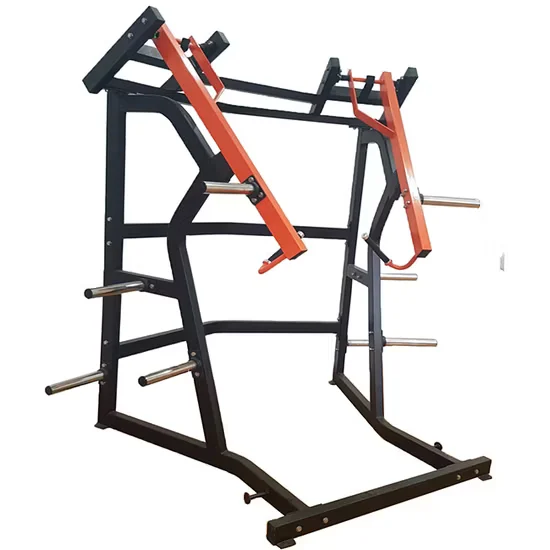
Plate Loaded ISO Lateral Low Row Machine, 1300×1150×1750mm, 141kg Net Weight — engineered with plate-loaded resistance for back training in high-traffic commercial environments. Frame constructed from industrial-grade steel with robotic MIG continuous welding to eliminate spot-weld fatigue points, paired with sealed bearings for smooth iso-lateral convergence without binding. Backed by 10-year frame warranty and per-unit load testing before shipment.
// Spec Highlights
• Direct from Manufacturer · No Middlemen · Worldwide Shipping
01
// Material
Imported Solid Wood
Premium hardwood frames sourced for density and visual warmth.
02
// Hardware
Medical-Grade Silent
Whisper-quiet pulleys and springs for clinical environments.
03
// Customization
Appearance OEM
Color, upholstery, and branding tailored to your studio.
04
// Service
Layout Design
Free venue planning for studios and rehab institutions.
Every component is selected for longevity, performance, and aesthetic harmony - from imported hardwood frames to silent medical-grade accessories.
// Features
Mill-Certified Steel — Frame tubing traced to the coil origin with 11-gauge thickness verified at receiving inspection, not assumed from supplier claims.
| Parameter | Value |
|---|---|
| Product Type | Plate Loaded Low Row Machine |
| Loading Type | Plate loaded |
| Frame Steel | 11-gauge, 3×3 inch tube |
| Steel Grade | Q235 / Q345 industrial steel, mill-certified |
| Welding Type | Robotic MIG continuous weld |
| Bearing Type | Sealed industrial bearings |
| Pulley System | Aircraft-cable with precision guide rods |
| Upholstery | Standard or high-density options |
| Powder Coating | 200μm scratch-resistant, sandblast pre-treated |
| Product Dimensions | 1300×1150×1750mm |
| Net Weight | 141kg |
| Certification | ISO 9001:2015, CE |
| Warranty | 10-year frame |
| Facility Type | Typical Use |
|---|---|
| Commercial gym strength floor | Primary back training station in high-traffic plate-loaded zones |
| University strength and conditioning room | Athlete posterior chain development under supervised sessions |
| Hotel and resort fitness center | Durable rowing station for mixed-ability guests with minimal maintenance |
| CrossFit box functional zone | Supplemental heavy rowing for strength-skill segments |
| Rehabilitation and performance center | Controlled iso-lateral loading for return-to-training protocols |
The steel specification, not the paint color, determines whether the mainframe holds alignment after thousands of loaded cycles.
Most buyers see "commercial grade" on a spec sheet and assume the frame can handle daily plate-loaded abuse. In reality, many facilities discover frame flex or weld cracking within the first year because the tube wall was never thick enough for the moment arm created during max-effort rows. A plate-loaded low row machine concentrates force at the seat-to-frame junction and the pivot axis, where spot welds and thin-walled tubing fail first. [NEED_CITE: EN 957 structural requirements for stationary training equipment]
This unit targets the mid-back and lats through an iso-lateral converging pull path, complementing lat pulldown stations and chest-supported row machines already on the floor. It fills the horizontal pulling plane for lifters who need heavy, independent-arm loading without a cable stack. The footprint suits medium-to-high density layouts, and the seat and chest pad geometry accommodates a wide range of torso lengths. A commercial plate loaded ISO lateral low row machine belongs adjacent to other plate-loaded back stations to consolidate loading plate storage.
Every loaded row sends a cyclic bending moment through the main upright and the seat support gusset. At high-traffic volumes, fatigue accumulates at weld intersections and bearing mounts long before visible deformation appears. Sealed bearings absorb lateral play that would otherwise migrate into the pivot hardware, while the continuous MIG weld bead distributes stress along the joint rather than concentrating it at discrete spots. [NEED_CITE: weld classification and fatigue performance in structural steel] The powder coating at grip contact points and plate horn bases must resist chipping from knurled bar contact and dropped plates.
The 11-gauge tube wall paired with a 3×3 inch cross-section sets the deformation threshold: wider and thicker tubing resists the bending moment generated when a lifter pulls heavy plates through full range. Robotic MIG continuous welding produces a uniform bead profile with no cold-joint gaps, meaning the fatigue life of each joint is predictable rather than dependent on individual welder skill. Sealed industrial bearings keep the pivot axis tight despite dust, chalk, and sweat infiltration that would degrade open bushings within months. The 200μm powder coating, applied after sandblast preparation, bonds to the substrate at a depth that prevents contact-point chips from reaching bare steel and starting corrosion.
Thinner tube walls may pass a static load test but develop permanent flex after repeated eccentric unloading, shifting the pull path out of alignment with the lifter’s shoulder joint. Spot-welded joints concentrate stress at discrete points, creating crack initiation sites that propagate under cyclic loading and eventually compromise structural integrity. Non-sealed bushings develop play that accelerates wear on guide rods and pulley surfaces, driving replacement part costs and equipment downtime. Low-density upholstery compresses and splits within months of commercial use, requiring re-covering labor that exceeds the material savings. [NEED_CITE: commercial fitness equipment maintenance cost benchmarks]
The 11-gauge Q235/Q345 steel is mill-certified and traceable to the coil, so material properties are verified before cutting begins rather than assumed from supplier labels. Robotic MIG welding eliminates operator-dependent variation, producing continuous bead lines along every structural joint on this plate loaded ISO lateral rowing machine. Each unit undergoes individual load testing before crating — not sample-based batch testing — so deformation or weld anomalies surface before shipment. The 200μm industrial powder coating over sandblast prep handles sweat, cleaning chemicals, and plate contact without chipping to bare metal. A 10-year frame warranty backs the structural specification, and 2D-3D CAD layout support ensures the 1300×1150mm footprint is placed with safe clearance for plate loading and user entry on both sides.
Provide your floor area dimensions and existing equipment list to receive a 2D-3D layout that positions this unit with correct safety clearances and plate storage adjacency. Specify expected daily user volume so the structural grade matches your traffic pattern. Confirm the torso length and body weight range of your primary user population to verify pad geometry and adjustment range. Communicate any custom color, logo, or upholstery requirements early to align with production lead time.
Q: How do I confirm the frame steel is truly commercial grade before purchasing?
A: Request a mill certificate that traces the steel coil origin and lists gauge thickness, yield properties, and chemical composition. Reputable manufacturers supply this documentation per batch, not a generic "commercial grade" claim. Compare the certified gauge against the actual frame tube wall thickness measured at receiving inspection to verify consistency.
Q: What steel gauge should a plate-loaded rowing machine have for heavy daily use?
A: For machines subjected to repeated heavy plate loading, 11-gauge tubing in a 3×3 inch cross-section provides the deformation resistance needed to maintain alignment over years of commercial traffic. Thinner gauges may hold static loads but develop permanent flex under cyclic eccentric forces, shifting the movement path and accelerating component wear.
Q: Why do sealed bearings matter more than bushings on iso-lateral machines?
A: Sealed industrial bearings prevent chalk dust, sweat, and debris from entering the pivot surface, maintaining a tight rotational axis without developing lateral play. Open bushings degrade faster in high-traffic gym environments, causing the arm to wobble during loaded rows and requiring more frequent replacement to keep the movement path consistent.
Q: How should I plan floor spacing around plate-loaded strength equipment?
A: Account for the machine footprint plus plate-loading clearance on each side and user entry space at the seat. Insufficient spacing creates unsafe congestion during peak hours and limits the ability to load and unload plates without blocking adjacent stations. A detailed CAD layout prevents these gaps before equipment arrives on site.
Q: What is the expected upholstery lifespan under commercial conditions?
A: Upholstery lifespan depends on daily user volume, cleaning chemical exposure, and pad density. High-density options resist compression and splitting longer than standard pads in heavy-traffic environments. Confirm that replacement pads are available from the manufacturer so worn covers can be swapped without replacing the entire seat or backrest assembly.
Premium aesthetics meet quiet operation for boutique studio environments.
Medical-grade silence and precision for sports & postpartum recovery.
Furniture-grade craftsmanship for premium residential installations.
Compact premium setups for one-on-one and small-group training.
Aesthetic Pilates integration for hybrid wellness studio programming.
Multi-unit deployment with instructor-grade reliability for certification programs.
Tell us about your project. Our team will respond within 24 hours with pricing, customization options, and shipping details.
// Sales Director
William
+86 132 2531 1800
// Export Manager
Bella
+86 198 5412 8032
william@bickfit.com