01 / Scenario
STUDIO
P
High-End Pilates Studios
Premium aesthetics meet quiet operation for boutique studio environments.
ISO
9001
CE
Certified
OEM
Available
10YR
Warranty
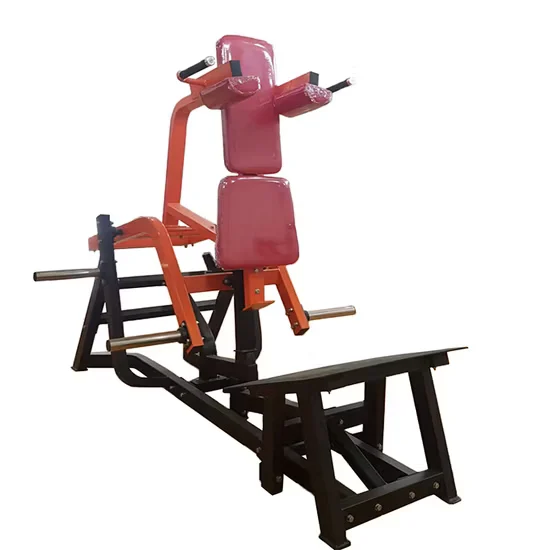
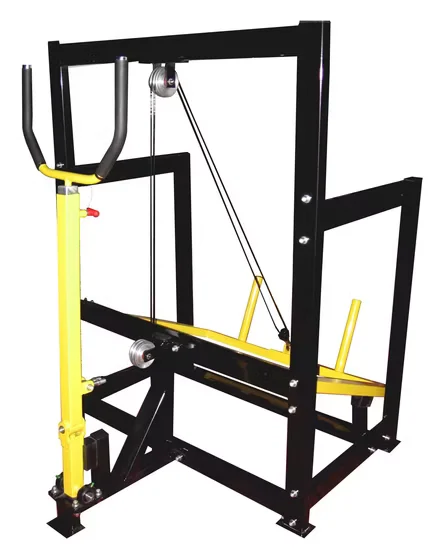
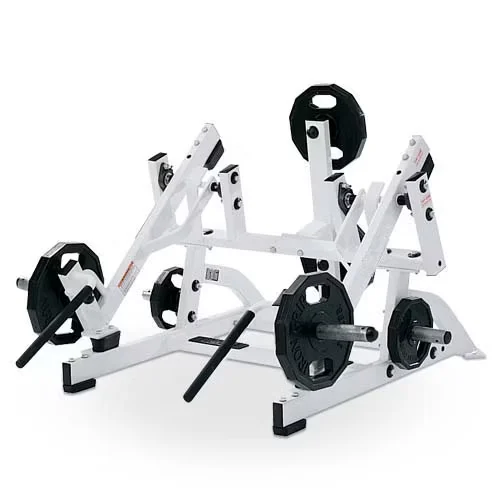
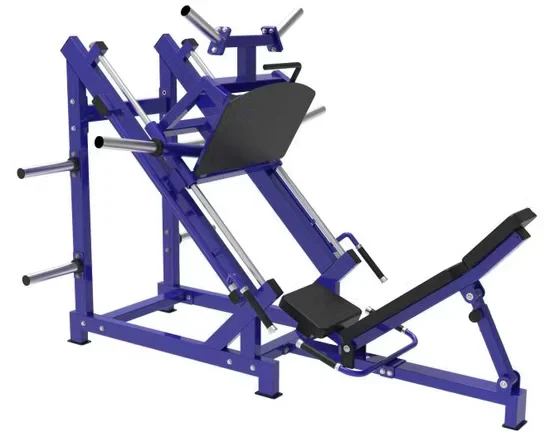
Plate Loaded Linear Leg Press Machine, 250kg Net Weight, 2375×1500×1475mm — built on 3×3 inch frame steel with robotic MIG continuous welding for fatigue resistance under heavy commercial loading. ISO9001 and CE certified, with full customization available for high-traffic strength facilities. Every unit undergoes individual load testing before shipment to verify structural integrity.
// Spec Highlights
• Direct from Manufacturer · No Middlemen · Worldwide Shipping
01
// Material
Imported Solid Wood
Premium hardwood frames sourced for density and visual warmth.
02
// Hardware
Medical-Grade Silent
Whisper-quiet pulleys and springs for clinical environments.
03
// Customization
Appearance OEM
Color, upholstery, and branding tailored to your studio.
04
// Service
Layout Design
Free venue planning for studios and rehab institutions.
Every component is selected for longevity, performance, and aesthetic harmony - from imported hardwood frames to silent medical-grade accessories.
// Features
Traceable Steel — 11-gauge Q235 mill-certified tube forming the backbone of every linear leg press we build.
| Parameter | Value |
|---|---|
| Product Type | Plate Loaded Leg Press Machine |
| Frame Steel | 11-gauge, 3×3 inch tube |
| Steel Grade | Q235 / Q345 industrial steel, mill-certified |
| Welding Type | Robotic MIG continuous weld |
| Loading Type | Plate loaded |
| Bearing Type | Sealed industrial bearings |
| Powder Coating | 200μm scratch-resistant |
| Product Dimensions | 2375×1500×1475mm |
| Net Weight | 250kg |
| Certification | ISO 9001, CE |
| Warranty | 10-year frame |
| Facility Type | Typical Use |
|---|---|
| Commercial gym strength floor | High-traffic bilateral leg pressing for general membership |
| University strength and conditioning room | Heavy loaded lower-body work for collegiate athletes |
| Hotel fitness center | Durable leg training accessible to varied guest fitness levels |
| Rehabilitation and performance center | Controlled linear-path pressing for return-to-play protocols |
| CrossFit box functional zone | Supplemental strength block for power and field athletes |
Wall thickness dictates deflection threshold before the frame yields.
Most spec sheets say "commercial grade" and leave it there. When a member drops six plates per horn and pushes through the sticking point, that vague label tells you nothing about how much the main rail will flex. An 11-gauge 3×3 tube resists that bending moment where thinner walls would begin to deform plastically over hundreds of load cycles [NEED_CITE: EN 957 structural requirements for stationary training equipment]. The mill certificate we ship with each commercial plate loaded linear leg press machine traces the coil back to the heat number, so the steel identity is never a guess.
This machine owns the sagittal-plane bilateral press, loading quads, glutes, and adductors through a fixed linear track. It pairs with a hack squat and a leg extension to cover the full lower-body pushing spectrum without redundant movement patterns. High-traffic floors benefit from its simple plate-horn loading — no cables, no selector pins to jam during peak hours. The 2375mm length accommodates tall users at full extension while keeping the footprint manageable for dense strength zones.
Every repetition sends a compressive force through the carriage and into the main frame rails at the weld junctions. Under eccentric loading — a member pushing unevenly or riding one leg — those junctions see cyclic shear that spot welds cannot sustain beyond a few thousand cycles. Continuous robotic MIG welds distribute that stress along the full seam length, eliminating the cold-joint failures that show up as hairline cracks at the carriage guide interface [NEED_CITE: weld classification and fatigue performance in structural steel]. Sealed bearings at the guide shaft keep dust and chalk out of the race, and the 200μm powder coat resists the abrasion from repeated plate contact at the horns.
The 250kg net weight is not ballast — it is structural mass. A frame built from 11-gauge 3×3 inch Q235 tube with continuous MIG seams accumulates weight because there is simply more steel in the load path. That mass raises the resonant frequency of the frame, meaning less vibration and rattle under heavy eccentric returns. The sealed industrial bearings on the linear guide shaft eliminate the play that unsealed bushings develop within months of chalk-heavy use. Upholstery available in standard or high-density options covers the back pad, and the powder coat — sandblasted to bare metal before the 200μm application — survives sweat and cleaner exposure without chalking at the contact edges.
A thinner-walled tube may pass a static load test but deflects visibly under a working set, accelerating fatigue at every weld intersection. Spot-welded carriage brackets crack without warning, turning a routine maintenance ticket into a liability conversation. Unsealed guide bearings accumulate chalk and metal dust, binding the sled mid-rep and requiring full teardown to service. Low-density pad foam compresses permanently within a season, forcing upholstery replacements that add downtime and parts cost. A powder coat under 200μm chips at the plate horns within months, exposing bare steel to rust in a humid gym environment [NEED_CITE: powder coating thickness and corrosion resistance in fitness equipment].
The 11-gauge Q235 frame with mill-certified traceability means you know the steel grade before the machine leaves the factory floor. Robotic MIG continuous welds replace the spot-weld weak points that fail under cyclic heavy loading. Every unit undergoes a full load test before crating — not a sample-batch check. The 200μm powder coat, applied after sandblast prep, holds up at the plate horns and footplate edges where abrasion concentrates. A 10-year frame warranty backs the structure, and our 2D-3D CAD planning service maps the 2375×1500mm footprint with safe clearance for loading zones and traffic lanes specific to this commercial plate loaded linear leg press machine.
Provide your strength floor dimensions and existing equipment list to receive a 2D-3D CAD layout that positions this press with proper loading clearance and traffic flow. Specify your expected daily user volume so we confirm the structural grade matches your traffic tier. Share your member height and weight range to verify the carriage travel accommodates full extension comfortably. Note any custom color, logo, or upholstery density requirements for brand consistency across your floor.
Q: How do I verify a leg press meets genuine commercial-grade standards?
A: Request the steel mill certificate showing gauge and grade — Q235 or Q345 with 11-gauge walls is a reliable baseline. Confirm the welding is continuous robotic MIG, not spot-welded, and ask for the individual load test record that accompanies each unit rather than a batch sample report.
Q: How does frame tube gauge affect load capacity and service life?
A: Thicker walls resist bending deflection under heavy sled loads, keeping weld junctions from cycling into fatigue failure. An 11-gauge 3×3 tube provides a higher deformation threshold than thinner alternatives, meaning the frame maintains alignment and structural integrity through years of high-frequency commercial use.
Q: What are the maintenance differences between plate loaded and selectorized leg presses?
A: Plate loaded machines eliminate the cable, selector pin, and weight stack guide rods that require regular inspection and replacement. Maintenance focuses on the guide shaft bearings and structural fasteners, reducing parts inventory and simplifying service scheduling for busy strength floors.
Q: How should I plan spacing around a linear leg press in a commercial gym?
A: Allow adequate clearance on both plate-loading horns and behind the footplate for safe loading and unloading. A detailed CAD layout accounts for the 2375×1500mm footprint plus operator zones, ensuring members can move between stations without crossing active loading paths.
Q: How often does the upholstery need replacement under daily commercial use?
A: Pad lifespan depends on foam density and daily user volume. High-density options resist compression set longer under constant loading. Replacement pads are available as spare parts, and the bolt-on attachment allows quick swap without taking the machine out of service for extended periods.
Premium aesthetics meet quiet operation for boutique studio environments.
Medical-grade silence and precision for sports & postpartum recovery.
Furniture-grade craftsmanship for premium residential installations.
Compact premium setups for one-on-one and small-group training.
Aesthetic Pilates integration for hybrid wellness studio programming.
Multi-unit deployment with instructor-grade reliability for certification programs.
Tell us about your project. Our team will respond within 24 hours with pricing, customization options, and shipping details.
// Sales Director
William
+86 132 2531 1800
// Export Manager
Bella
+86 198 5412 8032
william@bickfit.com