01 / Scenario
STUDIO
P
High-End Pilates Studios
Premium aesthetics meet quiet operation for boutique studio environments.

ISO
9001
CE
Certified
OEM
Available
10YR
Warranty
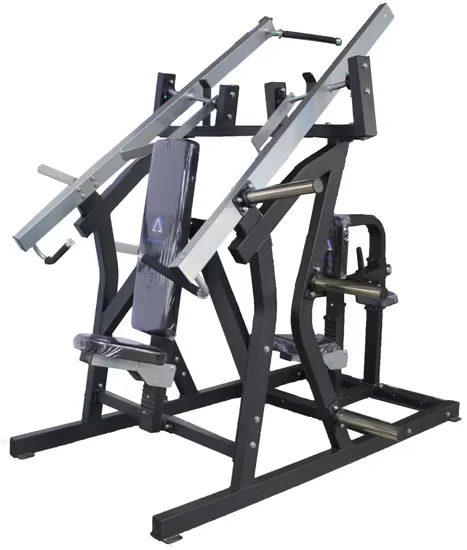
Plate Loaded Squat Lunge Machine, 1623×1691×872mm, 122kg Net Weight — engineered with plate-loaded resistance for high-repetition squat and lunge training in commercial environments. Built to withstand axial and lateral loads typical of strength-focused facilities with continuous welding at stress points. Each unit undergoes per-unit load testing before shipment, backed by ISO 9001 and CE certification for global compliance.
// Spec Highlights
• Direct from Manufacturer · No Middlemen · Worldwide Shipping
01
// Material
Imported Solid Wood
Premium hardwood frames sourced for density and visual warmth.
02
// Hardware
Medical-Grade Silent
Whisper-quiet pulleys and springs for clinical environments.
03
// Customization
Appearance OEM
Color, upholstery, and branding tailored to your studio.
04
// Service
Layout Design
Free venue planning for studios and rehab institutions.
Every component is selected for longevity, performance, and aesthetic harmony - from imported hardwood frames to silent medical-grade accessories.
// Features
Mill-Certified Steel Traceability — Every coil of 11-gauge Q235 structural steel used in this squat lunge machine is traceable back to the originating steel mill, ensuring verifiable material integrity.
| Parameter | Value |
|---|---|
| Product Type | Plate Loaded Squat Lunge Machine |
| Loading Type | Plate loaded |
| Frame Steel Gauge | 11-gauge |
| Frame Tube Size | 3×3 inch |
| Steel Grade | Q235 industrial steel, mill-certified |
| Welding Type | Robotic MIG continuous weld |
| Product Dimensions | 1623×1691×872mm |
| Net Weight | 122kg |
| Powder Coating | 200μm scratch-resistant |
| Certification | ISO 9001, CE |
| Warranty | 10-year frame |
| Facility Type | Typical Use |
|---|---|
| Commercial gym strength floor | Lower-body unilateral training station within free-weight zones |
| Hotel fitness center | Durable squat and lunge station for high-turnover guest use |
| University strength and conditioning room | Athletic lower-body development for team training programs |
| CrossFit box functional zone | Heavy plate-loaded compound movement station |
Continuous robotic MIG welds eliminate the joint-level failures that plague light-commercial equipment under repeated heavy loading.
When gym owners evaluate a commercial plate loaded squat lunge machine, the steel gauge often gets the spotlight while the welding method stays buried in fine print. Yet in our experience tearing down failed equipment, spot-welded joints at the loading horn base and the seat carriage connection are where fatigue cracks originate long before the frame tube itself reaches its deformation threshold. Under the cyclical off-axis loading of lunge patterns, a spot weld concentrates stress into a small fusion zone that progressively fractures with each training session [NEED_CITE: weld classification and fatigue performance in structural steel].
Robotic MIG welding produces a continuous bead along the entire joint length, distributing stress across a much broader area. This is not a marginal improvement — it fundamentally changes how the joint handles thousands of loading cycles per week on a busy gym floor.
This plate loaded squat lunge machine targets the sagittal and frontal planes simultaneously, engaging quadriceps, glutes, and stabilizer muscles through a guided unilateral movement path. In a commercial strength floor layout, it complements bilateral machines like leg presses and hack squats by filling the unilateral training gap that free-weight lunges cannot safely serve under maximal loading.
The machine fits facilities where members range from recreational lifters to competitive athletes, as the plate-loaded format allows incremental loading without fixed weight stack limitations. Its footprint integrates into high-density strength zones without requiring excessive clearance beyond standard safety margins.
Lunge movements generate asymmetric force vectors — the descent phase places eccentric stress on one side of the carriage while the loading horns carry lateral torque that pure axial loading machines never encounter. Over hundreds of daily repetitions across multiple users, these off-center forces accumulate at the weld intersections connecting the carriage rail to the main frame [NEED_CITE: EN 957 structural requirements for stationary training equipment].
The sealed industrial bearings on the guide rail resist particulate intrusion from chalk dust and rubber flooring debris that plague high-traffic gym environments. Contact points on the back pad and grip handles endure sweat exposure, cleaning chemical contact, and abrasion from repeated hand placement — all of which accelerate wear on inadequately finished surfaces.
The 11-gauge steel frame with 3×3 inch tube dimensions establishes a deformation threshold well beyond what typical commercial loading patterns produce, even when users load the horns asymmetrically. Tube wall thickness and cross-sectional area together determine how the frame responds to bending moments during the deepest portion of a lunge, where leverage forces multiply.
Robotic MIG continuous welding means every joint along the main structural path carries a uniform weld bead rather than intermittent tack points. This consistency matters most at the transition zones where the loading horn bracket meets the vertical upright — locations where stress concentration naturally peaks during heavy eccentric phases.
The 200μm powder coating, applied over sandblast pretreatment, creates a barrier that withstands repeated contact from weight plates, cleaning wipes, and incidental impacts from dropped collars without exposing bare steel to oxidation.
A thinner-walled tube may pass a static load test in the showroom yet progressively deform under the cyclic loading patterns of a busy commercial floor, eventually developing permanent curvature in the guide rail that causes the carriage to bind mid-travel. Spot-welded joints that survive initial quality inspection develop hairline fractures within months when subjected to the asymmetric torque of single-leg pressing movements, creating liability exposure that no gym operator wants to manage [NEED_CITE: structural fatigue failure modes in welded steel assemblies].
Underspecified powder coating chips at plate contact points within the first year, exposing untreated steel that rusts outward from the damage site, requiring full strip-and-recoat far earlier than properly finished equipment.
Every frame tube on this commercial plate loaded squat lunge machine uses 11-gauge Q235 steel traceable to the mill coil, not unverified "commercial grade" labeling. Robotic MIG welding produces continuous weld lines at every structural joint, verified through visual and dimensional inspection before the unit leaves the production floor.
Each completed unit undergoes individual load testing rather than sample-based batch verification — meaning the machine that ships to your facility has been physically tested under load, not assumed to match a prototype. The 200μm powder coating provides long-term finish durability, and the 10-year frame warranty reflects confidence built on verifiable manufacturing processes. Floor planning support ensures this machine is positioned with correct safety clearances relative to adjacent stations.
Provide your strength zone dimensions and existing equipment list to receive a 2D or 3D layout showing how this commercial plate loaded squat lunge machine integrates with safe clearance zones. Specify average daily user volume so we can confirm the structural grade matches your traffic pattern. Share your target user demographic to verify the movement path and loading range accommodate the expected body type spectrum. Indicate any custom requirements including frame color, logo placement, or upholstery material preferences.
Q: How do I verify a plate loaded machine is genuinely commercial grade rather than light commercial?
A: Request mill-certified steel specifications showing gauge and grade rather than accepting vague "commercial grade" claims. Verify the welding method — continuous robotic MIG welds indicate structural investment that spot welding does not. Ask for per-unit load testing documentation rather than sample-based batch reports. Check that the powder coating thickness is specified in microns with pretreatment details included.
Q: What is the relationship between frame tube dimensions and actual load capacity on plate loaded equipment?
A: Load capacity depends on tube gauge, cross-sectional dimensions, steel grade, and welding method working together as a system. A thicker wall or larger tube cross-section raises the deformation threshold, but only if the welds connecting structural members can transfer the same forces. Request the complete structural specification rather than a single load number, and verify testing was done on production units, not engineering prototypes.
Q: How should I plan equipment spacing around plate loaded machines on a commercial gym floor?
A: Account for the machine footprint plus user movement envelope — loading and unloading plates requires lateral clearance, and the lunge movement path extends beyond the frame dimensions. Maintain safe passage between stations so users can enter and exit without crossing another person’s training zone. Request CAD layout files from the manufacturer to verify spacing before finalizing floor plans.
Q: What maintenance intervals should I expect for bearings and guide rails under heavy daily use?
A: Sealed industrial bearings significantly reduce maintenance frequency compared to unsealed alternatives because they prevent chalk dust, rubber debris, and moisture from entering the bearing race. Inspect guide rail travel smoothness quarterly and check for play or binding. Units with sealed bearings in commercial environments typically require far less frequent service intervals, but inspection schedules should still reflect your actual daily user volume.
Premium aesthetics meet quiet operation for boutique studio environments.
Medical-grade silence and precision for sports & postpartum recovery.
Furniture-grade craftsmanship for premium residential installations.
Compact premium setups for one-on-one and small-group training.
Aesthetic Pilates integration for hybrid wellness studio programming.
Multi-unit deployment with instructor-grade reliability for certification programs.
Tell us about your project. Our team will respond within 24 hours with pricing, customization options, and shipping details.
// Sales Director
William
+86 132 2531 1800
// Export Manager
Bella
+86 198 5412 8032
william@bickfit.com