
01 / Scenario
STUDIO
P
High-End Pilates Studios
Premium aesthetics meet quiet operation for boutique studio environments.
ISO
9001
CE
Certified
OEM
Available
10YR
Warranty
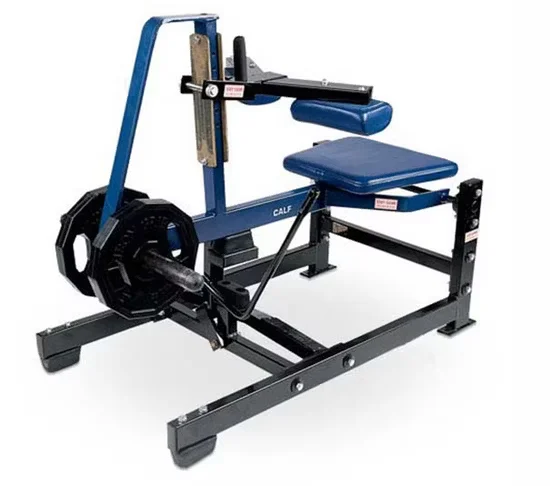
Commercial Seated Calf Raise Machine, Selectorized Pin-Select, 1230×730×1004mm — built with steel frame construction and manual operation for high-traffic commercial gym environments. Frame tube gauge and welding specifications available upon request to verify structural integrity for heavy loading. ISO9001 and CE certified with OEM/ODM customization for frame and upholstery colors. Every unit undergoes load testing before shipment, ensuring reliable performance in demanding fitness facilities.
// Spec Highlights
• Direct from Manufacturer · No Middlemen · Worldwide Shipping
01
// Material
Imported Solid Wood
Premium hardwood frames sourced for density and visual warmth.
02
// Hardware
Medical-Grade Silent
Whisper-quiet pulleys and springs for clinical environments.
03
// Customization
Appearance OEM
Color, upholstery, and branding tailored to your studio.
04
// Service
Layout Design
Free venue planning for studios and rehab institutions.
Every component is selected for longevity, performance, and aesthetic harmony - from imported hardwood frames to silent medical-grade accessories.
// Features
Mill-Traceable Steel — Every tube in this seated calf raise frame is tied to a specific coil heat number, ensuring structural accountability from the mill to your gym floor.
| Parameter | Value |
|---|---|
| Product Type | Selectorized Calf Raise Machine |
| Frame Steel | 11-gauge, 3×3 inch tube |
| Steel Grade | Q235 and Q345 industrial steel, mill-certified |
| Welding Type | Robotic MIG continuous weld |
| Loading Type | Selectorized / pin select |
| Weight Stack | Up to 150kg per station |
| Bearing Type | Sealed industrial bearings |
| Pulley System | Aircraft-cable pulley system |
| Upholstery | Available in standard or high-density options per customer requirements |
| Powder Coating | 200μm scratch-resistant, sandblast pre-treated |
| Product Dimensions | 1230×730×1004mm |
| Net Weight | 65kg |
| Color Options | Main frame and cushion colors customizable |
| Certification | ISO 9001, CE |
| OEM/ODM | Acceptable |
| Facility Type | Typical Use |
|---|---|
| Commercial gym strength floor | Isolated calf development station in the plate-loaded and selectorized row |
| Hotel and resort fitness center | Compact lower-body station for guest use in limited-footprint fitness rooms |
| University strength and conditioning room | High-frequency calf training for athletic programs with heavy daily traffic |
| Rehabilitation and performance center | Controlled, seated loading for ankle and calf strengthening protocols |
Continuous weld lines eliminate the crack initiation points that destroy calf machines under repetitive loading.
A commercial selectorized seated calf raise machine absorbs concentrated downward force through a relatively short lever arm. That geometry concentrates stress at the junction where the seat rail meets the main upright. When manufacturers use spot welds at these junctions to cut cycle time, the unwelded gaps between spots become fatigue origins. After months of members loading heavy pin selections, those micro-gaps propagate into visible cracks. The steel itself was never the weak link — the weld pattern was. [NEED_CITE: weld classification and fatigue performance in structural steel]
The seated calf raise targets the soleus through a bent-knee position that the standing calf raise cannot replicate. In a commercial strength zone, this machine sits alongside leg press and leg extension stations as part of a lower-body isolation cluster. Its compact footprint allows placement against walls or between larger machines without consuming primary traffic lanes. The selectorized pin-load format suits facilities with high member turnover, where plate loading and unloading would slow floor traffic. The seated geometry accommodates a wide range of user heights through adjustable thigh pad and foot platform positions. A well-placed commercial selectorized seated calf raise machine fills a training gap that most members cannot address with free weights alone.
Each repetition of a seated calf raise drives compressive force through the foot platform, transfers it through the pivot axis, and reacts against the seat frame anchoring the user’s thighs. In a busy commercial gym, this cycle repeats hundreds of times daily with varying load magnitudes. The pivot bearings at the foot platform axis endure both radial load from the weight stack and axial thrust from off-center foot placement. Sealed industrial bearings prevent swe*ning smooth articulation where unsealed bushings would develop play and rattle. The powder coating at the thigh pad contact zone faces constant abrasion from clothing friction and cleaning chemicals. [NEED_CITE: EN 957 structural requirements for stationary training equipment]
Frame gauge and tube cross-section define the elastic limit of the seat rail under maximum pin-select loading. An 11-gauge wall thickness in a 3×3 inch tube section provides a deformation threshold well above what typical users generate, meaning the frame returns to true alignment after every set. Robotic MIG continuous welding produces uniform penetration depth along the entire joint length, avoiding the incomplete fusion zones that manual spot welding leaves at overlap boundaries. The sealed bearing specification matters because the pivot axis on a calf machine operates at low rotational speed but high radial load — exactly the condition where contaminant ingress kills unsealed alternatives. Powder coating thickness of 200μm over a sandblasted substrate resists chipping at the foot platform edge and pad mounting points, where contact wear is concentrated. These four parameters together define whether a commercial selectorized seated calf raise machine survives its first year in a high-traffic environment or becomes a maintenance liability.
Thin-wall tubing on a seated calf raise may pass a static load test in the showroom but begins to flex permanently after months of dynamic eccentric loading, tilting the seat rail and misaligning the thigh pad. Spot-welded joints at the foot platform bracket create a liability exposure: when a weld fails mid-set, the user’s loaded knees drop uncontrolled. Unsealed pivot bearings require scheduled maintenance that most gym operators skip until the play becomes audible, at which point the bearing race is already scored and the housing needs re-machining. Low-density upholstery compresses permanently within months on a high-use station, and if the pad shape is proprietary, replacement involves long lead times rather than a quick swap. Insufficient powder coating at the foot platform edge exposes bare steel to sweat corrosion, spreading rust stains across adjacent flooring. [NEED_CITE: fatigue failure modes in welded fitness equipment frames]
The 11-gauge frame steel used in this seated calf raise is sourced with mill certification traceable to the coil, so every tube can be verified against the specification sheet. Robotic MIG welding runs continuous bead lines at the seat rail and foot platform junctions — the same standard applied across our plate-loaded and functional rig lines. Every unit undergoes individual load testing before crating, not sample-based batch inspection. The 200μm powder coating over sandblast pre-treatment matches the finish spec on our heaviest squat racks, providing consistent wear resistance across the entire product range. The 10-year frame warranty applies here because the structural design margins support it. For facility planning, the 1230×730mm footprint allows us to model precise clearance zones in 2D and 3D CAD layouts, ensuring safe passage space around the station within your strength floor configuration.
Provide your strength floor dimensions and current equipment list to receive a 2D or 3D layout showing this calf raise station integrated with proper clearance zones. Specify your expected daily user volume so we can confirm the selectorized load range and structural grade match your traffic profile. Share your member demographic details to verify the thigh pad and foot platform adjustment range covers your user base. Indicate any custom requirements for frame color, upholstery material, or logo placement to include in the production specification.
Q: How do I verify that a seated calf raise frame is genuinely commercial-grade?
A: Request the mill certificate that traces the frame steel to its original coil, confirming gauge and grade. Inspect the weld pattern at high-stress junctions — continuous robotic MIG welds indicate structural commitment, while intermittent spot welds suggest cost reduction. Ask whether load testing is performed on every unit or only on samples. These three checks separate true commercial frames from light-commercial alternatives that look similar in photographs.
Q: What frame specifications matter most for a selectorized calf raise machine?
A: The tube gauge and cross-section dimensions determine how the seat rail handles repeated heavy loading without permanent flex. Welding method matters because continuous welds distribute stress evenly while spot welds create localized fatigue points. Sealed bearings at the pivot axis prevent contaminant ingress that causes play over time. Together, these parameters define whether the machine maintains alignment and smoothness through years of daily commercial use.
Q: Selectorized or plate-loaded calf raise — which fits a high-traffic gym better?
A: Selectorized pin-load systems allow faster weight changes between users, reducing bottleneck time on a busy strength floor. Plate-loaded versions require members to handle heavy plates in a bent-knee seated position, which slows turnover and increases floor clutter. For facilities prioritizing member flow and minimal supervision, the selectorized format keeps the station efficient and self-contained with its integrated weight stack and guide rod system.
Q: How should I plan spacing and clearances around this calf raise station?
A: Account for the full footprint plus user entry space on the seating side and weight stack access on the opposite side. Members need room to adjust the thigh pad and position their feet without crowding adjacent equipment. Request a CAD layout from the manufacturer that models this station within your specific floor plan, verifying that traffic lanes and emergency egress paths remain unobstructed at your intended placement location.
Premium aesthetics meet quiet operation for boutique studio environments.
Medical-grade silence and precision for sports & postpartum recovery.
Furniture-grade craftsmanship for premium residential installations.
Compact premium setups for one-on-one and small-group training.
Aesthetic Pilates integration for hybrid wellness studio programming.
Multi-unit deployment with instructor-grade reliability for certification programs.
Tell us about your project. Our team will respond within 24 hours with pricing, customization options, and shipping details.
// Sales Director
William
+86 132 2531 1800
// Export Manager
Bella
+86 198 5412 8032
william@bickfit.com


![Hammer Strength MTS-8010 ISO-Lateral Leg Extension Machine [WARN] draft identifier mismatch](https://bickgym.com/wp-content/uploads/2026/08/hammer-strength-mts-8007-iso-lateral-high-row-gym-machine-2920f1.webp)