01 / Scenario
STUDIO
P
High-End Pilates Studios
Premium aesthetics meet quiet operation for boutique studio environments.

ISO
9001
CE
Certified
OEM
Available
10YR
Warranty
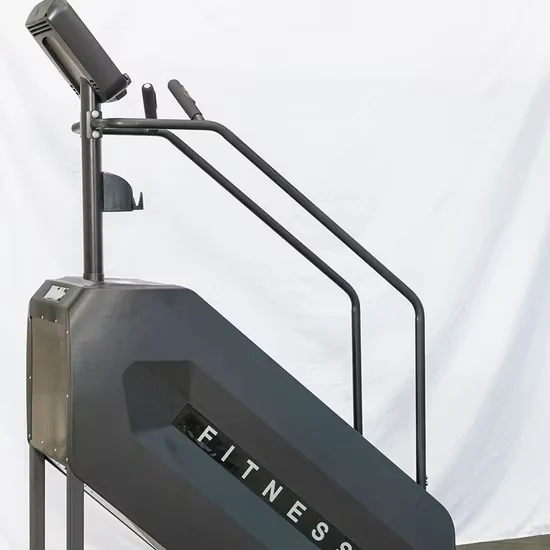
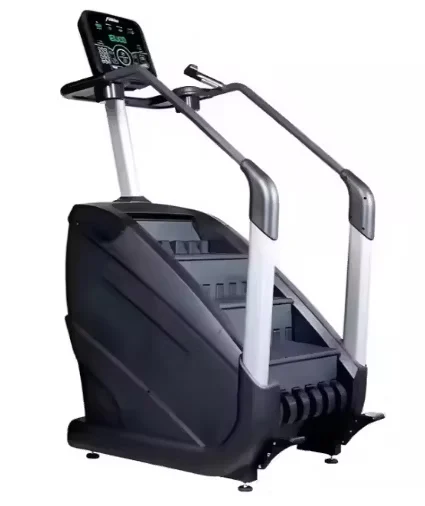
Commercial Stair Climber, Motor Drive, 15–164 Steps/Min, 148kg Net Weight — steel pipe frame with PP plastic step assembly ensures structural rigidity under continuous high-traffic use, while motor-driven mechanism delivers consistent speed control and reduced user fatigue variability across all fitness levels. Console tracks time, steps, calories, and heart rate for member engagement. Every unit undergoes load testing before shipment, backed by 10-year frame warranty and mill-certified steel traceability.
// Spec Highlights
• Direct from Manufacturer · No Middlemen · Worldwide Shipping
01
// Material
Imported Solid Wood
Premium hardwood frames sourced for density and visual warmth.
02
// Hardware
Medical-Grade Silent
Whisper-quiet pulleys and springs for clinical environments.
03
// Customization
Appearance OEM
Color, upholstery, and branding tailored to your studio.
04
// Service
Layout Design
Free venue planning for studios and rehab institutions.
Every component is selected for longevity, performance, and aesthetic harmony - from imported hardwood frames to silent medical-grade accessories.
// Features
Motor-Driven Step Assembly — Engineered for sustained daily operation with steel pipe frame construction and sealed bearing step mechanism.
| Parameter | Value |
|---|---|
| Product Type | Commercial Stair Climber |
| Model | SQ1017 |
| Drive Type | Motor Drive |
| Running Velocity | 15–164 steps/minute |
| Step Area | 560×235×220mm |
| Product Dimensions | 1450×820×2080mm |
| Net Weight | 148kg |
| Mains Input | AC220V±10% / AC110V±10% |
| Console Display | Time, Climb, Calories, Steps, Heart Rate |
| Material | Steel Pipe + PP Plastic |
| Color | Black |
| Certification | CE, RoHS, ISO |
| Facility Type | Typical Use |
|---|---|
| Commercial gym cardio zone | High-traffic endurance training and warm-up protocols |
| Hotel and resort fitness centers | Compact footprint with premium user experience |
| Athletic performance facilities | Stair-specific conditioning for sports training |
| University recreation centers | Multi-user daily operation across fitness levels |
Many stair climbers on the market use vague "commercial-grade" labels without verifiable frame specifications — leading to wobbly structures, motor burnout under sustained load, and step mechanisms that degrade within months of heavy gym use. Steel pipe frame construction with motor-driven step mechanism provides structural rigidity under repetitive loading cycles.
The step mechanism bears continuous eccentric loading as users ascend at varying cadences. Without proper steel gauge and sealed bearings, the step assembly develops play, the motor strains against inconsistent resistance, and the console telemetry drifts from actual output. Facility operators discover these failures only after member complaints about instability or after maintenance calls reveal worn components that should have lasted years [NEED_CITE: structural fatigue in motor-driven fitness equipment under continuous duty cycles].
The commercial stair climber stepper machine for gym environments occupies a distinct niche in vertical endurance training, targeting lower body muscular endurance through continuous stepping motion. The motor-driven mechanism maintains consistent step velocity from 15 to 164 steps per minute, accommodating rehabilitation patients through athletic performance testing. In a comprehensive cardio configuration, this unit complements treadmills, ellipticals, and rowers by providing stair-specific conditioning that engages gluteal, quadriceps, and calf musculature through full range of motion. The 1450×820mm footprint allows dense cardio zone layouts while the 2080mm height requires adequate ceiling clearance for user comfort during extended sessions.
Commercial stair climbers face unique mechanical demands compared to self-powered alternatives. The motor drive system must maintain consistent torque across thousands of daily step cycles, with bearings subjected to both radial and axial loads as users shift weight during ascent. The step mechanism experiences impact loading at each foot strike, particularly when users transition between cadences or pause mid-climb. Weld joints at the frame-to-step assembly interface must resist fatigue cracking from these repetitive stress concentrations. Console sensors and heart rate monitors endure constant vibration exposure, requiring secure mounting and protected wiring pathways. The powder coating at handgrip contact points faces abrasion from grip friction combined with sweat corrosion, demanding industrial-grade finish thickness [NEED_CITE: bearing seal ratings for dust and moisture ingress in fitness equipment].
The steel pipe frame construction forms the foundation for long-term reliability. Steel tube gauge and diameter determine the frame’s resistance to torsional flex under off-center loading — when users grip one handrail tighter or step asymmetrically, the structure must resist twisting that would otherwise accelerate bearing wear. The motor drive system specification directly impacts duty cycle capability; continuous-rated motors withstand 8+ hours of daily operation without thermal degradation, whereas intermittent-rated alternatives overheat during peak usage periods. Step area dimensions of 560×235×220mm provide adequate foot placement stability for users across height ranges, preventing the toe-catching and heel-slipping that plague undersized step platforms. The PP plastic step surfaces balance grip traction with cleanability, resisting the surface degradation that occurs with rubber alternatives exposed to commercial disinfectants. Console telemetry accuracy depends on sensor calibration and stepper motor precision — cheap encoders drift over time, reporting inaccurate calorie expenditure and step counts that undermine member trust in equipment data.
Facilities that prioritize initial purchase price over structural verification often discover the true cost within 18 months. Thin-wall steel tubes flex visibly under heavy users, creating the perception of instability that drives member complaints even when no safety hazard exists. Spot-welded joints at stress concentration points crack under continuous loading, requiring structural reinforcement or complete frame replacement. Non-sealed bearings allow sweat and cleaning solution ingress, accelerating corrosion that manifests as grinding noise and step mechanism stiffness. Low-density foam padding compresses permanently within months, exposing the substrate and creating uncomfortable pressure points. Powder coating applied below 150μm chips at contact points, exposing bare steel to rust that spreads beneath adjacent finish. When these failures occur, proprietary hardware and non-standard components make replacement impossible, forcing complete unit disposal rather than repair.
The commercial stair climber stepper machine for gym deployment benefits from manufacturing processes that prioritize structural verification over cost minimization. Steel pipe frames use mill-certified material with traceable sourcing, ensuring consistent mechanical properties across production batches. Robotic MIG welding produces continuous weld seams without the cold joints and incomplete fusion that plague manual spot-welding, distributing stress across the full joint length rather than concentrating it at discrete points. Every unit undergoes load testing before shipment, verifying structural integrity under conditions exceeding normal commercial use rather than relying on sample-based quality control. Industrial powder coating at 200μm thickness provides scratch and corrosion resistance that maintains appearance through years of high-traffic operation. The 10-year frame warranty reflects confidence in structural design rather than marketing positioning. For facility planning, 2D-3D CAD layout support ensures proper spacing between units and adequate clearance for safe user access and maintenance.
Provide your cardio zone dimensions and equipment list to receive 2D-3D floor planning with optimal commercial stair climber stepper machine for gym placement. Specify daily usage hours and peak user volume to confirm motor duty cycle suitability for your traffic patterns. Indicate target user height range to verify step area dimensions accommodate your member demographic. Customization options including frame color, console language, and branding are available for multi-unit deployments.
Q: How do I verify if a stair climber meets true commercial-grade structural requirements?
A: Request mill certification for the steel pipe frame material, weld inspection reports documenting continuous seams rather than spot welds, and load testing records for individual units. Commercial-grade equipment specifies steel gauge and tube dimensions rather than vague "heavy-duty" claims. Sealed bearings with IP ratings resist sweat and dust ingress that destroys unsealed alternatives. Motor duty cycle ratings must confirm continuous operation capability, not intermittent use assumptions.
Q: What maintenance does the motor drive system require compared to self-powered alternatives?
A: Motor-driven stair climbers require periodic drive belt tension checks and motor mounting bolt verification, but eliminate the user-dependent resistance variation of self-powered models. The sealed bearing step mechanism needs annual inspection for play or noise indicating seal compromise. Console electronics require protection from moisture ingress during cleaning. Self-powered alternatives place all mechanical stress on user-generated force, accelerating bearing wear at higher cadences.
Q: How do I calculate proper spacing for multiple stair climber installations?
A: Each unit requires the 1450×820mm footprint plus minimum 600mm clearance on all sides for safe user mounting, dismounting, and emergency access. Maintain 900mm between adjacent units to prevent elbow contact during use. Ensure 2400mm ceiling height minimum for user comfort at maximum step height. Plan electrical access within 1500mm of each unit location for the AC220V or AC110V power connection.
Q: What indicates step mechanism bearing failure before it becomes catastrophic?
A: Listen for grinding or clicking sounds during step rotation that wasn’t present during initial operation. Feel for lateral play when pressing sideways on the step platform. Observe inconsistent step speed despite constant motor operation. Visible grease leakage around bearing seals indicates seal failure allowing contamination ingress. Address these symptoms immediately to prevent shaft damage that requires complete assembly replacement.
Premium aesthetics meet quiet operation for boutique studio environments.
Medical-grade silence and precision for sports & postpartum recovery.
Furniture-grade craftsmanship for premium residential installations.
Compact premium setups for one-on-one and small-group training.
Aesthetic Pilates integration for hybrid wellness studio programming.
Multi-unit deployment with instructor-grade reliability for certification programs.
Tell us about your project. Our team will respond within 24 hours with pricing, customization options, and shipping details.
// Sales Director
William
+86 132 2531 1800
// Export Manager
Bella
+86 198 5412 8032
william@bickfit.com