01 / Scenario
STUDIO
P
High-End Pilates Studios
Premium aesthetics meet quiet operation for boutique studio environments.
ISO
9001
CE
Certified
OEM
Available
10YR
Warranty
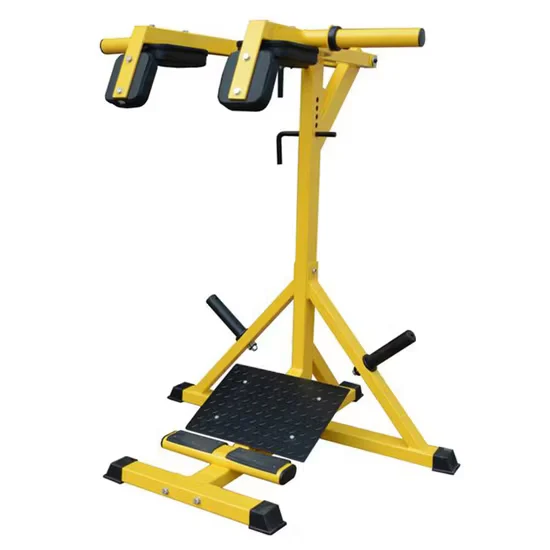
Commercial Stand Calf Raise Machine, Pin Select Loading, 1300×1260×1495mm — engineered with steel frame construction and customizable cushion and frame colors for high-traffic commercial environments. Built with sealed bearings and industrial-grade components to withstand repeated heavy loading without play or degradation. Every unit undergoes full load testing before shipment, backed by a 10-year frame warranty and factory-direct pricing with no middlemen.
// Spec Highlights
• Direct from Manufacturer · No Middlemen · Worldwide Shipping
01
// Material
Imported Solid Wood
Premium hardwood frames sourced for density and visual warmth.
02
// Hardware
Medical-Grade Silent
Whisper-quiet pulleys and springs for clinical environments.
03
// Customization
Appearance OEM
Color, upholstery, and branding tailored to your studio.
04
// Service
Layout Design
Free venue planning for studios and rehab institutions.
Every component is selected for longevity, performance, and aesthetic harmony - from imported hardwood frames to silent medical-grade accessories.
// Features
Welded For Longevity — Every seam on the commercial stand calf raise machine is a continuous robotic MIG weld, eliminating the spot-weld joints that crack under repeated heavy loading in high-traffic gym environments.
| Parameter | Value |
|---|---|
| Product Type | Selectorized Calf Raise Machine |
| Model NO. | 5079 |
| Frame Steel | 11-gauge, 3×3 inch tube |
| Steel Grade | Q235 / Q345 mill-certified |
| Welding Type | Robotic MIG continuous weld |
| Product Dimensions | 1300×1260×1495mm |
| Net Weight | 70kg |
| Loading Type | Pin select |
| Bearing Type | Sealed industrial bearing |
| Pulley System | Aircraft-cable |
| Powder Coating | 200μm scratch-resistant |
| Upholstery | Available in standard or high-density options |
| Main Frame Color | Customizable |
| Cushion Color | Customizable |
| Certification | ISO 9001:2015, CE |
| OEM/ODM | Acceptable |
| Facility Type | Typical Use |
|---|---|
| Commercial gym strength floor | Dedicated calf station in plate-loaded and selectorized zones |
| CrossFit box functional zone | Isolation accessory work between compound barbell movements |
| Hotel fitness center | Compact lower-body training for time-constrained guests |
| University strength and conditioning room | Athlete ankle stability and gastrocnemius development |
| Rehabilitation and performance center | Controlled ankle-loading progressions post-injury |
Continuous weld lines carry the load where spot welds surrender.
A stand calf raise machine concentrates force into a narrow footprint — every rep pushes the shoulder pads upward while the footplate resists downward, creating torsional stress at the upright-to-base junction. On equipment built with spot welds, that junction is the first place fatigue cracks appear, often within the first year of heavy commercial rotation [NEED_CITE: weld classification and fatigue performance in structural steel]. The commercial stand calf raise machine addresses this with robotic MIG welding that runs continuous beads along every joint, distributing stress across the full seam length rather than concentrating it at discrete points.
The stand calf raise machine targets the gastrocnemius and soleus through a full ankle plantarflexion arc performed under axial shoulder loading. In a commercial strength zone, it fills the gap left by leg press calf attachments, which restrict ankle range and force a seated hip angle. Positioning this unit near the free-weight rack or plate-loaded leg stations lets athletes move between compound lower-body work and isolation without crossing the gym floor. The vertical footprint suits high-density layouts where floor area per station is limited, and the upright frame accommodates users across a broad height range through adjustable shoulder pad positioning.
Each loaded repetition drives vertical force through the shoulder pads into twin uprights bolted to a flat base. The loading is predominantly compressive with a torsional component when users shift weight to one side during single-leg variations. Over thousands of weekly cycles in a commercial gym, this torsion concentrates at the upright-to-gusset junction. Sealed bearings at the pivot points prevent chalk dust and sweat ingress that degrades lubrication in open bushing designs [NEED_CITE: EN 957 structural requirements for stationary training equipment]. The powder coating at contact zones — where the footplate meets the base rail and where the guide rod collar slides — must resist both abrasion and corrosive sweat residue to prevent early rust formation.
The 3×3 inch, 11-gauge tube section sets the deflection threshold for the upright columns; a smaller cross-section would flex perceptibly under heavy pin-select loads and compromise the linear guide rod alignment. Robotic MIG continuous welding at every junction removes the intermittent fusion gaps inherent to manual spot welding, which become crack initiation sites under cyclic loading. Sealed industrial bearings at the pivot maintain consistent resistance feel over years of use, whereas unsealed bushings develop radial play as particulate contamination increases friction. The 200μm powder coating, applied over a sandblast-prepped surface, provides enough film thickness to survive daily contact with rubber flooring and cleaning chemicals without chipping down to bare steel.
A thinner frame tube may pass a static load test at the factory but deflects under dynamic repetitions, shifting the guide rod off-axis and causing the weight stack to bind. Spot-welded joints hold during initial inspection yet propagate micro-cracks that become visible only when a pad mount loosens mid-session. Unsealed bearings require lubrication every few months in dusty gym environments, and when that maintenance window is missed, the pivot develops lateral play that users feel immediately [NEED_CITE: bearing service life under particulate contamination in commercial fitness equipment]. Low-density foam pads compress within weeks under shoulder loading, leaving users pressing directly against steel tubing.
The 11-gauge Q235/Q345 steel is sourced with mill certification traceable to the coil, so the material origin is verifiable rather than claimed. Every commercial stand calf raise machine receives continuous robotic MIG welds, eliminating the human inconsistency that produces cold joints on high-volume production lines. Each unit undergoes a full load test before shipment — not sample-based batch testing, but individual verification under working weight. The 200μm industrial powder coating resists the scuffs and chemical exposure typical in commercial environments. A 10-year frame warranty backs the structural components. For facility planning, the 1300×1260mm footprint integrates into CAD layouts with recommended safety clearances on each side, ensuring the station fits without creating pinch points between adjacent equipment.
Provide your strength floor dimensions and target station list to receive a 2D or 3D layout showing this calf raise machine integrated with adjacent equipment and recommended safety clearances. Specify expected daily user volume so the structural grade matches your traffic intensity. Indicate the height range of your primary user group to confirm shoulder pad adjustability covers all positions. Communicate any frame color, cushion color, or branding requirements early in the order process to align production scheduling.
Q: How do I distinguish a commercial-grade calf raise machine from a light-commercial one?
A: Inspect the frame tube gauge and wall thickness — commercial units use 11-gauge steel with verifiable mill certificates, while light-commercial frames often list only "heavy-duty" without specification. Check whether welds are continuous MIG beads or intermittent spot welds. Confirm that bearings are sealed industrial type, not open bushings. Request per-unit load test documentation rather than accepting sample-based batch reports.
Q: Does frame tube size actually affect calf raise machine performance?
A: Yes. The upright columns bear compressive and torsional loads simultaneously during standing calf raises. A larger cross-section — such as 3×3 inch 11-gauge tubing — resists lateral deflection under load, keeping the guide rod aligned and the weight stack moving smoothly. Thinner tubes may flex enough to cause binding on the guide rod, especially when users perform single-leg repetitions that load the frame asymmetrically.
Q: Selectorized or plate-loaded — which calf raise station fits a busy gym floor?
A: Selectorized stations allow faster weight changes via pin selection, reducing user dwell time between sets and improving throughput during peak hours. Plate-loaded versions require manual loading but accommodate higher total resistance for advanced athletes. In a commercial gym with diverse membership, a selectorized calf raise machine typically serves more users efficiently, while plate-loaded units suit dedicated strength facilities or athletic performance centers.
Q: What safety clearances should I plan around this station?
A: Allow adequate passage space on all sides so users can approach and exit without interference from adjacent equipment traffic. The machine footprint is 1300×1260mm; the layout CAD provided with the order includes recommended clearance zones based on the shoulder pad swing radius and user standing area. Tight spacing between stations creates collision risk during single-leg calf raise variations where balance may shift laterally.
Q: How often do the shoulder pads and footplate surface need replacement?
A: Pad lifespan depends on foam density and daily user volume. High-density upholstery options resist compression longer in high-traffic environments, while standard-density pads may show flattening sooner. The diamond-pattern footplate surface is steel and does not require replacement under normal use. Request replacement pad part numbers at the time of purchase to ensure supply continuity when refurbishment is eventually needed.
Premium aesthetics meet quiet operation for boutique studio environments.
Medical-grade silence and precision for sports & postpartum recovery.
Furniture-grade craftsmanship for premium residential installations.
Compact premium setups for one-on-one and small-group training.
Aesthetic Pilates integration for hybrid wellness studio programming.
Multi-unit deployment with instructor-grade reliability for certification programs.
Tell us about your project. Our team will respond within 24 hours with pricing, customization options, and shipping details.
// Sales Director
William
+86 132 2531 1800
// Export Manager
Bella
+86 198 5412 8032
william@bickfit.com