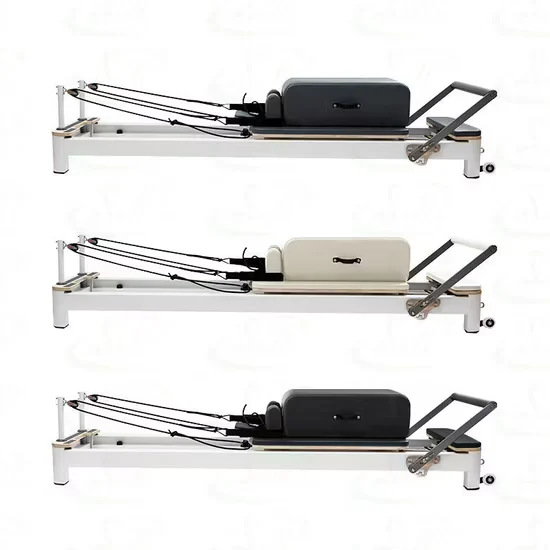
01 / Scenario
STUDIO
P
High-End Pilates Studios
Premium aesthetics meet quiet operation for boutique studio environments.
ISO
9001
CE
Certified
OEM
Available
10YR
Warranty
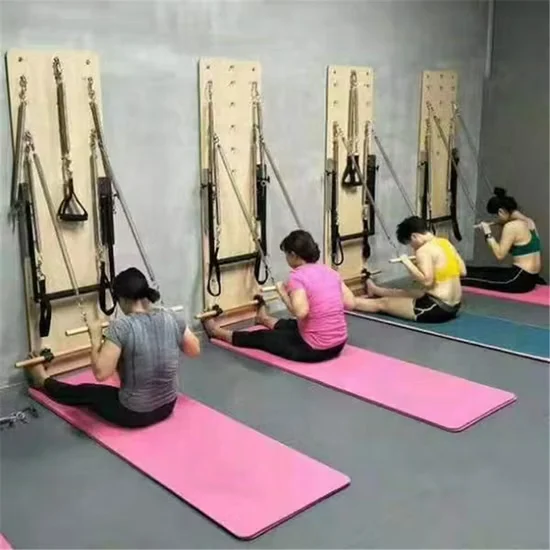
Wall Pilates Springboard, 1850×560×75mm, 35kg Net Weight — engineered with a reinforced solid-color frame and integrated spring resistance system for consistent rebound under repetitive studio loading. Modular accessory compatibility with long box, jump board, and platform ensures versatile training configurations without structural flex. Backed by a 3-year warranty and direct manufacturer support for high-traffic commercial environments.
// Spec Highlights
• Direct from Manufacturer · No Middlemen · Worldwide Shipping
01
// Material
Imported Solid Wood
Premium hardwood frames sourced for density and visual warmth.
02
// Hardware
Medical-Grade Silent
Whisper-quiet pulleys and springs for clinical environments.
03
// Customization
Appearance OEM
Color, upholstery, and branding tailored to your studio.
04
// Service
Layout Design
Free venue planning for studios and rehab institutions.
Every component is selected for longevity, performance, and aesthetic harmony - from imported hardwood frames to silent medical-grade accessories.
// Features
Steel Traceability Assured — Every Wall Pilates Springboard frame is cut from mill-certified Q235/Q345 steel coils with full batch documentation, so facility operators can verify exactly what supports the spring tension on their studio walls.
| Parameter | Value |
|---|---|
| Product Type | Wall Pilates Springboard |
| Model NO. | SRY-09 |
| Product Dimensions | 1850 × 560 × 75 mm |
| Net Weight | 35 kgs |
| Accessory Compatibility | Long Box / Jump Board / Platform |
| Color Options | Solid Color |
| User Profile | Adult, Unisex |
| Logo Customization | Customized Is Allowed |
| Warranty | 3 Years |
| Facility Type | Typical Use |
|---|---|
| Commercial Pilates Studio | Wall-mounted reformer-style group and private sessions |
| Boutique Fitness Center | Springboard circuit classes in high-density training zones |
| Rehabilitation Clinic | Supported mobility work and controlled resistance therapy |
| Small-Space Urban Studio | Vertical floor-space optimization for Pilates programming |
| Hotel Fitness Center | Compact wall-mounted training for guest wellness areas |
The mounting interface — not the frame itself — is where most commercial wall Pilates springboards quietly compromise structural integrity.
When a studio installs a springboard on a wall without verifying the substrate, the dynamic rebound forces from repeated spring loading transfer directly into anchor points that were specified for static loads only. Hollow masonry, common in many overseas builds, cannot sustain the cyclic tension-compression shifts that spring resistance generates [NEED_CITE: EN 957 structural requirements for wall-mounted training equipment]. Within months, micro-fractures propagate around fastener holes, the frame begins to shift under load, and the springboard develops lateral play that instructors notice immediately during standing sequences. The frame steel might be adequate, but the installation envelope was never engineered for what a commercial wall Pilates springboard actually does eight hours a day.
A wall-mounted springboard occupies the vertical plane that floor reformers cannot, allowing standing, kneeling, and supine movement patterns that engage stabilizers through a full kinetic chain. In a studio layout, it pairs with cadillacs and chairs to cover the complete Pilates apparatus repertoire while consuming minimal floor footprint. Facilities running back-to-back group classes benefit from the rapid transition between users — no carriage reset required. The 1850 × 560 mm profile accommodates a wide range of user statures, and the modular accessory ports accept a long box, jump board, or platform for programming variety without swapping equipment.
Each spring engagement on a commercial wall Pilates springboard generates a sharp tensile pulse at the anchor plate, followed by a controlled eccentric return through the spring housing pivot. Multiply that by dozens of sessions daily, and the fatigue cycle count at the weld joints between the spring mount plate and the main frame accumulates rapidly [NEED_CITE: weld classification and fatigue performance in cyclic steel assemblies]. The spring housings themselves endure constant compression-release sequences that expose seals to sweat aerosol and cleaning chemicals. Padding contact zones on the main board surface experience abrasive wear from barefoot traffic and grip friction, while the accessory mounting interfaces must resist shear forces whenever a jump board or long box is loaded dynamically mid-exercise.
The 75 mm depth of the springboard frame establishes the standoff distance from the wall, which directly governs the spring travel range and the angular vector of resistance throughout each movement. A shallower profile would limit spring extension and compress the useful resistance curve, while excessive depth introduces a longer moment arm that increases stress at the wall anchors. The 1850 mm vertical span positions spring attachment points to serve exercises from full supine to standing reach, accommodating the percentile range of adult users. Net weight of 35 kgs reflects the frame mass needed to resist torsional deflection when springs are loaded asymmetrically — a lighter board would flex under single-side tension and degrade the movement feel that experienced practitioners expect. The 560 mm width provides a stable base for bilateral work while keeping the unit narrow enough to mount multiple boards along a studio wall with adequate clearance between stations.
A springboard built with thin-gauge framing saves money at purchase but reveals the compromise the first time an instructor loads the jump board for a plyometric sequence — the frame resonates audibly, users lose confidence, and the board’s service life shortens with every high-impact cycle. Non-sealed spring housings invite dust and humidity into the coil chamber, accelerating corrosion on the springs themselves and requiring replacement far sooner than a sealed system would demand. Inadequate wall-mounting hardware, specified for static display weight rather than dynamic operational load, creates liability exposure the moment a fastener loosens mid-session. Low-density padding compresses permanently within a season of commercial use, leaving hard contact points that drive users away. When accessory ports lack precision machining, the long box and platform develop wobble that no amount of maintenance can correct.
The Wall Pilates Springboard frame begins with mill-certified Q235 or Q345 steel, with coil documentation traceable back to the producing mill — no anonymous tube stock. Robotic MIG welding produces continuous weld lines at every frame joint, eliminating the spot-weld weak points that crack under repeated spring-tension cycling. Every unit undergoes load testing before shipment, verifying that the frame and spring mount assembly sustains operational forces without deflection. The 200μm industrial powder coating withstands daily contact with sweat, grip friction, and studio cleaning agents without chipping at high-wear contact zones. A 10-year frame warranty backs the structural claim, and facility layouts receive 2D and 3D CAD planning support to ensure each springboard is positioned with correct wall clearance, safe adjacent spacing, and proper anchor substrate verification before installation begins.
Share your studio floor plan and wall construction details to receive a 2D or 3D layout that positions each springboard with verified mounting clearances and safe traffic flow. Indicate your daily class volume so we can confirm the structural grade matches your operational intensity. Detail your accessory programming needs — long box, jump board, or platform — to ensure mounting compatibility. Provide color, logo, and padding preferences for any custom finish requirements.
Q: What frame specifications distinguish a commercial-grade Wall Pilates Springboard from a light-duty version?
A: Commercial units use thicker-gauge steel frames with continuous welded joints rather than spot welds, and the spring housings feature sealed pivots rated for thousands of daily cycles. The mounting hardware is specified for dynamic rebound loads, not just static board weight. Frame depth and width are engineered to resist torsional flex during asymmetric spring engagement, which lighter boards cannot sustain under repeated studio traffic.
Q: How does the spring housing design affect resistance consistency over time?
A: Sealed spring housings prevent dust, humidity, and cleaning chemical ingress that corrode coils and degrade tension uniformity. An open housing may perform adequately in a home setting but accumulates contaminants rapidly in a commercial studio where multiple users generate sweat aerosol and maintenance staff apply surface cleaners frequently. Sealed designs extend spring replacement intervals and maintain the predictable resistance curve that instructors depend on for class programming.
Q: How are accessories like the jump board and long board secured to the main frame?
A: Each accessory connects through precision-machined mounting ports on the springboard frame, using locking pins or bolt-through interfaces that eliminate lateral play during dynamic use. The mounting interface must tolerate both static loading and impact forces — a jump board in particular generates repeated shear stress at the connection point. Secure attachment prevents wobble and ensures the accessory behaves as an extension of the main frame rather than an unstable add-on.
Q: What are the recommended wall clearance and spacing requirements for safe installation?
A: Adequate lateral clearance between adjacent boards allows users to move through full-range exercises without collision, while vertical clearance above the board accommodates overhead spring attachments and standing reach positions. Wall substrate assessment is essential before installation, as hollow masonry requires different anchor systems than solid concrete. Facility layout CAD support helps verify these dimensions against actual wall construction before hardware is ordered.
Q: How often do springs and padding require replacement in a high-traffic commercial environment?
A: Replacement intervals depend on daily session volume, user load profiles, and maintenance consistency. Springs in sealed housings typically outlast those in open configurations by a significant margin because they avoid corrosion from studio humidity and cleaning agents. Padding density directly determines compression lifespan — higher-density foam retains its contact surface profile through far more cycles before developing the permanent indentations that prompt replacement orders.
Premium aesthetics meet quiet operation for boutique studio environments.
Medical-grade silence and precision for sports & postpartum recovery.
Furniture-grade craftsmanship for premium residential installations.
Compact premium setups for one-on-one and small-group training.
Aesthetic Pilates integration for hybrid wellness studio programming.
Multi-unit deployment with instructor-grade reliability for certification programs.
Tell us about your project. Our team will respond within 24 hours with pricing, customization options, and shipping details.
// Sales Director
William
+86 132 2531 1800
// Export Manager
Bella
+86 198 5412 8032
william@bickfit.com