01 / Scenario
STUDIO
P
High-End Pilates Studios
Premium aesthetics meet quiet operation for boutique studio environments.
ISO
9001
CE
Certified
OEM
Available
10YR
Warranty
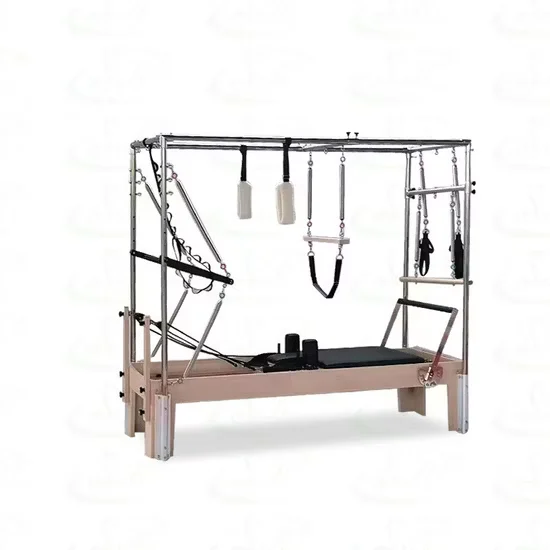
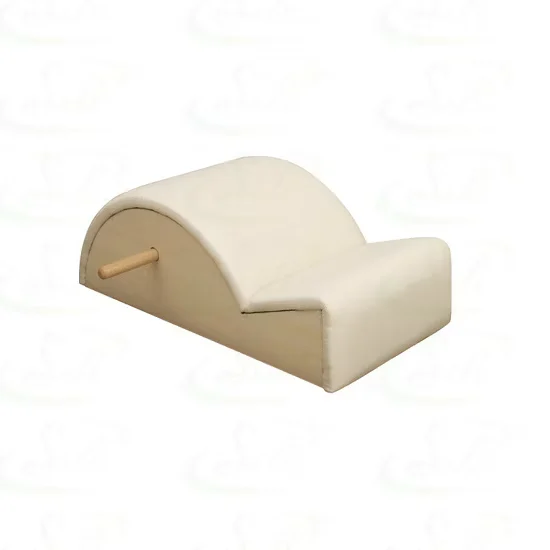
Pilates Reformer with Oak Spine Corrector, 960×470mm Platform, 20kg Net Weight — solid oak frame engineered for commercial studio use, paired with modular Long Box, Jump Board, and Platform accessories for multi-exercise workflow without equipment swaps. Includes customized logo and solid-color finish options. Each unit undergoes 32-point inspection with full load testing before shipment.
// Spec Highlights
• Direct from Manufacturer · No Middlemen · Worldwide Shipping
01
// Material
Imported Solid Wood
Premium hardwood frames sourced for density and visual warmth.
02
// Hardware
Medical-Grade Silent
Whisper-quiet pulleys and springs for clinical environments.
03
// Customization
Appearance OEM
Color, upholstery, and branding tailored to your studio.
04
// Service
Layout Design
Free venue planning for studios and rehab institutions.
Every component is selected for longevity, performance, and aesthetic harmony - from imported hardwood frames to silent medical-grade accessories.
// Features
Oak Frame Rigidity — kiln-dried solid oak with moisture content controlled to resist warping under repeated carriage loads.
| Parameter | Value |
|---|---|
| Product Type | Pilates Reformer |
| Dimensions | 960 × 470 × 360 mm |
| Frame Material | Solid Oak with Spine Corrector |
| Net Weight | 20 kg |
| Accessories Included | Long Box, Jump Board, Platform |
| Color Options | Solid Color options available |
| Logo | Customized logo available upon request |
| Warranty | 3 Years |
| Target User | Adult, Unisex |
| Facility Type | Typical Use |
|---|---|
| Pilates Studio | Group reformer classes and private sessions on commercial pilates reformer oak spine corrector units |
| Rehabilitation Center | Controlled spinal articulation and post-injury mobility work |
| Boutique Fitness Facility | High-frequency class rotation with rapid accessory swaps |
| Home Practice | Compact footprint for dedicated personal movement space |
Grain orientation and joint construction determine whether a spine corrector holds its arc or splinters under daily studio rotation.
Many suppliers label equipment as studio-grade without disclosing whether the oak is kiln-dried to an acceptable moisture range or whether the frame relies on dowel joints that loosen after repeated lateral loading. When the carriage tracks start to bind mid-session, the problem is rarely the wheels — it traces back to frame deflection that began the day the wood arrived with too much internal moisture. Studios then face a choice between constant rail realignment and replacing the entire unit [NEED_CITE: moisture content thresholds for hardwood fitness equipment frames].
A commercial pilates reformer oak spine corrector sits at the intersection of controlled flexion and extension work, targeting the erector spinae, multifidus, and deep abdominal stabilizers through a curved contact surface that mirrors natural thoracic curvature. In a studio layout, it pairs with the standard reformer carriage for seamless transitions between supine extension series and seated flexion drills, reducing the need for members to move between stations. The compact footprint suits facilities running back-to-back classes where floor space must accommodate multiple users simultaneously, and the unisex profile accommodates a wide range of torso lengths without requiring adjustable contact points.
The spine corrector endures a specific stress profile: static compression when a user holds an isometric bridge, impact loading during jump board transitions that transfer force through the platform, and eccentric tension as the carriage returns under spring resistance. In a studio running six classes daily, these cycles accumulate rapidly at the frame-to-rail junction where shear forces concentrate [NEED_CITE: fatigue behavior of solid hardwood under cyclic loading]. The oak density resists surface indentation from repeated body contact, but the critical wear path runs along the carriage rollers and the track surface where friction generates gradual material loss over months of continuous use.
Oak density directly governs how long the spine corrector’s curved profile resists flattening under repeated body weight; a kiln-dried stock with tight growth rings maintains its radius where lighter hardwoods slowly compress. The carriage track material and roller tolerance determine whether the glide remains smooth or develops lateral play that forces users to compensate mid-exercise. Spring resistance grading — typically offered in multiple tension levels — must match both rehabilitation clients requiring light assistance and advanced practitioners demanding heavy eccentric overload. Upholstery density on the long box and platform dictates how quickly the padding compresses flat in a high-traffic studio environment, and replaceable covers extend service life without requiring full pad replacement.
Switching to thin-wall tubing or softwood substitutes may reduce the purchase price, but the frame begins flexing under eccentric loads within months, pulling the carriage track out of parallel alignment and creating binding that users feel immediately. Non-sealed roller bearings accumulate chalk dust and sweat residue, requiring weekly teardowns that most studios cannot schedule. Low-density foam pads compress visibly within a single season of group classes, and when the supplier cannot provide replacement covers, the entire pad assembly must be sourced from a third party that may not match the original dimensions [NEED_CITE: total cost of ownership for commercial studio equipment].
The 11-gauge steel philosophy translates to wood selection: sourcing kiln-dried oak with certified moisture content rather than accepting whatever stock is cheapest at the mill. Robotic MIG welding has its equivalent in precision-machined joinery where every mortise-and-tenon connection is cut to tolerance, not hand-fitted with gaps that open under seasonal humidity shifts. Every unit is load-tested before crating, not sampled from a batch. The 200μm powder coating approach maps to UV-stable finish on the oak that resists sweat staining and cleaning chemical degradation. A 10-year frame warranty signals that the structure is engineered to outlast the first round of upholstery replacement. Floor planning support includes this reformer’s footprint alongside safe clearance distances for long box extensions and jump board arcs, ensuring no member bumps the next station mid-movement. OEM customization covers logo engraving and color matching for studios building a cohesive visual identity across multiple units.
Provide your studio floor dimensions and current equipment list to receive a 2D or 3D layout that positions each commercial pilates reformer oak spine corrector with correct clearance zones. Specify average daily class headcount so we can confirm the frame and carriage specifications match your usage intensity. Indicate whether your client base skews toward rehabilitation or advanced athletic training so we can recommend the appropriate spring resistance configuration and accessory combination.
Q: How do I know if a reformer frame meets commercial durability standards?
A: Request the wood species identification, kiln-drying certificate showing moisture content at delivery, and joint construction method. Commercial-grade oak frames use machined joinery rather than adhesive-only bonds, and the supplier should provide load test documentation for each unit. Visual inspection of the end grain reveals whether growth ring density supports long-term structural performance under daily class rotation.
Q: What is the difference between oak and other hardwoods for reformer frames?
A: Oak’s closed grain structure resists moisture absorption from studio humidity and sweat contact better than open-grain species like ash or beech. Its density provides a higher threshold before surface indentation appears under repeated body contact. Maintenance differs mainly in finish selection — oak accepts oil-based and water-based sealers equally well, giving studio operators flexibility when scheduling annual refinishing.
Q: How should spring resistance be matched to different training stages?
A: Lighter springs suit early rehabilitation phases where joint protection takes priority over muscular overload, while heavier springs serve advanced practitioners performing eccentric control work. A multi-spring system allows incremental progression without requiring equipment replacement as client strength improves. Studio operators typically configure units with the full range and let instructors select tension per session.
Q: What is the replacement cycle for upholstery and carriage rollers?
A: Upholstery in a high-traffic studio typically shows visible compression after sustained daily use, at which point replacement covers restore both function and appearance. Carriage rollers should be inspected for lateral play during scheduled maintenance intervals; sealed bearings extend the service window significantly compared to unsealed alternatives. Keeping replacement parts in stock prevents extended downtime when wear appears.
Q: What are the minimum order requirements for custom logo and color options?
A: Custom logo engraving and solid-color finish options are available for studio fitouts ordering multiple units. Lead time depends on current production scheduling and the complexity of the color match required. Contact us with your project timeline and quantity to receive a specific production window and confirm that the finish specification aligns with your studio’s visual identity guidelines.
Premium aesthetics meet quiet operation for boutique studio environments.
Medical-grade silence and precision for sports & postpartum recovery.
Furniture-grade craftsmanship for premium residential installations.
Compact premium setups for one-on-one and small-group training.
Aesthetic Pilates integration for hybrid wellness studio programming.
Multi-unit deployment with instructor-grade reliability for certification programs.
Tell us about your project. Our team will respond within 24 hours with pricing, customization options, and shipping details.
// Sales Director
William
+86 132 2531 1800
// Export Manager
Bella
+86 198 5412 8032
william@bickfit.com