
01 / Scenario
STUDIO
P
High-End Pilates Studios
Premium aesthetics meet quiet operation for boutique studio environments.
ISO
9001
CE
Certified
OEM
Available
10YR
Warranty
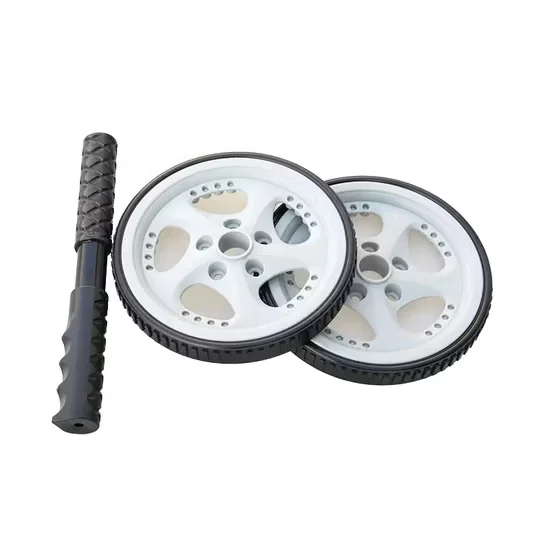
Customizable Ab Wheel Roller, PP/TPR/Steel Construction, 24.5×18×2.3 cm — steel-core axle eliminates flex under loaded kneeling rollouts, while TPR grip surface resists sweat degradation and compression set across high-rep commercial use. Custom color and logo integration available for branded facility deployments. Every unit undergoes bore tolerance verification and axle load testing before shipment.
// Spec Highlights
• Direct from Manufacturer · No Middlemen · Worldwide Shipping
01
// Material
Imported Solid Wood
Premium hardwood frames sourced for density and visual warmth.
02
// Hardware
Medical-Grade Silent
Whisper-quiet pulleys and springs for clinical environments.
03
// Customization
Appearance OEM
Color, upholstery, and branding tailored to your studio.
04
// Service
Layout Design
Free venue planning for studios and rehab institutions.
Every component is selected for longevity, performance, and aesthetic harmony - from imported hardwood frames to silent medical-grade accessories.
// Features
Steel-Core Axle Eliminates Flex Under Load — Hollow plastic axles bend during loaded kneeling rollouts; this unit uses a solid steel shaft paired with a PP wheel and TPR grip surface to maintain straight tracking rep after rep.
| Parameter | Value |
|---|---|
| Product Type | Abdominal Trainer |
| Axle Material | Solid Steel Core |
| Wheel Material | PP (Polypropylene) |
| Grip Surface | TPR (Thermoplastic Rubber) |
| Product Dimensions | 24.5 × 18 × 2.3 cm |
| Color Options | Customized Color Available |
| Logo | Customized Logo Available |
| MOQ | 50 PCS |
| Application | Indoor, Outdoor |
| Facility Type | Typical Use |
|---|---|
| Commercial Gym Accessory Zone | Core station alongside functional rigs and cable machines |
| CrossFit Box Functional Area | Warm-up and mid-workout abdominal engagement |
| Hotel Fitness Room | Compact, low-maintenance core training option |
| Home Gym | Space-efficient abdominal trainer for personal use |
A steel-core axle is the single structural decision that separates a commercial-grade ab roller from a retail toy.
Most ab wheels on the market use hollow plastic or thin-wall metal axles that flex under the eccentric loading of kneeling rollouts. Once the axle bends even slightly, the wheel tracks unevenly, bearings wear prematurely, and the user compensates with lateral instability — defeating the purpose of the exercise entirely. On a commercial customizable ab wheel roller, the steel shaft maintains rigidity through thousands of loaded reps, keeping the wheel aligned and the bearing load centered. [NEED_CITE: axial load distribution and bearing life in rolling fitness accessories]
The commercial customizable ab wheel roller occupies a narrow but essential slot in the strength floor: a single-plane, anti-extension core tool that complements cable crunches, hanging leg raises, and plank variations. It suits facilities running high-density accessory zones where floor space per station is limited and equipment must withstand continuous turnover. The compact footprint allows placement beside functional rigs or inside storage walls, and the neutral grip width accommodates a broad range of user hand positions without requiring adjustment mechanisms.
An ab wheel endures a specific stress profile: repetitive eccentric loading concentrated at the axle bore, combined with sweat exposure, rubber-floor friction, and aggressive cleaning chemicals. The steel-core axle resists bending fatigue at the wheel hub interface, while the PP wheel’s wall thickness and durometer determine whether the bore deforms over time. TPR grip surfaces resist compression set and chemical degradation far better than foam, which collapses and absorbs sweat within weeks in commercial environments. The bearing seal must hold out against gym dust and floor debris — an open or poorly sealed bearing develops play rapidly, causing the wobble that makes straight-line rolling impossible. [NEED_CITE: bearing seal ingress protection in high-particulate fitness environments]
The solid steel axle is the load-bearing spine of the unit. Unlike plastic inserts that rely on the wheel hub for rigidity, a steel core transfers force directly through the bearing, reducing point stress at the bore. The PP wheel’s wall thickness at the bore determines resistance to cracking under repeated loading; a thin-wall wheel may feel adequate initially but develops micro-fractures that propagate into wobble. TPR bonding to the wheel hub matters as much as the TPR compound itself — poor adhesion leads to edge peeling under sweat and cleaning exposure. Color and logo customization methods also carry structural implications: pad printing sits on the surface and wears under abrasion, while mold-in color integrates into the material layer for longer visual life.
Facilities that spec retail-grade ab wheels to reduce per-unit cost typically replace them within months. Hollow axles bend, foam grips compress and tear, bearings seize from dust ingress, and logos fade after a few cleaning cycles. The replacement cost compounds: procurement time, staff labor for swap-outs, and downtime at the station. A commercial customizable ab wheel roller built with a steel axle, sealed bearing, TPR grip, and durable logo application eliminates that cycle — the unit stays on the floor and performs consistently through the equipment lifecycle. [NEED_CITE: total cost of ownership for commercial fitness accessories under daily use]
BICKFIT manufactures the commercial customizable ab wheel roller in a vertically integrated facility where steel sourcing, welding, finishing, and assembly are controlled in-house. Every unit undergoes load testing before shipment. The 200μm powder coating process used across the product line extends to metal components in accessory equipment, ensuring corrosion resistance. Custom color matching and logo integration are handled at the manufacturing stage, not as an afterthought. For facility operators planning accessory zones, BICKFIT provides CAD-based layout support to ensure the ab roller station fits within safe clearance distances alongside rigs, benches, and free-weight areas. OEM private label options allow branded rollouts for chain operators and hotel groups.
Provide your functional zone dimensions and accessory equipment list to receive a 2D-3D floor plan showing ab roller station placement and clearance. Specify daily user volume to confirm the appropriate structural grade for your traffic level. Indicate target user demographics to verify grip width and wheel diameter suitability. Share custom color, logo, or branding requirements for integrated facility rollout.
Q: How do I distinguish a commercial-grade ab wheel from a retail version?
A: Check the axle material first — commercial units use solid steel cores, not hollow plastic or thin-wall tubing. Look at the grip surface: TPR resists sweat and cleaning chemicals, while foam compresses quickly. Sealed bearings are standard on commercial models. Finally, examine the wheel bore thickness; a thin bore cracks under repeated loaded use.
Q: What is the difference between a steel axle and a plastic axle in terms of durability?
A: A solid steel axle maintains straight-line tracking under eccentric kneeling loads because it resists bending at the hub. Plastic or hollow axles flex under the same load, causing the wheel to wobble and the bearing to wear unevenly. Steel axles also transfer force more cleanly through the bearing, extending service life in high-rep commercial environments.
Q: What are the minimum order requirements for custom color and logo options?
A: The minimum order for customized color and logo on the commercial customizable ab wheel roller is 50 pieces. Color matching can be done to Pantone or physical sample. Logo application methods include pad printing or mold-in integration, with mold-in offering superior abrasion resistance for high-traffic facilities.
Q: How should the ab wheel be maintained in a high-traffic commercial setting?
A: Wipe the TPR grip after each use with a neutral pH cleaner to prevent sweat buildup and chemical degradation. Inspect the axle-to-bore fit and bearing play quarterly — any wobble indicates bearing wear. Store the unit upright or on a rack to avoid point-loading the axle. Reapply or touch up pad-printed logos as needed; mold-in color requires no maintenance.
Q: Can this ab wheel be used on rubber gym flooring without damage?
A: The PP wheel durometer is selected to roll smoothly on standard commercial rubber flooring without marking or excessive wear. The steel-core axle ensures the wheel tracks straight, preventing lateral scrubbing that could scuff the floor surface. Ensure the flooring is level — uneven seams accelerate bearing wear and affect roll consistency.
Premium aesthetics meet quiet operation for boutique studio environments.
Medical-grade silence and precision for sports & postpartum recovery.
Furniture-grade craftsmanship for premium residential installations.
Compact premium setups for one-on-one and small-group training.
Aesthetic Pilates integration for hybrid wellness studio programming.
Multi-unit deployment with instructor-grade reliability for certification programs.
Tell us about your project. Our team will respond within 24 hours with pricing, customization options, and shipping details.
// Sales Director
William
+86 132 2531 1800
// Export Manager
Bella
+86 198 5412 8032
william@bickfit.com


