01 / Scenario
STUDIO
P
High-End Pilates Studios
Premium aesthetics meet quiet operation for boutique studio environments.
ISO
9001
CE
Certified
OEM
Available
10YR
Warranty
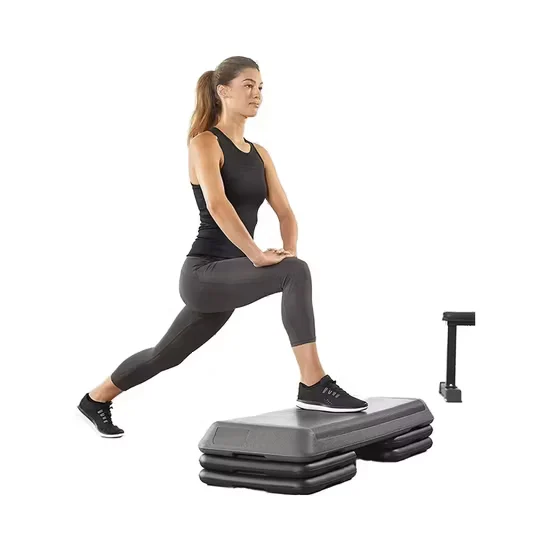
Customizable Aerobic Step Board, 110×41 cm PP Construction, 8.5 kg Net Weight — injection-molded PP surface resists fatigue cracking under repeated high-impact group fitness use, with adjustable riser modules for height variation and customizable color plus logo options at 50 pcs MOQ. Every unit undergoes load testing and structural inspection before shipment, backed by 17 years of commercial gym manufacturing experience.
// Spec Highlights
• Direct from Manufacturer · No Middlemen · Worldwide Shipping
01
// Material
Imported Solid Wood
Premium hardwood frames sourced for density and visual warmth.
02
// Hardware
Medical-Grade Silent
Whisper-quiet pulleys and springs for clinical environments.
03
// Customization
Appearance OEM
Color, upholstery, and branding tailored to your studio.
04
// Service
Layout Design
Free venue planning for studios and rehab institutions.
Every component is selected for longevity, performance, and aesthetic harmony - from imported hardwood frames to silent medical-grade accessories.
// Features
Structural Integrity Under Repetitive Impact — PP injection-molded surface resists cracking where hollow blow-molded boards fail within months of commercial class use.
| Parameter | Value |
|---|---|
| Product Type | Aerobic Step Board |
| Material | PP (Polypropylene) |
| Product Dimensions | 110 × 41 × 21 cm |
| Net Weight | 8.5 kg |
| Adjustment | Modular riser inserts for height variation |
| Color Options | Customizable |
| Logo | Customized logo available |
| Customization | Available |
| MOQ | 50 pcs |
| HS Code | 9506911900 |
| Production Capacity | 10,000 pcs/year |
| Facility Type | Typical Use |
|---|---|
| Commercial gym group fitness studio | High-frequency step aerobics classes with repeated impact loading |
| Hotel and resort fitness center | Scheduled cardio programming for transient member populations |
| University athletic training facility | Conditioning sessions for student-athlete groups |
| Functional training zone | Plyometric drills and elevated surface work |
One-piece PP injection molding eliminates the weld-line failure point that hollow boards develop under repeated step-up loading.
Most step boards on the market use thin-wall blow-molded construction with a hollow core. Under commercial class conditions — dozens of athletes performing step-ups, lateral hops, and push-off movements across a single session — the molded seam between the top plate and the side wall becomes the first structural weak point. Cracks propagate from that seam within three to six months, exposing the hollow interior and creating uneven surfaces where athletes can roll an ankle. Riser attachment points on blow-molded boards also rely on snap-fit tabs that fatigue and fracture after repeated height adjustments, leaving modules loose or detached mid-class. [NEED_CITE: fatigue failure mechanisms in cyclic-loaded thermoplastic housings]
A commercial adjustable aerobic step board occupies the high-impact cardio zone of a group fitness studio, serving as the primary platform for choreographed step routines and elevated bodyweight conditioning. Its 110 cm length provides a wider stepping surface than standard residential boards, accommodating lateral travel patterns and multi-directional combinations without athletes stepping off the edge. In a studio layout, step boards pair with open floor space for traveling movements and sit adjacent to mat storage or light accessory racks. The adjustable height range allows a single unit to serve beginner classes at the lowest setting and advanced athletic conditioning at elevated positions, reducing the total unit count a facility needs to stock.
Group fitness step classes generate repetitive impact loading concentrated at the center and forefoot zones of the board surface. Each step-up produces a vertical compression force followed by a shear component as the athlete pushes off laterally — a combined load cycle that hollow blow-molded boards resist poorly once wall thickness drops below a functional threshold. Riser insert connection points experience both compressive and lateral shear every time height is adjusted and loaded, demanding a locking mechanism that maintains engagement across thousands of insertion and removal cycles. The PP material must resist surface abrasion from athletic shoe outsoles while maintaining its anti-slip texture profile over an extended service period. Sweat, rubber sole residue, and cleaning chemicals applied between sessions further test the material’s surface integrity and color stability. [NEED_CITE: wear resistance standards for high-traffic fitness equipment surfaces]
The choice of PP as the base material directly determines how the board responds to repeated impact. Polypropylene offers higher impact resistance and fatigue endurance compared to recycled blends or ABS compounds, meaning the surface resists crack propagation at stress concentration points around the riser sockets and along the board edges. The 110 × 41 cm footprint exceeds typical residential step board dimensions, distributing athlete weight across a broader area and reducing center-point deflection under load. Net weight of 8.5 kg indicates sufficient material mass to resist shifting during lateral push-off movements without requiring permanent floor anchoring. The modular riser insert system replaces fragile snap-fit tabs with a positive engagement mechanism — each insert locks into a dedicated socket with a secure fit that resists dislodgement under dynamic loading, while still allowing height adjustment between class formats.
Facilities that specify low-cost hollow blow-molded step boards absorb replacement costs far sooner than the initial purchase price suggests. Thin-wall construction deforms under sustained point loading, creating a concave surface that compromises footing stability and accelerates material fatigue at the deformation apex. Snap-fit riser tabs fracture without warning, and replacement modules are rarely available from the original supplier — forcing the facility to discard the entire unit rather than repair a single component. Surface texture on inferior boards wears smooth within months, eliminating slip resistance and creating a liability exposure during high-intensity classes where sweat is present. Powder-coated or painted finishes on non-PP boards chip at contact edges, exposing raw material to moisture and accelerating degradation. [NEED_CITE: total cost of ownership analysis for commercial fitness accessories]
Every commercial adjustable aerobic step board is produced from virgin PP compound with material traceability to the source resin batch, ensuring consistent impact performance across production runs. The injection molding process produces a single-piece top plate with no structural weld lines, eliminating the primary failure mode found in blow-molded alternatives. Customization extends to color matching and logo placement, allowing facility operators to maintain brand consistency across their accessory inventory with a minimum order of 50 units. Production capacity supports phased rollout for multi-location operators, and the manufacturer provides dimensional files for integration into studio floor plans to verify spacing between board stations meets safe clearance requirements for lateral movement patterns. OEM private label programs are available for distributors building their own branded accessory lines.
Provide your studio floor area and target class capacity so the engineering team can verify board spacing and safe movement clearance for your specific layout. Specify average daily class frequency and participant count to confirm the structural grade matches your usage intensity. Indicate color preferences, logo placement requirements, and target unit quantity to receive a customization timeline and MOQ confirmation.
Q: What structural differences separate commercial-grade step boards from residential models?
A: Commercial boards use one-piece PP injection molding without hollow cores or seam weld lines, providing higher impact fatigue resistance. The 110 cm platform width accommodates lateral travel in choreographed routines, and riser modules use positive-lock engagement rather than fragile snap-fit tabs that fracture under repeated adjustment in high-frequency class environments.
Q: How does PP material compare to ABS or recycled plastic blends for step board durability?
A: PP delivers superior impact resistance and fatigue endurance under repetitive loading, resisting crack propagation at stress concentration points around riser sockets. Recycled blends introduce inconsistent material properties and lower impact thresholds, while ABS tends to become brittle under sustained UV and sweat exposure, shortening usable service life in commercial settings.
Q: What height adjustment options are available and how secure are the riser connections?
A: The board uses modular riser inserts that engage into dedicated sockets with a positive-lock mechanism designed to resist dislodgement under dynamic step-up and push-off loading. Each insert can be added or removed between class formats, and the connection maintains structural rigidity without play or wobble during loaded use.
Q: What is the minimum order quantity for customized colors and logo placement?
A: Customization including color matching and logo application requires a minimum order of 50 units. Production lead time depends on the complexity of color requirements and logo placement specifications, and the manufacturer provides dimensional files for integration into your studio floor plan upon request.
Q: How should the anti-slip surface texture be maintained in a high-traffic studio environment?
A: Clean the PP surface after each session using non-abrasive detergent and a soft cloth to remove sweat residue and rubber sole marks. Avoid solvent-based or abrasive cleaners that degrade the molded texture profile. Periodic inspection for texture wear in high-contact zones helps identify when surface integrity begins to compromise slip resistance under wet conditions.
Premium aesthetics meet quiet operation for boutique studio environments.
Medical-grade silence and precision for sports & postpartum recovery.
Furniture-grade craftsmanship for premium residential installations.
Compact premium setups for one-on-one and small-group training.
Aesthetic Pilates integration for hybrid wellness studio programming.
Multi-unit deployment with instructor-grade reliability for certification programs.
Tell us about your project. Our team will respond within 24 hours with pricing, customization options, and shipping details.
// Sales Director
William
+86 132 2531 1800
// Export Manager
Bella
+86 198 5412 8032
william@bickfit.com