01 / Scenario
STUDIO
P
High-End Pilates Studios
Premium aesthetics meet quiet operation for boutique studio environments.

ISO
9001
CE
Certified
OEM
Available
10YR
Warranty
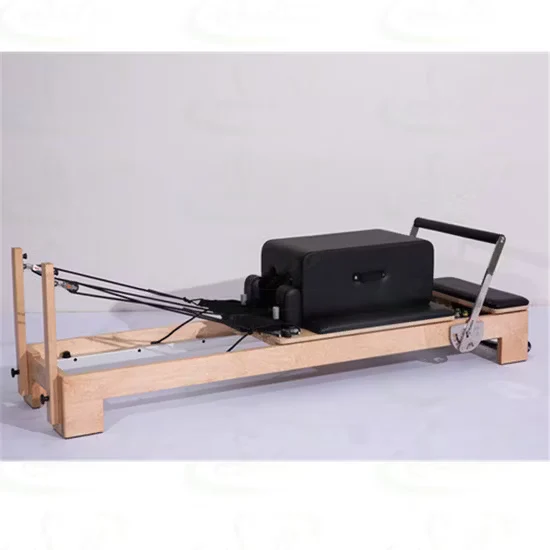
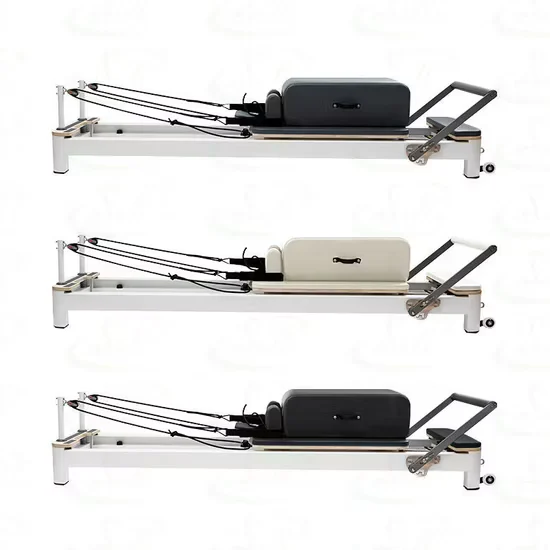
Foldable Pilates Reformer, Solid Oak Wood Frame, 2400×600×350mm — engineered with hardwood construction to resist warping and delamination under repetitive carriage movement, featuring reinforced fold joints for multi-use studio layouts and integrated mounting points for long box, jump board, and platform accessories. Backed by 3-year warranty and 32-point inspection with full load testing before shipment.
// Spec Highlights
• Direct from Manufacturer · No Middlemen · Worldwide Shipping
01
// Material
Imported Solid Wood
Premium hardwood frames sourced for density and visual warmth.
02
// Hardware
Medical-Grade Silent
Whisper-quiet pulleys and springs for clinical environments.
03
// Customization
Appearance OEM
Color, upholstery, and branding tailored to your studio.
04
// Service
Layout Design
Free venue planning for studios and rehab institutions.
Every component is selected for longevity, performance, and aesthetic harmony - from imported hardwood frames to silent medical-grade accessories.
// Features
Solid Oak Frame — kiln-dried hardwood maintains carriage alignment under years of repetitive studio use without delamination risk.
| Parameter | Value |
|---|---|
| Product Type | Pilates Reformer |
| Frame Material | Solid Oak Wood |
| Product Dimensions | 2400 × 600 × 350 mm |
| Net Weight | 100 kg |
| Foldable | Yes |
| Included Accessories | Long Box, Jump Board, Platform |
| Finish | Solid Color |
| Logo | Customization available |
| Warranty | 3 Years |
| Target User | Adult, Unisex |
| Facility Type | Typical Use |
|---|---|
| Commercial Pilates Studio | Daily group and private reformer classes across multiple time slots |
| Boutique Fitness Studio | Hybrid reformer sessions integrated with mat and functional training |
| Rehabilitation and Physiotherapy Center | Controlled resistance exercises for post-injury and mobility recovery |
| Hotel Fitness Facility | Guest-access reformer sessions in compact wellness areas |
| Home Gym | Space-efficient reformer training with fold-away storage between sessions |
Solid oak eliminates the delamination cycle that plagues high-traffic reformer studios.
Most studio owners I have worked with replaced at least one plywood-frame reformer within the first two years of commercial rotation. The adhesive layers in laminated frames separate under the repeated lateral stress of carriage travel, especially in humid environments or facilities near coastal areas. Once the plies begin to shift, the carriage rails lose parallelism and the ride develops a wobble that no amount of wheel adjustment can correct [NEED_CITE: EN 957 structural requirements for stationary training equipment]. A commercial foldable oak wood Pilates reformer built from solid hardwood bypasses this failure mode entirely because the grain runs continuously through the frame, distributing carriage loads along the natural fiber direction rather than across glued seams.
The 2400 × 600 mm footprint positions this commercial foldable oak wood Pilates reformer as a primary apparatus for one-on-one and small-group sessions. In a studio running six to eight classes daily, the foldable mechanism lets operators clear floor space for mat work or functional circuits between reformer blocks without moving equipment to storage. The included long box, jump board, and platform cover the majority of classical and contemporary reformer repertoires, reducing the need for supplementary apparatus. The unisex load rating accommodates practitioners across a broad range of body weights and heights, which matters when a single unit serves both private clients and open class participants.
Every forward-and-return stroke applies alternating lateral and vertical forces to the rail mounting points. In a studio running eight classes a day, a single reformer can accumulate thousands of carriage cycles per week. These micro-loads concentrate at the rail-to-frame junction and, on foldable units, at the hinge mechanism [NEED_CITE: fatigue performance of wood joints under cyclic loading]. Solid oak absorbs and redistributes this stress along its grain structure more predictably than laminated alternatives, where glue lines act as discrete failure planes. The hinge joints on a foldable frame require reinforcement hardware that resists loosening under repeated setup and teardown — a detail that separates units built for daily folding from those designed for occasional storage.
The 2400 mm frame length provides a full travel range for practitioners up to and beyond average height, ensuring the carriage does not bottom out during long-stroke exercises like footwork and long stretch series. The 100 kg net weight reflects the density of solid oak and the mass of included accessories, which contributes to frame stability during dynamic jump board work where the unit must resist shifting on the floor. The 350 mm frame height sets the working surface at a position that allows instructors to observe and cue movement patterns without excessive bending. Foldable construction introduces hinge points that must be machined to tight tolerances; any play at the joint translates directly into carriage misalignment. The solid color finish penetrates the oak surface rather than sitting on top, reducing the visible wear that accumulates at contact points where hands and feet grip the frame repeatedly.
Studios that purchase lower-cost plywood or thin-gauge metal frame reformers often track the total replacement expense over a three to five year window. Plywood frames delaminate at the rail mounts, metal frames develop flex under jump board loads, and both scenarios result in carriage travel that feels rough or off-center to experienced practitioners. Non-reinforced fold mechanisms loosen within months of daily use, creating a knocking sound during return strokes that clients notice immediately. When the frame geometry shifts, accessory mounting points for the long box and jump board no longer seat flush, introducing instability during exercises that require secure attachment [NEED_CITE: structural testing protocols for folding fitness equipment]. The disposal and repurchase cycle costs more than specifying solid hardwood construction from the start.
The solid oak frame is sourced with moisture content specifications that prevent warping in climate-controlled and semi-conditioned environments alike. Each hinge joint on the foldable mechanism is reinforced to withstand repeated deployment and collapse without fastener fatigue. The carriage rail and wheel assembly is matched to the oak frame’s dimensional stability, maintaining smooth travel as the wood seasons further in its operating environment. The 200μm industrial-grade finish protects the frame surface from sweat absorption, cleaning agents, and the abrasion that accumulates at grip points. A 3-year warranty backs the structural package, and the manufacturer provides 2D and 3D layout CAD files so studio operators can plan reformer spacing, instructor circulation paths, and storage zones before the units arrive [NEED_CITE: commercial fitness facility layout and clearance standards]. OEM logo customization allows branding consistency across a multi-unit purchase without compromising the underlying specification.
Provide your studio floor dimensions and existing apparatus list to receive a 2D or 3D layout showing reformer placement, clearance zones, and folded storage positions. Specify average daily class count and practitioner volume so the structural grade and accessory package can be matched to your actual usage pattern. Confirm whether practitioners in your facility fall outside standard anthropometric ranges so the travel length and accessory mounting positions can be verified before production. State any customization requirements including finish color, logo placement, and accessory additions so the quotation reflects the complete delivered specification.
Q: How does solid oak compare to plywood and metal frames for commercial Pilates reformers?
A: Solid oak maintains dimensional stability under repetitive carriage loading because the continuous grain distributes stress along the fiber direction. Plywood relies on adhesive layers between veneers, and these glue lines can separate under the cyclic lateral forces generated during daily studio use. Metal frames avoid delamination but may flex under jump board loads if the tube gauge is insufficient. For facilities running multiple classes per day, solid oak offers predictable long-term rigidity without the failure modes associated with laminated or thin-gauge alternatives.
Q: Does the foldable design compromise carriage alignment or frame rigidity?
A: A properly engineered fold mechanism maintains rail parallelism through reinforced hinge joints and precision-machined mating surfaces. The critical factor is whether the hinge hardware resists loosening under repeated deployment and collapse cycles. Units designed for occasional home storage may use simpler hinges that develop play under daily studio rotation. This reformer’s fold mechanism is built for frequent setup and teardown, with fastener specifications that hold alignment through the cycle counts typical of commercial scheduling.
Q: What maintenance does a solid oak frame require in a high-traffic studio?
A: Oak frames need regular cleaning with pH-neutral solutions to remove sweat residue and prevent finish degradation at grip points. Hinge bolts on foldable units should be inspected and retorqued periodically, particularly during the first months as hardware seats under load. Carriage wheels and rails benefit from quarterly inspection for bearing play and surface wear. Unlike metal frames, oak does not require corrosion treatment, but the finish should be monitored at high-contact areas and refreshed if abrasion exposes bare wood.
Q: How do I assess carriage wheel and rail quality for long-term smoothness?
A: Wheel bearing specification determines how long the carriage maintains smooth travel before developing lateral play. Sealed bearings resist contamination from dust and cleaning agents that accumulate in studio environments. Rail material hardness and surface finish affect wear rate — softer materials develop grooves over time that create a rough ride. Ask for the bearing type and rail material specification rather than relying on initial smoothness, which can mask lower-grade components that degrade within the first year of commercial use.
Q: Which accessories are essential for a commercial Pilates studio setup?
A: The long box enables seated and supine exercises that expand the reformer’s repertoire significantly, making it essential for studios offering full classical or contemporary programming. The jump board adds plyometric and cardiovascular intervals that many boutique formats now include. The platform extends the footwork surface for taller practitioners and specific rehabilitation protocols. A studio serving diverse client goals and class formats will use all three accessories regularly, while a facility focused on private rehabilitation sessions may prioritize the long box and platform over the jump board.
Premium aesthetics meet quiet operation for boutique studio environments.
Medical-grade silence and precision for sports & postpartum recovery.
Furniture-grade craftsmanship for premium residential installations.
Compact premium setups for one-on-one and small-group training.
Aesthetic Pilates integration for hybrid wellness studio programming.
Multi-unit deployment with instructor-grade reliability for certification programs.
Tell us about your project. Our team will respond within 24 hours with pricing, customization options, and shipping details.
// Sales Director
William
+86 132 2531 1800
// Export Manager
Bella
+86 198 5412 8032
william@bickfit.com