01 / Scenario
STUDIO
P
High-End Pilates Studios
Premium aesthetics meet quiet operation for boutique studio environments.

ISO
9001
CE
Certified
OEM
Available
10YR
Warranty
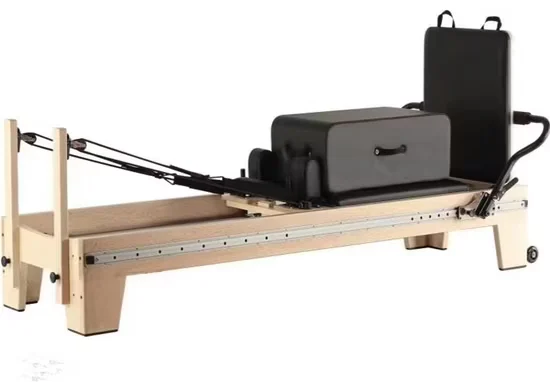
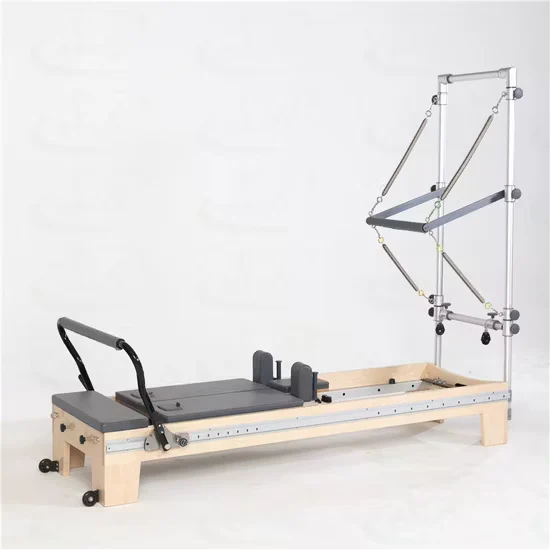
Home Folding Wooden Pilates Reformer, Solid-Wood Frame, 2400×600×350mm Dimensions — engineered with foldable portability and 100kg net weight for compact studio storage, includes long box, jump board, and platform accessories to expand exercise variety without extra equipment. 3-year warranty covers frame and carriage components for daily use confidence. Each unit undergoes 32-point inspection and 100% load testing before shipment.
// Spec Highlights
• Direct from Manufacturer · No Middlemen · Worldwide Shipping
01
// Material
Imported Solid Wood
Premium hardwood frames sourced for density and visual warmth.
02
// Hardware
Medical-Grade Silent
Whisper-quiet pulleys and springs for clinical environments.
03
// Customization
Appearance OEM
Color, upholstery, and branding tailored to your studio.
04
// Service
Layout Design
Free venue planning for studios and rehab institutions.
Every component is selected for longevity, performance, and aesthetic harmony - from imported hardwood frames to silent medical-grade accessories.
// Features
Solid-Wood Joinery — Solid-wood frame joinery resists torsional flex that laminate portable reformers develop within their first year of daily carriage travel.
| Parameter | Value |
|---|---|
| Product Type | Pilates Reformer |
| Frame Material | Solid Wood |
| Product Dimensions | 2400×600×350mm |
| Net Weight | 100kg |
| Assembly State | Foldable / Portable |
| Included Accessories | Long Box, Jump Board, Platform |
| Color Options | Solid Color, customizable finishes available |
| Customization | Logo placement and finish options available |
| Warranty | 3 Years |
| Facility Type | Typical Use |
|---|---|
| Home studio | Daily personal practice with fold-and-store convenience between sessions |
| Boutique Pilates studio | Small-format class environments requiring multi-function accessory range |
| Small-format training facility | Rehabilitation and movement-quality sessions prioritizing controlled resistance |
| Personal training suite | One-on-one instruction where accessory swaps replace multiple dedicated machines |
A rigid frame and sealed rail interface keep the carriage tracking straight under load, even when the reformer folds for storage.
Portable reformers routinely chase compact dimensions by thinning the rail walls and substituting lightweight aluminum carriages. The result shows up within months: lateral play at the carriage, uneven spring tension felt through the ropes, and audible rattle during jump board work. I have seen thin-wall aluminum rails develop visible scoring where the wheels bite under off-center loading, and spring anchor points that crack at the weld after repetitive stretch cycles [NEED_CITE: structural fatigue in folding fitness equipment frames]. A folding wooden pilates reformer for home studio use must handle the same carriage loads as a full-size studio machine — just in a smaller footprint.
This folding wooden pilates reformer for home studio and boutique environments covers the full sagittal and transverse movement spectrum — footwork, long box series, jump board plyometrics, and platform-based standing work. It complements a Cadillac or Wunda Chair by handling the primary carriage-based repertoire while those machines cover vertical-plane resistance work. The footprint suits studios running two to four reformer stations where floor space doubles as mat-work area between classes. The solid-wood frame and 100kg net weight anchor the unit firmly enough for jump board rebound without requiring bolt-down installation.
Every fold-and-unfold cycle loads the hinge pins and latch hardware in shear, while the carriage rails experience repeated alignment stress as the frame locks into position. Spring anchors endure thousands of eccentric load cycles per week in a busy studio, and the rope-to-pulley interface accumulates friction wear proportional to daily class volume. Sweat and humidity fluctuation challenge the wood finish and metal hardware at contact points, particularly around the spring tower and foot bar pivot [NEED_CITE: moisture-content stability in hardwood fitness equipment]. The upholstery on the carriage and long box compresses under body weight and must resist splitting at the staple line after sustained daily use.
Solid-wood species selection determines how the frame responds to humidity swings — kiln-dried hardwood holds joinery tolerances tighter than softwood or engineered laminate, which delaminate at the rail-mounting points. The carriage wheel-to-rail material pairing governs wear rate and travel smoothness; hardened polymer wheels on sealed bearings outperform unsealed metal-on-metal setups that develop lateral play under studio-frequency use. Spring resistance gradient matters for programming range — a reformer offering only heavy springs limits beginner progressions, while a full light-to-heavy set accommodates rehabilitation through advanced conditioning. The accessory attachment interface, where the long box and jump board lock into the frame, must eliminate wobble at the connection point without requiring tools for each swap.
Manufacturers offset low pricing by reducing rail wall thickness, which invites carriage deflection under heavy footwork and jump board impact. Unsealed bearings accumulate dust and chalk residue, generating maintenance calls every few months in a commercial environment. Springs sourced without cycle-life specification lose tension consistency, forcing instructors to compensate with verbal cueing rather than relying on predictable resistance. Low-density foam on the carriage and long box compresses within a season of daily use, and replacement upholstery often requires sending the entire carriage back to the supplier [NEED_CITE: commercial upholstery lifespan in Pilates studio environments]. Non-standard accessory mounting widths mean third-party long boxes and jump boards will not fit, locking the buyer into a single supplier for replacements.
Solid-wood frame construction with verified species and moisture-content specification prevents the warping that throws carriage alignment out of tolerance. Each unit ships with a documented accessory set — long box, jump board, and platform — eliminating the interface-compatibility guesswork that plagues multi-brand studio builds. The foldable mechanism is stress-checked at the hinge and latch points before packing, not just the frame. The 3-year warranty covers structural defects on the frame and carriage system. Customization options including logo placement and finish selection allow boutique studios to match equipment to their interior specification without resorting to aftermarket modification.
Provide your studio floor dimensions and target station count to receive a 2D layout confirming safe clearance between reformers during simultaneous class use. Specify expected daily class volume so the structural grade matches your usage cadence. Confirm the body-size range of your client population to verify that the carriage travel and foot bar positions accommodate your users. State any customization requirements including frame finish, logo placement, and accessory color matching early in the specification process.
Q: How do I judge frame rigidity between solid-wood and laminate portable reformers?
A: Press firmly on the rail at the mid-point while the reformer is unfolded and loaded. Solid-wood frames resist deflection and return to alignment, while laminate or thin engineered wood shows visible flex and may not fully recover. Inspect the joinery at the rail-to-base connection — doweled and glued hardwood joints outperform stapled or screwed laminate assemblies under repeated folding cycles.
Q: What spring resistance range should I specify for mixed-level studio programming?
A: A full set from light through heavy allows instructors to program rehabilitation and beginner sessions on lighter springs while advancing experienced clients to heavier resistance. Confirm that the spring tower accepts the full gradient and that replacement springs are available individually rather than only as complete sets.
Q: What should I inspect on the folding mechanism over time?
A: Check hinge pins for lateral play, latch engagement depth, and any visible deformation at the fold-point hardware. A mechanism that requires force to lock or shows uneven gaps when unfolded indicates wear or misalignment that must be corrected before continued use.
Q: Will third-party long boxes and jump boards fit this reformer width?
A: Accessory compatibility depends on the mounting width and attachment interface specific to each reformer brand. Confirm the exact rail-to-rail inner width and the locking mechanism type before ordering accessories from a different manufacturer, as even small dimensional differences prevent secure attachment.
Q: What maintenance schedule suits daily studio use?
A: Inspect carriage wheels and rails weekly for debris and wear grooves. Clean rope and pulley surfaces monthly. Check spring anchor points and rope connections quarterly for fraying. Wipe wooden surfaces after each session to prevent sweat from degrading the finish over time.
Premium aesthetics meet quiet operation for boutique studio environments.
Medical-grade silence and precision for sports & postpartum recovery.
Furniture-grade craftsmanship for premium residential installations.
Compact premium setups for one-on-one and small-group training.
Aesthetic Pilates integration for hybrid wellness studio programming.
Multi-unit deployment with instructor-grade reliability for certification programs.
Tell us about your project. Our team will respond within 24 hours with pricing, customization options, and shipping details.
// Sales Director
William
+86 132 2531 1800
// Export Manager
Bella
+86 198 5412 8032
william@bickfit.com