01 / Scenario
STUDIO
P
High-End Pilates Studios
Premium aesthetics meet quiet operation for boutique studio environments.
ISO
9001
CE
Certified
OEM
Available
10YR
Warranty
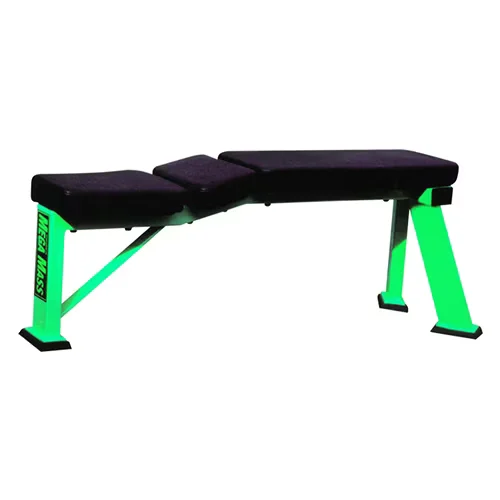
Commercial Flat Bench, 1353×595×532mm, 32kg Net Weight — built with industrial steel frame and continuous MIG welding to eliminate spot-weld fatigue points under repeated heavy barbell pressing. High-density upholstery resists splitting during daily commercial use across high-traffic training floors. Every unit undergoes per-piece load testing before shipment, backed by a 10-year frame warranty and mill-certified 11-gauge steel traceability.
// Spec Highlights
• Direct from Manufacturer · No Middlemen · Worldwide Shipping
01
// Material
Imported Solid Wood
Premium hardwood frames sourced for density and visual warmth.
02
// Hardware
Medical-Grade Silent
Whisper-quiet pulleys and springs for clinical environments.
03
// Customization
Appearance OEM
Color, upholstery, and branding tailored to your studio.
04
// Service
Layout Design
Free venue planning for studios and rehab institutions.
Every component is selected for longevity, performance, and aesthetic harmony - from imported hardwood frames to silent medical-grade accessories.
// Features
Traceable Mill Steel — 11-gauge Q345 steel sourced with coil-level certification ensures every flat bench frame can be traced back to its originating mill batch.
| Parameter | Value |
|---|---|
| Product Type | Flat Bench |
| Frame Steel Gauge | 11-gauge |
| Frame Tube Size | 3×3 inch |
| Steel Grade | Q235 / Q345 Industrial Steel |
| Welding Type | Robotic MIG Continuous Weld |
| Load Capacity | Tested beyond 500kg |
| Upholstery | High-density commercial foam with split-resistant vinyl |
| Powder Coating | 200μm scratch-resistant industrial finish |
| Product Dimensions | 1353×595×532mm |
| Net Weight | 32kg |
| Certification | ISO 9001, CE |
| Warranty | 10-year frame |
| Facility Type | Typical Use |
|---|---|
| Commercial gym free weight zone | Primary platform for barbell pressing and dumbbell movements |
| CrossFit box functional area | Dedicated heavy pressing station within mixed-use rig zones |
| Hotel and resort fitness center | Durable bench for general strength training by transient guests |
| University strength and conditioning room | Bench pressing and accessory lifts for athletic performance programs |
| Rehabilitation and performance center | Stable, low-profile platform for controlled pressing progressions |
Thicker frame walls distribute stress across the full tube cross-section, not just at weld joints.
Many flat benches sold under the label "commercial grade" offer no verifiable steel specification. The wall thickness is assumed, not documented. When repeated heavy loading cycles concentrate force at the junction between the upright and the base, spot-welded joints on thinner frames begin to develop hairline cracks — often invisible until the joint shifts under load. A commercial flat bench built on 11-gauge steel with continuous robotic MIG welds shifts the failure threshold far beyond what a standard training session produces [NEED_CITE: EN 957 structural requirements for stationary training equipment]. The question is never whether the steel can hold once. The question is whether the weld pattern can hold after thousands of loading cycles.
The flat bench occupies the center of any free weight zone. It pairs with power racks and squat stands for barbell pressing, and stands alone for dumbbell work across chest, shoulder, and triceps movement patterns. In a commercial gym layout, flat benches require less floor space than incline or adjustable variants, allowing higher station density without compromising user clearance. The 1353×595mm footprint fits standard rack spacing configurations, leaving adequate lateral room for plate loading and spotter movement. Users across a wide range of body sizes can position themselves on the flat pad without adjustment, reducing transition time between users in high-traffic training periods. A well-built commercial flat bench should disappear into the training environment — stable, unobtrusive, and ready for the next set.
A flat bench experiences predominantly static and impact loading. When a lifter lowers a loaded barbell to the chest and pauses, the frame sustains a static hold that transmits force through the uprights into the base tube. The eccentric phase of each repetition generates an impact spike as the barbell contacts the pad and the lifter’s bodyweight shifts. Over hundreds of daily repetitions in a busy facility, these cycles concentrate fatigue at the upright-to-base weld junction and the pad mounting points. Upholstery foam compresses repeatedly under the shoulder and upper back region, and vinyl surfaces endure friction from body contact and cleaning agents [NEED_CITE: weld classification and fatigue performance in structural steel]. A powder coating that is too thin will chip at the floor contact feet where the frame meets the ground and where dropped plates strike the base.
Frame gauge and tube dimensions define how a flat bench responds under load. An 11-gauge wall thickness in a 3×3 inch tube section provides a broad load distribution area, meaning the tube resists bending and twisting under off-center barbell placement. Robotic MIG continuous welding eliminates the intermittent weak points inherent to spot-welded assemblies — the weld bead runs the full length of each joint, distributing stress evenly rather than concentrating it at discrete weld spots. The 200μm powder coating, applied over a sandblasted surface, creates a mechanical bond that resists chipping far better than paint or thin electrostatic finishes. High-density upholstery foam is selected to resist compression set over months of daily commercial use, maintaining pad shape and support through the shoulder and upper back contact zones. Net weight at 32kg reflects the mass of steel required to keep the bench grounded during heavy pressing without sliding or rocking.
Thinner frame tubes on a flat bench will flex perceptibly under heavy dumbbell or barbell loads, introducing instability that forces the lifter to compensate for movement in the platform. Spot-welded joints on these lighter frames fail unpredictably — the liability exposure for a gym operator is significant when a bench joint gives way during a loaded set. Low-density foam pads compress and bottom out within months of commercial traffic, requiring full pad replacement on a recurring basis that compounds maintenance costs. Powder coatings applied at insufficient thickness chip and expose bare steel to moisture and sweat, accelerating corrosion at high-contact areas. When a bench is built with proprietary or non-standard hardware, replacement pads and feet become unavailable within a short product lifecycle, forcing full unit replacement rather than component-level repair [NEED_CITE: ASTM durability standards for commercial fitness equipment].
The 11-gauge frame steel carries mill-level traceability — the coil origin is documented, not assumed. Robotic MIG welding produces continuous weld lines at every structural joint on the commercial flat bench, with no spot-weld gaps that concentrate fatigue. Each unit undergoes load testing before shipment rather than relying on sample-based batch inspection. The 200μm industrial powder coating, applied after full sandblast preparation, resists chipping at contact points under daily gym conditions. A 10-year frame warranty backs the structural assembly. For facility layout, the 1353×595mm footprint allows precise spacing calculations in CAD planning, ensuring safe user clearance and efficient floor density across the free weight zone. OEM customization including frame color, pad material, and logo application is available for operators building branded environments.
Provide your free weight zone dimensions and current equipment schedule to receive a 2D or 3D floor plan showing optimal commercial flat bench placement and rack spacing. Specify expected daily user volume to confirm the structural grade matches your traffic profile. Communicate target user demographics to verify the flat pad profile accommodates the full range of body sizes in your membership base. Outline any color, logo, or pad customization requirements for branded facility environments.
Q: How do you verify a flat bench is genuinely commercial grade versus light commercial?
A: Request mill-certified steel documentation showing the exact gauge and grade of the frame tube. Inspect the welding pattern — continuous welds along full joint lengths indicate commercial construction, while spot welds at discrete points suggest lighter-duty assembly. Confirm whether load testing is performed on every unit or only on samples. Check the warranty period offered on the frame structure.
Q: What frame specifications are necessary for heavy barbell pressing on a flat bench?
A: An 11-gauge steel frame in a 3×3 inch tube section provides the structural foundation for sustained heavy pressing. Continuous MIG welding at all upright and base joints distributes load stress across the full weld length rather than concentrating it at isolated points. A net weight above 30kg generally indicates sufficient steel mass to prevent bench movement during loaded repetitions.
Q: How should flat benches be spaced in a commercial gym layout?
A: Allow at least 600mm between adjacent benches for lateral plate loading and spotter movement. When positioned inside power racks, confirm the bench footprint aligns with the rack’s internal width and J-hook spacing. CAD-based floor planning ensures each commercial flat bench occupies its designated zone with verified safe clearances on all sides.
Q: What is the expected lifespan of bench upholstery under daily commercial use?
A: High-density foam paired with split-resistant vinyl typically maintains structural support through extended commercial service when cleaned with appropriate pH-neutral agents. Foam density determines how long the pad resists compression set. When replacement is needed, availability of bolt-on replacement pads extends the bench service life without requiring full unit retirement.
Premium aesthetics meet quiet operation for boutique studio environments.
Medical-grade silence and precision for sports & postpartum recovery.
Furniture-grade craftsmanship for premium residential installations.
Compact premium setups for one-on-one and small-group training.
Aesthetic Pilates integration for hybrid wellness studio programming.
Multi-unit deployment with instructor-grade reliability for certification programs.
Tell us about your project. Our team will respond within 24 hours with pricing, customization options, and shipping details.
// Sales Director
William
+86 132 2531 1800
// Export Manager
Bella
+86 198 5412 8032
william@bickfit.com