01 / Scenario
STUDIO
P
High-End Pilates Studios
Premium aesthetics meet quiet operation for boutique studio environments.
ISO
9001
CE
Certified
OEM
Available
10YR
Warranty
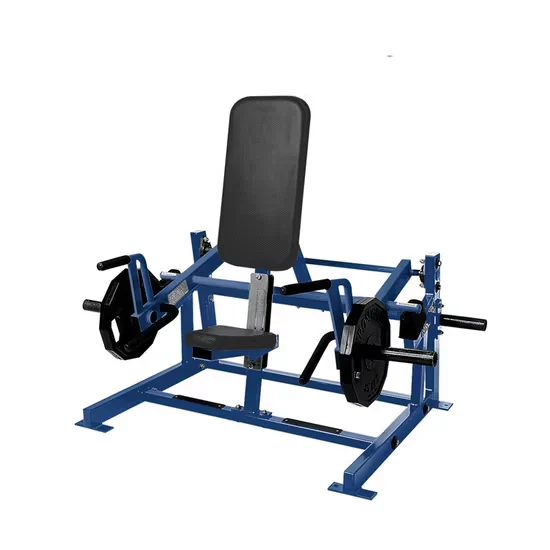
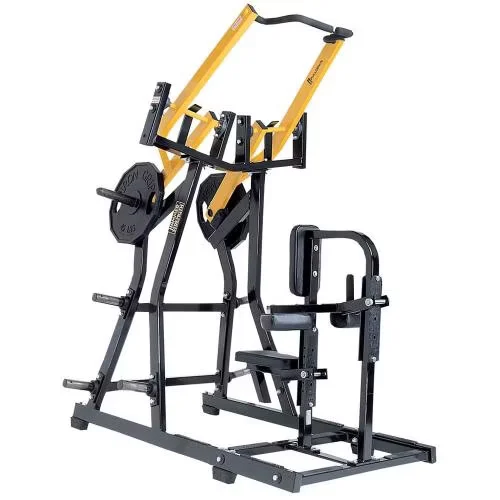
Commercial Plate Loaded Lat Pulldown, Plate-Loaded Resistance, Back Training Equipment — engineered with industrial steel frame construction and continuous robotic MIG welding to eliminate cold joints under cyclic loading. ISO 9001 and CE certified for international commercial gym deployment. Every unit undergoes structural load testing before shipment, backed by a 10-year frame warranty for high-traffic strength zones.
// Spec Highlights
• Direct from Manufacturer · No Middlemen · Worldwide Shipping
01
// Material
Imported Solid Wood
Premium hardwood frames sourced for density and visual warmth.
02
// Hardware
Medical-Grade Silent
Whisper-quiet pulleys and springs for clinical environments.
03
// Customization
Appearance OEM
Color, upholstery, and branding tailored to your studio.
04
// Service
Layout Design
Free venue planning for studios and rehab institutions.
Every component is selected for longevity, performance, and aesthetic harmony - from imported hardwood frames to silent medical-grade accessories.
// Features
Mill-Certified Frame Steel — Every tube in this plate loaded lat pulldown traces back to its origin steel coil, eliminating the guesswork that plagues vaguely specified commercial equipment.
| Parameter | Value |
|---|---|
| Product Type | Plate Loaded Lat Pulldown Machine |
| Loading Type | Plate loaded |
| Frame Material | Steel (Q235 / Q345 industrial grade options) |
| Frame Steel Gauge | 11-gauge (3×3 inch tube section) |
| Welding Type | Robotic MIG continuous weld |
| Bearing Type | Sealed industrial bearings |
| Powder Coating | 200μm scratch-resistant finish |
| Product Dimensions | 562×1037×443mm |
| Net Weight | 36kg |
| Certification | ISO 9001, CE |
| Warranty | 10-year frame |
| Color Options | Main frame and cushion color available per customer specification |
| OEM/ODM | Acceptable |
| Facility Type | Typical Use |
|---|---|
| Commercial gym strength floor | Primary lat and upper-back station in high-traffic training zones |
| Professional fitness club | Dedicated plate loaded section for experienced lifters |
| Hotel and resort fitness center | Durable back training station requiring minimal daily maintenance |
| University strength and conditioning room | Athletic team back development in supervised training sessions |
| Rehabilitation and performance center | Controlled upper-body pulling movements with adjustable external loading |
Continuous MIG welds distribute cyclic stress across the entire joint line rather than concentrating it at discrete points.
Most suppliers describe their frames as "commercial grade" without providing a verifiable steel gauge or mill certificate. When an ISO-lateral pulldown arm experiences repeated heavy loading cycle after cycle, spot welds become the first failure point — hairline cracks propagate from the weld nugget outward, often invisible beneath powder coating until the joint separates under load. [NEED_CITE: weld classification and fatigue performance in structural steel] I have walked gym floors where equipment less than eighteen months old showed visible cracking at the pivot arm junction, not because the steel was inadequate but because the weld pattern could not handle the torsional stress of daily commercial use.
The plate loaded lat pulldown occupies the vertical pulling plane, targeting the latissimus dorsi, rhomboids, and posterior deltoids through a fixed movement arc. In a commercial strength floor, it pairs naturally with a plate loaded row station and a seated shoulder press to cover the full spectrum of upper-body compound movements. Facilities running high daily member throughput benefit from plate loaded configurations because there are no weight stack cables to replace and no selector pins to lose. The ISO-lateral arm design accommodates a wide range of torso lengths and shoulder widths, allowing lifters from lighter to heavier builds to maintain a natural pulling path without forcing the shoulder joint into compromise positions.
Every rep on this commercial plate loaded lat pulldown machine drives torsional load through the pivot arm bearings and into the main frame upright. During eccentric return phases, the load does not simply decrease — it reverses direction, creating a cyclic stress pattern that accelerates fatigue at any discontinuity in the weld line. Sealed industrial bearings at the arm pivot resist contamination from chalk dust, sweat residue, and cleaning chemicals that degrade open bushings within months of commercial operation. [NEED_CITE: bearing contamination and maintenance intervals in commercial fitness equipment] The powder coating at grip contact points and plate-loading horns endures repeated abrasion and impact, making pre-treatment quality and coating thickness directly relevant to long-term appearance retention. Upholstery on the thigh pad and chest support faces compression cycles thousands of times daily, where low-density foam compresses permanently and splits the vinyl cover along the seam.
An 11-gauge steel tube in a 3×3 inch cross-section resists bending deformation far better than thinner-walled alternatives when a lifter loads multiple plates onto the horns and pulls through the full range. Robotic MIG welding produces a continuous bead with consistent penetration depth, eliminating the cold joints and incomplete fusion that plague manual spot-welded frames under cyclic loading. Sealed bearings maintain rotational precision without periodic greasing, a practical necessity in facilities that operate extended hours without dedicated maintenance staff between shifts. The 200μm powder coating, applied over sandblasted steel, provides a scratch-resistant surface that withstands contact from weight plates, knurled bar surfaces, and daily cleaning protocols. [NEED_CITE: powder coating thickness standards for commercial fitness equipment surfaces]
A frame built from thinner-gauge tube flexes noticeably under heavy plate loads, creating a sensation of instability that experienced lifters immediately recognize and avoid. Spot-welded joints that pass a visual factory inspection develop micro-cracks within months of commercial cycling, eventually requiring frame replacement rather than repair because the crack has propagated into the base metal. Non-sealed bearings at the arm pivot accumulate chalk dust and sweat residue, developing rotational play that introduces wobble into the pulling motion and forces unplanned maintenance shutdowns. Low-density upholstery compresses beyond recovery within the first year, splitting along seam lines and requiring full pad replacement — downtime that removes the station from the floor during peak membership hours. Coating that lacks adequate thickness or proper pre-treatment chips at plate-loading contact points, exposing bare steel to humidity and sweat-driven corrosion that spreads beneath adjacent coating.
The 11-gauge frame steel used in this commercial plate loaded lat pulldown machine carries mill certification traceable to the coil, providing documentation that supports equipment audits and insurance assessments. Robotic MIG continuous welding ensures every unit leaving the factory has consistent joint integrity rather than depending on individual welder skill on a given shift. Each completed unit undergoes load testing before shipment — a protocol that catches structural anomalies on the production floor rather than on a gym owner’s strength zone. The 200μm industrial powder coating maintains appearance integrity at the plate-loading horns and grip contact areas where abrasion is most concentrated. A 10-year frame warranty reflects confidence in the structural system rather than a marketing gesture, backed by manufacturing traceability from raw steel through final assembly. The 15,000㎡ vertically integrated facility in Ningjin, Dezhou, Shandong supports full OEM customization including frame color, upholstery selection, and private labeling.
Provide your strength zone floor area and existing equipment list to receive a 2D or 3D layout that positions this plate loaded lat pulldown with correct safety clearances and traffic flow. Specify your facility’s average daily user volume so the structural grade recommendation aligns with actual cyclic loading demands. Indicate the expected user population size range to confirm the pivot arm geometry and pad positioning accommodate your membership profile. Note any customization requirements including frame color, upholstery material, and logo placement for private label projects.
Q: How do I verify that a frame marketed as commercial grade actually meets structural requirements?
A: Request mill-certified steel documentation traceable to the coil origin, which confirms the steel grade and gauge rather than relying on supplier claims alone. Verify that the welding method uses continuous MIG passes rather than spot welds at structural joints. Confirm that load testing is performed on every individual unit before shipment, not on a sample basis. [NEED_CITE: EN 957 structural requirements for stationary training equipment]
Q: What maintenance intervals should I expect for pivot bearings on plate loaded pulldown machines?
A: Sealed industrial bearings in a plate loaded lat pulldown require significantly less maintenance than open bushings or unsealed bearing assemblies because contaminants cannot enter the race. In high-traffic commercial environments, a quarterly rotation check is typically sufficient to confirm smooth operation and detect any developing play. Facilities using chalk heavily may need to increase inspection frequency at the pivot points.
Q: Does powder coating thickness affect long-term equipment appearance in commercial environments?
A: Coating thickness directly determines how well the finish resists chipping at contact points where weight plates and knurled surfaces repeatedly strike the frame. A 200μm industrial powder coat applied over proper sandblast pre-treatment maintains surface integrity far longer than thin decorative coatings. This is particularly relevant at plate-loading horns and adjustment pin contact areas on high-use equipment.
Q: What is the difference between plate loaded and selectorized systems for commercial back training stations?
A: Plate loaded systems eliminate the cable, selector pin, and weight stack guide rod mechanisms that require regular maintenance in selectorized machines. This reduces the number of wear components and potential failure points in high-traffic environments. Plate loaded configurations also allow experienced lifters to load beyond the maximum pin-selected stack weight available on most selectorized stations.
Premium aesthetics meet quiet operation for boutique studio environments.
Medical-grade silence and precision for sports & postpartum recovery.
Furniture-grade craftsmanship for premium residential installations.
Compact premium setups for one-on-one and small-group training.
Aesthetic Pilates integration for hybrid wellness studio programming.
Multi-unit deployment with instructor-grade reliability for certification programs.
Tell us about your project. Our team will respond within 24 hours with pricing, customization options, and shipping details.
// Sales Director
William
+86 132 2531 1800
// Export Manager
Bella
+86 198 5412 8032
william@bickfit.com