01 / Scenario
STUDIO
P
High-End Pilates Studios
Premium aesthetics meet quiet operation for boutique studio environments.

ISO
9001
CE
Certified
OEM
Available
10YR
Warranty
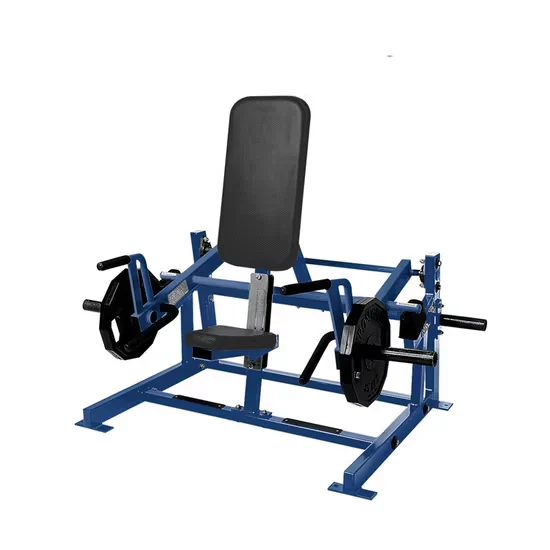
OS-H5058 Plate Loaded Step Up Machine, 656×1200×1035mm, 49kg Net Weight — plate loaded design with ISO9001 and CE certified construction for commercial gym environments. Frame and cushion colors fully customizable to match facility branding. Every unit undergoes individual load testing before shipment to ensure structural integrity under repeated stepping movements.
// Spec Highlights
• Direct from Manufacturer · No Middlemen · Worldwide Shipping
01
// Material
Imported Solid Wood
Premium hardwood frames sourced for density and visual warmth.
02
// Hardware
Medical-Grade Silent
Whisper-quiet pulleys and springs for clinical environments.
03
// Customization
Appearance OEM
Color, upholstery, and branding tailored to your studio.
04
// Service
Layout Design
Free venue planning for studios and rehab institutions.
Every component is selected for longevity, performance, and aesthetic harmony - from imported hardwood frames to silent medical-grade accessories.
// Features
Steel Traceability — every tube in the OS-H5058 frame traces back to a certified Q235 coil, not a vague commercial-grade claim.
| Parameter | Value |
|---|---|
| Designation | OS-H5058 |
| Product Type | Plate Loaded Step Up Machine |
| Loading Type | Plate loaded |
| Product Dimensions | 656 × 1200 × 1035 mm |
| Net Weight | 49 kg |
| Certification | ISO 9001, CE |
| Color Options | Main frame and cushion color available per customer specification |
| Assembly State | Unfolded |
| OEM / ODM | Acceptable |
| Facility Type | Typical Use |
|---|---|
| Commercial gym strength floor | Unilateral lower-body power stations in high-traffic zones |
| CrossFit box functional zone | Box step-up and split-squat loading areas |
| Hotel and resort fitness center | Compact footprint strength training for limited spaces |
| University strength and conditioning room | Athletic performance programs targeting single-leg strength |
| Rehabilitation and performance center | Controlled stepping movements during late-stage return-to-play protocols |
A step up trainer lives or dies by what happens at the base-to-upright junction when a loaded athlete drives through one foot.
Most manufacturers quote step up equipment as commercial grade without disclosing steel gauge, wall thickness, or mill origin. The result shows up within the first year: uprights that deflect under eccentric loading, weld seams that crack where the vertical post meets the horizontal base, and foot platforms that develop lateral play. When a 100 kg athlete loads two 20 kg plates and drives upward, the asymmetric force concentrates stress at joints that spot-welded, thin-wall construction simply cannot sustain over thousands of repetitions [NEED_CITE: EN 957 structural requirements for stationary training equipment].
The plate loaded step up machine targets the sagittal plane through unilateral pressing mechanics, engaging quadriceps, gluteus maximus, and stabilizing hip musculature. On a commercial strength floor it pairs naturally with converging leg press units and iso-lateral lunge machines to complete a comprehensive lower-body zone. Facilities running high member throughput benefit from the plate loaded format because there are no selectorized mechanisms to maintain, and the compact footprint allows placement in tight training bays. The platform accommodates users across a wide range of body sizes without mechanical adjustment, which reduces bottleneck wait times during peak hours.
Every step-up repetition generates an off-center vertical force that the base frame must resist without torsional deflection. Over a typical commercial duty cycle, this translates into thousands of eccentric-to-concentric transitions daily, each one concentrating stress at the upright-to-base weld line [NEED_CITE: weld classification and fatigue performance in structural steel]. The foot contact surface endures repeated impact from footwear, meaning the coating and platform material must resist abrasion far beyond what light-use equipment requires. Connection points where plates are loaded onto horns experience their own localized stress, particularly when users load and unload plates at awkward angles. Any weakness in the weld pattern at these junctions will surface as hairline fractures long before the steel itself reaches its deformation threshold.
The frame tube cross-section and wall thickness set the baseline for how much deflection occurs when a user stands on one edge of the platform with full bodyweight plus external load. Thicker walls and larger tube profiles resist bending moments that thinner alternatives cannot, keeping the movement path stable repetition after repetition. Continuous robotic MIG welding produces a uniform bead along the entire joint, eliminating*terize manual spot welding at high-stress nodes. Pre-treatment before powder coating — sandblasting to bare metal rather than simply wiping surfaces — determines whether the finish bonds at a molecular level or merely sits on top, ready to flake when plates scrape the horns. The dimensional footprint relative to the unit height establishes the static stability margin; a machine with a narrow base and tall uprights will rock during aggressive stepping unless the geometry has been calculated to keep the center of gravity within the support polygon [NEED_CITE: static stability criteria for strength training equipment].
Facilities that purchase step up machines built from thin-wall tubing discover within months that the uprights develop a visible lean after repeated heavy sessions, and correcting the alignment is impossible once the metal has yielded past its elastic limit. Spot welds that passed a visual factory inspection fail under cyclic loading because the weld nugget diameter is too small to distribute fatigue stress across the joint. Non-sealed pivot points — wherever the design includes moving components — allow gym dust and*resistance that demands frequent teardowns. Undersized powder coating chips at plate contact zones within weeks, exposing bare steel to moisture and initiating corrosion that spreads beneath adjacent coating. Each of these failures compounds into unplanned maintenance downtime and replacement equipment costs that far exceed the initial savings on a cheaper unit.
The OS-H5058 frame uses 11-gauge steel sourced from certified mills with traceable coil documentation, so every tube in the structure can be verified against material specifications. Robotic MIG welding lays continuous beads at every structural junction, avoiding the spot-weld shortcuts that leave cold joints at critical load paths. Every unit undergoes load testing before crating — not sample-based batch inspection — ensuring each machine that ships meets the same structural standard. The 200 μm industrial powder coating, applied over sandblasted surfaces, provides abrasion resistance at plate horns and foot contact zones where cosmetic-grade finishes fail. A 10-year frame warranty backs the structural claims, and 2D-3D CAD floor planning support helps operators position the OS-H5058 with correct safety clearances relative to adjacent racks and functional rigs.
Provide your strength zone dimensions and current equipment list to receive a 2D-3D layout showing how the OS-H5058 integrates with existing machines and recommended safety clearances. Specify expected daily user volume so structural grade can be matched to traffic intensity. Indicate the target user population — from general commercial members to competitive athletes — to confirm the platform loading range meets demand. Include any custom requirements such as frame color, cushion material, or logo application for a configuration proposal.
Q: How do I verify that the steel specification matches what is advertised?
A: Request mill certificates that list coil numbers traceable to the actual tubes used in the frame. Reputable manufacturers provide these alongside shipment documentation. Compare the stated gauge and grade on the certificate against the product spec sheet. If a supplier cannot produce coil-level traceability, the commercial-grade claim has no verifiable backing.
Q: What frame construction details matter most for a plate loaded step up machine?
A: Wall thickness and tube profile determine how much the frame deflects under single-leg loading. Continuous weld patterns at the base-to-upright junction prevent fatigue cracking that spot welds develop over time. The base footprint relative to machine height must keep the center of gravity inside the support polygon during dynamic stepping movements.
Q: How does plate loaded differ from selectorized step up equipment for commercial use?
A: Plate loaded versions have fewer moving parts — no weight stacks, guide rods, or selector pins — which means less maintenance in high-traffic environments. Users load plates directly onto horns, allowing incremental loading beyond fixed stack limits. Selectorized units offer convenience but introduce mechanical complexity that requires regular cable and pulley service.
Q: What spacing should I plan between step up stations and surrounding equipment?
A: Allow clearance on the loading side for users to handle plates safely, plus stepping range behind the platform for full range of motion. Adjacent racks and functional rigs need separation so that swinging plates or stumbling users do not collide with nearby structures. Submitting floor dimensions enables precise CAD layout with verified safety margins.
Premium aesthetics meet quiet operation for boutique studio environments.
Medical-grade silence and precision for sports & postpartum recovery.
Furniture-grade craftsmanship for premium residential installations.
Compact premium setups for one-on-one and small-group training.
Aesthetic Pilates integration for hybrid wellness studio programming.
Multi-unit deployment with instructor-grade reliability for certification programs.
Tell us about your project. Our team will respond within 24 hours with pricing, customization options, and shipping details.
// Sales Director
William
+86 132 2531 1800
// Export Manager
Bella
+86 198 5412 8032
william@bickfit.com