01 / Scenario
STUDIO
P
High-End Pilates Studios
Premium aesthetics meet quiet operation for boutique studio environments.
ISO
9001
CE
Certified
OEM
Available
10YR
Warranty
Every unit undergoes individual load testing prior to shipment, ensuring structural integrity for high-traffic environments.
// Spec Highlights
• Direct from Manufacturer · No Middlemen · Worldwide Shipping
01
// Material
Imported Solid Wood
Premium hardwood frames sourced for density and visual warmth.
02
// Hardware
Medical-Grade Silent
Whisper-quiet pulleys and springs for clinical environments.
03
// Customization
Appearance OEM
Color, upholstery, and branding tailored to your studio.
04
// Service
Layout Design
Free venue planning for studios and rehab institutions.
Every component is selected for longevity, performance, and aesthetic harmony - from imported hardwood frames to silent medical-grade accessories.
// Features
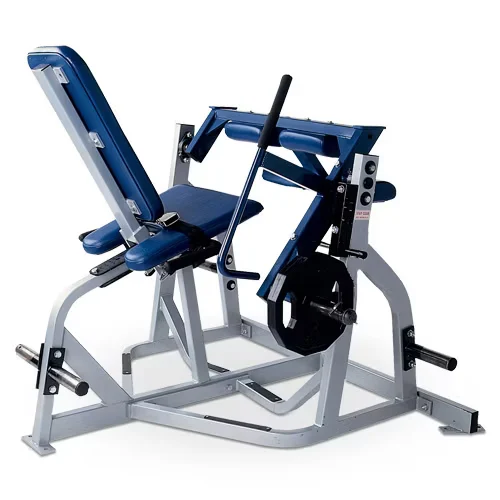
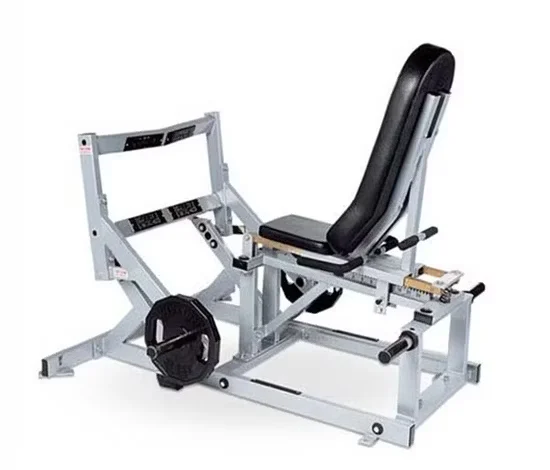
Trusted Steel Integrity — Every horizontal calf raise frame is built from 11-gauge steel traceable to the mill coil, ensuring verifiable structural performance under repeated plate loading.
| Parameter | Value |
|---|---|
| Designation | OS — H5034 |
| Product Type | Plate Loaded Calf Raise Machine |
| Loading Type | Plate loaded |
| Product Dimensions | 1673 × 1631 × 1501 mm |
| Net Weight | 135 kg |
| Frame Finish | Sandblast plus 200μm scratch-resistant powder coating |
| Upholstery Options | Main frame and cushion color according to customer requirements |
| Certification | ISO 9001, CE |
| OEM/ODM | Acceptable |
| Facility Type | Typical Use |
|---|---|
| Commercial gym strength floor | Dedicated calf station within a plate loaded machine circuit |
| Hotel and resort fitness center | Low-maintenance lower-leg training for transient guest populations |
| University strength and conditioning room | High-frequency calf work for athletic team programs |
| Crossfit box functional zone | Accessory calf isolation for athletes focused on Olympic lifting |
| Rehabilitation and performance center | Controlled ankle plantar-flexion loading for return-to-play protocols |
A spot weld holds until it does not — continuous MIG welding eliminates that uncertainty entirely.
When suppliers label a frame as "commercial grade" without disclosing the actual gauge, buyers are left trusting a marketing term instead of a measurable specification. [NEED_CITE: EN 957 structural requirements for stationary training equipment] Spot-welded joints on a commercial plate loaded calf raise machine pass a quick visual inspection at the factory, but under the repeated eccentric loading of heavy plates, those discrete weld points develop fatigue cracks that propagate through the heat-affected zone. Meanwhile, unsealed pivot bearings allow sweat and chalk dust to infiltrate the race, producing detectable play in the movement arm within the first year of heavy rotation. The structural failures are rarely sudden — they accumulate silently until the frame begins to shift under load, and by that point, the warranty claim process is already underway.
The horizontal calf raise targets the gastrocnemius and soleus through a fixed-path plantar-flexion movement, filling a gap that squat racks and leg presses leave open for dedicated lower-leg development. Within a plate loaded circuit, this station pairs naturally with a seated calf raise and a leg press, giving athletes a complete lower-body configuration without duplicating movement patterns. Its footprint suits mid-to-high-density strength floors where commercial traffic demands equipment rated for continuous daily rotation. The fixed movement path accommodates a wide range of user heights without requiring complex adjustment sequences, keeping turnover between users fast during peak hours. A commercial plate loaded calf raise machine occupies a defined zone that pairs well with free weight stations and functional rigs nearby.
The primary load on this machine is eccentric — the user lowers heavy plates through the negative phase before driving up through the concentric push, creating cyclical stress reversals at the pivot and base welds. [NEED_CITE: weld classification and fatigue performance in structural steel] High-traffic gyms can see hundreds of these cycles per day on a single unit, each one concentrating force at the junction where the movement arm meets the base frame. Unsealed bearings in that pivot point allow particulate contamination to accelerate wear, eventually introducing lateral play that degrades the movement feel. The powder coating at contact zones — where plates touch the loading horns and where the user’s feet meet the platform — faces abrasion from metal-on-metal contact and sweat exposure simultaneously. Upholstery on the chest and hip pads compresses under loaded body weight, and low-density foam loses its recovery within months under this sustained pressure.
The steel gauge of the frame tube determines the deformation threshold before the metal enters its plastic range under heavy plate loads. A thicker-walled tube resists bending and torsional twist at the base, keeping the movement arm aligned with its intended path. Continuous robotic MIG welding produces a uniform bead along the entire joint length, eliminating the weak nodes that spot welding leaves between discrete fusion points. A 200μm powder coating applied over a sandblasted surface provides mechanical adhesion that thin spray finishes cannot match, preventing the chips and bare-steel exposure that lead to corrosion in humid gym environments. The upholstery density and cover material determine how long the pads maintain their shape before compression set creates permanent depressions — a factor that directly affects user comfort and the interval between replacement orders.
Reducing frame tube wall thickness to cut material cost introduces flex under heavy loading, and that flex transfers stress directly into the weld joints where fatigue cracks originate. Spot-welded connections may hold during the initial load test but lack the continuous bond needed to survive thousands of daily cycles, shifting liability to the gym operator when a failure occurs. [NEED_CITE: common failure modes in commercial fitness equipment frames] Non-sealed bearings require scheduled maintenance and eventual replacement — downtime that pulls a revenue-generating station off the floor. Powder coatings applied below industrial thickness chip at the loading horns within months, exposing bare steel to sweat and humidity that accelerate oxidation. When non-standard hardware is used in pivot assemblies and adjustment mechanisms, sourcing replacement parts becomes a persistent problem long after the original supplier has moved on.
The 11-gauge frame steel used here carries mill certification traceable back to the coil, providing documentation that vague "commercial grade" claims cannot. Robotic MIG continuous welding ensures every joint on this commercial plate loaded calf raise machine receives a uniform weld line rather than discrete spot connections. Each unit undergoes individual load testing before shipment — not sample-based batch testing — so the structural performance of your specific machine is verified. The 200μm industrial powder coating resists chipping at high-contact zones, reducing the appearance of wear in visible areas of the strength floor. A 10-year frame warranty backs the structural investment, and 2D-3D CAD layout support helps position this unit with correct safety clearances relative to adjacent plate loaded machines and traffic pathways. OEM customization for frame color, upholstery, and logo application is available to match existing facility branding.
Provide your strength floor area and existing equipment list to receive a 2D-3D layout that integrates this station with proper clearances and traffic flow. Specify expected daily user volume so the structural rating aligns with your facility’s operational intensity. Indicate the target user population’s height and weight range to confirm the fixed movement path accommodates your members. Submit frame color, cushion color, and logo requirements early in the order cycle to coordinate OEM customization with production scheduling.
Q: How can buyers distinguish true commercial plate loaded equipment from light-commercial grade?
A: Request mill-certified steel documentation showing the exact gauge and grade — not just a "commercial grade" label. Verify the welding process is continuous MIG rather than spot welding. Ask for individual unit load test records rather than sample-based batch reports. Inspect the powder coating thickness specification, which should meet industrial standards for high-traffic environments. [NEED_CITE: EN 957 classification criteria for commercial versus light-commercial fitness equipment]
Q: What is the relationship between frame steel gauge and load capacity in calf raise machines?
A: The gauge determines wall thickness, which governs how much force the tube can absorb before bending. Thicker gauge steel resists deformation under heavy plate loads, keeping the movement arm tracking correctly through its full range. When the frame flexes under load, that stress transfers to the weld joints, accelerating fatigue. Gauge is a measurable specification that directly correlates to the machine’s structural performance under repeated commercial use.
Q: Should a gym choose plate loaded or selectorized calf raise machines?
A: Plate loaded units suit facilities where users are experienced with loading and unloading weight plates, and where equipment budgets prioritize structural simplicity over convenience. Selectorized machines offer faster weight changes for high-turnover group class environments. For strength-focused gyms and athletic facilities, plate loaded designs typically provide a more direct force transfer and a lower maintenance burden over time.
Q: How does equipment spacing affect safety and usability around a calf raise station?
A: Adequate clearance on all sides allows users to load and unload plates without obstructing adjacent equipment or walkways. Insufficient spacing creates pinch points where loaded plates swing into traffic paths. A proper 2D or 3D floor plan accounts for the machine footprint plus the full range of plate diameter and user movement, ensuring safe passage between stations during peak hours.
Premium aesthetics meet quiet operation for boutique studio environments.
Medical-grade silence and precision for sports & postpartum recovery.
Furniture-grade craftsmanship for premium residential installations.
Compact premium setups for one-on-one and small-group training.
Aesthetic Pilates integration for hybrid wellness studio programming.
Multi-unit deployment with instructor-grade reliability for certification programs.
Tell us about your project. Our team will respond within 24 hours with pricing, customization options, and shipping details.
// Sales Director
William
+86 132 2531 1800
// Export Manager
Bella
+86 198 5412 8032
william@bickfit.com