01 / Scenario
STUDIO
P
High-End Pilates Studios
Premium aesthetics meet quiet operation for boutique studio environments.

ISO
9001
CE
Certified
OEM
Available
10YR
Warranty
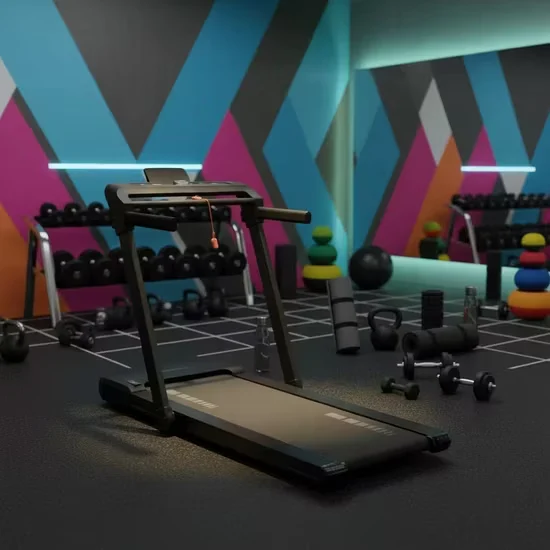
Folding Treadmill, 1.5 HP DC Motor, 1200×420 mm Running Surface — engineered for residential spaces with a DC motor rated for sustained walking and light jogging, paired with a compact folding frame and LCD console offering 12 preset programs. CE and RoHS certified for home fitness environments. Every unit undergoes motor duty cycle verification and hinge load testing before shipment to ensure reliable daily use.
// Spec Highlights
• Direct from Manufacturer · No Middlemen · Worldwide Shipping
01
// Material
Imported Solid Wood
Premium hardwood frames sourced for density and visual warmth.
02
// Hardware
Medical-Grade Silent
Whisper-quiet pulleys and springs for clinical environments.
03
// Customization
Appearance OEM
Color, upholstery, and branding tailored to your studio.
04
// Service
Layout Design
Free venue planning for studios and rehab institutions.
Every component is selected for longevity, performance, and aesthetic harmony - from imported hardwood frames to silent medical-grade accessories.
// Features
Hydraulic folding hinge — engineered for repeated deployment cycles without pivot play or frame flex at the joint.
| Parameter | Value |
|---|---|
| Product Type | Folding Treadmill |
| Model | MT23B |
| Motor Power | 1.5 HP (DC 2.0 HP Peak) |
| Maximum Speed | 1–12 km/h |
| Running Surface | 1200 × 420 mm |
| Product Dimensions (Unfolded) | 1490 × 720 × 1100 mm |
| Net Weight | 37 kg |
| Display | LCD (Speed / Distance / Time / Calories / Pulse) |
| Programs | 12 preset programs |
| Folding Mechanism | Hydraulic cylinder assisted |
| Certification | CE, RoHS |
| Facility Type | Typical Use |
|---|---|
| Residential home gym | Daily walking and light jogging in limited floor space |
| Apartment fitness corner | Compact cardio solution with fold-away storage |
| Personal training studio | Supplementary warm-up or cool-down station |
| Boutique wellness suite | Low-impact cardiovascular conditioning for private clients |
The hydraulic cylinder is the single most stressed joint on any folding treadmill — and the first component to fail when duty cycle exceeds design intent.
Most household folding treadmills advertise foldability as a convenience feature without disclosing the cylinder’s load rating or the hinge’s fatigue tolerance. In practice, the pivot point absorbs the full weight of the deck plus dynamic impact forces every time the unit is raised or lowered. Over hundreds of cycles, unsealed cylinder seals degrade, gas pressure drops, and the deck either drops unexpectedly or refuses to hold its unfolded position. This is not a belt problem or a motor problem — it is a structural hinge problem, and it renders the household folding treadmill unsafe long before the running surface shows wear [NEED_CITE: hydraulic cylinder duty cycle and seal degradation in repetitive load applications].
This household folding treadmill occupies the light-duty cardiovascular tier — suited for walking and jogging at speeds up to 12 km/h across a 1200 × 420 mm running surface. The 1.5 HP DC motor delivers continuous output appropriate for single-user residential environments, not the sustained multi-user demands of a commercial gym floor. In a home gym layout, it complements strength equipment by providing a dedicated warm-up zone without consuming permanent floor space. The 420 mm belt width accommodates users of average stride length, though taller individuals may find the running surface restrictive at higher speeds.
Every fold and unfold event loads the hydraulic cylinder and hinge pins with the full mass of the running deck — approximately 37 kg of static weight plus any residual dynamic force from incomplete speed reduction before folding. The hinge bore experiences shear stress at the pivot, while the cylinder mounting bracket endures cyclic tension and compression. Over time, these repeated load reversals can elongate mounting holes, loosen fasteners, and compromise alignment between the deck and the frame rails. The powder-coated steel frame resists surface corrosion, but the hinge interface itself is a wear point that requires periodic inspection for play or misalignment [NEED_CITE: fatigue failure modes in pinned joints under cyclic loading].
The 1.5 HP DC motor rating reflects continuous duty output — distinct from the 2.0 HP peak figure, which represents short-duration overload capacity. For daily residential use, continuous HP determines whether the motor sustains belt speed under load without thermal shutdown. The 1200 × 420 mm running surface defines the usable stride envelope: 1200 mm length accommodates most walking gaits, while 420 mm width provides lateral margin for natural foot placement. The LCD console integrates 12 preset programs that modulate speed and incline (if equipped) to simulate interval or steady-state protocols. The hydraulic folding cylinder eliminates manual deck lifting, reducing user effort and minimizing impact shock to the hinge assembly during deployment.
A folding treadmill that sacrifices hinge material thickness or cylinder quality to meet a price point will exhibit pivot play within months of daily use. The cylinder may lose gas pressure, causing the deck to drop under its own weight — a safety hazard for users and a liability for facility operators. Non-standard fasteners at the hinge interface make replacement difficult, and proprietary cylinder dimensions mean the entire frame assembly may need swapping rather than a simple seal or pin replacement. Thin powder coating at the fold joint chips quickly, exposing bare steel to sweat and moisture, accelerating corrosion at the most structurally critical location.
The hydraulic folding mechanism on this household folding treadmill is engineered for residential duty cycles, with cylinder and hinge components selected to match the 37 kg deck weight and expected usage frequency. The 1.5 HP continuous motor is rated for sustained operation within its thermal envelope, avoiding the overheating failures common in under-rated household units. Every unit undergoes load testing before shipment to verify hinge integrity and motor performance under running conditions. The 1200 × 420 mm running surface and 1490 × 720 × 1100 mm unfolded footprint are validated for safe clearance in residential environments, and 2D-3D layout planning support is available to integrate this treadmill into a multi-equipment home gym configuration. OEM customization options include frame color, console branding, and upholstery selection to match interior design requirements.
Provide your available floor dimensions and target equipment list to receive a 2D-3D spatial planning layout that integrates this household folding treadmill with complementary strength or conditioning equipment. Specify your expected daily usage duration and primary user height range to confirm motor duty cycle adequacy and running surface suitability. Customization requests for frame finish, console language, or branding placement can be reviewed during the quotation stage.
Q: How does continuous HP differ from peak HP on a household folding treadmill?
A: Continuous HP reflects the motor’s sustained output under normal running load, while peak HP indicates short-duration overload capacity. For daily residential use, continuous HP determines whether the motor maintains belt speed without thermal shutdown. A 1.5 HP continuous rating suits walking and light jogging; higher-intensity running or heavier users may require a motor with greater continuous output to avoid premature wear or overheating.
Q: What running surface dimensions are adequate for different user heights?
A: A 1200 mm belt length accommodates most walking and light jogging strides for users up to approximately 180 cm tall. Taller individuals with longer stride lengths may find the surface restrictive at higher speeds. The 420 mm width provides sufficient lateral margin for natural foot placement during moderate-intensity exercise, though users accustomed to commercial-grade belt widths may perceive it as narrow.
Q: How does the hydraulic folding mechanism affect long-term durability?
A: The hydraulic cylinder eliminates manual lifting effort and reduces impact shock to the hinge during deployment. However, the cylinder and hinge pins endure cyclic loading every time the treadmill is folded or unfolded. Over extended use, cylinder seals may degrade and mounting hardware may loosen. Periodic inspection of the hinge interface and cylinder mounting bolts helps detect early signs of wear or misalignment before they compromise structural integrity.
Q: Can this household folding treadmill support daily commercial-style use?
A: This treadmill is engineered for residential duty cycles — typically one to two hours of daily use by a single household. It is not designed for the sustained multi-user demands of a commercial gym environment, where motor thermal management, belt wear, and hinge fatigue accumulate rapidly. For high-traffic facilities, a commercial-rated treadmill with higher continuous HP, larger running surface, and reinforced structural components is recommended.
Premium aesthetics meet quiet operation for boutique studio environments.
Medical-grade silence and precision for sports & postpartum recovery.
Furniture-grade craftsmanship for premium residential installations.
Compact premium setups for one-on-one and small-group training.
Aesthetic Pilates integration for hybrid wellness studio programming.
Multi-unit deployment with instructor-grade reliability for certification programs.
Tell us about your project. Our team will respond within 24 hours with pricing, customization options, and shipping details.
// Sales Director
William
+86 132 2531 1800
// Export Manager
Bella
+86 198 5412 8032
william@bickfit.com