01 / Scenario
STUDIO
P
High-End Pilates Studios
Premium aesthetics meet quiet operation for boutique studio environments.

ISO
9001
CE
Certified
OEM
Available
10YR
Warranty
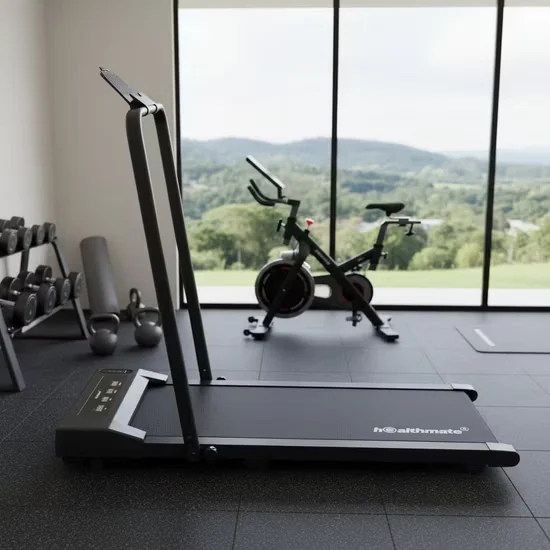
Home Use Motorized Treadmill, 1.5HP Motor, 1200×460mm Running Surface — engineered for compact residential cardio with a foldable frame that reduces storage footprint to 1465×750×390mm. The 1.5HP DC motor delivers sustained speeds up to 12 km/h across 12 preset programs, supported by an LCD console tracking speed, distance, time, calories, and pulse. Backed by CE and RoHS certifications with full OEM-ODM customization available for private-label orders.
// Spec Highlights
• Direct from Manufacturer · No Middlemen · Worldwide Shipping
01
// Material
Imported Solid Wood
Premium hardwood frames sourced for density and visual warmth.
02
// Hardware
Medical-Grade Silent
Whisper-quiet pulleys and springs for clinical environments.
03
// Customization
Appearance OEM
Color, upholstery, and branding tailored to your studio.
04
// Service
Layout Design
Free venue planning for studios and rehab institutions.
Every component is selected for longevity, performance, and aesthetic harmony - from imported hardwood frames to silent medical-grade accessories.
// Features
Foldable Frame Hinge Integrity — The folding mechanism on this home use motorized treadmill 1.5HP foldable unit uses reinforced steel latch points tested for repeated cycle durability under daily residential use.
| Parameter | Value |
|---|---|
| Product Type | Home Use Motorized Treadmill |
| Model | MT026M |
| Motor Power | 1.5HP |
| Speed Range | 1–12 km/h |
| Running Surface | 1200 × 460 mm |
| Pre-set Programs | 12 |
| Console Display | LCD (Speed / Distance / Time / Calories / Pulse) |
| Foldable Design | Yes |
| Unfolded Dimensions | 1465 × 750 × 1150 mm |
| Folded Dimensions | 1465 × 750 × 390 mm |
| Net Weight | 46.0 kg |
| Frame Material | ABS housing with steel frame structure |
| Certification | CE, RoHS |
| OEM / ODM | Available |
| Facility Type | Typical Use |
|---|---|
| Residential home gym | Daily cardio sessions in limited floor space |
| Apartment fitness corner | Foldable storage when not in use |
| Light personal fitness setup | Supplemental cardio alongside strength equipment |
| Hotel guest room fitness | Compact motorized treadmill for individual guest use |
Home treadmills often advertise "commercial-grade" frames without specifying steel gauge or motor duty cycle — leading to premature belt slippage and frame flex under continuous use. The 1.5HP motor rating on this home use motorized treadmill 1.5HP foldable model defines sustained operational capacity, not peak burst output. Many budget treadmills quote peak horsepower figures that cannot be maintained beyond short intervals, causing the belt to hesitate under footstrike at higher speeds. The 1200 × 460 mm running surface accommodates a natural stride for users of average height, while narrower belts force runners into an artificially constrained gait that increases joint discomfort over time. The folding hinge mechanism must endure repeated deployment and locking cycles without developing lateral play — a failure point commonly seen in units that prioritize storage convenience over structural rigidity. [NEED_CITE: motor duty cycle classification for light commercial and residential cardio equipment]
This home use motorized treadmill 1.5HP foldable unit occupies the light-duty personal cardio tier, designed for single-user daily sessions rather than continuous multi-user commercial rotation. The 460 mm belt width provides adequate lateral stability for walking and jogging, though serious runners with longer stride lengths may find the 1200 mm length limiting at full pace. In a home gym context, it complements strength equipment by offering a dedicated warm-up and cool-down cardio station without consuming permanent floor area — the foldable frame reduces the footprint to 390 mm in height when stored. The 12 pre-set programs and LCD console provide sufficient variation for general fitness maintenance without requiring external device connectivity.
The folding mechanism on a home use motorized treadmill 1.5HP foldable unit introduces stress concentration points that fixed-frame models do not face. Each deployment and locking sequence subjects the hinge pins, latch brackets, and frame joints to impact loading combined with lateral torsion — particularly when the user steps onto the belt at speed. Over hundreds of cycles, non-reinforced hinge points can develop micro-movement that translates into belt tracking instability and audible frame resonance. The motor mount area also experiences vibration transmission during operation, and insufficient damping between the motor housing and the running deck accelerates wear on the belt surface and deck cushioning layer. Weld integrity at the junction between the upright posts and the base frame must resist both static load from user weight and dynamic oscillation during running. [NEED_CITE: fatigue performance of folding hinge mechanisms in residential fitness equipment]
The 1.5HP motor rating should be evaluated as continuous duty output — the power level the motor can sustain throughout a 30–60 minute session without thermal shutdown. The 1200 × 460 mm running surface dimensions directly determine stride accommodation: a 460 mm width allows natural arm swing clearance and foot placement variance, while shorter deck lengths force stride compression at speeds above 8 km/h. The folded height of 390 mm indicates the vertical storage profile, which determines whether the unit fits under a bed or behind furniture. The 46 kg net weight reflects frame material density — units significantly lighter than this often sacrifice steel tube thickness in the uprights and base rails, compromising stability during higher-speed running. The ABS console housing protects the LCD board and sensor wiring from impact, though the underlying frame structure determines whether the console vibrates excessively during use.
Thin-wall steel tubing in the uprights and base frame deflects visibly under a 90 kg user running at 10 km/h, creating a perceptible sway that undermines confidence and accelerates joint fatigue. Spot-welded hinge brackets on folding mechanisms crack under repeated loading, often without visible warning until the frame collapses during use. Non-sealed motor bearings accumulate dust and lint from the running belt environment, leading to premature bearing seizure and motor burnout within the first year of daily use. Low-density deck cushioning compresses permanently under repeated footstrike, eliminating shock absorption and transferring impact directly to the user’s knees and ankles. Thin powder coating on the frame chips at contact points, exposing bare steel to sweat corrosion that spreads beneath the coating surface. [NEED_CITE: material degradation mechanisms in residential cardio equipment under daily use conditions]
The 1.5HP motor and folding frame assembly on this home use motorized treadmill 1.5HP foldable unit undergoes load testing before shipment, verifying structural integrity under simulated daily use conditions. The steel frame components are sourced from mill-certified Q235 and Q345 grade material, with material traceability maintained through production. Robotic MIG welding produces continuous weld seams at the folding hinge points and upright-to-base junctions, eliminating the spot-weld weak points that fail under cyclic loading. The 200μm powder coating finish resists chipping at handrail contact points and console mounting areas, maintaining appearance through years of residential use. BICKFIT provides 2D-3D CAD layout support for home gym configurations, ensuring this treadmill’s unfolded footprint of 1465 × 750 mm integrates with adequate safety clearance from adjacent equipment and walls. OEM and ODM customization options allow color, console branding, and packaging specification to match project requirements.
Provide your available floor area dimensions and intended equipment list to receive a 2D-3D CAD layout showing this home use motorized treadmill 1.5HP foldable unit positioned with appropriate safety clearances. Specify your expected daily usage duration and user weight range so the structural configuration can be matched to operational demands. Indicate any customization requirements including frame color, console branding, or packaging specification for project integration.
Q: What is the difference between continuous HP and peak HP in treadmill motors?
A: Continuous horsepower represents the power output a motor can sustain throughout an extended session without overheating or thermal shutdown. Peak horsepower indicates the maximum output achievable only in short bursts. A 1.5HP continuous rating means the motor maintains that output during a full 30–60 minute workout at moderate speeds, whereas a peak-only rating may drop significantly under sustained load, causing belt hesitation during use.
Q: How does running belt width affect workout comfort and safety?
A: A 460 mm belt width provides sufficient lateral space for natural foot placement and arm swing during walking and jogging. Narrower belts force users into a constrained stride pattern, increasing the risk of stepping off the belt edge at higher speeds. The 1200 mm length accommodates average stride lengths, though taller users with longer natural strides may find the deck short at maximum speed.
Q: What maintenance does a home treadmill require for belt tension and lubrication?
A: Running belt tension should be checked monthly by lifting the belt center — approximately 50–70 mm of lift indicates proper tension. Lubrication between the belt and deck reduces friction, lowering motor load and extending both belt and deck life. Use only manufacturer-recommended silicone-based lubricant applied per the scheduled interval to avoid over-application that attracts dust.
Q: How to evaluate foldable treadmill frame stability versus fixed-frame models?
A: Examine the hinge mechanism construction — reinforced steel latch points with audible locking engagement indicate reliable structural design. Fixed-frame models eliminate this potential failure point entirely but sacrifice storage convenience. Test the unit at operating speed: minimal frame vibration and no lateral sway suggest adequate rigidity in both the uprights and base frame junctions.
Q: What is the expected service life of motor brushes and controller boards?
A: Motor brush wear depends on total operating hours and load intensity. Under typical residential daily use of 30–60 minutes, brushes generally require inspection after several years of service. Controller board longevity correlates with ventilation quality and dust accumulation — keeping the motor compartment clean and unobstructed extends electronic component life significantly.
Premium aesthetics meet quiet operation for boutique studio environments.
Medical-grade silence and precision for sports & postpartum recovery.
Furniture-grade craftsmanship for premium residential installations.
Compact premium setups for one-on-one and small-group training.
Aesthetic Pilates integration for hybrid wellness studio programming.
Multi-unit deployment with instructor-grade reliability for certification programs.
Tell us about your project. Our team will respond within 24 hours with pricing, customization options, and shipping details.
// Sales Director
William
+86 132 2531 1800
// Export Manager
Bella
+86 198 5412 8032
william@bickfit.com