
01 / Scenario
STUDIO
P
High-End Pilates Studios
Premium aesthetics meet quiet operation for boutique studio environments.
ISO
9001
CE
Certified
OEM
Available
10YR
Warranty
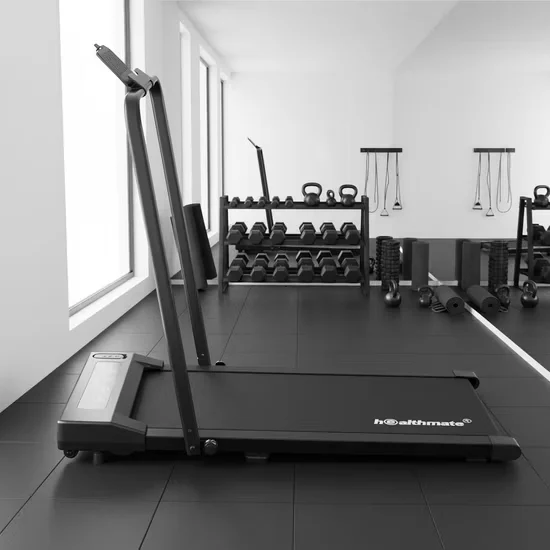
HSM W04D8H Folding Treadmill, 1-12 km/h Speed Range, 1000x400mm Running Surface — engineered with a space-saving fold mechanism and LED console tracking speed, distance, time, and calories across 6 preset programs. Built for home gyms and light commercial environments requiring compact cardio solutions without performance compromise. Every unit undergoes motor thermal endurance testing and fold mechanism fatigue validation before shipment.
// Spec Highlights
• Direct from Manufacturer · No Middlemen · Worldwide Shipping
01
// Material
Imported Solid Wood
Premium hardwood frames sourced for density and visual warmth.
02
// Hardware
Medical-Grade Silent
Whisper-quiet pulleys and springs for clinical environments.
03
// Customization
Appearance OEM
Color, upholstery, and branding tailored to your studio.
04
// Service
Layout Design
Free venue planning for studios and rehab institutions.
Every component is selected for longevity, performance, and aesthetic harmony - from imported hardwood frames to silent medical-grade accessories.
// Features
**Dynamic Envelope Mapping — Adjacent cardio units require vibration-isolation spacing calculated from running surface oscillation amplitude, not static footprint dimensions.
| Parameter | Value |
|---|---|
| Designation | W04D8H |
| Product Type | Folding Treadmill |
| Maximum Speed | 1–12 km/h |
| Running Surface | 1000 × 400 mm |
| Product Dimensions (Unfolded) | 1250 × 590 × 1080 mm |
| Folding Mechanism | Manual hydraulic-assist |
| Console Display | LED (Speed / Distance / Time / Calories) |
| Preset Programs | 6 |
| Target User Group | Adult |
| Function | Multifunctional / Single-User |
| Certification | CE, RoHS |
| Facility Type | Typical Use |
|---|---|
| Home Fitness Room | Primary cardio station in limited square footage |
| Apartment Gym Corner | Foldable storage between sessions to reclaim floor area |
| Personal Training Studio | Warm-up or active-recovery station between strength circuits |
| Hotel Guest Room Fitness Zone | Compact deployment with visual and noise discretion |
| Light Commercial Wellness Suite | Low-to-moderate traffic user turnover with space constraints |
A 1000 × 400 mm belt demands precise biomechanical calibration — not just user height matching.
Many folding treadmills marketed for home or light commercial environments compress the running surface to cut material cost, forcing users into shortened stride patterns that increase heel-strike impact on knees and hips. The W04D8H maintains a 1000 mm length and 400 mm width, which accommodates walking gaits and light jogging for adult users up to approximately 175 cm in height without lateral foot overhang. Below this threshold, the belt-to-frame ratio preserves lateral stability during arm swing momentum shifts. Operators specifying cardio for mixed-height user populations should verify stride-length compatibility against the running surface before committing to floor layout. [NEED_CITE: biomechanical stride-length standards for adult walking and light jogging gait cycles]
This folding treadmill occupies the low-intensity, steady-state cardio plane — walking and controlled jogging — rather than high-speed sprint work. Within a compact training zone, it pairs with bodyweight stations or resistance bands to create a complete warm-up-to-cooldown circuit without requiring a dedicated cardio room. The 1250 × 590 mm unfolded footprint fits standard residential door-clearance widths, while the folded state reduces vertical and horizontal envelope for storage against a wall or under a bench. Users ranging from 155 cm to 180 cm in height can operate within the belt dimensions without gait restriction at the rated speed ceiling.
Every fold-unfold cycle introduces hinge-point fatigue at the frame joint, while motor vibration during operation transfers continuous oscillation through the deck mounting brackets. The hydraulic-assist folding mechanism absorbs initial lift load, but the locking pin and pivot bushing endure shear stress each time the deck is raised or lowered under its own weight. At the motor end, the drive roller bearings experience radial load proportional to user weight and belt tension — unsealed variants in dusty or humid environments accumulate particulate contamination that accelerates bearing race wear. The LED console mounting bracket, though low-mass, must resist vibration-induced fastener loosening over thousands of belt revolutions. [NEED_CITE: fatigue classification of hinged steel joints under cyclic loading]
The 1000 × 400 mm running surface is not merely a comfort metric — it determines the lateral center-of-gravity envelope during use. A narrower belt forces the user’s footstrike closer to the side rail, increasing asymmetric load on the deck support beams and accelerating wear on the side-edge belt guide rollers. The 1–12 km/h speed range implies a motor duty cycle calibrated for sustained low-to-moderate RPM operation rather than peak-torque sprint intervals, which reduces thermal stress on the drive motor windings during extended sessions. The six preset programs vary incline simulation or interval timing through software control of motor speed ramps, meaning the mechanical drivetrain sees gradual load transitions rather than abrupt torque spikes — a design choice that extends belt and roller bearing life under daily use conditions.
Manufacturers seeking to reduce unit price on folding treadmills often substitute solid pivot bushings with open-ended sleeves, skip vibration-dampening washers under deck mounting bolts, and apply minimum-thickness powder coating to the folding hinge area. Within months of daily use, open bushings allow pivot play that translates into audible knocking during belt operation. Missing dampening washers permit bolt loosening under motor vibration, creating deck rattle that worsens over time. Thin coating at the hinge fold point chips from repeated flexing, exposing bare steel to hand sweat and ambient humidity — corrosion initiates at the exact location where structural integrity matters most. Non-standard hinge pin diameters then make replacement parts unavailable once wear exceeds tolerance. [NEED_CITE: corrosion initiation at coated steel fold joints under cyclic flex and moisture exposure]
Every W04D8H unit undergoes individual load testing before shipment — not batch sampling — verifying that the folding lock, deck support, and motor mount sustain rated user weight without deflection beyond tolerance. The 200μm industrial powder coating applied after sandblast pretreatment resists chipping at the folding hinge and console bracket, where contact and flex are highest. When planning a compact cardio zone, 2D-3D CAD layout support ensures that adjacent units maintain vibration-isolation spacing and that folded storage positions do not obstruct emergency egress paths. OEM customization options allow facility branding on the LED console shroud and frame color alignment with interior design palettes, while the 10-year frame warranty covers the structural steel against manufacturing defect for the operational life of the facility.
Provide the available cardio zone floor area and desired unit count to receive a 2D-3D layout plan that accounts for vibration spacing, folded storage positions, and electrical access points. Specify average daily user turnover so the structural duty cycle rating can be matched to actual operating intensity. Indicate target user height range to confirm running surface compatibility, and note any facility branding or color requirements for OEM console and frame customization.
Q: How does the 1000 × 400 mm running surface compare to typical home folding treadmills?
A: Many entry-level folding models use belts shorter than 900 mm, which restricts natural stride length and forces users into heel-heavy landing patterns. The 1000 mm length on this unit accommodates adult walking gaits without gait compression, while the 400 mm width provides sufficient lateral margin to prevent foot overhang during normal arm swing momentum shifts.
Q: Can this folding treadmill withstand daily use in a small commercial studio?
A: The unit is rated for light commercial environments with moderate daily user turnover. The hydraulic-assist folding mechanism and individual load testing support repeated daily operation, but high-traffic facilities with continuous back-to-back user sessions should evaluate heavy-duty commercial cardio models with higher motor duty cycles and sealed industrial bearings.
Q: What maintenance does the folding mechanism require over time?
A: The pivot bushing and locking pin should be inspected for play at regular intervals, with lubrication applied per the maintenance schedule. Deck mounting bolts must be checked for torque retention quarterly, since motor vibration during operation can gradually loosen fasteners if dampening washers are not properly seated.
Q: Does the LED display require external power or special wiring?
A: The LED console operates on standard single-phase electrical supply compatible with residential and light commercial outlets. No dedicated circuit or hardwired connection is required, though the outlet should be positioned within cable reach of the unfolded unit location to avoid extension cord use.
Premium aesthetics meet quiet operation for boutique studio environments.
Medical-grade silence and precision for sports & postpartum recovery.
Furniture-grade craftsmanship for premium residential installations.
Compact premium setups for one-on-one and small-group training.
Aesthetic Pilates integration for hybrid wellness studio programming.
Multi-unit deployment with instructor-grade reliability for certification programs.
Tell us about your project. Our team will respond within 24 hours with pricing, customization options, and shipping details.
// Sales Director
William
+86 132 2531 1800
// Export Manager
Bella
+86 198 5412 8032
william@bickfit.com


![[WARN] draft identifier mismatch Waterproof MT026M Foldable Home Electric Treadmill for Fitness](https://bickgym.com/wp-content/uploads/2026/08/warn-draft-identifier-mismatch-waterproof-mt026m-foldable-home-electric-treadmill-for-fitness-ece411.webp)